


Professional black mould remediation combines containment, physical removal of contaminated materials, moisture correction, and independent clearance testing. Hire a certified remediator when mould covers more than 10 square feet, when water or sewage damage is involved, when HVAC systems are affected, or when occupants report health symptoms.
What a certified job covers:
-
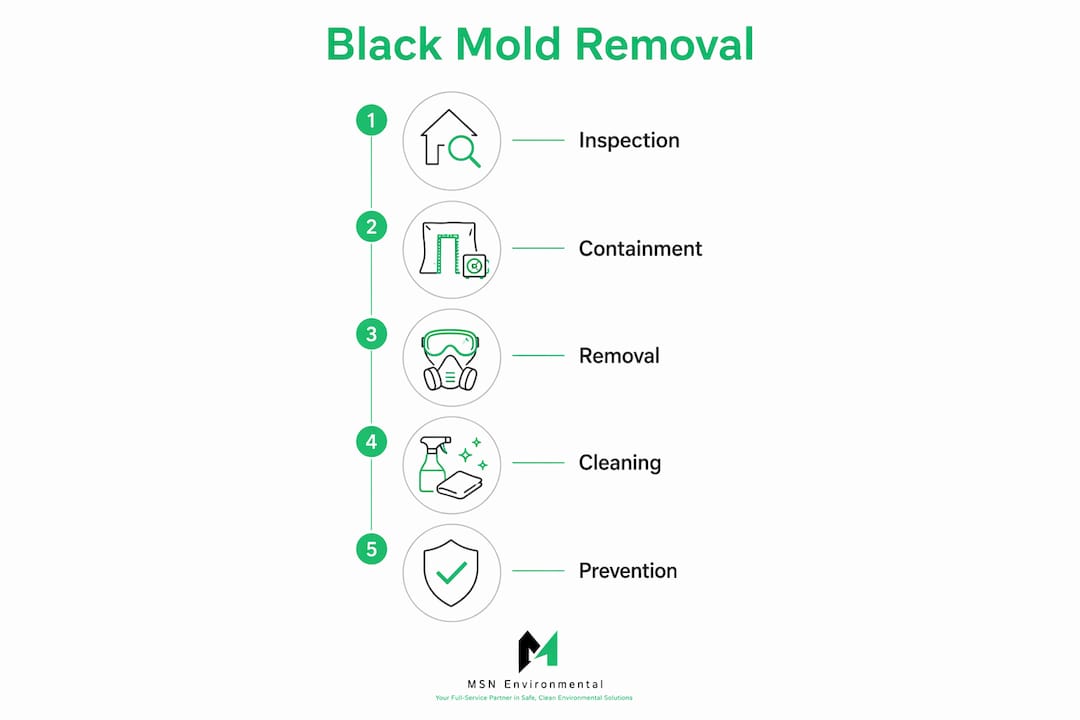
Inspection and testing: Visual assessment (Thermal Imaging and Moisture Meter) plus air and surface sampling when contamination extent is unclear
-
Containment and negative air: Poly barriers and HEPA-filtered air scrubbers keep spores from migrating to clean spaces
-
Physical removal: Porous materials (drywall, ceiling tiles, carpet) are removed, not cleaned; non-porous surfaces are HEPA vacuumed and treated
-
Moisture-source repair: Fixing the leak or ventilation failure is mandatory; skipping it guarantees regrowth
-
Post-remediation verification (PRV): Air and surface samples analysed by an AIHA-accredited lab; clearance is issued only when spore counts return to baseline
Trust signals to require: Written scope of work, disposal manifests, proof of training certification, WSIB coverage, and pollution liability insurance.
Safety note: Never mix chlorine bleach with ammonia-based cleaners — toxic vapours form. Bleach also fails to reach mould roots in porous materials, so it is not a substitute for physical removal.
Table of Contents
What prolonged mould exposure does to your health
Mould is not just a cosmetic problem. Prolonged indoor exposure, regardless of species, can produce respiratory irritation, chronic coughing, worsening asthma, and in sensitive individuals, neurological symptoms. Harvard Health clinicians note that “black mould” is not inherently more hazardous than other indoor moulds; the real risk comes from sustained exposure to any active colony.
Dead spores and mould fragments remain allergenic even after chemical treatment. That is why physical removal outperforms chemical sterilisation as the primary treatment method: biocides and encapsulants supplement demolition and cleanup, they do not replace it. Children, elderly occupants, and anyone immunocompromised face the highest risk and should vacate the affected area until clearance testing confirms the space is safe.
MSN Environmental: certified mould remediation across Ontario
When the job is beyond a small hard-surface patch, you need a certified contractor, not a spray bottle.
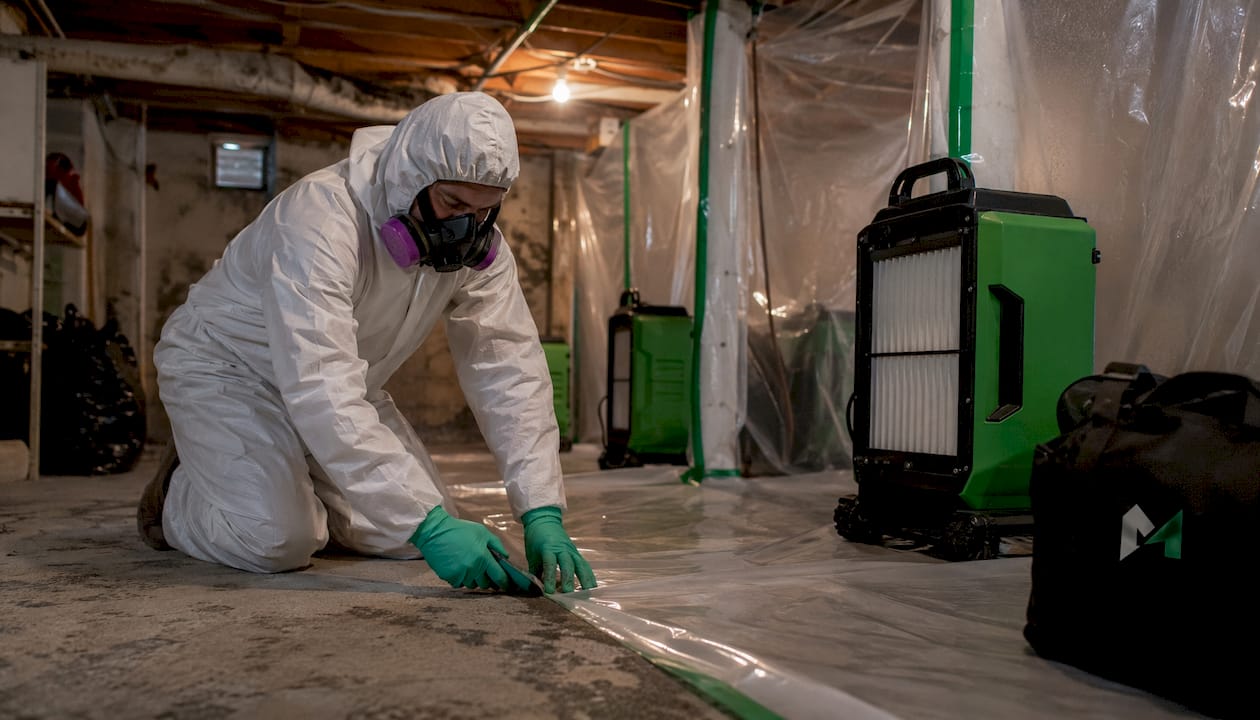
MSN Environmental provides certified hazardous-mould remediation for residential, commercial, and industrial properties across Ontario, following EACC standards and provincial occupational safety requirements. The first call includes a scope questionnaire, scheduling of a certified inspection, preliminary safety guidance for occupants, and documentation support for insurance claims.
MSN Environmental’s technicians carry WSIB coverage and pollution liability insurance, and every project closes with before-and-after documentation.
Contact MSN Environmental to book a certified inspection and get a written scope of work before any remediation begins. Review the top reasons to hire certified professionals if you are still weighing your options.
Key takeaways
Professional black mould remediation requires containment, physical removal of porous materials, moisture-source correction, and independent post-remediation verification before a space is safe to reoccupy.
| Point | Details |
|---|---|
| Hire threshold | Call a certified remediator when mould exceeds 10 sq ft or involves water, sewage, or HVAC contamination. |
| Porous materials must go | Drywall, carpet, and ceiling tiles are removed, not cleaned, because mould hyphae penetrate their structure. |
| Moisture fix is mandatory | Cleaning without correcting the moisture source guarantees regrowth, often within weeks. |
| PRV closes the job | Confirm spore counts are at baseline before reconstruction begins. |
| MSN Environmental | Provides EACC compliant services, WSIB-covered mould remediation with written scope and clearance testing across Ontario. |