

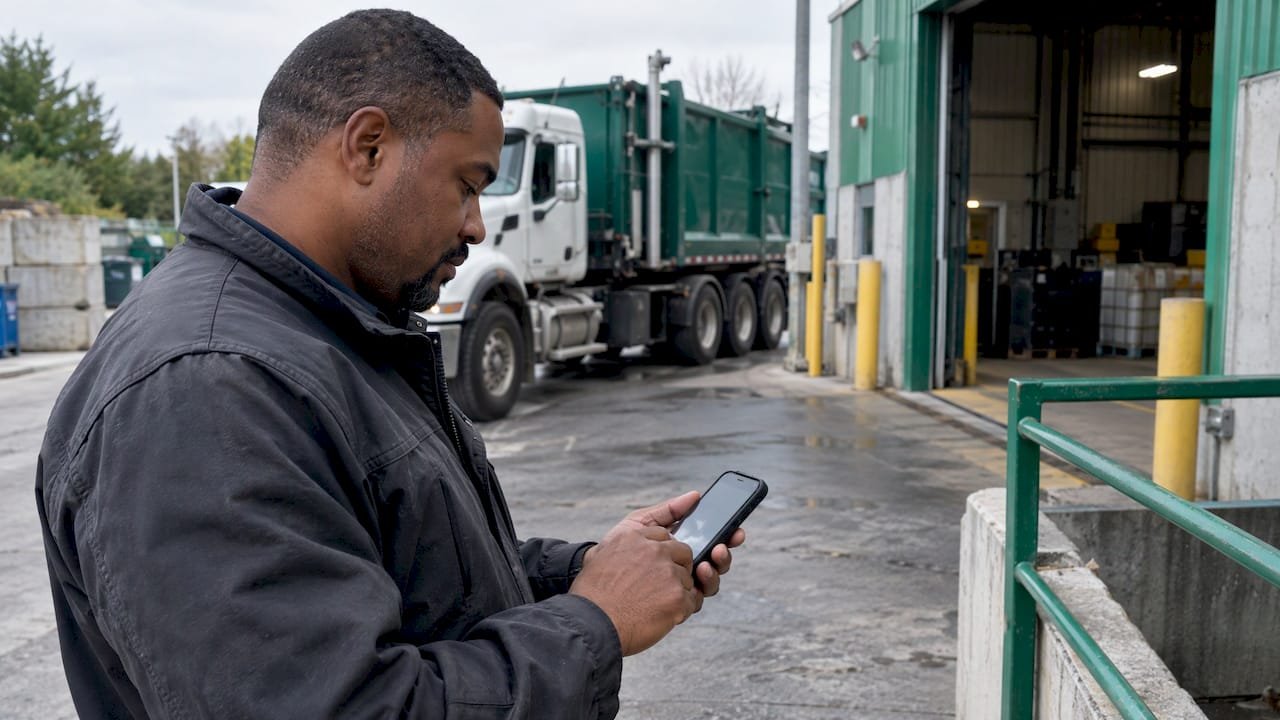
An Ontario hazardous waste manifest is the record that follows a shipment of regulated waste from the property where it was produced to the facility that receives it. Since 2023 it is a digital record kept in the provincial Registry, not a paper form. If your project produces regulated waste, the manifest is the generator’s responsibility, and the generator is usually you, the owner or the business that produced the waste. The practical way to stay on the right side of it is to hire a certified abatement contractor who plans the waste stream before work starts. We remove asbestos, PCBs, mercury, lead paint, UFFI, bat guano and mould, so the waste question comes up on our jobs from the first walkthrough.
TL;DR
- A manifest is the tracking document for moving subject waste (hazardous waste and liquid industrial waste) off-site from a generator to a receiver, per the Ministry’s guidance manual.
- Since January 1, 2023, the RPRA Registry and the HazTrack app have replaced HWIN and paper manifests (RPRA).
- The generator registers, lists the waste, and can hand the Registry work to an authorized delegate. Carriers and receivers sign their own parts.
- Asbestos waste has its own definition and its own landfill rule in Regulation 347, so ask for the waste plan in writing before a project starts.
- If a load is refused or a record is wrong, the fix runs through the Registry, and RPRA makes corrections once a receiver has confirmed receipt.
Table of Contents
- What a hazardous waste manifest is
- What counts as hazardous waste
- What replaced HWIN
- Who does what: generator, carrier, receiver
- How a manifest is created, step by step
- When a shipment is refused or a record is wrong
- Why the manifest is a reason to hire a certified contractor
- Our perspective
- Plan the waste before you start
- FAQ
- Sources
What a hazardous waste manifest is
A manifest is a tracking document. Under Ontario’s Regulation 347 (the general waste management regulation), it is completed through the Registry run by the Resource Productivity and Recovery Authority (RPRA). In unusual circumstances it is obtained from the Ministry. It is required to ship subject waste off-site from a generator to a receiver (Ministry of the Environment, Conservation and Parks, 2023). “Subject waste” means liquid industrial waste and hazardous waste together.
The province describes the digital manifest as travelling with the waste from origin to disposal. It describes the waste and shows when it changes hands between generators, carriers and receivers. The Registry serves more than 40,000 generators, carriers and receivers (Ontario.ca, updated May 2026).
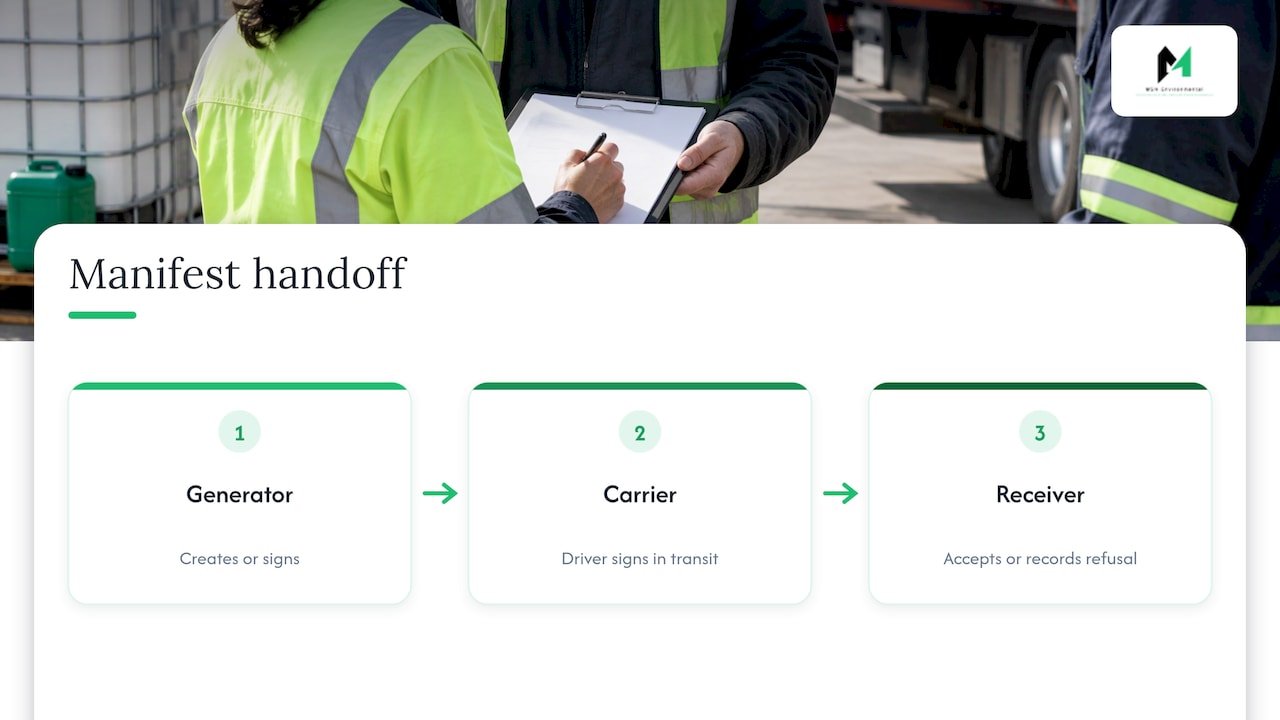
Three roles appear on every manifest:
- Generator: the person or business whose activity produced the waste. On a renovation or abatement project, that is usually the property owner or the business operating the facility.
- Carrier: the operator of the transportation system moving the waste by road, rail, air or water (RPRA).
- Receiver: the operator of the facility the waste goes to, including transfer stations, processing facilities and final disposal sites (same RPRA page).
What counts as hazardous waste
Regulation 347 lists the categories. They include hazardous industrial waste, acute hazardous waste chemical, hazardous waste chemical, severely toxic waste, ignitable, corrosive, reactive or leachate toxic waste, radioactive waste (with a federal exception), pathological waste and PCB waste (Ontario e-Laws, Reg. 347).
For property owners, two items on that list matter most. PCB waste, found in older electrical equipment and some lighting ballasts, is named in the definition. Waste from lead paint or mercury work can also fall into a category depending on its characteristics, which is why a testing result and a waste plan should exist before demolition starts, not after.
Where asbestos waste fits
Asbestos is the material most of our clients ask about, and it is treated in its own right. Regulation 347 defines asbestos waste as solid or liquid waste containing more than a trivial amount of asbestos from removing asbestos-containing construction or insulation materials. It also covers waste from handling that material, including protective equipment, tools that cannot be decontaminated and cleaning materials (CanLII, Reg. 347). The same regulation says asbestos waste may be deposited only at locations in a landfill that are adapted or otherwise suitable for it.
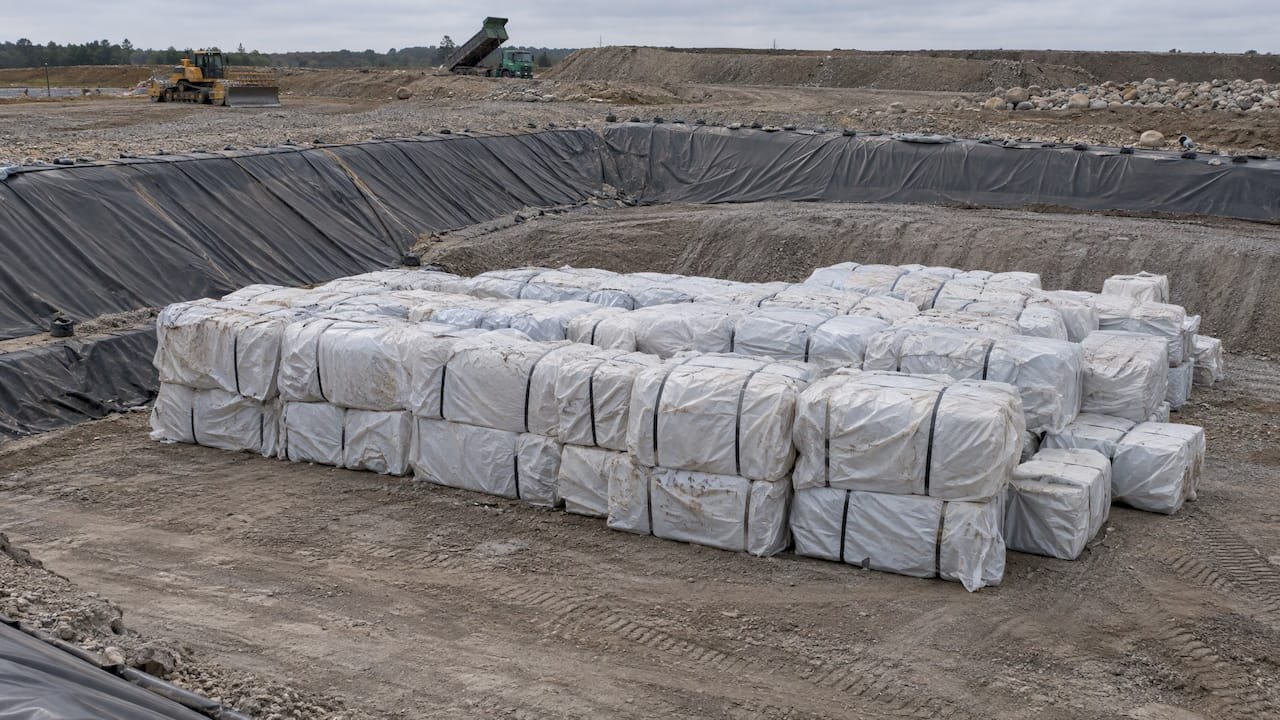
In plain terms: asbestos debris cannot go in a regular bin or any dumpster. It needs a controlled route to an appropriate disposal location. Your contractor should tell you in writing which waste streams your job produces and where each goes. For the rules that govern the removal work itself, our Ontario asbestos regulations roadmap walks through owner and contractor duties.
What replaced HWIN
If you remember the old system, the change is simple. As of January 1, 2023, all reporting under the Hazardous Waste Program must be done through RPRA’s online Registry. The Registry and its mobile app, HazTrack, replaced the HWIN system and paper manifests, and no waste can be shipped or received without a Registry account (RPRA).
A generator needs an account to be listed on a manifest, to create, edit or sign manifests, or to report on-site waste activities. A generator may also delegate submissions to a service provider.
Who does what: generator, carrier, receiver
The generator
It is a provincial offence to store, process, dispose of or transport liquid industrial or hazardous waste unless the generator has submitted a Generator Registration Report electronically (or is approved to use paper forms under section 27.1 of Regulation 347) and a registration document is posted on the Registry. Generators outside Ontario whose waste goes to an Ontario disposal site must also register (Ontario.ca registration guidance manual).
The timing rule is firm. Under O. Reg. 324/22, a generator running a facility that produces, collects, handles or stores subject waste must submit the report before the first transfer of subject waste from the facility, or 90 days after subject waste was first produced, collected or stored, whichever comes first (O. Reg. 324/22).
The carrier and the receiver
The carrier’s driver needs app access on the road. HazTrack lets carriers, drivers and receivers view and sign manifests, create new ones (parts A and B), complete them (part C, including accepting or refusing wastes) and make corrections (RPRA).
The regulation adds physical controls. When subject waste is transferred to or from a vehicle, the driver must be present unless the generator or receiver is. Hazardous waste may not be mixed, blended or bulked with other material unless the receiving facility named on the manifest is approved for it (Ontario e-Laws, Reg. 347). The paperwork and the physical handling are meant to match.
Delegating the Registry work
Amended Regulation 347 lets a generator appoint a service provider as an “authorized generator delegate”. With full delegation, the generator does not use the Registry and the delegate is invoiced for fees. With partial delegation, the generator keeps its own account and RPRA invoices it directly (RPRA). Property managers and business owners who generate waste occasionally should decide which model suits them before the first shipment, not on the day the truck arrives.
How a manifest is created, step by step
The sequence below follows RPRA’s work instruction for generators. Where our work touches a step, we say how.
- Register and confirm your facility. Have the Generator Registration Report on the Registry before the first transfer. On a project we scope, the waste types come from the testing and survey results, so the registration reflects what is actually in the building. We offer bulk sampling, air testing, designated substance surveys and pre-renovation surveys for this.
- Identify and classify the waste. Match each stream to the Regulation 347 categories. This is where most mistakes start: a mixed pile of debris is harder to classify and to ship than separated streams. Our technicians work through the materials in the survey and keep streams apart as part of the abatement.
- Select New Manifest. The generator searches for and selects the facility, carrier and receiver, then chooses the waste streams (RPRA work instruction).
- Complete the mandatory fields and dates. Quantities, shipping details and scheduled dates all go in here. A quantity that is far from reality becomes a question later at the receiver.
- Select Ready for Signatures. The manifest moves to Awaiting Signatures status (same RPRA document).
- Sign at pickup. The generator and the carrier’s driver sign as the waste is loaded.
- Receiver completes part C. The receiver accepts or refuses the waste and signs.
- Keep your copy. Store the completed record with the project file: the survey, the clearance results and the invoice.
A note on cost: the province’s Subject Waste Program rule says RPRA may not collect tonnage fees from anyone other than the generator. No tonnage fees apply to non-hazardous subject waste or to hazardous waste sent directly to an exempt recycling facility that accepts it (O. Reg. 323/22). Ask for fees to be itemized in your quote so you know what is yours.
When a shipment is refused or a record is wrong
Shipments do not always arrive as planned. Section 27 of Regulation 347 covers load refusal. If a receiver refuses a shipment, the carrier should consult the generator and get instructions before trying a different receiver. If a different transfer is not convenient, the carrier may return the waste to the generator and update the manifest through the Registry. The receiver must submit refusal information through the Registry, including what was refused and why (Ontario.ca, Manifesting).
For errors, the same guidance says that once the receiver has confirmed receipt, the person initiating a correction contacts RPRA to make it. So act quickly while the manifest is still open and the carrier or receiver can fix it in HazTrack.
A short routine keeps problems small:
- Check quantities and waste descriptions before you select Ready for Signatures.
- Confirm that the receiver named on the manifest can accept the waste.
- Keep a contact at the carrier who can reach the driver.
- Check the manifest status after the scheduled delivery date.
- If anything looks off, raise it with the carrier and receiver straight away.
Storage before pickup
Waste often sits on site for a few days. Keep it in a labelled, restricted area. Clear hazard labelling matters here, and this overview of hazard sign pictograms shows the common symbols facility managers use. Storing and handling waste is also covered by the registration rule above, so do not let a project sit for months before the first shipment.
Why the manifest is a reason to hire a certified contractor
The manifest ties you to every handoff. If a carrier or receiver makes a mistake, the generator’s name is still on the record. That is why the choice of contractor matters more than the choice of dumpster.
On our side, we handle asbestos, mould, lead paint, PCBs, mercury, UFFI and bat guano work for homes, offices and industrial sites in Ontario, in line with Ontario regulations and industry standards. Our technicians are trained and certified, and we carry full liability insurance. For a homeowner removing asbestos, a property manager clearing a tenanted building or a construction manager preparing a demolition, that means one team handles the survey, the removal and the waste questions together. For interior work, our guide to interior demolition versus abatement explains why the sequence matters.
Questions to settle before work begins
- Which materials on site are regulated, and what does the survey say? Our guide to the 0.5% asbestos rule in older homes explains why testing comes first.
- Which waste streams will the job create, and who is named as generator?
- Will the contractor act as your delegate, or will you hold your own Registry account?
- Where will each stream go, and are fees itemized?
- How will you receive the completed record and the clearance results?
Our perspective
Most owners first hear the word “manifest” when a truck is already booked. By then the choices that shape the paperwork have been made: what was tested, how debris was separated, and how the waste was described.
Our view is that the manifest is the last page of a job that began with a survey. When a building has been sampled properly and the materials are known, the waste plan is straightforward. When nobody has looked, the waste is a guess, and a guess is a poor thing to put your name on.
That is why we pair testing with removal. Our technicians are trained and certified, we carry full liability insurance, and we tailor each project to the property in front of us, whether that is a century-old house with insulation to remove or a commercial floor being stripped for a tenant.
If you are planning work in an older building, speak to a certified team early. It saves you the scramble at the end.
Moacyr
Plan the waste before you start
If you own or manage property in Kitchener-Waterloo, Guelph, Hamilton, London, Brantford, Oakville, Burlington or across southwestern Ontario, we can survey the building, remove the hazardous materials and take the questions about waste off your list. Start with our testing and assessment services, or go straight to asbestos removal if you already know what is in the walls. Our team covers mould, lead paint, PCBs, mercury and UFFI as well, and you can see everything on msnenvironmental.com.
For a renovation where the structure itself has to come down, our interior demolition services are planned after the hazardous materials survey, so the order of work and the waste streams line up.
FAQ
What replaced HWIN in Ontario?
Since January 1, 2023, the RPRA Hazardous Waste Program Registry and the HazTrack mobile app have replaced HWIN and paper manifests. Generators, carriers and receivers all work through the Registry. No waste can be shipped or received without a Registry account.
Who is responsible for the manifest on a renovation or abatement project?
The generator is responsible, meaning the owner or business whose activity produced the waste. The generator can appoint an authorized generator delegate to submit Registry information on its behalf. Carriers and receivers complete and sign their own sections.
Is asbestos waste handled like other hazardous waste?
Regulation 347 defines asbestos waste separately from the hazardous waste categories. It also sets its own landfill rule: asbestos waste may go only to locations adapted or otherwise suitable for it. Ask your contractor to confirm in writing the route for each waste stream from your project.
What happens if a receiver refuses the load?
The carrier should get instructions from the generator before trying another receiver, or may return the waste to the generator. The manifest is updated through the Registry, and the receiver submits refusal information with the reason.
Can I fix a mistake on a manifest?
Corrections can be made through HazTrack while the manifest is open. After the receiver has confirmed receipt, the person initiating the correction contacts RPRA to make it.
Sources
- Registration guidance manual for generators (Ministry, July 2023 PDF)
- Registration guidance manual for generators of liquid industrial and hazardous waste
- 6. Manifesting, registration guidance manual
- Hazardous waste management: business and industry, Ontario.ca
- R.R.O. 1990, Reg. 347, e-Laws
- R.R.O. 1990, Reg. 347, e-Laws earlier version
- Reg. 347, CanLII
- O. Reg. 324/22, General – Waste Management
- O. Reg. 323/22, Subject Waste Program
- RPRA Hazardous Waste Program Registry
- RPRA Hazardous Waste Program Carriers and Receivers
- RPRA work instruction: Initiate Manifest as a Generator