

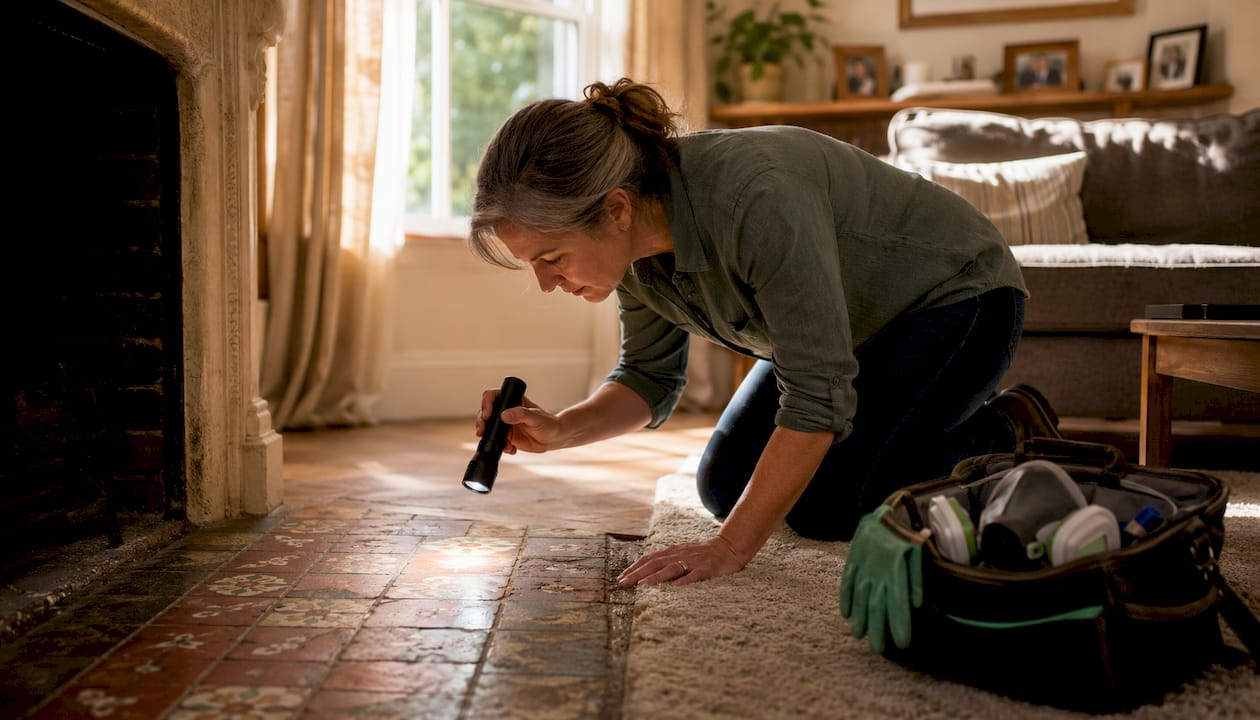
If your home was built before 1985 and you’re planning any flooring work, the short answer is this: do not disturb those tiles until you have a lab result in hand. If that result comes back positive, licensed asbestos abatement is the recommended default for removal in Canada. A narrow exception exists for intact, non-friable tiles in owner-occupied single-family homes, but even that exception requires strict wet-method procedures, proper disposal documentation, and compliance with provincial rules such as Ontario Regulation 278/05. The practical path forward is straightforward: arrange accredited bulk sampling, review the lab result with a qualified inspector, then choose between encapsulation (if tiles are intact and stable) or hiring a certified abatement contractor for removal.
Asbestos fibres cause mesothelioma and asbestosis, both irreversible. The risk is not from tiles sitting undisturbed on your floor. It is from breaking, scraping, or grinding them. That distinction drives every decision in this guide.
Table of Contents
-
How do you know if your floor tiles or mastic contain asbestos?
-
How does asbestos testing work in Canada, and what should you ask for?
-
Can you remove asbestos floor tiles yourself, or do you need a licensed contractor?
-
What does a licensed abatement contractor actually do during removal?
-
What are the disposal rules and regulatory requirements in Canada?
-
How do you hire a licensed asbestos abatement contractor in Canada?
-
What is the typical timeline, and when can you reoccupy the space?
-
Why hire a certified abatement contractor: Msnenvironmental’s credentials and process
How do you know if your floor tiles or mastic contain asbestos?
Age is the single most reliable indicator. Vinyl asbestos tiles (VAT) were manufactured and installed widely in Canada from the 1950s through the early 1980s. The most common sizes were 9×9 inches and 12×12 inches. Sheet vinyl with an asbestos-containing paper or felt backing was also standard in kitchens and bathrooms through the same era. If your home was built or renovated before 1985, any resilient flooring deserves suspicion.
Visual clues that raise the likelihood of asbestos content:
-
Tile size: 9×9-inch tiles are almost always from the VAT era; 12×12-inch tiles from before 1980 carry a high probability.
-
Colour and pattern: Speckled, marbled, or solid muted tones (tan, grey, dark green, burgundy) were the dominant VAT aesthetics.
-
Thickness: VAT tiles are typically 3/32 to 1/8 inch thick and feel noticeably denser than modern vinyl.
-
Crumbling edges or brittleness: Tiles that chip at the corners or crumble when touched are more likely to release fibres if disturbed.
-
Black adhesive (mastic) underneath: Black mastic under vintage tiles frequently contains higher asbestos concentrations than the tile itself and is brittle. This adhesive is commonly the highest remediation risk and cost driver on a job.
-
Paper or felt backing on sheet vinyl: Asbestos-backed sheet vinyl has a grey or tan fibrous layer bonded to the underside of the decorative surface.
None of these signs are definitive on their own. Photos can help you communicate what you’re seeing to a professional, but they cannot confirm asbestos content. Only a lab can do that.
Pro Tip: Never pry up a corner of a tile or scrape at the mastic to “check” for fibres. That physical disturbance is exactly what releases asbestos into the air. Leave the material intact and arrange testing instead.
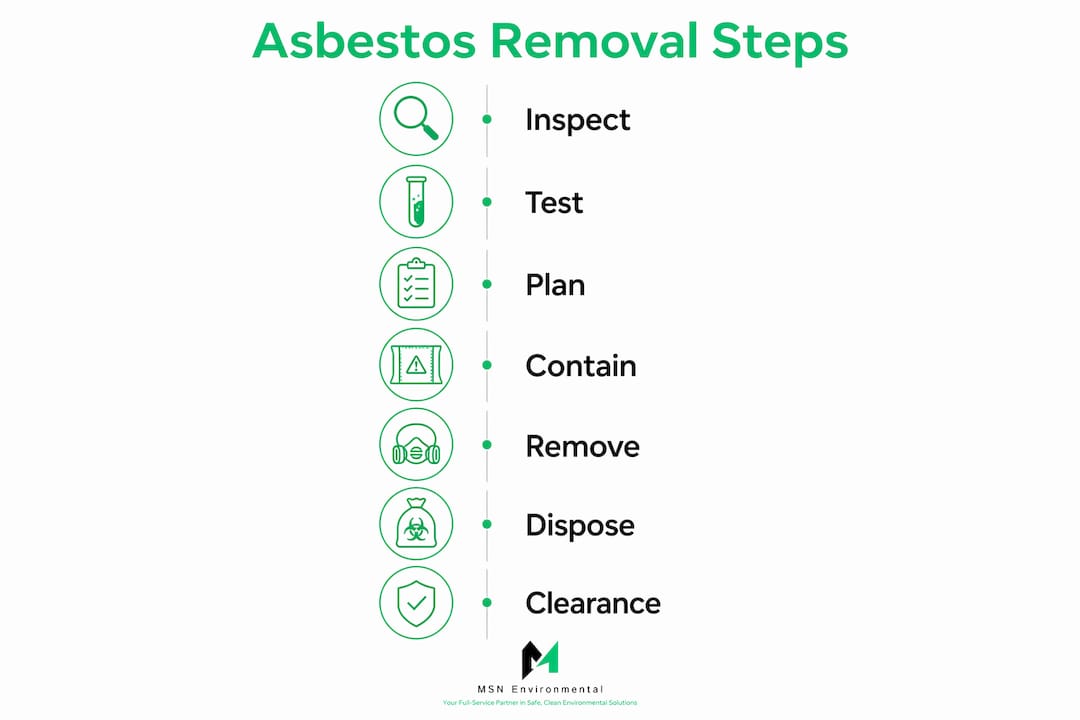
How does asbestos testing work in Canada, and what should you ask for?
A bulk sample is a small physical piece of the suspect material, collected and sent to an accredited laboratory for analysis under polarised light microscopy (PLM). The lab identifies whether asbestos fibres are present and, if so, what percentage. For floor tile work, you need separate samples of both the tile and the mastic, because abatement experts confirm the adhesive is often more hazardous than the tile itself.
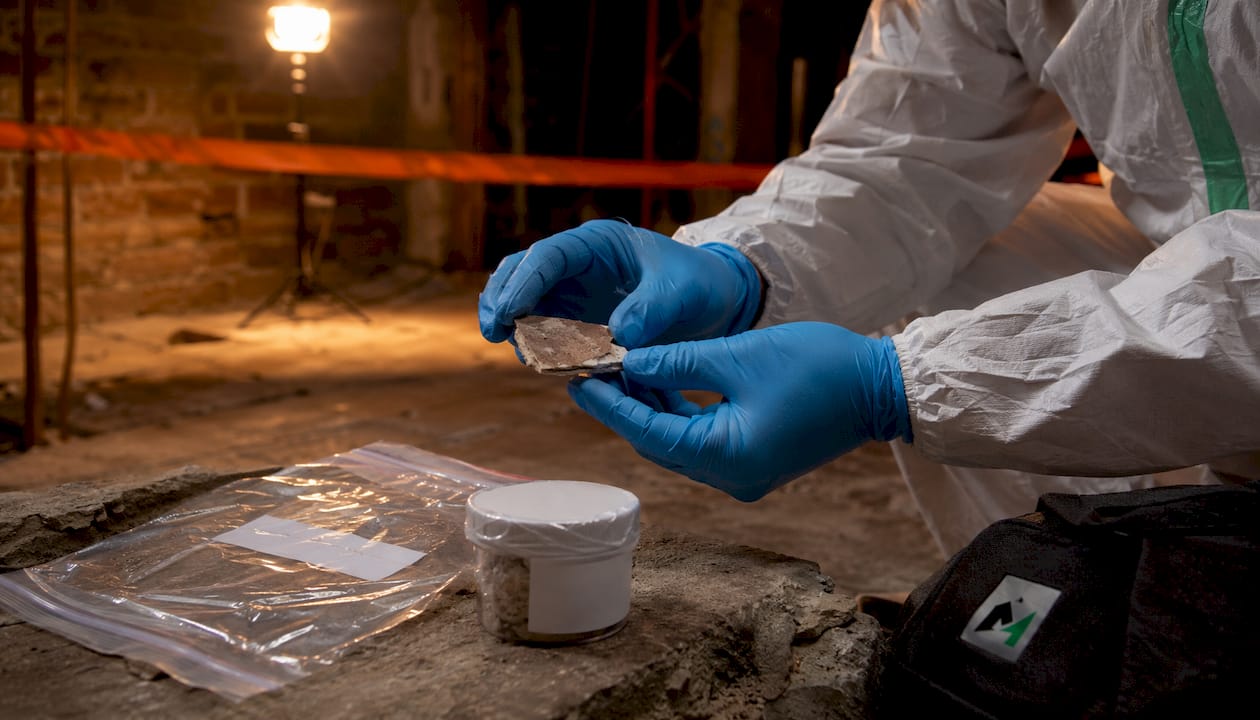
Lab accreditation matters. In Canada, look for laboratories accredited under the Standards Council of Canada (SCC) or a provincial equivalent. An accredited lab follows documented chain-of-custody procedures, which means the result is defensible for insurance, resale, and regulatory purposes.
Who should collect the sample? Homeowners can technically take a bulk sample themselves using wet methods and a utility knife, but the safer and more defensible approach is to hire a qualified environmental consultant or testing firm. A professional sampler knows how to isolate the area, minimise fibre release, complete the chain-of-custody form correctly, and package the sample for transport. For accredited testing and inspection services, MSN Environmental offers bulk and air sampling as part of its pre-renovation assessment process.
The practical workflow:
-
Contact an accredited lab or environmental consultant to discuss the scope.
-
Isolate the area and restrict access before any sampling.
-
Photograph the floor before any material is disturbed.
-
Collect samples using wet methods; complete the chain-of-custody form on site.
-
Package samples in sealed, labelled containers and deliver to the lab.
-
Receive results, typically within 3–10 business days depending on the lab and service level.
A negative result means no asbestos was detected at reportable levels. A positive result means you move to the next decision: encapsulate or remove. Keep the lab report permanently. Buyers, insurers, and future contractors will ask for it.
Pro Tip: Ask the lab for a written report that names the specific asbestos mineral type (chrysotile, amosite, crocidolite) and the percentage by weight. That detail affects disposal classification and contractor planning.
Can you remove asbestos floor tiles yourself, or do you need a licensed contractor?
The short answer is: generally, no. Removal of asbestos-containing floor tiles in Canada almost always requires a licensed abatement contractor, and in most commercial or multi-unit residential settings there is no legal DIY option at all.
The legal picture in Ontario is governed by Ontario Regulation 278/05 under the Occupational Health and Safety Act. That regulation classifies asbestos work by type and risk level and sets out who may perform it. If a removal method causes a non-friable material to become friable (crumbling, releasing fibres), the work is immediately reclassified as regulated asbestos work requiring a licensed contractor, proper containment, and waste manifesting. Other provinces have equivalent regulations; the specific thresholds and licensing requirements vary, so confirm the rules with your provincial regulator before planning any work.
The narrow owner-occupant exception: In some jurisdictions, an owner-occupant of a single-family home may remove a limited quantity of intact, non-friable vinyl asbestos tiles, provided the tiles can be lifted whole without breaking, wet methods are used throughout, and disposal rules are followed. Oregon DEQ guidance describes this approach in detail as a procedural reference. The key condition: if tiles begin to break or crumble during removal, work must stop immediately and a licensed contractor must take over. Even where DIY is technically permitted, disposal and documentation requirements still apply in full.
The health stakes are not abstract. Dry scraping, sanding, or pulverising asbestos-containing material can raise airborne fibre concentrations beyond safety thresholds almost instantly. Mesothelioma has a latency period of 20–50 years, which means the consequences of a poorly managed removal today may not appear until decades later. DIY methods typically lack the negative pressure units, HEPA filtration, and decontamination procedures that licensed contractors use as standard.
If your tiles are intact and stable, encapsulation is worth serious consideration. Covering intact tiles with new flooring or a properly applied sealant avoids disturbance entirely and can save 40–60% of the cost compared with full removal.
What does a licensed abatement contractor actually do during removal?
Understanding the professional process helps you evaluate quotes and know what documentation to expect. Here is the high-level workflow a certified contractor follows for asbestos floor tile abatement:
-
Pre-work site survey and testing. The contractor reviews existing lab results or arranges additional bulk sampling. A designated substance survey documents all suspect materials in the work area.
-
Containment and negative pressure. Poly sheeting isolates the work zone. Negative pressure for Type 1 abatement procedures, does not require negative air pressure, but does require are to be isolated, HVAC intake and difusers sealed. However if power tools are required to remove it, ork area must be upgraded for type 2 or 3 depending on a few factors on how the work will take place.
-
Wet-method tile lifting. Tiles are scored and lifted using hand tools while the surface is kept continuously wet. Wet methods are critical because moisture binds fibres and prevents them from becoming airborne. Power tools that abrade or grind are prohibited.
-
Mastic remediation. Mastic removal options include mechanical methods (shot blasting or scarifying with full containment), chemical softening, or encapsulation of residual adhesive. Mechanical methods require specialist equipment and typically increase containment requirements.
-
HEPA vacuuming, waste bagging, and manifesting. All debris is double-bagged in 6-mil polyethylene or placed in labelled asbestos disposal bags. A waste manifest documents the chain of custody from the job site to the licensed disposal facility.
-
Final HEPA cleaning and clearance air testing. After removal, the area is HEPA-vacuumed and wiped down. An independent air sample is collected and sent to an accredited lab. A written clearance certificate is issued only when results confirm fibre levels are below the applicable threshold.
Safety equipment used: P100 respirators (half-face or full-face), disposable Tyvek coveralls, gloves, and boot covers for workers. HEPA vacuums rated for asbestos work (not standard shop vacs). Negative pressure units and decontamination stations at the work zone entry.
Documents you should receive: itemised written quote, pre-work site plan, provincial notification (where required), chain-of-custody for waste manifests, and a written clearance certificate after work is complete.
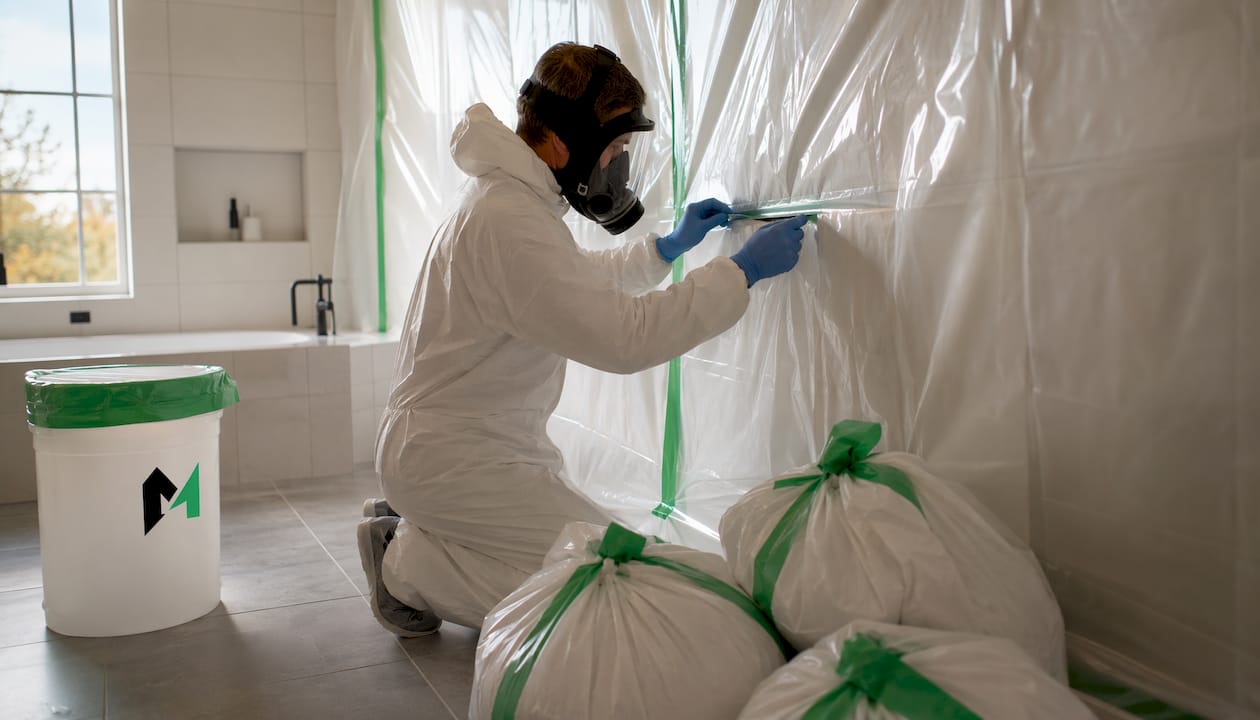
Pro Tip: Before work begins, ask the contractor for pre-work photographs of the containment setup and a written site plan. This makes the scope unambiguous and gives you a record if any dispute arises about what was included.
What does asbestos floor tile removal cost in Canada?
Cost ranges vary significantly depending on area, condition, and the complexity of mastic remediation. The figures below are illustrative Canadian-framed ranges based on available market data.
| Cost factor | Typical range (CAD) | Notes |
|---|---|---|
| Tile + mastic removal (per sq. ft.) | $5–$15 | Varies with friability, containment level, and access |
| Mastic remediation add-on (per sq. ft.) | $2–$5 | Higher if mechanical methods required |
| Small room | $500–$2,500 | Includes containment, labour, and basic disposal |
| Basement or multi-room job | $3,000+ | Scales with containment complexity and disposal fees |
| Clearance air testing | $600-
$1,000 |
Independent lab; required for occupancy sign-off |
| Disposal and landfill tipping fees | Variable | generally included in the price |
Primary cost drivers are area size, the condition and friability of the tile and mastic, the level of containment required (negative pressure adds cost), landfill tipping fees, and whether provincial notification or permits are required. Mastic remediation is frequently underestimated in initial quotes; always confirm it is explicitly included.
Quote checklist: A compliant estimate should itemise containment setup, labour, wet-method remediation, mastic work, waste manifesting and disposal, clearance air testing, and any notification fees. A quote that lumps all of these into a single line is a red flag. Ask specifically whether clearance testing is included or billed separately.
When comparing bids, verify that each contractor holds a valid provincial licence, has a documented disposal plan naming a licensed facility, and includes clearance testing in the scope. The lowest bid that omits clearance testing or disposal documentation is not actually the lowest total cost.
What are the disposal rules and regulatory requirements in Canada?
Asbestos waste in Canada is classified as a hazardous material and must be disposed of at a licensed facility that accepts asbestos-containing materials. The specific rules vary by province, but the core requirements are consistent.
Key documents to expect throughout the process:
-
Lab report confirming asbestos content and percentage for both tile and mastic.
-
Chain-of-custody form documenting sample collection, transport, and lab receipt.
-
Waste manifest tracking asbestos waste from the job site to the disposal facility. This is a legal document; keep a copy permanently.
-
Provincial notification (where required). In Ontario, certain asbestos work requires advance notification to the Ministry of Labour, Immigration, Training and Skills Development. Timelines and thresholds are set by Ontario Regulation 278/05.
-
Clearance certificate issued after independent air testing confirms the area is safe for reoccupation.
-
Final abatement report summarising the scope, methods, waste disposal, and clearance results.
How waste is classified affects disposal cost. Non-friable asbestos waste (tiles removed intact) generally attracts lower tipping fees than friable waste (broken tiles, loose mastic). If mastic is mechanically removed and becomes powdery or crumbled, it is reclassified as friable and must be handled and disposed of accordingly. EPA guidance on NESHAP applicability to floor tiles and mastic is a useful reference for understanding how federal notification and disposal thresholds work, though Canadian provincial rules govern in Canada.
Before scheduling removal, confirm with your contractor that the disposal facility they plan to use accepts asbestos-containing material and that the tipping fee is included in the quote. Some facilities have volume minimums or require advance booking.
Retain all documentation permanently. A documented abatement record provides an audit trail that many buyers and insurers now request, and it protects you if questions arise during a future sale or renovation.
How do you hire a licensed asbestos abatement contractor in Canada?
The hiring process is where most homeowners either protect themselves well or leave themselves exposed. A few focused questions separate qualified contractors from those who should not be on your shortlist.
Questions to ask every contractor:
-
What is your provincial licence or registration number, and can I verify it with the regulator?
-
Do you carry general liability insurance and WSIB (or provincial equivalent) coverage for your workers?
-
How many tile and mastic remediation projects have you completed? Can you provide references and before/after photos?
-
Will clearance air testing be performed by an independent party, or by your own team?
-
Who is your disposal facility, and will you provide a copy of the waste manifest after the job?
-
What is your written scope of work, and does it include a pre-work site plan?
Red flags to watch for:
-
Unwillingness to provide a licence number or proof of insurance before signing anything.
-
Offering to skip clearance testing to save money.
-
No written scope of work or site plan.
-
Pressure to start immediately without a pre-work inspection.
Get at least two written, itemised quotes. Verify each contractor’s licence directly with the provincial regulator (in Ontario, the Ministry of Labour, Immigration, Training and Skills Development maintains a list of licensed asbestos abatement contractors). Ask for sample clearance certificates from past jobs so you can see what the final documentation looks like.
Pro Tip: Require the contractor to provide pre-work photographs of the containment setup before any tiles are lifted. This creates an unambiguous record of what was in scope and protects you if a dispute arises about the work area.
What is the typical timeline, and when can you reoccupy the space?
Planning around an abatement project is easier when you know where the time actually goes. Most of the calendar is consumed by testing and scheduling, not the physical removal itself.
| Phase | Typical duration | Notes |
|---|---|---|
| Bulk sampling and lab turnaround | 1–2 weeks | Rush service available at most labs for a fee |
| Contractor quotes and selection | 1–2 weeks | Allow time to verify licences and compare itemised bids |
| Provincial notification (if required) | Up to 10 business days advance notice | Confirm with contractor; some work is exempt |
| Containment setup | Half day to 1 day | Depends on area size and access |
| Tile and mastic removal | 1–3 days | Scales with area, layers, and mastic condition |
| Clearance air testing and lab turnaround | 2–5 business days | Independent lab; cannot be rushed without premium service |
| Final report and clearance certificate | 1–3 business days after results |
What causes delays: Unexpected friability (tiles that break during removal trigger reclassification and additional containment), additional mastic work that was not visible in the pre-work inspection, permitting or notification lead times, and landfill availability during busy periods.
Reoccupation checklist: Do not reoccupy the space until you have a written clearance certificate in hand, the area has received a final HEPA cleaning, and there is no visible debris or dust. For sensitive occupants (infants, elderly, immunocompromised individuals), a conservative approach is to wait until the clearance certificate is received and the space has been ventilated for at least 24 hours.
Pro Tip: Plan relocation of pets, babies, and anyone with a respiratory condition before work begins, not after. Containment is effective, but the safest approach is to keep vulnerable occupants out of the building entirely during active removal.
Why hire a certified abatement contractor: MSN Environmental’s credentials and process
Choosing a contractor is not just about price. The documentation trail a certified contractor creates protects your health, your property value, and your legal standing.
MSN Environmental provides asbestos abatement and removal services across Ontario, including residential, commercial, and industrial properties. The company’s scope covers the full abatement cycle: pre-renovation designated substance surveys, accredited bulk and air sampling, licensed tile and mastic remediation, waste manifesting, and independent clearance air testing. Interior demolition is also available where floor removal requires subfloor work.
Trust signals that matter when evaluating any contractor, and that MSN Environmental maintains:
-
Provincial licensing and registration for asbestos abatement work in Ontario.
-
WSIB coverage and general liability insurance for all workers and projects.
-
5M Liability and Pollution Insurance
-
Accredited lab partnerships for bulk sampling and clearance air testing, with chain-of-custody documentation on every job.
-
Written itemised quotes, pre-work site plans, and final abatement reports with clearance certificates.
To request an inspection or quote, have the following ready: property address, photographs of the floor (taken without disturbing the tiles), any prior lab results, and your target renovation or sale date. MSN Environmental serves Toronto, Hamilton, Kitchener, Waterloo, Cambridge, London, and surrounding communities across Ontario.
Key takeaways
Licensed asbestos abatement is the legally compliant, health-protective default for floor tile removal in Canada; encapsulation is the lower-cost alternative when tiles are intact and undamaged.
| Point | Details |
|---|---|
| Test before you touch anything | Arrange accredited bulk sampling of both tile and mastic before any renovation work begins. |
| Encapsulation saves money on intact floors | Covering stable tiles avoids disturbance and can cost 40–60% less than full removal. |
| Mastic is often the bigger risk | Black adhesive under vintage tiles frequently contains higher asbestos concentrations than the tile itself. |
| Documentation protects your property | Lab reports, waste manifests, and clearance certificates are required for resale and insurance purposes. |
| Msnenvironmental for certified removal | Msnenvironmental provides licensed abatement, accredited testing, and clearance certification across Ontario. |
The case for not cutting corners on asbestos abatement
There is a version of this decision that homeowners talk themselves into: the tiles look fine, they’ve been there for 40 years, and a quick pry-up seems harmless. I understand the logic. What that reasoning misses is that asbestos is not a problem until it is, and the moment it becomes a problem is the moment you disturb it without proper controls.
The documentation argument is the one I find most underappreciated. A properly documented abatement job, with a pre-renovation designated substance survey, a chain-of-custody lab report, waste manifests, and a clearance certificate, does something that no DIY removal can replicate: it gives the next buyer, the next insurer, and the next contractor a clean, verifiable record. Undocumented removal leaves a gap that sophisticated buyers and their lawyers notice. In a competitive real estate market, that gap can cost more than the abatement itself.
The encapsulation option is also underused. Where tiles are intact and not in a high-traffic area subject to future renovation, covering them in place is a legitimate, code-compliant choice that eliminates the disturbance risk entirely. The instinct to “get rid of it” is understandable, but it is not always the safest or most economical path.
MSN Environmental can help you move forward safely
When you are ready to stop guessing and get a clear picture of what you are dealing with, MSN Environmental is the certified option for homeowners and property managers across Ontario. The process starts with a visual inspection and sampling plan, not a hard sell.
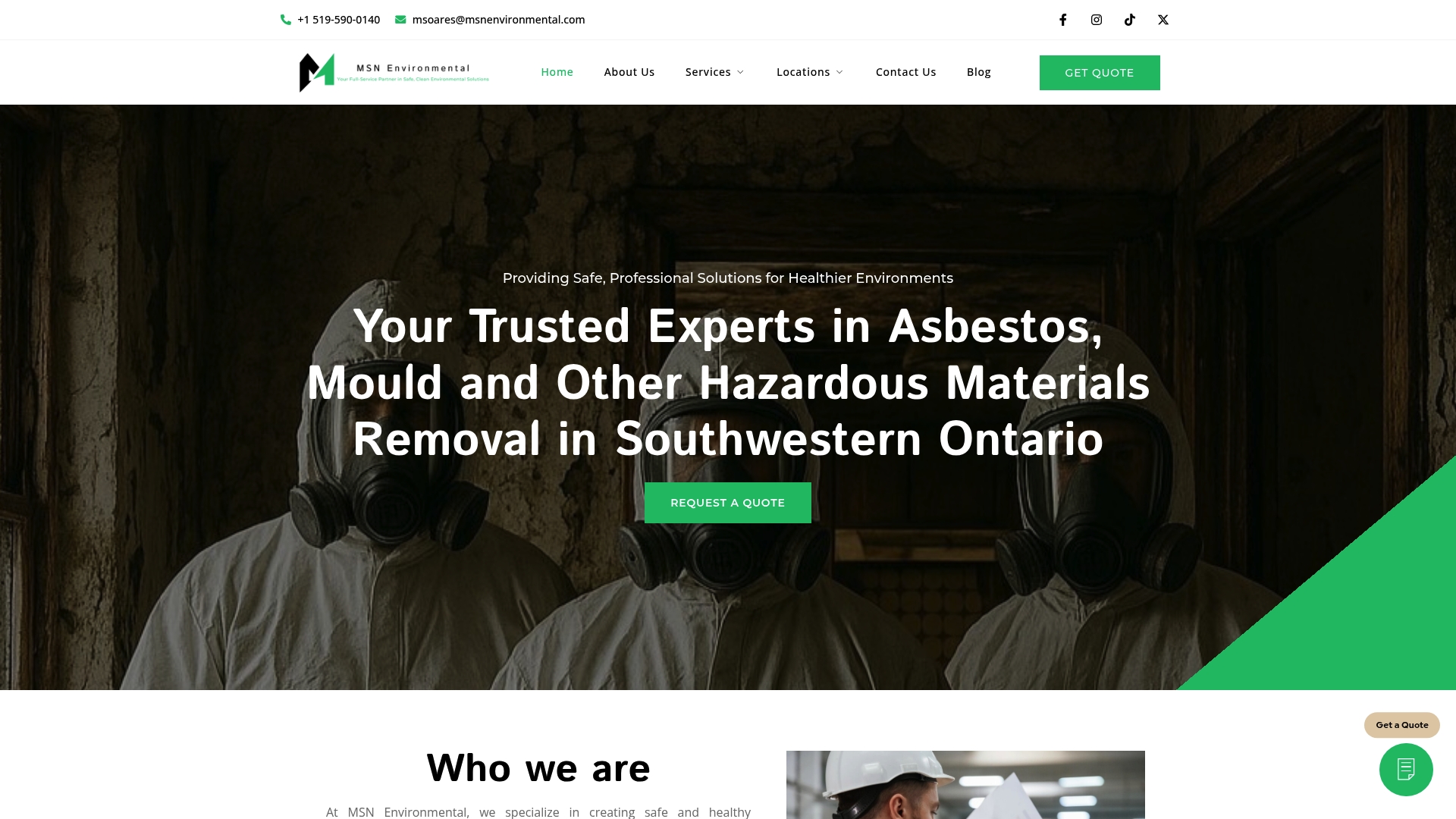
MSN Environmental handles the full scope: accredited testing and inspection, licensed tile and mastic abatement, waste manifesting, and independent clearance air testing. Before your first site visit, have your property address, floor photographs, any existing lab results, and your target renovation dates ready. That information lets the team arrive prepared to assess the scope accurately and provide an itemised quote the same day.
There are 7 strong reasons to hire certified professionals for hazardous material removal, and the clearance certificate you receive at the end of a properly managed job is one of the most valuable documents your property file can hold. To book an inspection or request a quote, visit msnenvironmental.com/asbestos-removal.
Authoritative Canadian and international sources to consult
Use these references to verify regulatory requirements, confirm disposal rules, and find licensed contractors in your province.
Federal and provincial regulators:
-
Health Canada publishes guidance on asbestos in buildings and the Canadian Environmental Protection Act regulatory framework for asbestos prohibition and management.
-
Ontario Ministry of Labour, Immigration, Training and Skills Development administers Ontario Regulation 278/05 and maintains the list of licensed asbestos abatement contractors. Use this to verify any contractor’s licence before signing a contract.
-
OSHA (U.S.) publishes the asbestos standard for construction work (29 CFR 1926.1101), which is a useful procedural reference even though Canadian provincial regulations govern in Canada.
Practical guidance documents:
-
HSE A23 (UK Health and Safety Executive): Removing asbestos-containing floor tiles and mastic is a detailed good-practice document covering wet methods, HEPA vacuuming, and waste bagging. Directly applicable as a procedural reference for Canadian contractors.
-
EPA NESHAP applicability: The EPA guidance on floor tiles and mastic explains how U.S. federal notification and disposal thresholds apply, useful context for understanding the regulatory logic behind Canadian rules.
-
Oregon DEQ non-friable VAT guidance: A clear, procedural owner-removal reference illustrating the narrow conditions under which homeowner removal may be permitted and the wet-method steps required.
Accredited labs: Search the Standards Council of Canada (SCC) directory for accredited environmental testing laboratories in your province. Confirm the lab holds accreditation for asbestos bulk analysis by PLM before submitting samples.
Keep your lab report, waste manifests, and clearance certificate in your property file permanently. These documents are increasingly requested by buyers, mortgage lenders, and insurers, and they are the clearest evidence that the work was done correctly.
This article provides general information about asbestos floor tile removal in Canada and is not a substitute for professional advice. Regulatory requirements vary by province and project type. Confirm current rules with your provincial regulator or a qualified environmental professional before beginning any work.