

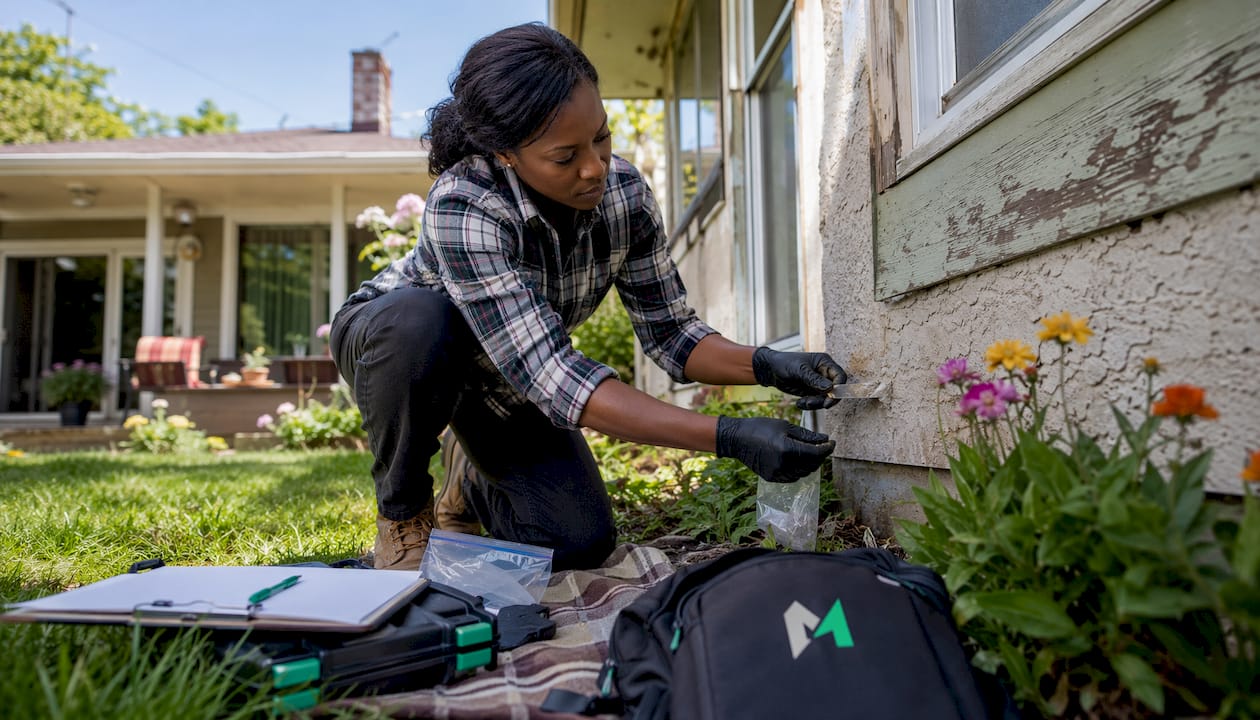
If you’re buying a home built before 1980 in Canada, ordering a professional asbestos inspection before closing is one of the smartest moves you can make. Lab analysis is the only definitive way to confirm asbestos, and certified sampling preserves the chain-of-custody documentation you’ll need for permits, contractor bids, and any post-closing negotiation.
Your immediate action checklist:
- Ask your real estate agent to request seller permission for destructive sampling during the inspection period.
- Hire a certified asbestos inspector (separate from your standard home inspector) as soon as your offer is accepted.
- Specify in your inspection contingency that you need access for bulk sampling and enough time for lab turnaround, typically 5–10 business days.
- Request all previous asbestos reports, renovation permits, and environmental records from the seller.
- Treat any suspect material as asbestos-containing until lab results say otherwise.
Testing before closing clarifies your obligations and renovation budget rather than automatically triggering removal. That distinction matters when you’re at the negotiating table.
Table of Contents
- Why asbestos matters to Canadian homebuyers
- When should you request asbestos testing during a purchase?
- How professional asbestos testing works in Canada
- What an asbestos report shows and how to read it
- How test results affect negotiation, closing, permits, and resale
- How to choose a certified asbestos inspector
- What does asbestos testing and abatement typically cost?
- How MSN Environmental supports buyers through the process
- Key takeaways
- The part most buyers get wrong
- Get certified asbestos testing and abatement from MSN Environmental
- Useful sources for further reading
Why asbestos matters to Canadian homebuyers
Asbestos fibres cause serious, irreversible lung disease. Prolonged exposure is linked to asbestosis and mesothelioma, a rare but aggressive cancer. The critical point for buyers: the risk comes from disturbance, not from mere presence. Intact, undisturbed asbestos-containing materials generally pose little immediate hazard. The moment you renovate, drill, or demolish, that changes.
Older Canadian homes contain asbestos in more places than most buyers expect:
- Popcorn (stipple) ceilings — common in homes built through the 1980s
- 9×9 inch vinyl floor tiles and their adhesive backing
- Pipe and duct insulation wrap
- Vermiculite attic insulation (often sourced from Libby, Montana, which carried elevated contamination)
- Transite siding and roofing panels
- Drywall joint compound applied before the mid-1980s
- Boiler and furnace insulation
The condition of the material matters as much as its presence. Friable materials crumble easily under hand pressure and release fibres readily; they require more urgent attention. Non-friable materials are bound in a matrix (vinyl, cement) and are generally stable unless cut or sanded. A standard home inspector can flag suspect materials, but cannot legally confirm asbestos without certified lab sampling. That’s why a separate asbestos assessment is worth scheduling.
Pro Tip: Vermiculite attic insulation deserves special caution. Do not disturb it, and do not attempt DIY sampling — the act of collecting a sample can release fibres. Budget for a licensed professional assessment if you see it.
When should you request asbestos testing during a purchase?
Timing is everything in a real-estate transaction. The inspection period is your window, and it closes fast.
- Right after your offer is accepted. Book a certified asbestos inspector the same day your conditions are waived or your inspection period begins. Lab turnaround adds days to the clock.
- Pre-offer, if the seller agrees. Some sellers will allow a pre-offer assessment, especially in a slower market. Coordinate early through your agent — sellers who are asked late in the process often say no to destructive sampling.
- Any time renovation is planned. If you intend to renovate, testing is not optional. Many Ontario municipalities require an asbestos survey before issuing a renovation or demolition permit.
- When visible suspect materials are present. Popcorn ceilings, old floor tiles, or pipe wrap visible during a showing are enough reason to test.
- When the home was built before 1980. Construction practices before 1980 routinely incorporated asbestos-containing products. Homes built between 1980 and 1990 can also contain asbestos, though less commonly.
- When a household member has respiratory health concerns. Even managed-in-place materials warrant documentation if someone in the home is immunocompromised or has existing lung conditions.
When writing your inspection contingency, include three things: explicit permission for destructive sampling (small core or chip samples), a timeline that accounts for lab turnaround, and a clause allowing you to renegotiate or withdraw if results are material to the purchase price.
How professional asbestos testing works in Canada
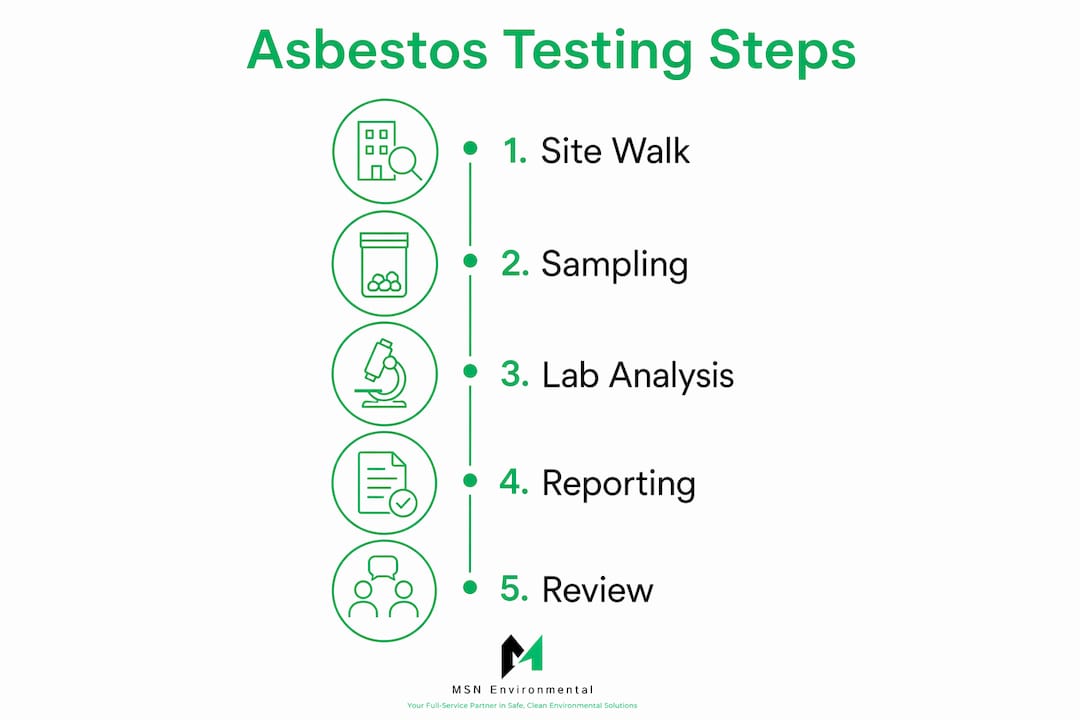
A certified asbestos assessment follows a structured process, and understanding each step helps you evaluate quotes and ask the right questions.
The assessment process, step by step
The inspector starts with a site walk and background review: property age, renovation history, and any existing records. They then conduct a visual risk assessment, identifying suspect materials by location, type, and condition. From there, a sampling plan is developed before any physical collection begins.
Bulk sampling involves removing a small physical piece of suspect material (a chip of floor tile, a scraping of ceiling texture) and sealing it in a labelled container. This is the standard method for most pre-purchase assessments and renovation planning. Air sampling measures airborne fibre concentrations and is used after abatement to confirm clearance, or when friable materials are already disturbed. For most buyers, bulk sampling is what you need first.
| Sampling type | When it’s used | What it tells you |
|---|---|---|
| Bulk (material) sampling | Pre-purchase assessment, renovation planning | Whether a specific material contains asbestos and at what percentage |
| Air sampling | Post-abatement clearance, active disturbance concern | Airborne fibre concentration in the space |
| Soil/debris sampling | Exterior transite, demolition debris | Contamination of outdoor areas |
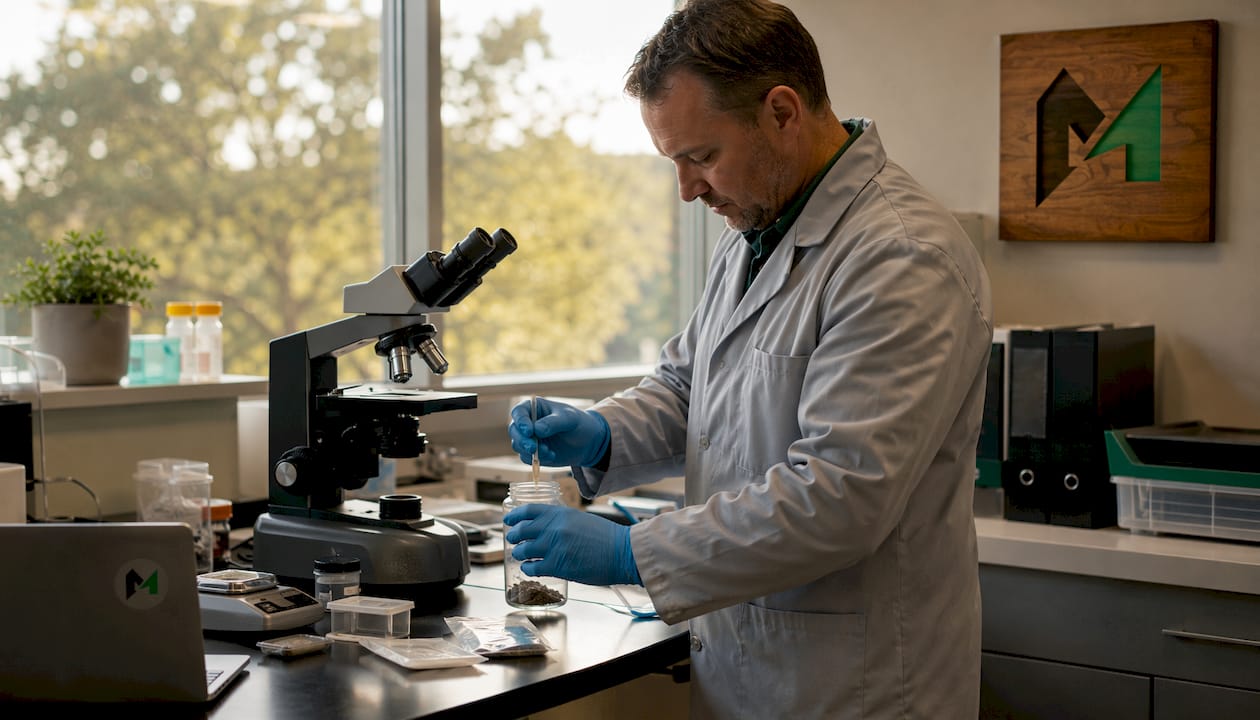
Samples go to an accredited laboratory with a documented chain-of-custody form. In Canada, labs are accredited through bodies such as the Standards Council of Canada (SCC) or through programs aligned with AIHA-LAP (American Industrial Hygiene Association Laboratory Accreditation Programs). The lab uses polarized light microscopy (PLM) for most bulk samples. When PLM results are inconclusive, transmission electron microscopy (TEM) provides higher resolution and is used for more complex or contested findings.
Pro Tip: Always ask your inspector for the lab’s accreditation certificate and the chain-of-custody form with your report. Without those two documents, the results may not be accepted by a permit office or a contractor’s insurer.
What an asbestos report shows and how to read it
A valid asbestos report is more than a pass/fail result. Here’s what it should contain and what each element means for your purchase.
Elements every report must include:
- Sample ID and exact location in the property
- Percentage of asbestos detected (by mineral type: chrysotile, amosite, crocidolite, etc.)
- Analytical method used (PLM or TEM)
- Lab name, accreditation number, and analyst signature
- Chain-of-custody documentation
- Material condition (friable or non-friable)
- Recommended action (manage in place, encapsulate, or abate)
Percentage matters, but not in isolation. A material with a low asbestos percentage that is friable and in poor condition is more urgent than a higher-percentage non-friable tile that is intact and undisturbed. Undisturbed, intact materials are often managed in place rather than removed immediately. The report’s recommended action column is the most practical guide for your next decision.
Red flags that should prompt immediate negotiation or abatement planning:
- Friable materials in poor or deteriorating condition
- Asbestos confirmed in HVAC systems or areas with air circulation
- Widespread contamination across multiple material types
- Vermiculite attic insulation confirmed as asbestos-containing
- Any material that will be disturbed by your planned renovations
Statistic to know: Laboratory confirmation is required for legal and permitting purposes in most Canadian jurisdictions — a visual assessment alone is not sufficient for contractor compliance or permit issuance.
How test results affect negotiation, closing, permits, and resale
A positive asbestos finding does not kill a deal. It gives you options, and how you use them depends on the material’s condition, location, and your renovation plans.
Your negotiation options when asbestos is confirmed:
- Price reduction to cover abatement costs, with quotes in hand as leverage
- Seller-paid abatement completed before closing, with clearance testing included
- Escrow holdback releasing funds to the buyer once abatement is certified complete
- Conditional closing with an agreed abatement schedule and timeline
- Walking away, if your contingency allows and the scope of contamination is material
Permit implications are significant. Many Ontario municipalities require a designated substance survey (DSS) before issuing a renovation or demolition permit. If asbestos is confirmed, licensed abatement must be completed and documented before structural work can begin. Skipping this step can void your contractor’s insurance and expose you to liability.
On the mortgage and insurance side, most lenders do not automatically decline a property with asbestos, but some insurers may flag it during underwriting, particularly for older homes with friable materials. Resale is also affected: disclosure obligations vary by province, and a clearance certificate from a licensed abatement contractor adds real value to your listing when you eventually sell.
Pro Tip: Consult a real estate lawyer or your agent before finalising any abatement-related condition in your offer. Provincial disclosure rules and permit requirements differ across Ontario, British Columbia, Alberta, and Quebec — what’s standard in one province may not apply in another.
Note that federal rules in Canada do not impose a universal residential disclosure requirement for asbestos; provincial and municipal rules govern what sellers must disclose and when.
How to choose a certified asbestos inspector
Not every inspector who offers asbestos testing has the credentials your transaction actually requires. Here’s how to vet them properly.
Credentials to verify:
- Provincial licensing where required (Ontario’s Occupational Health and Safety Act governs asbestos work on construction projects)
- Certified Industrial Hygienist (CIH) designation or equivalent training in asbestos assessment
- Errors-and-omissions (E&O) insurance and general liability coverage
- Named accredited lab partner with documented chain-of-custody procedures
- Experience with pre-purchase residential assessments specifically
Questions to ask before hiring:
- How many samples will you collect, and how do you determine homogeneous areas?
- Which accredited lab do you use, and can I see their accreditation certificate?
- What is your standard turnaround time from sampling to written report?
- Does your report include chain-of-custody documentation and lab analyst signatures?
- Do you offer clearance testing after abatement, or do you work with a separate assessor?
- Have you completed pre-purchase surveys for real-estate transactions before?
On sampling scope: a single-sample quick check tells you whether one material contains asbestos. An AHERA-style multi-sample survey, where multiple samples are taken from each homogeneous area, produces the documentation that permit offices and abatement contractors require for renovation planning. The latter costs more but eliminates mid-project surprises. For a home you’re buying with renovation plans, the more thorough approach is worth the extra cost.
What does asbestos testing and abatement typically cost?
Cost ranges vary by scope, property size, and region. Here’s a realistic picture for Canadian buyers.
Typical cost ranges:
- Professional bulk sampling (limited scope, a few samples) costs a few hundred dollars, plus lab fees
- AHERA-style multi-sample survey for renovation planning can cost several hundred to over a thousand dollars depending on property size
- Per-sample lab fee (PLM) may be included or charged separately
- TEM analysis (when PLM is inconclusive) involves additional costs per sample
- Asbestos abatement: varies widely by material type, volume, and access; get at least three quotes
- Clearance air testing after abatement typically costs several hundred dollars per area tested
For context, DIY mail-in kits cost roughly $30–$50 per sample, but they are not appropriate for real-estate transactions because they lack the chain-of-custody documentation that permits and contractors require.
Timeline to plan for:
- Inspector scheduling usually requires a few business days in most urban Ontario markets
- Lab turnaround typically takes several business days, with rush service available for an additional fee
- Abatement contractor quotes typically take several business days after report delivery
- Abatement completion: depends on scope, from one day for a small area to several weeks for whole-home removal
- Clearance testing and certificate issuance usually occur within several business days after abatement
Post-report action checklist:
- Obtain at least three abatement quotes with written scope of work
- Confirm the abatement contractor is licensed under Ontario’s OHSA regulations
- Schedule clearance air testing with an independent assessor (not the abatement contractor)
- Update your inspection contingency timeline if lab results arrive close to the deadline
- Confirm permit requirements with your municipality before any work begins
Pro Tip: Rush lab turnaround is available from most accredited labs for an added fee. If your inspection period is tight, ask your inspector to request 48-hour rush processing when samples are submitted.
How MSN Environmental supports buyers through the process
A qualified abatement contractor does more than remove material. For buyers, the value is in the documentation trail from first assessment through to clearance certificate.
Here’s what a professional engagement with a certified contractor like MSN Environmental typically looks like:
- Inquiry and scoping: You describe the property, its age, and your concerns. The contractor advises on the appropriate assessment type.
- Site risk assessment: A certified technician conducts a visual inspection and identifies suspect materials.
- Bulk sampling: Samples are collected following chain-of-custody protocols and submitted to an accredited lab.
- Written lab report: You receive a report with sample IDs, asbestos percentages, material condition, lab accreditation details, and recommended actions.
- Abatement plan and quote: If removal is needed, a detailed scope of work and timeline is provided.
- Licensed abatement: Work is completed by trained technicians using appropriate containment and disposal procedures compliant with Ontario regulations.
- Clearance testing and certificate: Independent air testing confirms the space is safe before re-occupancy or renovation continues.
Trust signals to demand from any contractor:
- Written lab report with the lab’s accreditation number and analyst signature
- Chain-of-custody form accompanying every sample
- Technician certifications and proof of provincial licensing
- General liability and E&O insurance certificates
- Before-and-after air clearance testing with a written clearance certificate
MSN Environmental provides asbestos testing and assessment services alongside licensed abatement and clearance testing for residential and commercial properties across Ontario. Their technicians work to Ontario OHSA standards, and their documentation is structured to meet permit office and mortgage underwriter requirements.
Pro Tip: Ask any contractor you’re considering whether their clearance testing is performed by an independent assessor. The abatement contractor and the clearance assessor should be separate parties — that independence is what makes the clearance certificate credible to insurers and permit offices.
Key takeaways
Pre-purchase asbestos testing is a transaction tool, not just a safety exercise: it gives you documentation, negotiating leverage, and a renovation budget before you close.
| Point | Details |
|---|---|
| Test before closing | Order certified bulk sampling during the inspection period for any pre-1980 home or planned renovation. |
| Lab analysis is definitive | Visual assessments triage risk; only accredited lab results with chain-of-custody are accepted for permits and abatement. |
| Condition drives urgency | Friable, deteriorating materials require abatement planning; intact non-friable materials are often managed in place. |
| Results open negotiation | Confirmed asbestos gives you grounds for a price reduction, seller-paid abatement, or an escrow holdback. |
| MSN Environmental | Provides certified sampling, licensed abatement, and clearance testing across Ontario with full documentation for permits and resale. |
The part most buyers get wrong
There’s a version of this conversation that goes: “The inspector didn’t mention asbestos, so we’re probably fine.” That logic has cost buyers real money. A standard home inspection is not an asbestos assessment. The inspector flags what looks suspicious; they cannot confirm anything without lab sampling, and most don’t collect samples at all.
The other mistake is treating a positive result as a deal-breaker. Asbestos in a 1965 bungalow is not a surprise — it’s almost expected. What matters is the condition of the material and what you’re planning to do with the house. A non-friable vinyl tile in a basement that you’re not touching is a management issue, not an emergency. A deteriorating pipe wrap in a mechanical room you’re renovating is a different conversation entirely.
The buyers who handle this well are the ones who get the assessment done early, read the report carefully, and use the findings to negotiate rather than panic. Documentation is the asset. A clearance certificate from a licensed contractor is worth more at resale than a verbal assurance that “it was all taken care of.”
Get certified asbestos testing and abatement from MSN Environmental
When asbestos findings could affect your closing, you need a contractor whose documentation holds up — with permit offices, mortgage underwriters, and future buyers.
MSN Environmental offers the full scope Ontario homebuyers need: certified bulk and air sampling, written lab reports with accredited chain-of-custody documentation, licensed abatement compliant with Ontario OHSA standards, and independent clearance testing with a written certificate. Their asbestos removal services cover residential and commercial properties across Kitchener, Toronto, Hamilton, Waterloo, London, Cambridge, and surrounding communities. Whether you need a targeted pre-purchase assessment or a full abatement and clearance package, the process starts with a single call.
Contact MSN Environmental to schedule your assessment and get a written quote before your inspection period closes.
Useful sources for further reading
These authoritative sources cover health guidance, lab accreditation standards, and provincial regulations relevant to asbestos in Canadian real estate.
| Source | Best used for |
|---|---|
| Health Canada — Asbestos | Health risk guidance and federal policy on asbestos in residential settings |
| Canadian Centre for Occupational Health and Safety (CCOHS) | Occupational exposure limits, handling guidelines, and worker safety standards |
| Ontario Ministry of Labour — Asbestos on Construction Projects | Provincial OHSA requirements for asbestos surveys, permits, and licensed abatement in Ontario |
| Standards Council of Canada (SCC) | Lab accreditation standards and accredited testing body directory for Canada |
| Asbestos Safety and Eradication Agency (ASEA) — Australia | Detailed guidance on residential assessments, report contents, and disclosure (Australian context, useful for methodology reference) |
- Health Canada is your starting point for understanding what levels of exposure are considered harmful and what the federal government recommends for residential settings.
- CCOHS provides detailed technical guidance on handling, sampling, and exposure limits that apply to contractors and assessors working in your home.
- Ontario Ministry of Labour sets out exactly which projects require a designated substance survey, what licensing abatement contractors must hold, and how clearance testing must be conducted.
- Standards Council of Canada lets you verify whether a lab your inspector uses is accredited to perform asbestos analysis in Canada.
This article provides general information for Canadian homebuyers and is not a substitute for professional legal, environmental, or real estate advice. Confirm current provincial rules with a qualified professional or the relevant regulatory authority for your specific situation.