

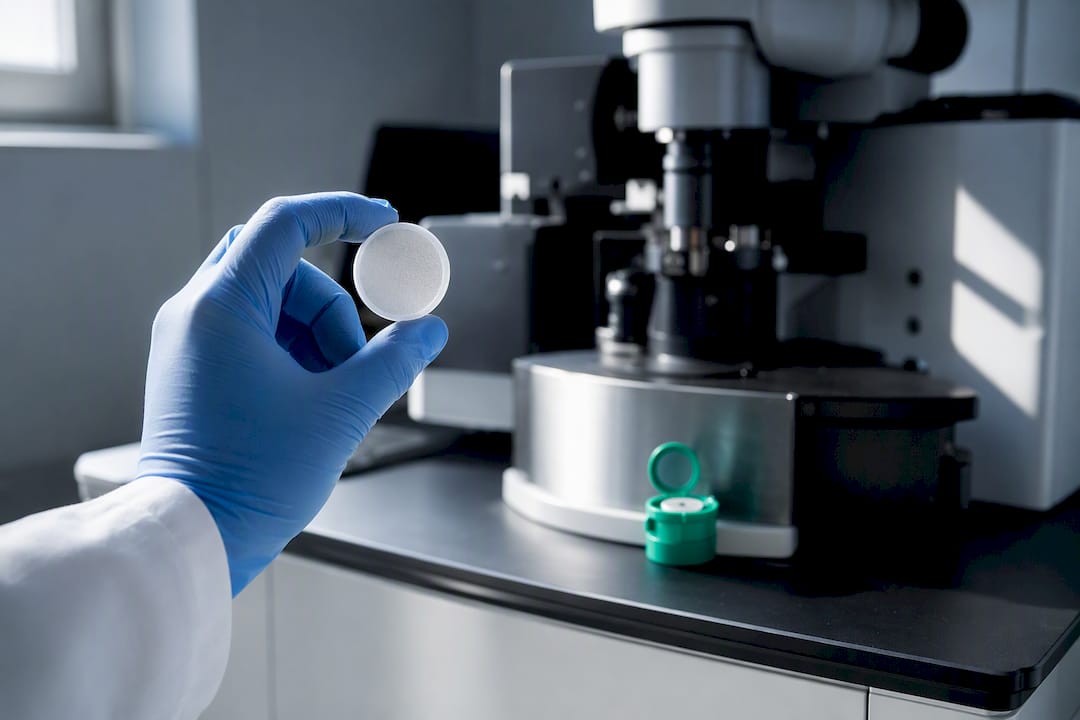
PCM counts fibres quickly and cheaply but cannot tell asbestos from any other fibre in the air. TEM identifies asbestos at far smaller sizes using electron microscopy, which is why it’s the method regulators and prudent building owners lean on for clearance testing. Use PCM for routine occupational monitoring where the fibre source is already known. Use TEM, or PCM with TEM confirmation, whenever reoccupancy decisions are on the line.
TL;DR:
- PCM is suitable for routine occupational monitoring when asbestos sources are known, but it cannot distinguish asbestos fibers from other airborne fibers.
- TEM provides definitive identification of asbestos fibers, detects thinner fibers missed by PCM, and is essential for clearance testing in sensitive environments.
- TEM results are generally higher than PCM counts for the same samples and should not be converted into each other’s equivalent figures due to variability.
- For final clearance or reoccupancy decisions, TEM or PCM with TEM confirmation is recommended, especially in schools, hospitals, and post-abatement settings.
- Proper sampling involves aggressive resuspension techniques, adequate sample volume, and choosing accredited labs to ensure results are reliable and legally defensible.
Table of Contents
- PCM basics: fast counting with a real blind spot
- TEM basics: what electron microscopy actually adds
- PCM vs TEM asbestos testing: how the two methods actually compare
- Which method to request for your project
- The sampling and lab details that decide whether results hold up
- Standards and regulatory expectations you should know
- How an accredited contractor actually applies these methods on-site
- Book air testing that matches the decision you’re making
- Sources
- FAQ
PCM basics: fast counting with a real blind spot
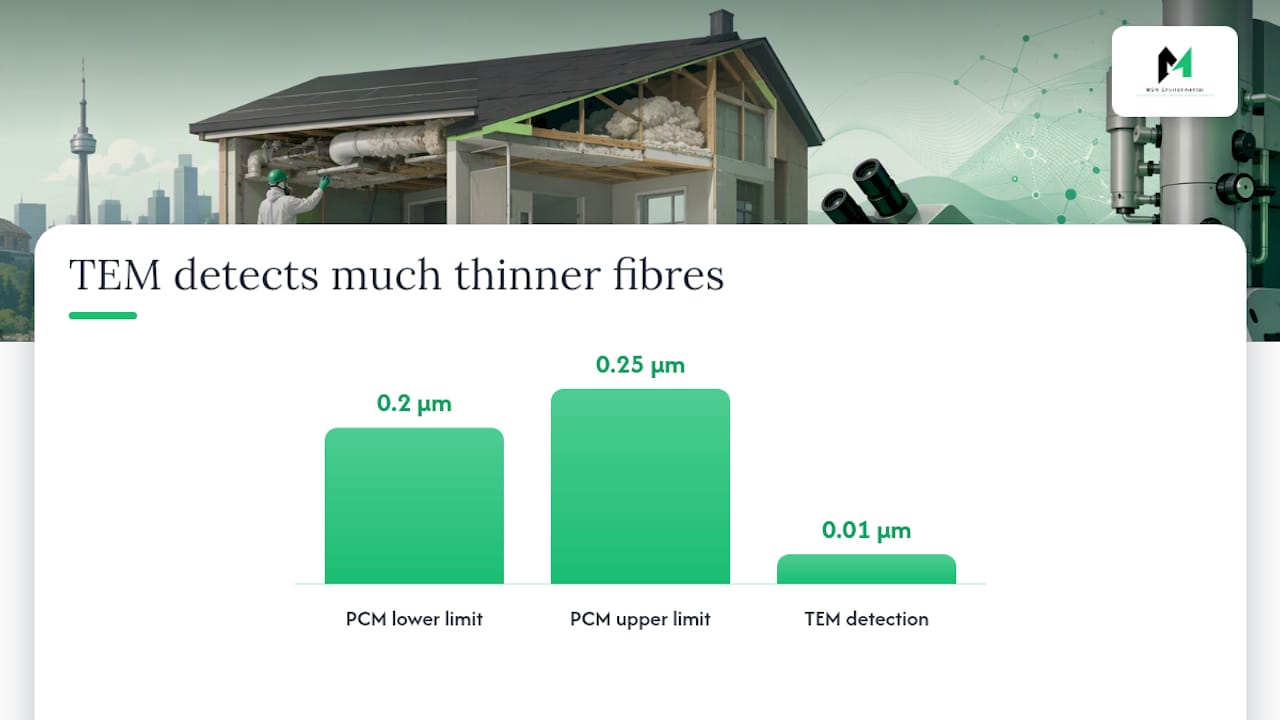
Phase Contrast Microscopy is an optical method, and NIOSH 7400 governs how technicians count fibres under the microscope. A fibre qualifies if it meets set length, width, and aspect ratio rules, roughly 3:1 or longer, and the microscope’s resolution floor sits around 0.2 to 0.25 microns in width. Anything thinner simply doesn’t register.
The catch is that PCM counts every fibre matching that shape, not just asbestos. Fibreglass, cellulose, synthetic carpet fibres, even some paper dust, can all pass as a “fibre” under the rules. That’s fine in a factory where asbestos is the known dominant material, but it’s a real problem in ordinary building air, where non-asbestos fibres are everywhere.
PCM earns its place for a few solid reasons:
- Results in hours, not days, since the counting happens on-site or at a nearby lab.
- Lower cost per sample than any electron microscopy method.
- Well suited to field screening during active occupational exposure monitoring.
- Long track record and universal lab familiarity with the NIOSH 7400 protocol.
TEM basics: what electron microscopy actually adds
Transmission Electron Microscopy magnifies samples thousands of times beyond what PCM can manage, and it detects fibres down to roughly 0.01 microns, about twenty times thinner than PCM’s resolution limit. That alone changes what shows up in a report.
The bigger advantage is identification. TEM pairs with energy dispersive X-ray analysis (EDXA) and selected area electron diffraction (SAED) to read a fibre’s chemical composition and crystal structure. That combination confirms whether a fibre is actually chrysotile, amosite, or another asbestos mineral, rather than just a fibre-shaped particle. ASTM D6281 lays out the counting and reporting procedures for TEM in ambient and building air, and NIOSH 7402 covers the same ground for occupational settings.
What that buys you:
- Definitive mineral identification, not just a fibre count.
- Detection of fibres far too thin for PCM to see at all.
- Reporting that distinguishes asbestos structures from everything else in the air.
- The accepted method when a clearance decision has to hold up to scrutiny.
The tradeoff is cost and turnaround. TEM analysis needs specialized equipment, trained microscopists, and more lab time, so expect a longer wait and a higher invoice than a standard PCM run.
PCM vs TEM asbestos testing: how the two methods actually compare
Line them up side by side and the gap is stark. TEM generally reports higher fibre concentrations than PCM on the same air sample, simply because it catches thinner fibres that PCM’s optics miss entirely, according to comparative research on PCM, SEM, and TEM. That same research warns against trying to convert PCM counts into TEM-equivalent numbers, or vice versa, because the conversion factor shifts depending on asbestos type and the material it came from. There’s no universal formula, so treat any “PCM times X equals TEM” shortcut with suspicion.
Specificity is where the real risk sits. PCM cannot tell you a fibre is asbestos. It can only tell you a particle met the shape rules. In a building with settled dust, drywall debris, and fabric fibres floating around, that creates a genuine chance of a false positive, one reason occupational health guidance flags PCM as unsuitable alone for reoccupancy clearance.
Here’s a rough decision path:
- Is this occupational monitoring with a known asbestos source nearby? PCM is usually adequate.
- Is this post-abatement clearance, a school, or any space people will reoccupy? Specify TEM, or PCM with TEM confirmation for borderline results.
- Does your contract or regulator already name a method? Follow that instruction over any general rule of thumb.
- Is turnaround critical and the risk profile low? PCM first, with TEM reserved for confirmation, keeps costs down without sacrificing defensibility.
Pro Tip: Never assume a passed PCM result means an area is asbestos-free. It only means fibre density stayed under the visual threshold. If any of those fibres could be asbestos, TEM is the only way to know for sure.
Which method to request for your project
The right call depends entirely on what’s at stake once testing is done. A few scenarios cover most situations readers run into:
- Routine occupational air monitoring in a facility with known asbestos-containing materials: PCM is standard practice and keeps costs reasonable.
- Final clearance after abatement work, especially before anyone moves back in: request TEM, or at minimum PCM with a TEM confirmation clause for results near the pass/fail line.
- Schools, hospitals, and other public buildings: TEM should be the default, given the liability and vulnerable occupants involved.
- Homeowner uncertainty after a renovation disturbance: start with an asbestos air sampling plan that specifies the method upfront rather than assuming the cheapest option covers you.
When you write the sampling order, spell out the method requested, sample volume, an aggressive sampling provision, a lab accreditation requirement, and the expected turnaround and reporting format. Leaving any of those unspecified is how disputes happen after the fact.
The sampling and lab details that decide whether results hold up
Aggressive sampling, forcing air movement with fans or leaf blowers to resuspend settled dust before and during collection, is what separates a defensible clearance test from a guess. Skipping it risks understating airborne fibres and issuing a clearance certificate that doesn’t reflect what’s actually still in the air.
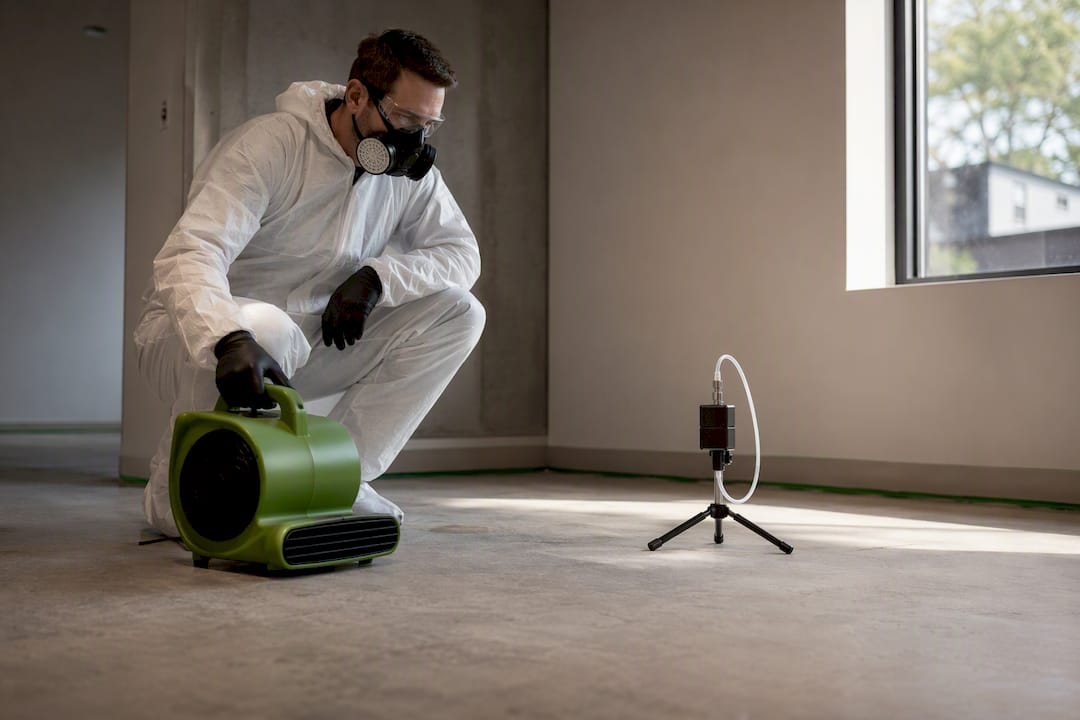
Sample volume matters too. Many clearance protocols call for around a typical volume of several thousand litres of air per sample. That volume directly affects the limit of detection: pull less air through the filter and you need proportionally more fibres present before the method can even register a count.
On the lab side, insist on:
- ISO/IEC 17025 accreditation, the recognized standard for competent testing and calibration labs.
- Documented counting rules matching the method cited in the report, not a vague summary.
- Blank samples and duplicates run alongside your actual samples to catch contamination.
- A clear chain of custody from collection to lab receipt to final report.
A lab that can’t produce accreditation paperwork on request isn’t one to trust with a clearance decision.
Standards and regulatory expectations you should know
NIOSH 7400 governs PCM counting, while NIOSH 7402 and ASTM D6281 cover TEM, and the counting rules between them are not interchangeable. In Ontario, O. Reg. 278/05 sets out clearance criteria built around PCM per NIOSH 7400, a commonly used low-level fibres per cubic centimetre pass benchmark, sample volumes near a typical volume of several thousand litres, and provision for TEM when PCM results fail or when the project specification calls for it.
Before hiring anyone:
- Confirm which method the regulation, contract, or property manager actually requires.
- Ask for the lab’s accreditation certificate and the method reference printed on the report.
- Don’t accept a report that doesn’t name its method explicitly.
How an accredited contractor actually applies these methods on-site
MSN Environmental treats method selection as a decision made before sampling starts, not after results come back ambiguous. That means routing samples to accredited labs, using aggressive sampling for every clearance job, and specifying TEM upfront whenever a reoccupancy decision hinges on a positive identification rather than a fibre count alone.
The practical lesson from years of abatement work: build the method, the sample volume, and a TEM contingency into the contract from day one. Waiting until a PCM result comes back borderline to ask about TEM adds days to a project that a single line item in the original scope would have avoided.
— Moacyr
Book air testing that matches the decision you’re making
Choosing between PCM and TEM shouldn’t be guesswork left to whoever answers the phone first. Testing providers coordinate both PCM and TEM analysis through accredited labs, build aggressive sampling into every post-abatement clearance package, and specify the method, sample volume, and TEM contingency in the sampling plan before sampling begins.
When you book through MSN Environmental’s testing and assessment services, expect a documented sampling plan, proof of lab accreditation on request, and a reporting turnaround stated upfront rather than discovered halfway through the job. If your project involves abatement work, pairing that testing with asbestos removal services keeps clearance and remediation under one coordinated scope instead of two disconnected contractors. Reach out and specify your method requirements before sampling day, not after.
This article is general information, not a substitute for advice from a qualified doctor. Consult a qualified healthcare professional about your own circumstances before acting on anything here.
Sources
- European harmonization of asbestos exposure assessment: comparing PCM, SEM, and TEM to derive conversion factors
- O. Reg. 278/05 DESIGNATED SUBSTANCE – Asbestos on construction projects and in buildings and repair operations
- ASTM D6281-23 — Test method for concentration of asbestos structures in ambient atmospheres by TEM
FAQ
What Is the 3-5-7 Rule for Asbestos Sampling?
There’s no universally recognized “3-#-# rule” in the standard asbestos testing frameworks like NIOSH 7400/7402 or ASTM D6281. If you’ve heard this term from a contractor, ask them to point to the specific standard or regulation they’re referencing, since it isn’t part of the accepted method documentation.
Will 30 Minutes of Asbestos Exposure Hurt You?
A single brief exposure carries far less risk than repeated or prolonged exposure, but no safe threshold has been established for asbestos, so any disturbance of suspect material is worth testing before continuing work. The real risk factor is fibre concentration in the air and how many times exposure happens over time, not any one fixed exposure window.
What Is the Deadliest Type of Asbestos?
Amphibole fibres, particularly crocidolite and amosite, are generally considered more hazardous than chrysotile because of their needle-like shape and how deeply they penetrate lung tissue. All asbestos types are treated as hazardous under Ontario regulation regardless of which mineral is present.
What Are the Two Main Types of Asbestos Sampling?
Bulk sampling tests solid material, like insulation or ceiling tile, to confirm whether asbestos is present in the product itself. Air sampling, using either PCM or TEM, measures airborne fibre concentration to assess exposure risk or confirm a space is safe to reoccupy.
Is PCM or TEM Better for Post-Abatement Clearance?
TEM is the stronger choice for clearance because it identifies asbestos definitively and detects fibres down to about 0.01 microns, well below what PCM can resolve. Many clearance protocols under O. Reg. 278/05 still reference PCM at a 0.01 fibres per cubic centimetre benchmark, with TEM confirmation required when results fail or the project specification calls for it.