

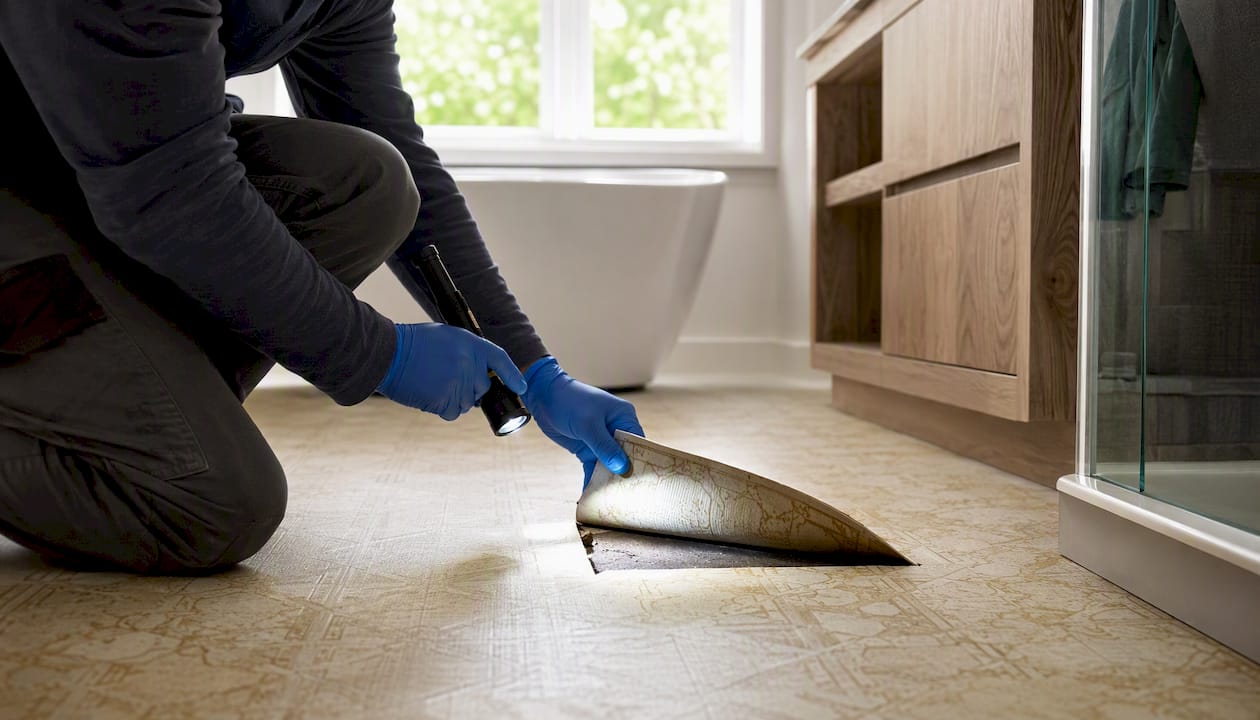
Yes. Many resilient floors sold as “linoleum” between the 1920s and mid-1980s are actually vinyl asbestos tile or asbestos-backed sheet flooring, and both can release dangerous fibres when disturbed. If your home was built or renovated before 1985 and you’re looking at old, brittle tiles or sheet flooring, treat it as presumed asbestos-containing material until a lab proves otherwise.
Immediate steps:
- Stop cutting, sanding, or tearing up the floor right now.
- Keep foot traffic light and don’t dry-sweep or vacuum debris.
- Arrange bulk sampling and polarized light microscopy (PLM) testing at an accredited lab before doing anything else.
- Isolate the area.
- Photograph the flooring without disturbing it.
- Book testing or a professional inspection.
Agencies like CCOHS and Health Canada publish guidance on handling suspect materials safely.
Key Takeaways
Old flooring installed before the mid-1980s should be presumed asbestos-containing until a certified lab proves otherwise, and disturbing it without testing is the biggest risk homeowners create for themselves.
| Point | Details |
|---|---|
| Age is the trigger | Resilient flooring installed before 1985 is presumed to contain asbestos until tested. |
| Visual clues aren’t proof | Black felt backing and rigid 9×9 tiles suggest risk, but only PLM lab testing confirms it. |
| Disturbance creates the danger | Sanding, cutting, or tearing backing releases fibres from otherwise low-risk intact flooring. |
| Manage in place when possible | Encapsulating intact, non-friable flooring is often lower-risk and lower-cost than removal. |
| Hire certified help for removal | MSN Environmental provides testing, encapsulation, certified removal, and clearance verification. |
Table of Contents
- Which types of asbestos linoleum flooring are most likely to contain asbestos?
- When does asbestos flooring actually become dangerous?
- How do you test for asbestos in old flooring?
- Should you cover old asbestos flooring or remove it completely?
- What do certified asbestos abatement contractors actually do?
- How do you choose a certified asbestos flooring contractor?
- Sources
- FAQ
Which types of asbestos linoleum flooring are most likely to contain asbestos?
True linoleum, made from linseed oil pressed onto a jute backing, almost never contained asbestos in its wear layer. The confusion comes from lookalikes sold under the same name. Vinyl asbestos tile (VAT), typically the hard 9×9 inch or 12×12 inch squares common in basements and kitchens, was manufactured from the 1920s into the 1980s and commonly contained roughly 5% to 30% chrysotile asbestos. Asphalt-saturated felt-backed sheet flooring is the other major suspect, along with the black mastic adhesive sometimes used to glue it down.
A few visual clues help you triage risk:
- Tile size and rigidity: hard, brittle 9×9 tiles lean toward VAT; larger, more flexible tiles lean toward vinyl composition without asbestos.
- Backing material: a coarse brown jute backer suggests true linoleum, while a black, paper-like asphalt felt backer is a red flag.
- Black mastic underneath: older adhesives sometimes contained asbestos even when the flooring itself did not.
None of this confirms anything on its own. Visual inspection can narrow the suspects, but only lab confirmation settles the question, and age matters more than appearance: flooring installed before the mid-1980s carries a presumption of asbestos content regardless of how it looks.
Pro Tip: If a corner or seam is already lifting, you can look at the exposed edge and backing with a flashlight without touching or prying it further. That’s inspection. The moment you pull, scrape, or cut to see more, you’ve crossed into disturbance.
When does asbestos flooring actually become dangerous?
Intact, undisturbed flooring is usually low risk because the fibres stay locked in the material. The problem is friability, meaning how easily a material crumbles into dust that can be inhaled. Non-friable flooring that’s glued down and in good shape rarely sheds fibres on its own.
Renovation work changes that fast:
- Sanding or power-stripping old tile or sheet goods
- Tearing the backing away from the surface layer
- Cutting, scoring, or snapping tiles to remove them
- Dry-sweeping or vacuuming debris with a regular household vacuum
Some VAT products contained up to 30% chrysotile asbestos by weight, so grinding even a small section can release a surprising volume of airborne fibres. DIY disturbance without testing or controls is the single biggest risk homeowners create for themselves, and it’s entirely avoidable by pausing before you start.
How do you test for asbestos in old flooring?
Bulk sampling and PLM analysis at an accredited lab is the only method that gives you a real answer. A technician or trained homeowner takes a small piece of the flooring, usually from an inconspicuous spot, double-bags it, and ships it to the lab with basic chain-of-custody paperwork noting where and when it was collected.
Immediate precautions while you wait for results:
- Stop all cutting, sanding, or removal work in the area.
- Avoid dry-sweeping; damp-wipe any loose debris instead.
- Skip the household vacuum. Standard filters don’t catch asbestos fibres.
- Close off the room or limit access to reduce foot traffic over the flooring.
- Leave the material as intact as possible until you have a plan.
If the flooring is already damaged, extensive, or tied to a larger renovation, call a professional inspector rather than pulling a sample yourself. A testing and inspection service can collect samples correctly and interpret results in the context of your renovation plans.
Pro Tip: Photograph the edges and backing before you do anything else. Good photos help testers and contractors assess the material remotely and plan the safest approach, without you needing to pry anything further.
Should you cover old asbestos flooring or remove it completely?
Managing flooring in place, through encapsulation or simply covering it with new material, is often the lower-risk and lower-cost option when the existing floor is intact and non-friable. Leaving asbestos-containing material undisturbed and sealing over it is a legitimate, widely recommended strategy, not a shortcut.
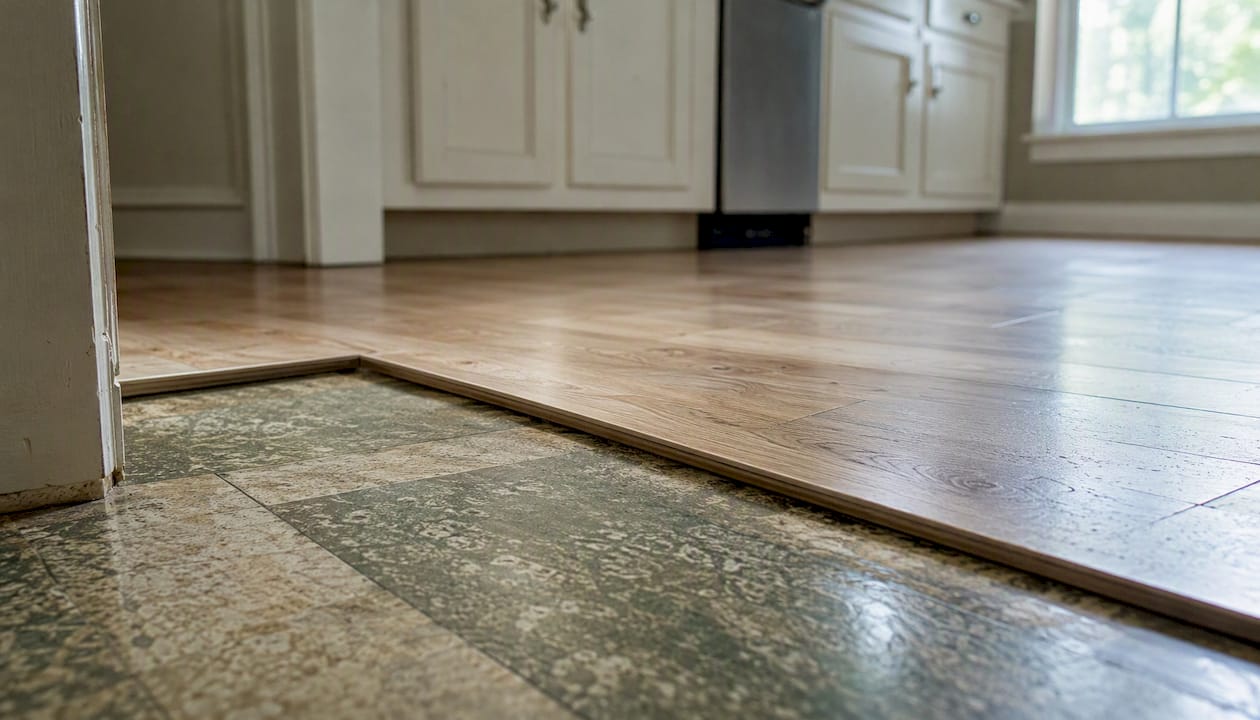
Removal becomes necessary when the flooring is severely damaged, water-affected, already friable, or standing in the way of a renovation that requires subfloor access, like plumbing or electrical work underneath.
| Factor | Manage in place | Full removal |
|---|---|---|
| Short-term risk | Low, if material stays intact | Higher during the work itself |
| Cost | Generally lower | Varies by scope, region, and disposal fees |
| Disruption | Minimal | Requires containment and access restrictions |
| Disposal requirements | None immediately | Regulated waste transport and manifests |
| Verification | Periodic visual checks | Post-work air clearance testing recommended |
Quotes for either path vary widely depending on square footage, accessibility, and local disposal rules, so treat any number you hear as a starting point for comparison rather than a fixed rate.
What do certified asbestos abatement contractors actually do?
A licensed crew follows a fairly consistent sequence, and knowing it helps you judge whether a quote is legitimate.
- Post warning signage and restrict access to the work area.
- Set up negative-pressure containment so air flows inward, not out into the rest of the home.
- Wet the material to suppress dust before any cutting or lifting begins.
- Remove flooring in large intact sections rather than breaking it into small pieces, since tearing the backing away from the surface layer is the main cause of airborne release.
- Clean the area with HEPA vacuums, never standard shop vacuums.
- Bag and label waste according to regulated disposal requirements.
- Conduct air monitoring or clearance testing when the scope calls for it.
That last step matters more than most homeowners realize. Lab confirmation through PLM at the start tells you what you’re dealing with, and clearance air sampling at the end confirms the space is safe to reoccupy. A firm offering asbestos air sampling as part of the job, not as an afterthought, is doing the work properly.
Pro Tip: Ask directly how they’ll keep the flooring’s surface bonded to its backing during removal. A vague answer here is often a sign the crew hasn’t thought through containment.
How do you choose a certified asbestos flooring contractor?
Start with proof, not promises. Ask for provincial licensing where it applies, current liability insurance, documented worker training, and a written waste disposal plan before signing anything.
Then ask direct questions:
- What’s the containment strategy for this specific job?
- Will you test before starting and confirm clearance after?
- What drives the cost estimate, square footage, disposal fees, or access difficulty?
- Can you share references from similar local projects?
Watch for red flags: a bid that’s unusually low with no written scope, reluctance to put the plan on paper, or no mention of waste transport and disposal documentation. Those gaps often mean corners will get cut later. A Canada-focused safety guide on asbestos floor tile removal covers what a proper written scope should include.
Why we push testing and caution over guesswork
Too many homeowners gamble on flooring “probably” being fine because it looks old but intact. That bet isn’t worth it. MSN Environmental’s field experience with asbestos testing, encapsulation, and abatement across Ontario informs this stance: test first, leave undisturbed material alone when you can, and bring in certified help when disturbance is unavoidable.
Get a straight answer on your flooring before you touch it again
Guesswork is what turns a manageable situation into an expensive one. MSN Environmental runs bulk sampling and PLM testing, then gives you a clear read on whether your floor needs encapsulation or full abatement, backed by the same containment and cleanup standards described above.
Services include pre-renovation testing, encapsulation for intact flooring, full certified removal, and post-work air clearance verification so you know the space is actually safe before you move furniture back in. If your floor is old, damaged, or standing between you and a renovation, request an asbestos inspection or quote and get a scoped plan instead of a guess.
Sources
- Asbestos management program — Appendix I: Type 1 removal of asbestos flooring (Loyalist College)
- How to inspect & test to identify resilient or sheet flooring that may contain asbestos (InspectApedia)
- Does linoleum flooring have asbestos? (dmbio blog)
This article is general information, not a substitute for advice from a qualified doctor. Consult a qualified healthcare professional about your own circumstances before acting on anything here.
FAQ
Does my linoleum flooring have asbestos?
It might, especially if it was installed before 1985 or looks like hard 9×9 tile with a black felt backer. Only bulk sampling and PLM testing at an accredited lab can confirm it either way.
What year did they stop using asbestos in linoleum-style flooring?
Vinyl asbestos tile and asbestos-backed sheet flooring were manufactured from the 1920s into the 1980s, and most guidance treats anything installed before 1985 as presumed asbestos-containing.
How can you tell if vinyl flooring contains asbestos?
Rigid 9×9 tiles, a black asphalt-felt backer, or black mastic underneath are warning signs, but visual inspection alone can’t confirm asbestos content. Lab testing is the only definitive method.
Does flooring from the 1970s contain asbestos?
Flooring from that era has a high likelihood of containing asbestos, since VAT and asphalt-backed sheet products were widely sold through the mid-1980s. Treat any flooring from that era as presumed asbestos-containing until tested.
Can I remove asbestos flooring myself?
Small, intact sections can sometimes be handled with strict wet methods and careful precautions, but tearing the backing or breaking material into small pieces sharply increases airborne fibre release. For anything beyond a small, low-risk patch, a certified abatement contractor is the safer choice.