

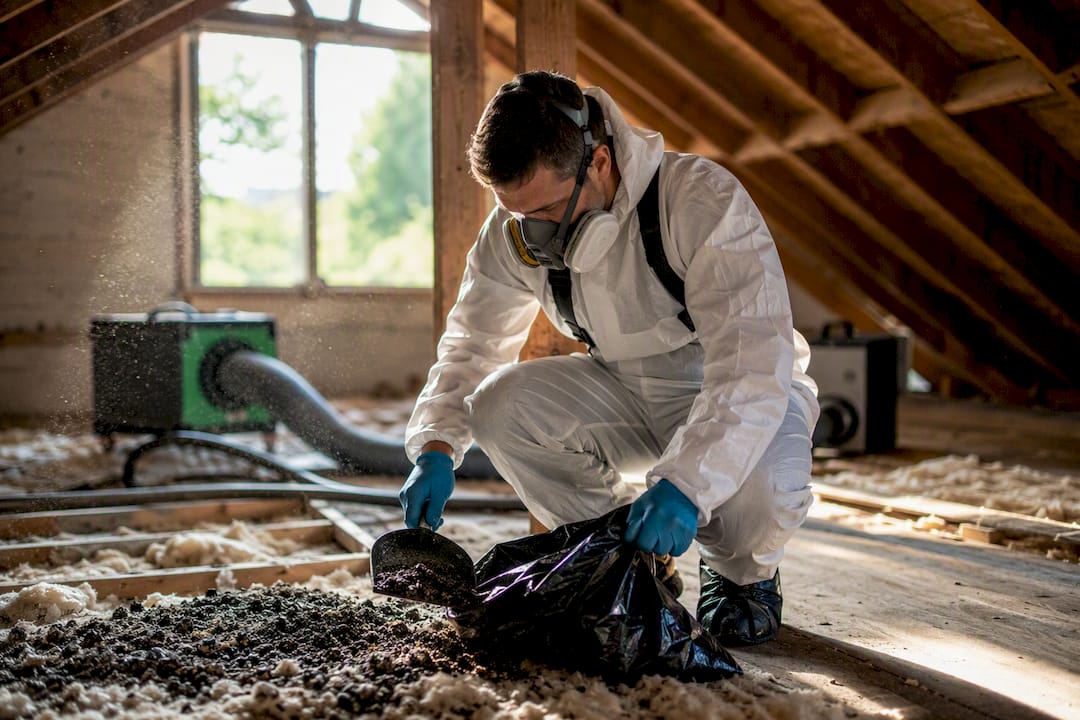
Small, dry droppings on a windowsill or attic floor are usually safe for a healthy adult to clean up alone, with a properly fitted N95 respirator, gloves, and a damp cleaning method. The main danger is histoplasmosis, a lung infection caused by inhaling fungal spores that grow in guano, and it strikes hardest when material is disturbed dry. Never dry-sweep or vacuum bat droppings with a household machine. Anything beyond a small, contained spot, especially attic or crawl space contamination, calls for professional remediation.
TL;DR:
- Small, contained guano deposits on non-porous surfaces can be safely cleaned by homeowners with proper protective gear and damp methods, but larger accumulations require professional remediation.
- Dry-sweeping, vacuuming with household machines, or working in heavily contaminated attics can release spores into the air, increasing health risks and spreading contamination.
- Disinfection with a bleach solution at a 1:9 or 1:10 ratio effectively kills residual spores after removal, but heavily soiled insulation often needs full replacement.
- Professional cleanup involves inspection, sealing, HEPA extraction, enzymatic cleaning, and material replacement when necessary, particularly in extensive or sensitive cases.
- Exclusion of bats must occur before cleanup to prevent recontamination, and timing during maternity season is crucial to avoid trapping unweaned pups inside structures.
Table of Contents
- Bat guano cleanup steps for small, contained deposits
- When large or attic contamination needs professional remediation
- What PPE and dust control actually prevent
- Disinfection ratios and safe disposal
- Excluding bats before you clean prevents recontamination
- What professional bat guano cleanup actually involves
- What I see homeowners get wrong most often
- How MSN Environmental handles bat guano cleanup
- Sources
- FAQ
Bat guano cleanup steps for small, contained deposits
Before you touch anything, judge the scope honestly. A job qualifies as DIY-safe when droppings sit on a hard, non-porous surface, cover less than roughly a square metre, and haven’t soaked into insulation, drywall, or wood fibre. If you can see a defined pile rather than a spread-out layer, and the area has decent airflow, you’re likely dealing with a contained job.
Gather this before you start:
- N95 respirator (fit-tested if you have one; a snug seal matters more than the box it came from)
- Disposable gloves and eye protection
- Plastic sheeting to cover the floor around the work zone
- A spray bottle filled with water or a diluted disinfectant
- Heavy-duty garbage bags and disposable rags or paper towels
Follow these steps in order:
- Open windows or run an exhaust fan to ventilate the space before you begin.
- Lightly mist the droppings with water. Wait a few minutes so dust doesn’t lift into the air when disturbed.
- Scoop the softened material into a bag using a dustpan or disposable scraper, never bare hands.
- Double-bag the waste and seal it tightly.
- Disinfect the surface, let it sit for the recommended contact time, then wipe clean.
- Ventilate again, remove your gear carefully, and wash your hands thoroughly.
Skip the shortcuts entirely. Government guidance is explicit that dry-sweeping and ordinary household vacuums are off-limits. Neither can capture the fine spores that cause the real health risk here.
When large or attic contamination needs professional remediation
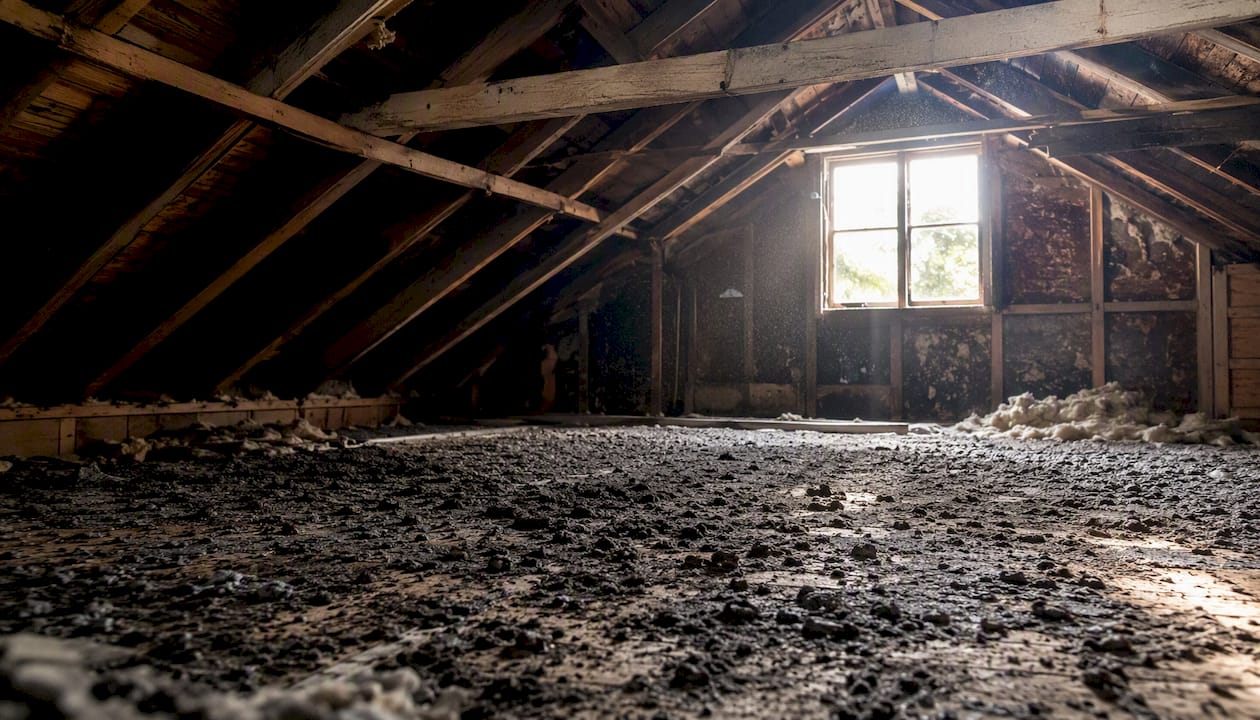
Volume changes the math entirely. A small dropping pile disturbed by a broom releases a manageable puff of dust. A thick attic accumulation disturbed the same way can send spores throughout the space, and once airborne, they don’t settle quickly in an enclosed area with poor circulation. Public-health agencies specifically flag heavy accumulations as requiring professional-grade containment, not a shop vac and a mask from the hardware store.
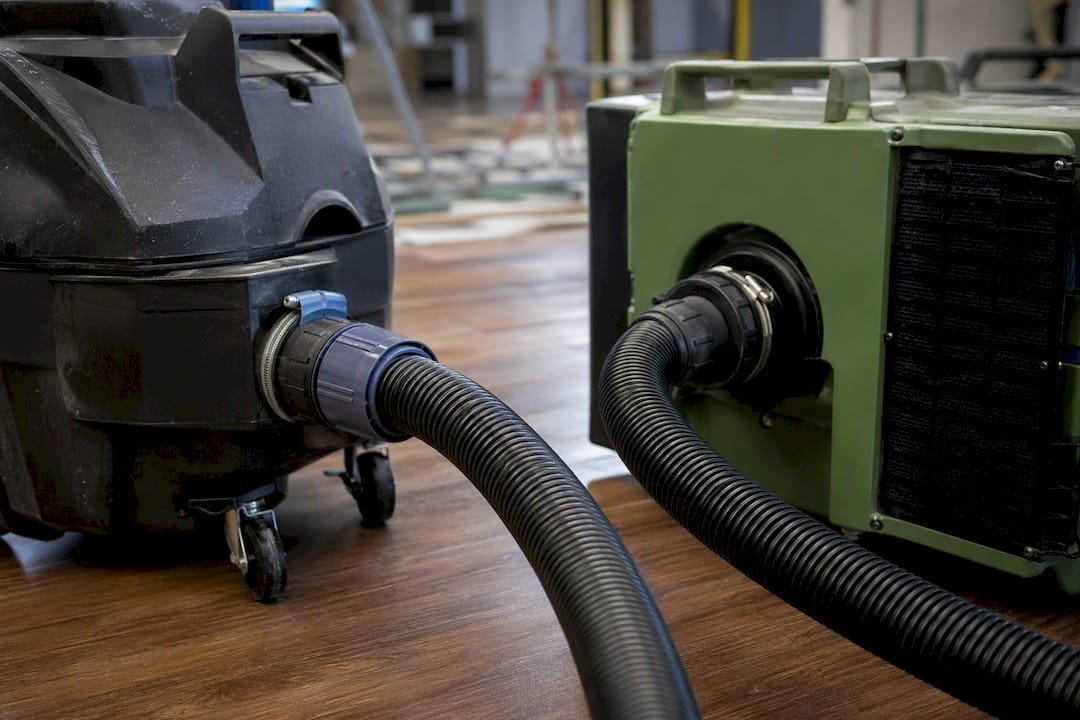
Household equipment simply isn’t built for this job. A standard vacuum lacks the HEPA filtration needed to trap microscopic spores, and running one through contaminated debris can push particles straight into your HVAC system, spreading contamination to rooms nowhere near the attic. Professional crews bring HEPA extraction and negative-air machines that keep the work zone under negative pressure, so nothing drifts into the living space while the job is underway.
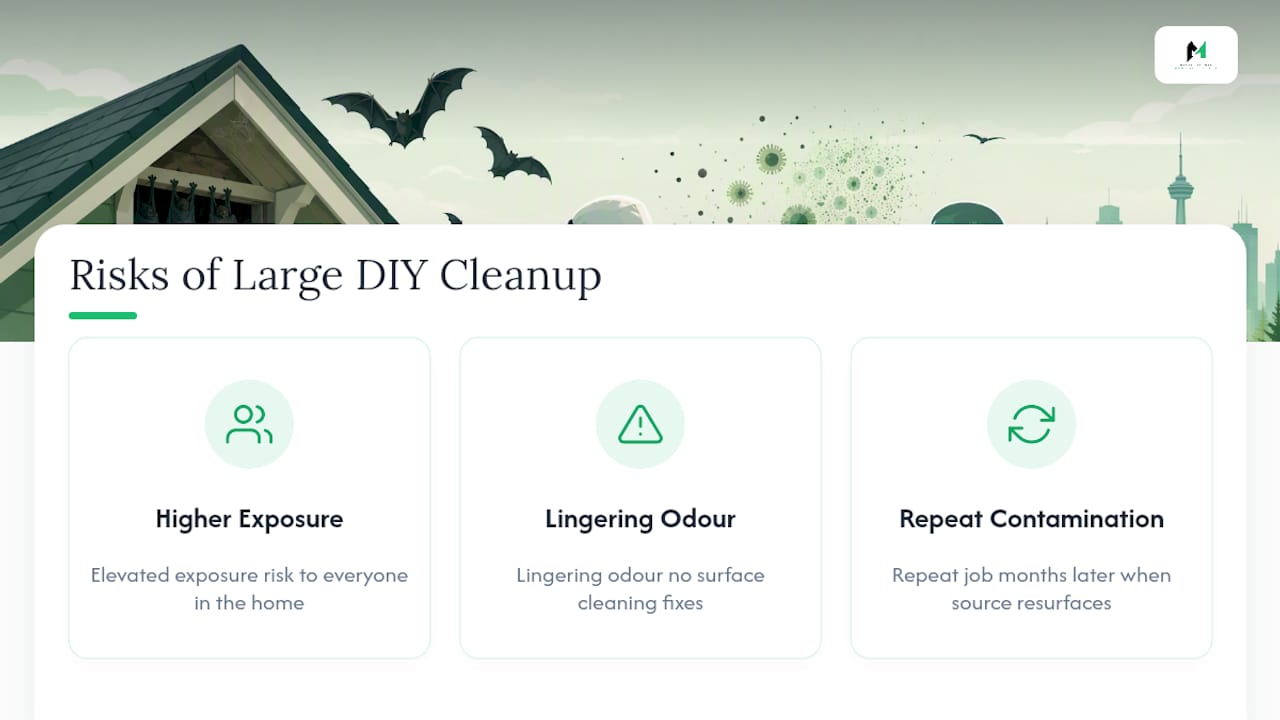
Botched DIY attempts on large deposits tend to produce three outcomes: elevated exposure risk to everyone in the home, a lingering odour that no surface cleaning fixes, and a repeat job a few months later once the source problem resurfaces.
Pro Tip: If you’re standing in an attic looking at droppings that cover more than a small patch of floor, or you can smell it from below, stop. That’s your signal to call a remediation company, not to reach for a bigger vacuum.
What PPE and dust control actually prevent
The entire point of protective gear and dampening is stopping spores from becoming airborne in the first place. Get this part wrong and everything downstream, disinfection, disposal, ventilation, becomes damage control instead of prevention.
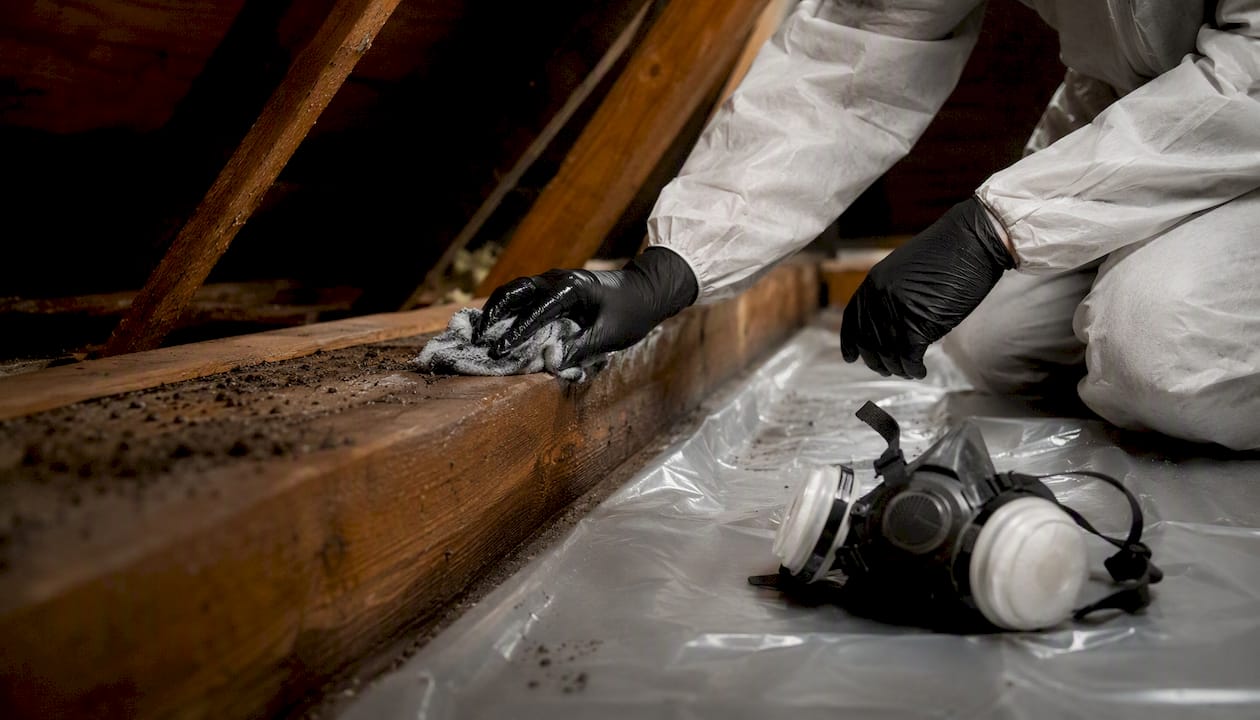
Respirator standards call for an N95 as the floor for small residential jobs, but larger remediation work steps up to P100 or HEPA-filtered cartridges. Workplace-grade respirator use also requires fit-testing and training, which is part of why professionals don’t rely on a mask pulled off a shelf.
The “mist and wait” technique does the real work here: a low-pressure spray of water or an enzyme-compatible cleaner, followed by a short wait before any physical contact, lets material settle instead of scattering into dust.
- Seal nearby vents before starting so spores can’t travel through the HVAC system
- Work in one direction, from clean areas toward contaminated ones, to avoid tracking material back through the house
- Never use a leaf blower, compressed air, or a dry broom near guano
Even a careful homeowner cleaning a modest deposit benefits from treating every disturbance as a dust event, not a sweeping job.
Disinfection ratios and safe disposal
Once material is removed, disinfection is what actually kills residual spores and bacteria. Bleach diluted at a ratio of roughly 1 part bleach to 9 or 10 parts water is the standard recommendation for surface disinfection after guano removal. Apply it, give it a few minutes of contact time, and avoid mixing bleach with ammonia-based products under any circumstances.
Not everything can be wiped clean. Insulation that’s absorbed urine or heavily soiled droppings usually can’t be salvaged; it traps spores and odour in a way surface disinfectant never fully reaches, which is why replacement is often the only real fix.
- Double-bag all contaminated waste in heavy-duty plastic before disposal
- Check your municipality’s rules on disposing of biological waste, since requirements vary by region
- Keep bagged material away from regular household traffic until pickup
For extensive contamination, or when vulnerable occupants live in the home, post-cleanup air or bulk sampling can confirm the space is actually safe rather than just visually clean.
Excluding bats before you clean prevents recontamination
Cleaning first and excluding bats second is a wasted afternoon. If bats can still get back in, they will, and you’ll be redoing the same job within a season. Exclusion always comes before cleanup.
- Identify every entry point during daylight, when bats are inside and inactive.
- Install one-way exclusion devices or mesh screens over the openings so bats can leave but not re-enter.
- Wait several days to confirm no bats remain, then seal the openings permanently.
- Schedule cleanup only after sealing is complete.
Timing matters more than most homeowners expect. Sealing entry points during maternity season can trap flightless pups inside, which creates both an animal welfare problem and a much worse contamination issue. Bat Conservation International recommends checking with a local wildlife authority before excluding bats if you’re unsure of the season or species involved. Once bats are gone for good, a periodic check of roof vents, soffits, and gaps keeps a new colony from moving in.
What professional bat guano cleanup actually involves
A certified remediation crew doesn’t skip straight to scrubbing. The sequence runs through inspection and scoping, confirming exclusion is complete, sealing off the work area, HEPA extraction of contaminated material, enzymatic cleaning to neutralize odour and pheromone markers that could attract new bats, and, when insulation is soaked or heavily soiled, full replacement rather than a surface clean.
Air or bulk sampling after the work is done gives homeowners documented proof the space is safe again, not just a visual once-over.
- Ask about respirator fit-testing and training for the technicians on site
- Ask what happens if insulation needs replacing, and get that cost itemized separately
- Request a written scope of work before anything starts, not after
Pro Tip: A reasonable quote breaks down inspection, removal, disinfection, and any material replacement as separate line items. If a quote is one flat number with no detail, ask for a breakdown before you sign anything. You can review what certified crews bring to a hazardous material job in MSN Environmental’s guide to hiring certified professionals.
What I see homeowners get wrong most often
The two mistakes that come up again and again are dry-sweeping before anyone thinks to dampen the area, and cleaning up guano while bats are still using the same entry point. Both feel like reasonable shortcuts in the moment. Neither one is. A careful, damp, well-ventilated approach to a small isolated spot is genuinely fine for most homeowners to handle. The line to watch for is scale: once you’re looking at attic-wide contamination or you can smell it from another room, that’s not a bigger version of the same job anymore.
— Moacyr
How MSN Environmental handles bat guano cleanup
Beyond DIY methods for small spots, larger jobs need inspection, HEPA extraction, enzymatic cleaning, and sometimes full insulation replacement, work that goes past what a homeowner can safely manage with a spray bottle and a respirator from the hardware store.
MSN Environmental’s technicians handle each of those stages as a documented sequence: scoping the contamination, verifying exclusion is complete, containing the work area, running HEPA extraction, and applying enzyme-based cleaning methods that neutralize odour rather than just masking it. Where insulation has absorbed urine or droppings, replacement gets discussed as part of the quote, not as a surprise afterward. If your attic contamination is beyond a spot cleanup, request a certified inspection and itemized quote before you decide how to proceed.
Sources
The health and procedural claims in this guide draw from the Mayo Clinic’s overview of histoplasmosis, CDC guidance on histoplasmosis exposure, Quebec’s official cleaning protocol for bat-contaminated environments, and Bat Conservation International’s risk assessment of guano exposure in enclosed spaces.
This article is general information, not a substitute for advice from a qualified doctor. Consult a qualified healthcare professional about your own circumstances before acting on anything here.
FAQ
How long is bat guano toxic to humans?
Guano can remain a histoplasmosis risk for years if it stays undisturbed and dry, since the fungal spores that cause infection persist in the material long after bats have left.
Can I remove bat guano myself?
Small, contained, surface-level deposits can be cleaned safely with an N95 respirator, gloves, and damp cleaning methods, but large accumulations or attic-wide contamination need professional remediation with HEPA extraction.
How long does bat guano take to break down?
Guano decomposes slowly in dry, undisturbed conditions like attics and wall cavities, which is why old deposits can still pose a histoplasmosis risk long after a colony has moved on.
Is it safe to clean up bat poop?
It’s safe for small areas when you follow proper precautions: dampen the material first, avoid dry-sweeping or ordinary vacuums, wear a fitted N95 respirator, and disinfect afterward with a bleach solution diluted around 1:9 or 1:10.
Do I need to exclude bats before cleanup?
Yes. Cleaning up guano while bats can still re-enter the space leads to recontamination, so exclusion devices and sealing entry points always come before the cleanup itself.