

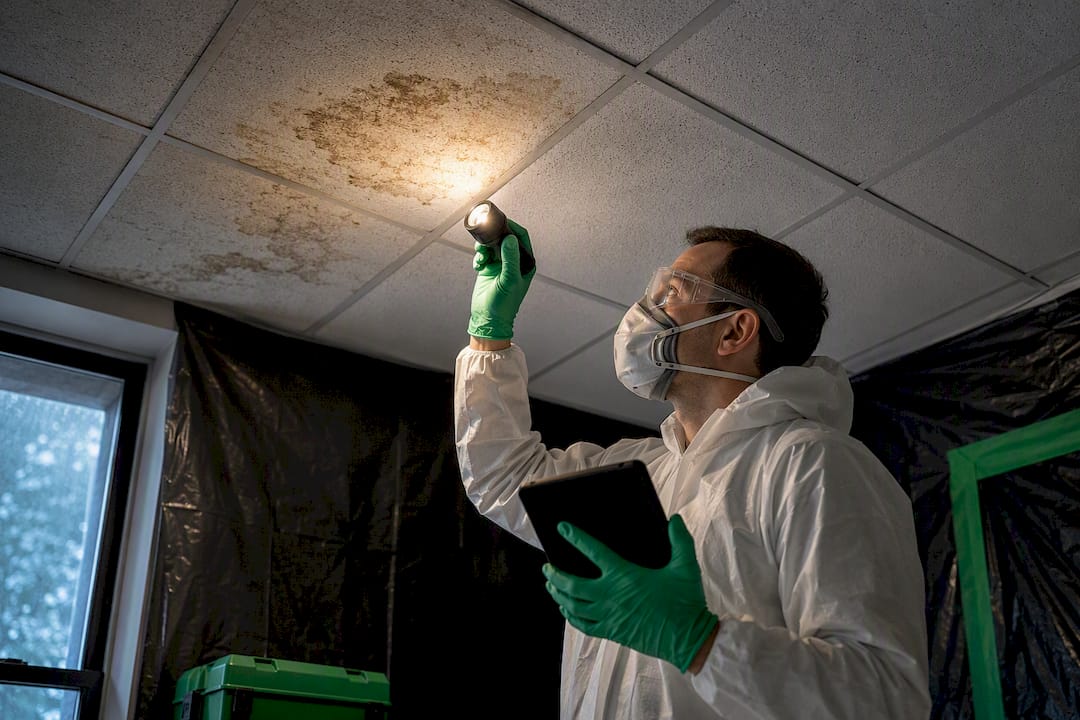
No. Visual signs like a pinhole texture, a 12×12 size, or an install date before 1990 can raise reasonable suspicion, but nothing short of laboratory analysis confirms asbestos ceiling tiles. If you’re about to renovate, drill, or remove tiles that fit that profile, stop, treat them as presumed asbestos-containing, and arrange testing or a licensed contractor before doing anything else.
TL;DR:
- Asbestos ceiling tiles are only confirmed through lab testing, and visual signs like textures or age are unreliable indicators.
- Disturbing or damaging asbestos tiles releases fibers that pose serious health risks, unlike intact, undisturbed materials.
- Testing must be done by licensed inspectors using controlled sampling methods, with results interpreted against regulatory thresholds.
- Managing in place or encapsulating asbestos tiles is often safer and cheaper than removal unless the material is damaged or renovation requires teardown.
- Always require licensed contractors with proper disposal and clearance testing when removing asbestos ceiling tiles to ensure safety and compliance.
Table of Contents
- Spotting asbestos acoustic ceiling tiles without disturbing them
- Why disturbance, not presence, is what makes asbestos dangerous
- How asbestos testing for ceilings actually works
- What to do once asbestos is suspected or confirmed
- What testing and removal actually cost, and what to do first
- How MSN Environmental handles asbestos ceiling tile jobs
- What homeowners get wrong about asbestos ceiling tiles
- Sources
- FAQ
Spotting asbestos acoustic ceiling tiles without disturbing them
Certain sizes and textures show up again and again in older buildings. Glue-up panels in 9×9 or 12×12 formats, and lay-in panels sized 24×24 for suspended grid systems, were standard through much of the 20th century, and manufacturers frequently used asbestos fibres to add fire resistance and rigidity to the mix. None of that guarantees a match, but it narrows the field of suspects.
When you’re checking for asbestos in a drop ceiling or a glued panel, look without touching whenever you can:
- Pinhole or fissured surface texture, sometimes with a fibrous, almost felt-like appearance on the exposed face.
- Black mastic adhesive on the back of glue-up tiles or around the perimeter of a room.
- Popcorn-style texture on tiles or on the ceiling deck itself, which used similar asbestos-containing compounds.
- Debris, old insulation, or crumbled tile fragments sitting above suspended ceiling panels, which can be hazardous even if the visible tile is clean.
Photograph everything and check for manufacturer stamps on the tile edge or back. If you can find building permits, renovation records, or the original install date, that context matters more than the tile’s appearance. A tile installed after the early 1990s is less likely to contain asbestos, but designated substance surveys still treat pre-renovation buildings of that era as presumed asbestos-containing until proven otherwise. Don’t pry a corner loose or snap a piece off to “check” it. That single act of curiosity is exactly what turns a stable material into an airborne hazard.
Why disturbance, not presence, is what makes asbestos dangerous
Asbestos harms people through inhalation. Fibres released into the air, and then breathed into the lungs, are what drives long-term health risks such as mesothelioma and asbestosis, not the mere presence of the material in a wall or ceiling. A tile sitting quietly in a drop-ceiling grid, undamaged and dry, is a very different hazard than the same tile after someone drills through it or knocks it down during a demolition.
That’s why water damage is treated as a red flag in every asbestos assessment. Renovators, demolition crews, and anyone cutting into ceilings face a materially higher occupational exposure risk than someone simply living under an intact ceiling, which is why professional jobs require respirators, disposable coveralls, and containment that a homeowner walking past their own ceiling doesn’t need.
How asbestos testing for ceilings actually works
You can’t safely collect your own sample if you already suspect asbestos, since poking at suspect material is the disturbance you’re trying to avoid. An accredited inspector collects a small bulk sample using controlled techniques, seals it, and sends it to an accredited lab.
- Book an accredited inspector. They’ll identify sample locations that represent the material without needlessly disturbing large areas.
- Lab analysis by polarized light microscopy (PLM). This is the standard method labs use, often paired with point counting to quantify fibre content.
- Compare against the regulatory threshold. Most authorities, including Environment and Climate Change Canada, use a regulatory threshold of asbestos concentration by weight as the line between “trace” and “asbestos-containing material.”
- Get the report and chain-of-custody documentation. Ask how samples were tracked from collection to lab and what format the results come in.
| Result | Typical meaning | Recommended next step |
|---|---|---|
| Negative (below 1%) | Not classified as asbestos-containing | Proceed with normal renovation or removal |
| Trace/borderline | Near the 1% threshold, may need retesting | Confirm with a second sample or point count |
| Positive (above 1%) | Confirmed asbestos-containing material | Manage in place, encapsulate, or arrange licensed abatement |
Turnaround for residential bulk samples typically runs a few business days once the lab receives them. If you’re planning a renovation, testing and inspection services can be booked well ahead of demolition so results are in hand before crews touch anything.
What to do once asbestos is suspected or confirmed
The moment a tile looks suspicious, or comes back positive, your priorities shift from identification to containment. Stop whatever work triggered the discovery. Restrict access to the room. Don’t sweep, vacuum, or dust the area, since a standard vacuum will push fine asbestos fibres straight through its filter and into the air.
From there, you’re choosing between managing the material in place or removing it entirely:
- Monitor, if the tile is intact, dry, and won’t be disturbed by planned work.
- Encapsulate, sealing the surface with a specialized coating to lock fibres in place.
- Enclose, building a physical barrier over the material rather than sealing it directly.
- Remove, when tiles are damaged, water-stained, crumbling, or standing in the way of a renovation.
Managing in place is often the safer, cheaper option, since a well-executed encapsulation can outlast a rushed removal and a poorly controlled removal job can actually raise airborne fibre counts rather than lower them. Removal becomes the right call when material is already deteriorating or when the reno simply requires tearing the ceiling down. Either way, safe removal of ceiling tiles containing asbestos is a job for licensed abatement contractors, not a weekend project.
Pro Tip: When you’re comparing quotes, ask each contractor for their disposal facility name and lab chain-of-custody process before asking about price. A contractor who can’t answer that clearly and quickly usually can’t back up the rest of their claims either.
Before signing anything, confirm the contractor holds current abatement licences and liability insurance, provides a written scope of work with a containment plan, and includes independent third-party air clearance testing after the job, not just their own sign-off — plus verify their waste management & remediation services credentials to ensure proper disposal. If you’ve just found suspect material mid-renovation, here’s what to do first before crews go any further.
What testing and removal actually cost, and what to do first
Cost swings widely depending on square footage, how accessible the ceiling is, whether asbestos-containing mastic sits underneath the tiles, and how much containment the job needs. A small bathroom ceiling with lay-in panels costs far less to test and remove than a full commercial suite with glued tiles and adhesive residue across every surface.
Bulk sampling and lab results for a typical residential ceiling usually take a few days from booking to report. Full abatement projects run longer, from a couple of days for a single room to several weeks for larger commercial spaces with heavy containment requirements.
Before committing to anything:
- Test first. Never quote or plan removal work off a visual guess.
- Get written quotes from at least two licensed contractors, not verbal estimates.
- Require independent clearance air testing as a line item, not an afterthought.
- Budget contingency for disposal fees and any mastic or adhesive removal that wasn’t obvious until the tiles came down.
How MSN Environmental handles asbestos ceiling tile jobs
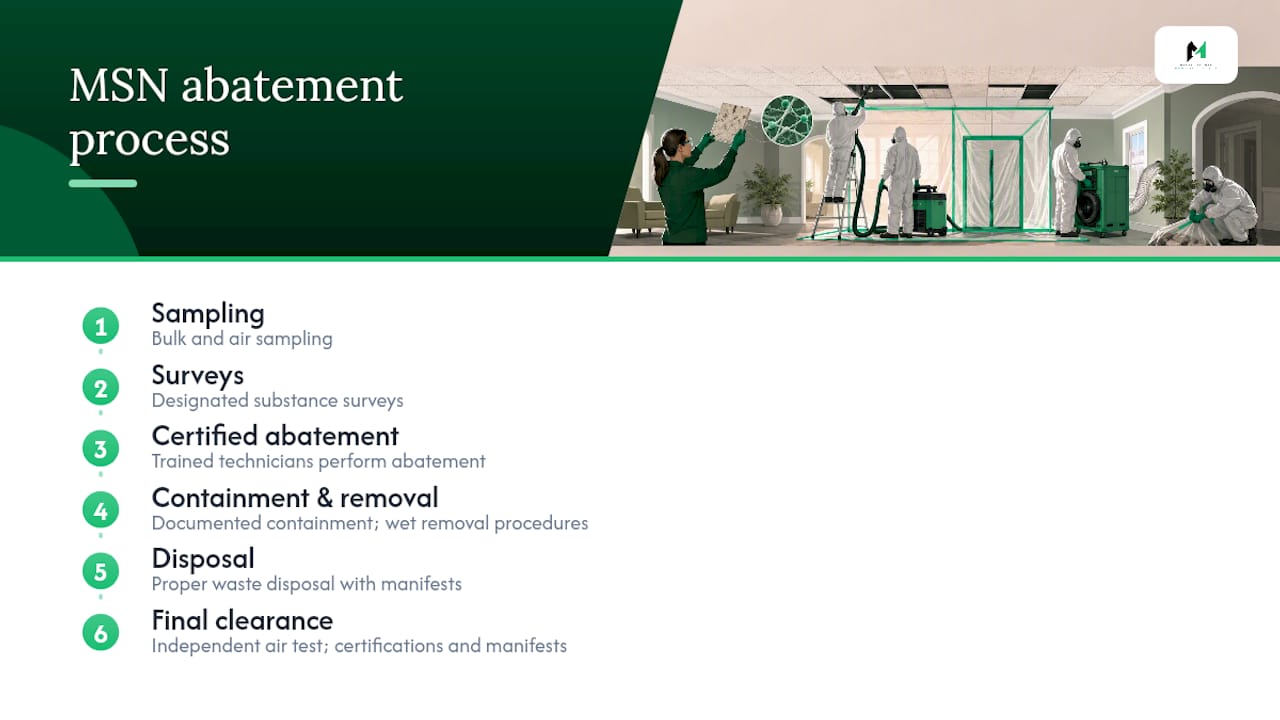
MSN Environmental runs bulk and air sampling, designated substance surveys, and certified abatement for ceiling tiles across residential and commercial properties. Trained technicians follow documented containment, wet removal, and disposal procedures, then confirm the space is safe with independent air clearance testing before anyone moves back in. Every job carries the safety certifications and disposal manifests a serious abatement file should have.
What homeowners get wrong about asbestos ceiling tiles
Most guidance on this topic swings too hard in one of two directions. Either it treats every pre-1990 popcorn ceiling as an emergency requiring immediate removal, or it shrugs and says “just leave it alone” without explaining when that stops being good advice. Neither is right. The material’s condition matters more than its age.
An intact 12×12 tile from 1975 sitting quietly in a spare bedroom is not the same risk as a water-stained, crumbling tile in a basement that floods every spring. Conventional advice tends to skip that distinction and jump straight to a verdict, which leaves homeowners either panicking over safe material or ignoring genuinely hazardous material because “asbestos is always dangerous” sounded like an overreaction the first time they heard it.
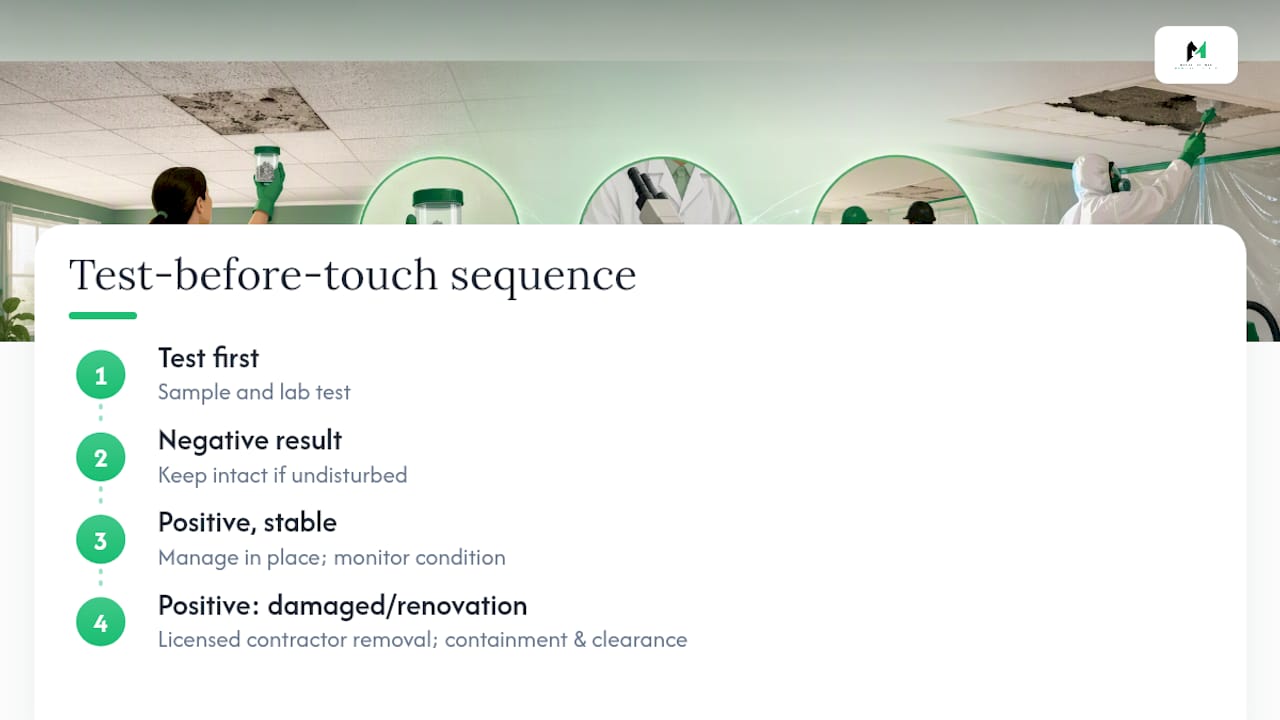
What actually matters is sequencing. Test before you touch anything. If it’s negative, you’ve saved yourself an unnecessary removal bill. If it’s positive and the tile is stable, managing in place is often the smarter, cheaper call than tearing it out. Removal should be reserved for damaged material or renovations that will disturb it regardless, and it should always go to a licensed contractor who can prove their containment and clearance testing process, not just quote you a price.
— Moacyr
This article is general information, not a substitute for advice from a qualified doctor. Consult a qualified healthcare professional about your own circumstances before acting on anything here.
Sources
- Health risks from asbestos — Health Canada
- Guide: Regulation respecting asbestos in construction projects and buildings — Ontario government
- Asbestos ceiling tile removal guide — InspectandTest
FAQ
Are 12×12 ceiling tiles asbestos?
Not necessarily. The 12×12 format was common in many ceiling tiles manufactured before the late 1980s, some of which contained asbestos, but plenty of 12×12 tiles are asbestos-free, and only lab testing by polarized light microscopy confirms it either way.
Are there asbestos ceiling tiles in Canada?
Yes, asbestos ceiling tiles are common in Canadian homes and buildings constructed or renovated before the late 1980s, since asbestos was widely used in building materials until regulations tightened. Ontario’s asbestos regulation guide directs owners to treat suspect material from that era as presumed asbestos-containing.
What if I accidentally removed asbestos tiles?
Stop immediately, leave the room, and avoid sweeping or vacuuming the area, since that spreads fibres rather than containing them. Contact a licensed abatement contractor to assess airborne fibre levels and safely clean and dispose of the debris.
How bad are asbestos ceiling tiles?
Intact, undisturbed tiles carry a lower immediate risk, but damaged, water stained, or disturbed tiles release airborne fibres tied to serious long-term lung diseases. The material itself isn’t the danger. Disturbing it is.