

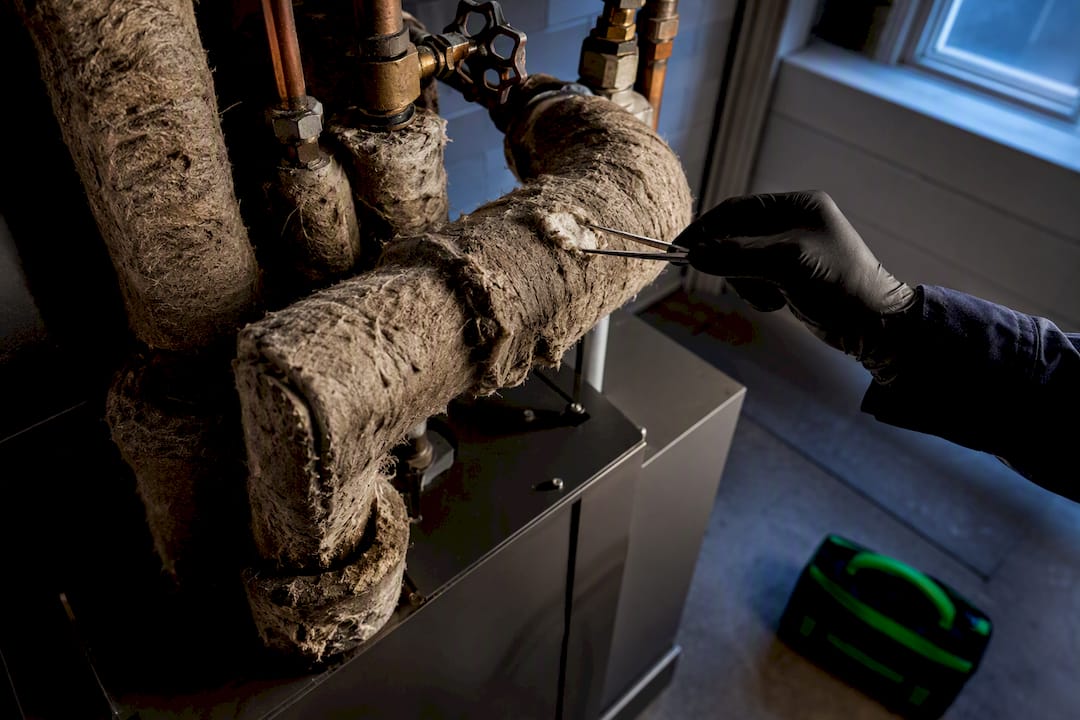
If your boiler or its pipework was insulated before 1980, it is likely to contain asbestos and should be treated as such until proven otherwise. Don’t touch it, sand it, or vacuum debris near it. Call a qualified inspector to collect samples for lab testing. If the material is intact and undisturbed, leaving it alone or having it professionally encapsulated is usually the safer, cheaper path compared to rushing into removal.
TL;DR:
- Insulation from boilers or pipes installed before 1980 is highly likely to contain asbestos and should be tested by professionals before any disturbance.
- Visual cues like fibrous wraps, chalky plaster, or preformed blocks suggest asbestos, but only lab testing can confirm its presence.
- Fibrous or crumbling insulation poses a serious health risk if disturbed, but undisturbed material generally sheds minimal fibers.
- If suspicion arises, stop all work, restrict access, photograph the material, and call a qualified inspector to collect samples for testing.
- Removal or disturbance requires licensed professionals due to strict regulations, with costs varying based on site accessibility, material condition, and containment needs.
Table of Contents
- Types and locations of asbestos boiler insulation
- How to spot suspect insulation, and where visual checks stop working
- Health risks tied to asbestos boiler insulation
- What to do the moment you suspect asbestos
- Leave it, wrap it, or remove it: choosing the right management approach
- What testing and removal typically cost, and how long it takes
- Vetting an asbestos contractor before you sign anything
- What a certified removal company actually delivers
- Managing legacy asbestos: a pragmatic view
- Get your boiler insulation tested before you decide anything
- Sources
- FAQ
Types and locations of asbestos boiler insulation
Boiler insulation came in several distinct forms, and knowing which one you’re looking at helps narrow down risk and scope before a professional ever shows up. Asbestos blanket or cloth wrapped directly around the boiler shell or pipe runs, often held in place with wire mesh or tape. Pipe wrap and lagging covered steam and hot water lines, especially at elbows and joints where heat loss mattered most. Insulating board, a rigid panel product, lined boiler room walls and door interiors. Cement or block insulation formed moulded sections around irregular shapes like valves and tank necks. Hardcast plaster, a trowelled-on coating, often hid a layer of cloth or tape underneath, which means the visible surface rarely tells the whole story.
Where you’ll find these materials matters as much as what they’re made of:
- The boiler’s outer jacket or casing, sometimes under a decorative metal shell
- Door gaskets and seals around the firebox
- The flue and breeching connecting the boiler to the chimney
- Steam or hot water pipe runs, particularly at elbows, tees, and valve bodies
- Fittings on nearby expansion tanks and headers
Installation date is the single biggest clue. Asbestos insulation was widely used in the boiler trade during much of the 20th century up to about 1980, prized for its heat resistance and durability, according to MesoWatch. A boiler system installed or last insulated before 1980 is likely to contain it. Newer patch jobs on old equipment sometimes mix asbestos and non-asbestos materials in the same room, which is exactly why a visual guess isn’t good enough on its own.
How to spot suspect insulation, and where visual checks stop working
You can train your eye to notice the warning signs, but you cannot confirm asbestos by looking at it. That distinction matters for what you do next.
Watch for these visual cues on boiler-related insulation:
- A fibrous, cloth-like wrap that looks woven rather than manufactured foam or fiberglass
- Chalky, crumbling, or powdery plaster coating, especially around joints and elbows
- Corrugated paper or cardboard-style tape wound tightly around pipe sections
- Preformed rigid blocks or half-round sections fitted around valves and tank fittings
- A cloth jacket sewn or pinned closed over an insulated boiler body
If you see any of these, photograph them from a distance without touching the material, and note where they appear. However, many asbestos-free products from the same era look very similar, and some asbestos materials may be covered by paint or other coatings that hide their fibrous texture entirely. No homeowner or property manager should attempt to definitively identify asbestos by appearance alone.
Confirmation requires laboratory analysis. A certified inspector collects small bulk samples from representative locations, typically multiple samples per homogeneous area for thermal system insulation, since asbestos content can vary within the same run of pipe wrap. The lab uses polarized light microscopy to identify asbestos fibres and estimate percentage content. After removal work, clearance air testing confirms fibre counts in the area have returned to acceptable levels before the space is reoccupied. Testing and inspection services exist precisely because visual inspection alone leaves too much room for error.
Pro Tip: Keep a phone photo log of any suspect material with the date and location noted before you call an inspector. It speeds up scheduling and gives the lab technician useful context on where samples were taken.
Health risks tied to asbestos boiler insulation
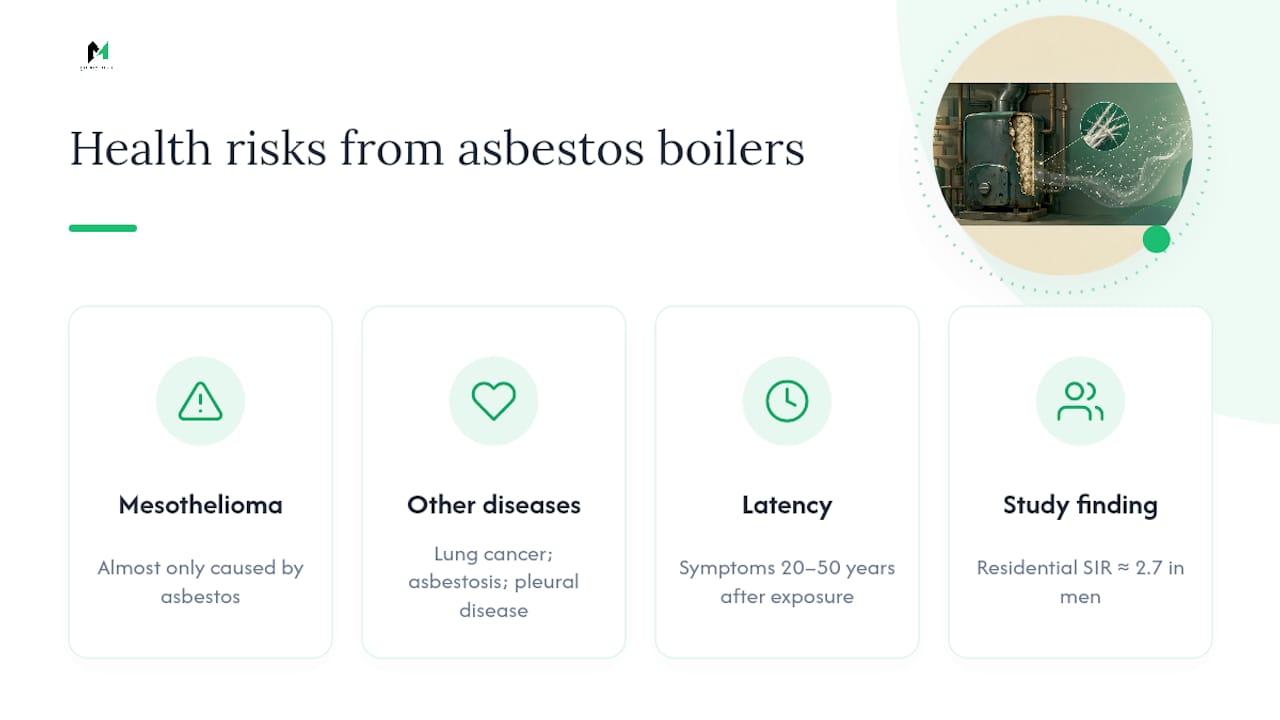
Asbestos fibres cause a small number of serious diseases, and every one of them can take decades to show up. Mesothelioma, a rare and aggressive cancer of the lung and abdominal lining, has almost no other known cause besides asbestos exposure. Lung cancer, asbestosis (a scarring lung disease), and pleural disease (thickening or plaques on the lung lining) round out the main outcomes tied to fibre inhalation.
Latency is the defining feature of asbestos illness. Symptoms commonly appear 20 to 50 years after exposure, which means damage from a disturbed boiler wrap in your basement today might not surface as disease until you’re well into retirement. Risk rises with repeated or heavier exposure, and smoking significantly increases lung cancer risk in combination with asbestos exposure.
A cohort study tracking residents of homes with loose fill asbestos insulation found an elevated rate of mesothelioma in men, with a standardized incidence ratio around 2.7, indicating increased cancer risk even without occupational exposure, according to research published on residential asbestos exposure.
The takeaway for homeowners isn’t panic. Intact, undisturbed insulation sheds very little fibre. The risk climbs sharply once someone starts cutting, sanding, or tearing the material loose without controls in place.
What to do the moment you suspect asbestos
Move through these steps in order, ideally within the first day or two of noticing the material:
- Stop whatever work you were doing. Don’t touch, brush, or vacuum the insulation. A standard shop vacuum or household vacuum cleaner will push fibres into the air rather than contain them, according to the Consumer Product Safety Commission.
- Restrict access to the area. Close the door to the boiler room if you have one, and keep kids, pets, and tenants away until it’s assessed.
- Photograph and document from a distance. Note the boiler’s approximate age, any recent maintenance or plumbing work, and whether the material looks disturbed already.
- Call a qualified asbestos inspector or abatement contractor. They’ll arrange bulk sampling and lab testing to confirm what you’re dealing with before anyone plans next steps.
- Tell anyone else who might work near it. HVAC technicians, plumbers, and other trades booked for unrelated work need a heads up so they don’t disturb the material without knowing.
Homeowners should never attempt temporary containment, wetting down the material, or any hands-on mitigation themselves. Those tasks require trained personnel with proper respiratory protection and containment equipment, and doing it wrong can spread fibres further than leaving the material alone in the first place.
Leave it, wrap it, or remove it: choosing the right management approach
Not every asbestos find on a boiler needs to come out immediately. The right call depends on condition, accessibility, and what you’re planning to do with the equipment.
- Leave undisturbed: If insulation is intact, bonded tightly to the surface, and located somewhere unlikely to be bumped or disturbed, ongoing monitoring can be the safest and least disruptive option. Regulators generally agree that undisturbed asbestos materials pose low risk, according to the EPA’s risk evaluation for legacy asbestos uses.
- Encapsulation or enclosure: A sealant or physical enclosure applied by trained personnel can lock fibres in place, reducing release risk without pulling the material out. It’s a reasonable interim step, though it needs periodic checks and isn’t ideal if the boiler is slated for replacement soon.
- Removal: Mandatory when insulation is damaged, crumbling, or friable, or when a renovation, boiler replacement, or demolition will disturb it regardless. Removal of thermal system insulation on boilers and pipes falls under Class I asbestos work, a heavily regulated category requiring specific containment measures, negative air pressure, and trained supervisors on site.
DIY removal is where most exposure incidents happen. Field experience from inspectors and remediation professionals consistently shows that untrained removal attempts release far more airborne fibre than professional work under containment, according to InspectApedia’s guidance on managing boiler insulation.
Pro Tip: If you’re planning to replace an old boiler within the next year or two, factor asbestos abatement into that project’s budget and timeline now rather than discovering it mid-demolition, when delays cost more and options narrow.
What testing and removal typically cost, and how long it takes
Cost swings widely based on a handful of factors: how accessible the boiler room is, the linear or square footage of insulated pipe and casing, whether the material is friable, and whether full containment (a sealed equipment room, decontamination shower) is required. Quantity thresholds often decide whether a job needs minimal precautions or full containment, which is usually the difference between a modest invoice and a substantial one.
- Accessibility and confined spaces (mechanical rooms, crawl spaces near boilers)
- Total area of insulated material, including pipe runs beyond the boiler itself
- Friability and how much the material has already degraded
- Containment level required, plus disposal fees at a licensed facility
- Number of lab testing rounds needed, including pre-work sampling and post-removal clearance
A realistic timeline runs from initial inspection and sampling, through lab turnaround (often a few business days), scheduling the abatement crew, the removal work itself, and final clearance air testing before the space reopens. The step-by-step removal process walks through each stage in more detail.
Vetting an asbestos contractor before you sign anything
A handful of direct questions separates a competent contractor from a risky one. Work through this list before hiring anyone:
- Ask for documented training and certifications. Reputable firms carry proof of specialized asbestos abatement training, not just general contracting licences.
- Confirm insurance coverage. Liability insurance specific to hazardous materials work protects you if something goes wrong on your property.
- Ask which lab they use and how samples are collected. A contractor who can’t name their laboratory or explain sampling protocol is a warning sign.
- Get the containment strategy in writing. This should spell out barrier locations, negative air pressure equipment, and decontamination procedures.
- Ask about disposal and manifesting. Licensed disposal sites track hazardous waste through a manifest system, and your contractor should provide that paperwork for your records.
- Confirm air clearance criteria and timeline. You want a written scope covering start date, expected duration, and the clearance testing that happens before the space is cleared for reoccupation.
Red flags include reluctance to discuss testing or clearance procedures, quotes far below competitors with no written scope attached, and any inability to produce proof of insurance or training on request. A single consolidated project document covering the sampling plan, containment design, waste manifesting, and clearance criteria is standard from established firms, and asking for it upfront heads off scope surprises later, based on MSN Environmental’s own removal process.
What a certified removal company actually delivers
Certified firms handle hazardous material removal, including asbestos, mould, and lead paint, with trained technicians specialized in containment and abatement work. The equipment and safety programs supporting that training are designed to meet industry standards.
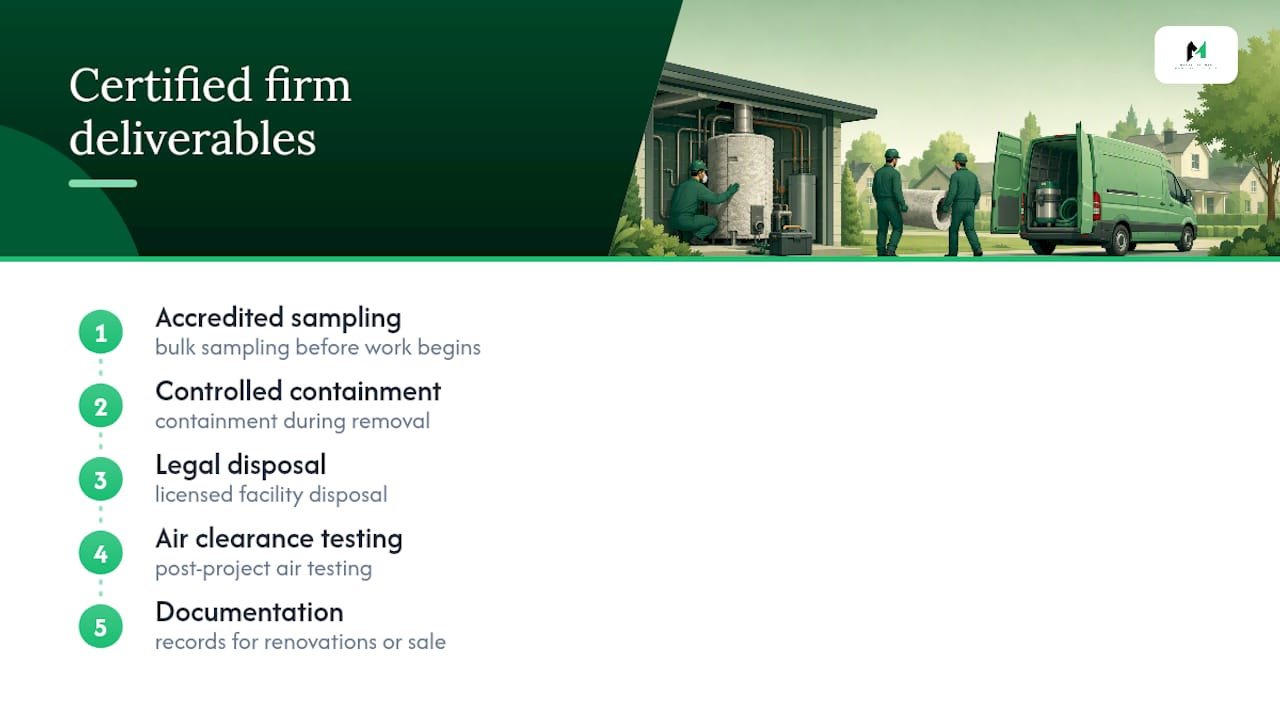
What a homeowner should expect from a certified firm handling boiler asbestos: accredited bulk sampling before any work begins, controlled containment during removal, legal disposal at a licensed facility, post-project air clearance testing, and documentation you can keep on file for future renovations or a home sale. Anything less than that full package leaves gaps a buyer’s inspector or an insurer might later flag.
Managing legacy asbestos: a pragmatic view
Occupant safety comes first, but that doesn’t mean removal is always the right call. Needless disturbance of intact, bonded insulation creates risk that doing nothing wouldn’t. Test the material, document what you find, then choose the least disruptive option that still meets regulatory standards. Skipping the testing step to save time is the one shortcut that consistently backfires.
— Moacyr
Get your boiler insulation tested before you decide anything
Guessing costs more than testing. MSN Environmental runs accredited bulk sampling and lab-confirmed testing on boiler insulation, pipe wrap, and related materials, so you’re working from a lab result instead of a guess about what’s behind that plaster coating. Property managers dealing with older mechanical rooms across multiple buildings get the same documented process every time, which matters when insurers or buyers ask for records later.
If your boiler or its insulation was installed before 1980, or you’ve spotted crumbling material near a valve or elbow, the recommended next step is to book an inspection through MSN Environmental’s asbestos removal service and arrange for sampling before any disturbance. You’ll get a written scope, lab results, and a clear plan, whether that plan ends up being encapsulation, targeted removal, or simply documented monitoring.
This article is general information, not a substitute for advice from a qualified doctor. Consult a qualified healthcare professional about your own circumstances before acting on anything here.
Sources
- Risk of cancer associated with residential exposure to asbestos insulation: updated evidence
- Asbestos in the home | U.S. Consumer Product Safety Commission (CPSC)
- Asbestos boiler insulation — how to identify and manage | InspectApedia
FAQ
How can I tell if my boiler has asbestos?
Check the installation date first: boilers or insulation installed before 1980 are statistically likely to contain asbestos. Visual clues like fibrous wrap, chalky plaster, or preformed blocks suggest asbestos, but only lab testing on collected samples can confirm it.
How can I tell if insulation is asbestos without testing?
You can’t confirm it visually with certainty. Some asbestos-free insulation looks nearly identical to asbestos-containing material, and paint or newer wrap can hide the fibrous texture underneath, so lab analysis is the only reliable method.
What does 1920s asbestos insulation look like?
Insulation from that era often appears as a fibrous cloth wrap or a hardcast plaster coating troweled over pipes and boiler casings, sometimes with a cloth or tape layer hidden underneath the visible surface.
Does 50-year-old insulation always contain asbestos?
Not always, but the odds are high. Insulation installed before 1980 falls squarely within the decades asbestos dominated the boiler and pipe insulation trade, so treat any material from that period as suspect until a lab sample proves otherwise.