

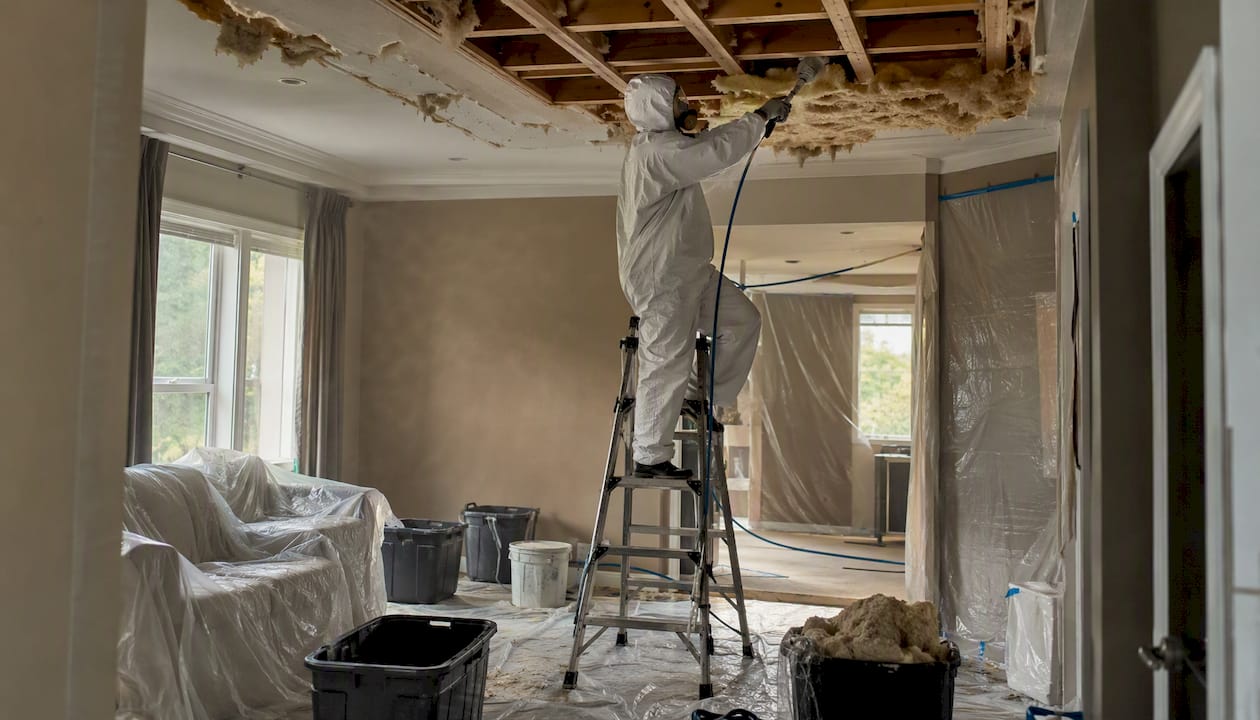
Stop work the moment you suspect asbestos, and hire a licensed asbestos surveyor before you lift another hammer. Renovating with asbestos without testing first is how a simple kitchen refresh turns into a full-house contamination job. The trust markers to look for right away: guidance from WorkSafeBC, a lab-analysed bulk sample report, and a written clearance certificate signed off by a licensed asbestos abatement contractor.
Here’s what to do in the next hour, not the next week:
- Isolate the area and close doors between it and the rest of the house.
- Stop cutting, sanding, or drilling into the suspect material immediately.
- Tell everyone in the household, plus any contractors on site, to stay out.
- Call a licensed asbestos surveyor to arrange sampling and lab testing.
- Hold off on any further work until you have written clearance.
Pro Tip: If your renovation timeline can flex at all, treat every suspect material as hazardous until a survey and clearance come back clean. That single decision prevents both a health exposure and a stop-work order that costs far more than the test.
Key Takeaways
Renovating with asbestos safely requires testing before disturbance, licensed abatement when removal is needed, and clearance testing before anyone re-occupies the space.
| Point | Details |
|---|---|
| Stop before you start | Halt work immediately at any sign of suspect material and isolate the area. |
| Test first, always | A licensed surveyor’s lab-analysed sample is the only way to confirm asbestos presence. |
| Match the job to the risk | Intact material can often be left alone or encapsulated; damaged material needs removal. |
| Demand written clearance | A signed clearance certificate, not a verbal assurance, confirms the air is safe. |
| Hire certified pros | MSN Environmental provides licensed testing, abatement, and clearance services for homeowners renovating older properties. |
Where to verify the rules and find licensed help
- WorkSafeBC for licensing checks and workplace-safety guidance.
- Health Canada for renovation-specific inspection guidance.
- Asbestos QLD for practical homeowner safety tips.
This article is general information, not a substitute for advice from a qualified doctor. Consult a qualified healthcare professional about your own circumstances before acting on anything here.
Table of Contents
- Why renovating with asbestos is riskier than most homeowners realize
- How to tell if your home has asbestos before you start
- Your pre-renovation checklist for handling suspected asbestos
- Should you remove, encapsulate, or leave asbestos alone?
- Hiring the right professional: what to check before you sign anything
- What testing and abatement typically cost and how long they take
- How a certified contractor handles asbestos from start to finish
- Get licensed testing and abatement before your project starts
- Sources
- FAQ
Why renovating with asbestos is riskier than most homeowners realize
There’s no safe level of asbestos exposure. Every fibre inhaled adds to a cumulative risk that shows up decades later as mesothelioma, lung cancer, or asbestosis, and the danger doesn’t come from having asbestos in the house. It comes from disturbing it.
Drilling, sanding, or demolishing a wall releases fibres too small to see or feel, and they stay airborne for hours, drifting through HVAC systems and settling on surfaces far from where the work happened. That unpredictability is exactly why DIY removal so often backfires: a homeowner thinks they’re doing a small job and ends up contaminating an entire floor.
Materials that commonly contain asbestos in older homes include:
- Textured “popcorn” ceilings
- Drywall joint compound and some plasters
- Vinyl floor tiles and the black mastic underneath
- Pipe and duct insulation
- Cement board siding and shingles
How to tell if your home has asbestos before you start
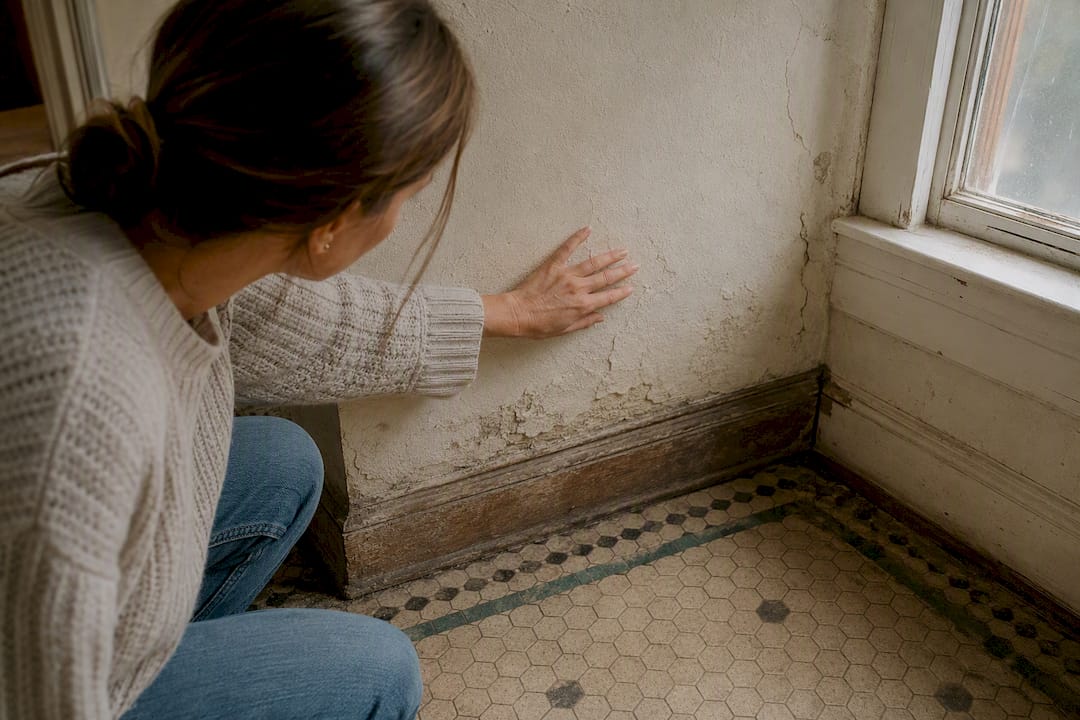
Assume anything installed before the 1990s might contain asbestos until testing proves otherwise. Homes from the 1950s through the 1980s are especially likely to have it in flooring, insulation, and ceiling texture, and the age of the house matters more than how it looks.
Check these spots first:
- Attic insulation, particularly loose-fill vermiculite
- Textured ceilings and older plaster finishes
- Nine-inch or twelve-inch vinyl floor tiles
- Insulation wrapped around basement pipes
- Exterior cement siding or shingles
- Drywall compound at seams and corners
Some materials have a telltale look, like the marbled pattern in older vinyl tile, but appearance is not proof. Only lab analysis of a bulk sample confirms what you’re dealing with.
Pro Tip: Walk through before calling anyone and photograph every material you’re planning to touch. A short inventory with photos speeds up sampling and gives the surveyor a head start on quoting the job accurately.
Your pre-renovation checklist for handling suspected asbestos
Test before you break anything. That’s the whole checklist in one sentence, but here’s how it plays out step by step:
- Stop work and seal off the area with plastic sheeting if you can.
- Hire a licensed asbestos surveyor to sample suspect materials.
- Wait for the lab report before deciding anything else.
- Based on the report, choose to leave it alone, encapsulate it, or remove it.
- If removal or serious disturbance is needed, hire a licensed abatement contractor.
- Get clearance air testing and a written clearance certificate before moving back in.
Along the way, notify anyone who needs to know:
- Your general contractor, so scheduling accounts for the delay
- Your property manager or condo board, if you’re in a shared building
- Local building authorities, if permits are tied to the scope of work
Booking a pre-renovation assessment early in the planning stage avoids the scramble that happens when suspect material turns up mid-demolition.
Should you remove, encapsulate, or leave asbestos alone?
Leaving intact material undisturbed is often the safest and cheapest option. Removal only becomes necessary when material is damaged, deteriorating, or directly in the path of planned construction.
Three real paths exist once your survey report comes back:
Leave in place. If the material is stable and won’t be touched, experts generally recommend monitoring it rather than disturbing it for no reason.
Encapsulate or encase. Sealing damaged material under a protective coating or covering can be a workable middle ground when full removal isn’t required by the scope of work.
Contain and remove. For anything that has to come out, licensed teams use wet methods to suppress fibres, negative air pressure to keep them from spreading, HEPA filtration to scrub the air, and sealed waste packaging with decontamination units at the exit point.
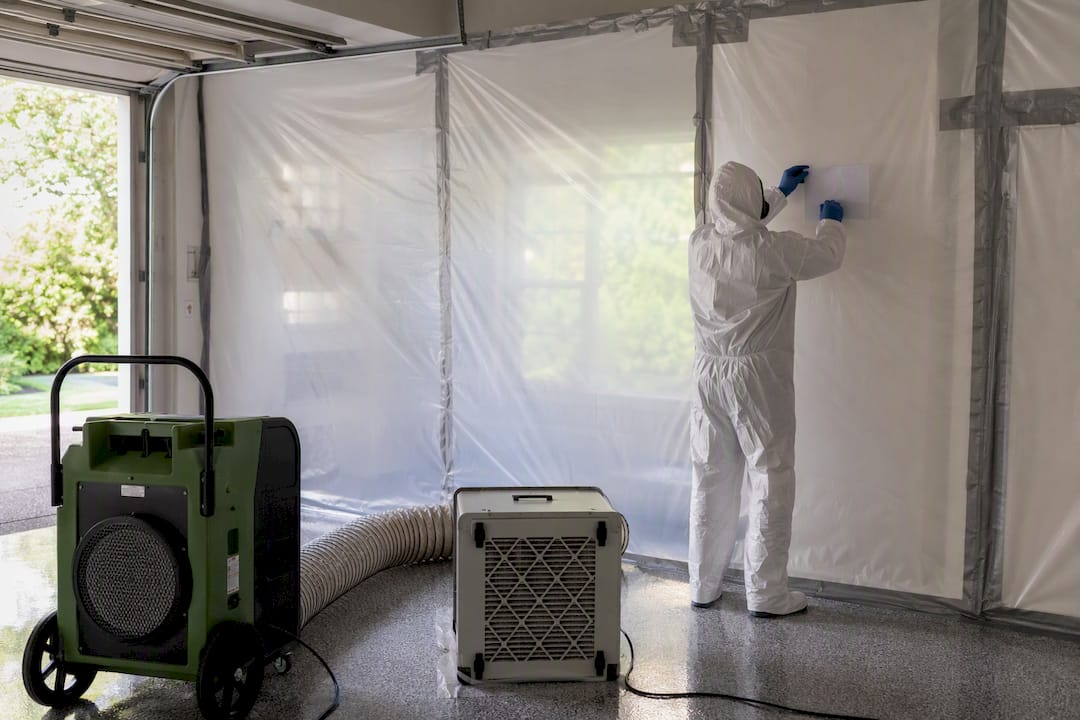
| Approach | When it’s used | Main trade-off |
|---|---|---|
| Leave in place | Material is intact and won’t be disturbed by the project | Lowest cost, but requires future monitoring |
| Encapsulate | Material is stable but the project touches the area | Cheaper than removal, doesn’t eliminate the material |
| Contain and remove | Material is damaged or must be demolished | Highest cost, but permanently resolves the hazard |
Whichever path you take, the job isn’t done until clearance air testing confirms fibre counts are back to acceptable levels and you have a written clearance certificate in hand.
Pro Tip: Never treat a verbal “it’s fine now” as clearance. Ask for the actual lab-verified certificate before you move furniture back in.
Hiring the right professional: what to check before you sign anything
Hire a licensed asbestos surveyor for testing and a licensed asbestos abatement contractor for any removal or containment work. Those are two different credentials, and a legitimate operator will never blur the line between them.
Ask to see, in writing:
- The survey report with lab analysis results
- A written abatement plan outlining methods and containment
- Licence numbers or certifications you can verify independently
- Proof of insurance and workplace-safety registration
- A clearance testing plan, including who does the testing and when
On your first call, ask how they suppress fibres, how long the job will take, where the waste goes, and how clearance gets confirmed. A contractor with nothing to hide answers all of that without hesitation, and most reputable abatement teams won’t even bid on a job without a survey report in hand first.
Watch for red flags: quotes that seem too low for the described scope, reluctance to show licence numbers, suggestions to toss waste in the regular garbage, or no mention of clearance testing at all.
Pro Tip: Ask for references and a sample clearance certificate from a similar past job, then confirm the contractor’s licence status directly with your provincial workplace-safety body, such as WorkSafeBC where that applies.
What testing and abatement typically cost and how long they take
Testing is almost always the fastest, cheapest part of the process. Abatement costs and timelines swing much more, depending on how much material needs to come out and how contained the space is.
Budget for these pieces:
- Surveyor site visit and sample collection
- Accredited lab analysis fees
- Abatement labour and containment setup
- Equipment like negative-air machines and HEPA units
- Regulated waste disposal and transport
- Clearance air testing after the work is done
Rough timing, in general terms:
- Sampling and lab results: a matter of days to a couple of weeks.
- A small, contained abatement job: often one to three days.
- Larger removals involving multiple rooms or floors: several days to a few weeks.
Local disposal rules and notification requirements can add time, so get two or three written quotes and build clearance testing into your renovation calendar, not as an afterthought tacked onto the end.
How a certified contractor handles asbestos from start to finish
A certified contractor follows the same sequence every time: site survey, written abatement plan, controlled removal, regulated disposal, clearance testing, written certificate. There’s no improvising in a job done right.
On site, that looks like:
- A risk assessment that maps exactly what’s present and where
- Wet-method application to keep fibres from becoming airborne
- Negative-air containment sealing the work zone off from the rest of the house
- HEPA-filtered vacuums and air scrubbers running throughout the job
- Sealed, labelled waste transported to an approved disposal site
- Lab-verified clearance testing before anyone re-enters the space
A professional survey isn’t paperwork for its own sake. It categorises the type, condition, and amount of material present, and that classification is what determines whether removal is even necessary, what a contractor can legally bid on, and what containment level the job requires.
MSN Environmental technicians specialize in hazardous material removal and use industry-standard containment and filtration equipment on every job.
Pro Tip: Before signing anything, ask the contractor to walk you through the full timeline and show you a sample clearance certificate from a past project. If they can’t produce one, keep looking.
What certified crews wish more homeowners understood
Fibre release doesn’t follow a predictable pattern. Even a small cut into old drywall compound can send fibres further than expected, and the cleanup after a DIY mistake routinely costs more than hiring it out right the first time. A clearance certificate isn’t a formality. It’s the only proof that the air in your home is actually safe to breathe again.
Get licensed testing and abatement before your project starts
If you’re renovating with asbestos anywhere in the picture, MSN Environmental gives you a faster path to a safe worksite than piecing it together yourself: certified surveyors, licensed abatement crews, and clearance testing under one roof, so you’re not chasing down three different companies while your renovation sits idle.
What that looks like in practice:
- Bulk sampling and accredited lab analysis before any demolition begins
- Containment and removal using wet methods, negative air, and HEPA filtration
- Regulated disposal handled entirely by the crew, no household bins involved
- Clearance air testing with a written certificate before you move back in
MSN Environmental has built a track record across hazardous material removal, and if you’re still weighing whether a DIY approach makes sense, this breakdown of reasons to hire certified professionals lays out exactly what’s at stake. Book an inspection now and get your survey scheduled before your renovation timeline slips any further.
While you’re planning pre-renovation checks, it’s also worth asking about radon, since older homes often carry more than one hidden hazard, and radon mitigation is a common companion check for the same vintage of house.
Sources
- WorkSafeBC — Asbestos campaign
- Health Canada — Renovation and asbestos video
- Tips when home renovating — Asbestos QLD
FAQ
Will 30 minutes of asbestos exposure hurt you?
Even brief exposure adds to lifetime risk, since there’s no safe threshold below which fibres are considered harmless. A short DIY task that disturbs material still isn’t a risk worth taking.
What’s worse, mould or asbestos?
They pose different types of harm and neither should be ignored. Mould reacts fast with respiratory and allergy symptoms, while asbestos causes no immediate symptoms but raises long-term cancer risk, which is part of why professional testing matters for both.
What are the first signs of asbestos exposure?
There typically aren’t any immediate symptoms. Asbestos-related diseases usually develop over decades, which is exactly why testing before disturbance matters more than waiting to see how you feel afterward.
Is a little exposure to asbestos okay?
No exposure level is considered risk-free. Even small amounts of airborne fibre exposure add to cumulative long-term risk, which is why licensed testing before any renovation work is the recommended standard.