

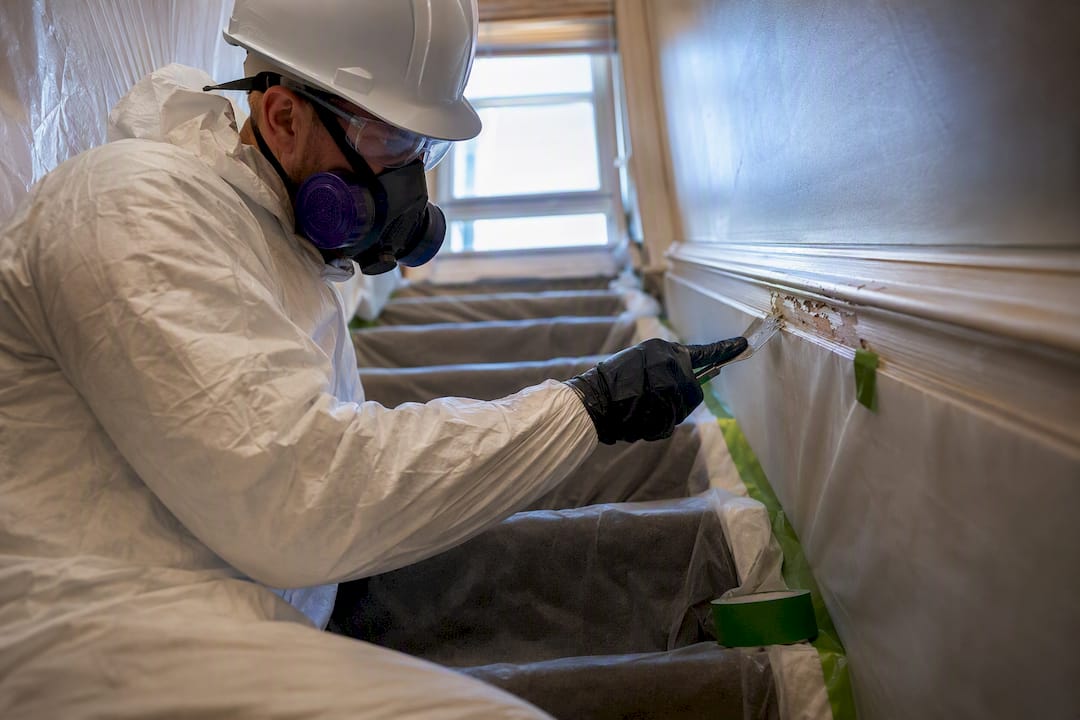
Professional lead paint removal typically costs $6 to $17 per square foot, with most focused interior jobs ranging between $1,500 and $15,000 and whole-house projects reaching $10,000 to $30,000 or more. The single biggest factor isn’t square footage. It’s which abatement method your contractor chooses, and whether testing and clearance testing are already built into the quote or added later as surprises.
TL;DR:
- The choice of abatement method significantly influences costs, with full removal often exceeding $8 per square foot and encapsulation staying below $10.
- Proper lead abatement includes testing, containment, removal, disposal, and clearance, and quotes should itemize each step to avoid hidden charges.
- Exterior projects or work involving deteriorated paint typically cost more, especially if soil remediation or window replacements are involved.
- Clearance testing after abatement usually adds $300 to $700 per round, and skipping this step risks unsafe re-occupancy.
- Comparing at least three certified contractors with detailed, transparent quotes reduces the risk of hidden costs and corners cut.
Table of Contents
- What is lead abatement, and why does the terminology matter?
- How much does lead paint removal cost per square foot?
- What line items should be on every lead paint removal quote?
- Which abatement method is right for your project?
- How much do testing and clearance testing cost?
- What does a real lead paint abatement project look like?
- How do you get an accurate estimate and compare contractors?
- What we’ve learned from the field
- Get an itemized lead abatement estimate
- Sources
- FAQ
What is lead abatement, and why does the terminology matter?
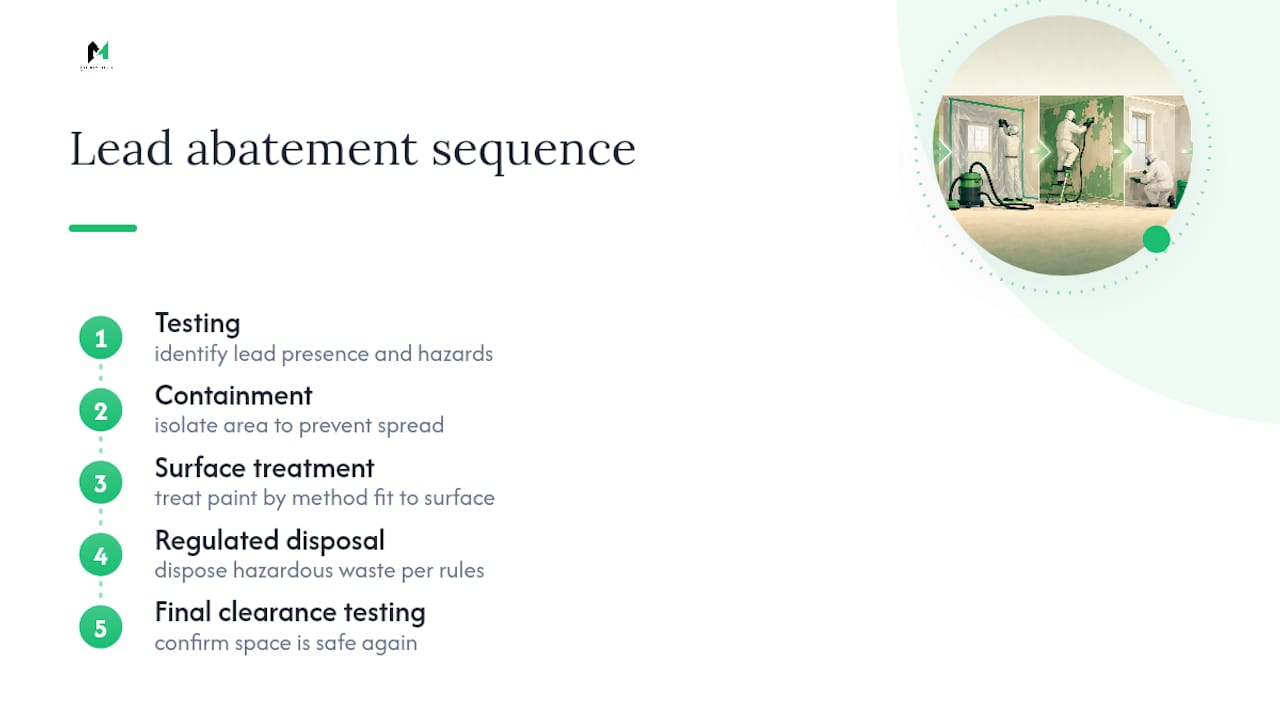
Before pricing anything, it helps to know the correct term. “Lead paint removal” is the phrase homeowners search for, but the industry itself uses “lead abatement” to describe the full regulated process: testing, containment, treatment (by whichever method fits the surface), disposal, and final clearance testing to confirm the space is safe again. A contractor who only quotes “removal” and skips the testing and clearance steps isn’t quoting abatement at all. That distinction is worth remembering every time you compare bids, because it explains why two quotes for the same room can differ by thousands of dollars.
How much does lead paint removal cost per square foot?
Pricing splits sharply by method, and that split is the first thing to understand before you look at any total.
- Encapsulation: roughly $1 to $10 per square foot, the cheapest option for intact, low-friction surfaces like walls and ceilings.
- Enclosure (covering with new material): similar mid-range pricing, often chosen for siding or walls where a permanent physical barrier makes more sense than a coating.
- Full removal or chemical stripping: commonly $8 to $20 or more per square foot, reflecting the labour-intensive nature of stripping deteriorated paint down to bare substrate.
- Component replacement (windows, doors, trim): priced per opening rather than per square foot, but often the better long-term value on high-friction surfaces.
On real projects, those per-square-foot numbers translate into totals like this: a single contaminated window can run $400 to $1,500 depending on method, a full room often lands in the $1,500 to $5,500 range, and a whole-house interior project frequently reaches $10,000 to $30,000 once multiple rooms, trim work, and disposal are factored in.
The top of these ranges usually applies when: the property is older with multiple paint layers, the crew needs to work around occupants still living in the home, or local disposal and labour rates run high. Rural jobs with simple access sometimes beat these ranges; downtown row houses with tight stairwells rarely do.
What line items should be on every lead paint removal quote?
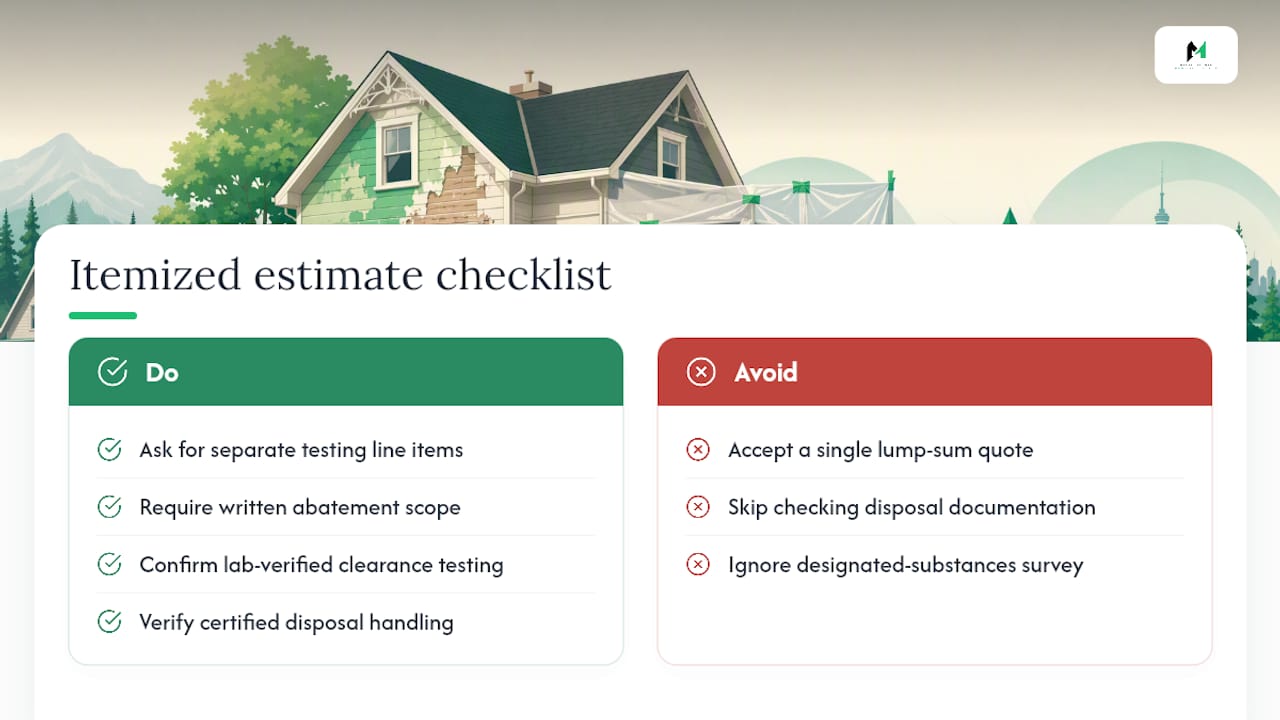
A proper quote reads like an itemized bill, not a single lump number. If a contractor hands you one flat figure with no breakdown, that’s a red flag worth asking about before you sign anything.
- Inspection and XRF testing. Expect $250 to $700 for a risk assessment or spot testing using an XRF analyzer, which reads lead content through paint layers without needing to cut into the wall.
- Containment and prep. Plastic sheeting, negative-air machines, and HEPA-filtered equipment all get billed separately, and the level of containment required (a sealed room versus a full negative-pressure enclosure) changes this line significantly.
- Labour. Crew hours scale with surface complexity. Ornate trim, multi-pane windows, and tall exterior walls all take far longer per square foot than a flat wall.
- Hazardous waste disposal. Lead debris is handled as regulated hazardous waste, which can mean special transport and landfill authorizations well beyond what general construction debris requires. This line alone commonly adds $150 to $1,500.
- Reconstruction, permits, and possible relocation. Repainting, replacing trim, or rebuilding drywall after abatement often gets quoted separately, and some jurisdictions require permits for the work itself.
Pro Tip: Ask your contractor to separate disposal tipping fees from the labour line. Many early estimates fold them together or leave them out entirely, and that’s exactly where costs quietly balloon once the job is underway.
Which abatement method is right for your project?
There’s no single “best” method. The right choice depends on the surface condition, whether it’s a friction point like a window sash, and how long you want the fix to last.
- Encapsulation works well on intact, low-wear surfaces and offers the lowest upfront cost, but encapsulants aren’t suitable for friction or high-wear surfaces like door jambs or window tracks. Budget for periodic re-inspection, since the coating needs monitoring over time.
- Enclosure covers the contaminated surface with new material such as drywall or siding. It costs more than encapsulation but holds up better on exteriors exposed to weather.
- Chemical stripping and HEPA sanding remove the paint entirely rather than covering it, which is the only option when paint is already deteriorating, chipping, or peeling. Expect the higher end of the per-square-foot range here.
- Component replacement swaps out the contaminated part altogether. For a window with lead paint baked into decades of layers, replacing the window often beats repeated encapsulation attempts that keep failing on a high-friction surface.
Exterior work adds its own wrinkle. If paint chips have contaminated the soil around a house’s foundation, soil remediation or capping can add a separate line item, and that possibility alone can push a modest exterior repaint into a five-figure project.
How much do testing and clearance testing cost?
Testing isn’t optional, and it isn’t one step. It’s several, each with its own price tag and purpose.
- Initial inspection or XRF spot testing: $250 to $700, depending on whether it’s a quick spot check or a full risk assessment covering the property.
- Post-abatement clearance testing: typically another $300 to $700 per round, and this is the lab-verified dust wipe or air sample that confirms the space is genuinely safe to reoccupy.
- DIY test swabs are cheap and tempting, but they’re unreliable with certain pigments and shouldn’t be your basis for planning a full abatement job.
Before hiring, ask to see current XRF lead testing credentials and abatement certification numbers. A legitimate contractor will produce these without hesitation.
What does a real lead paint abatement project look like?
Numbers land differently once you see them attached to an actual scenario.
- Single room, intact walls, encapsulation: two to three days of work, roughly $1,500 to $3,500 including testing.
- Window and door replacement: priced per opening, often $400 to $1,500 each depending on size and trim complexity, with the guidance on handling lead paint on windows covering what to check before committing to replacement over repair.
- Whole-house interior: one to two weeks depending on room count, with totals commonly in the $10,000 to $30,000 range.
- Exterior work with soil involvement: can run several weeks and push past $15,000 once multiple windows, siding sections, or soil capping are added.
Temporary relocation becomes common on whole-house interior jobs, especially with young children or pregnant occupants in the home, and hotel costs typically run $100 to $200 per night on top of the abatement bill itself.
How do you get an accurate estimate and compare contractors?
Getting three quotes isn’t just a nice habit here. It’s the only reliable way to spot a contractor who’s quietly skipping steps to undercut everyone else.
- Insist on an itemized quote covering testing, containment, labour, disposal, reconstruction, and clearance testing as separate lines, not one bundled number.
- Ask for certification numbers and proof of insurance, and call the references they give you rather than taking their word for it.
- Require clearance testing in writing, with the lab report to be delivered before you pay the final invoice.
- Watch for red flags: vague method descriptions (“we’ll take care of it”), no mention of clearance testing, or a bid dramatically lower than the other two.
- Get three quotes minimum, and when one comes in noticeably cheaper, ask specifically what’s missing before assuming it’s a deal.
Pro Tip: If a bid seems too good to be true on a lead job, it usually is. The corner being cut is almost always disposal documentation or clearance testing, and both matter for your family’s safety and your resale disclosures.
For broader site prep, the same logic that governs pre-task safety planning on construction sites applies directly to abatement: a documented plan before work starts prevents most of the disputes that show up on the invoice later.
What we’ve learned from the field
Estimates go sideways in predictable places: a wall that looks fine on inspection day turns out to have three failed paint layers once sanding starts, or a disposal facility raises its tipping fee mid-project. Certified crews build in contingency for exactly this, sequencing work room by room so occupants stay clear of containment zones and clearance results come back before anyone moves back in. If you want the technical detail behind how testing actually works, XRF lead testing is worth the read.
— Moacyr
Get an itemized lead abatement estimate
Certain environmental service providers price lead abatement in a transparent way with testing, containment, labour, disposal, and clearance testing listed separately, not buried in one number you can’t question. That transparency is the real difference between a quote you can trust and one that grows after the crew arrives.

Every estimate includes an inspection with XRF testing, a written scope for the abatement method that fits your surfaces, and lab-verified clearance testing before the job is considered complete. Certified technicians handle disposal in line with hazardous waste rules, so you’re not left guessing whether your contractor cut corners on transport or landfill documentation. If you’re planning a renovation in an older home, it’s also worth reviewing the designated substances survey requirements that can apply alongside lead testing.
Read more on why certified hazardous material removal protects both your health and your resale value, then reach out to book an inspection and get your itemized estimate started.
This article is general information, not a substitute for advice from a qualified doctor. Consult a qualified healthcare professional about your own circumstances before acting on anything here.
Sources
- Lead Paint Abatement Cost: What It Really Takes (2026)
- Lead Paint Removal Cost 2026: Inspection, Abatement, and Safer Options | HomeCostLab
- How much does lead paint removal cost? (2026) | MyHomeScore
- Lead Paint Removal Cost Calculator (2026) — Free Online Estimate | HomeCostCalc
FAQ
Can I remove lead paint myself?
DIY removal is legally allowed in many cases but strongly discouraged on any deteriorated or large-scale surface, since improper sanding or scraping releases lead dust that’s far more dangerous than the intact paint itself. Professional containment and HEPA filtration exist specifically to prevent that contamination from spreading through your home.
Can a homeowner paint over lead paint?
Painting over lead paint without proper encapsulation doesn’t seal it safely. A true encapsulant is a specific, tested product designed to bond permanently, and it isn’t suitable for high-friction surfaces like window sashes or doors where the coating will wear through with use.
Is scraping off lead paint bad?
Dry scraping is one of the more hazardous ways to disturb lead paint, since it generates fine dust and chips that settle into carpets, HVAC systems, and soil. Professional abatement uses wet methods and HEPA vacuums specifically to control that dust, which is a core reason certified removal costs more than DIY scraping.
What happens if I inhaled lead paint dust?
Short-term exposure to lead dust can cause headaches, nausea, or irritation, while repeated exposure carries more serious long-term health risks, particularly for children and pregnant people. Anyone concerned about exposure should speak with a doctor, and the property should undergo professional testing and clearance testing before anyone continues living or working in the space.