

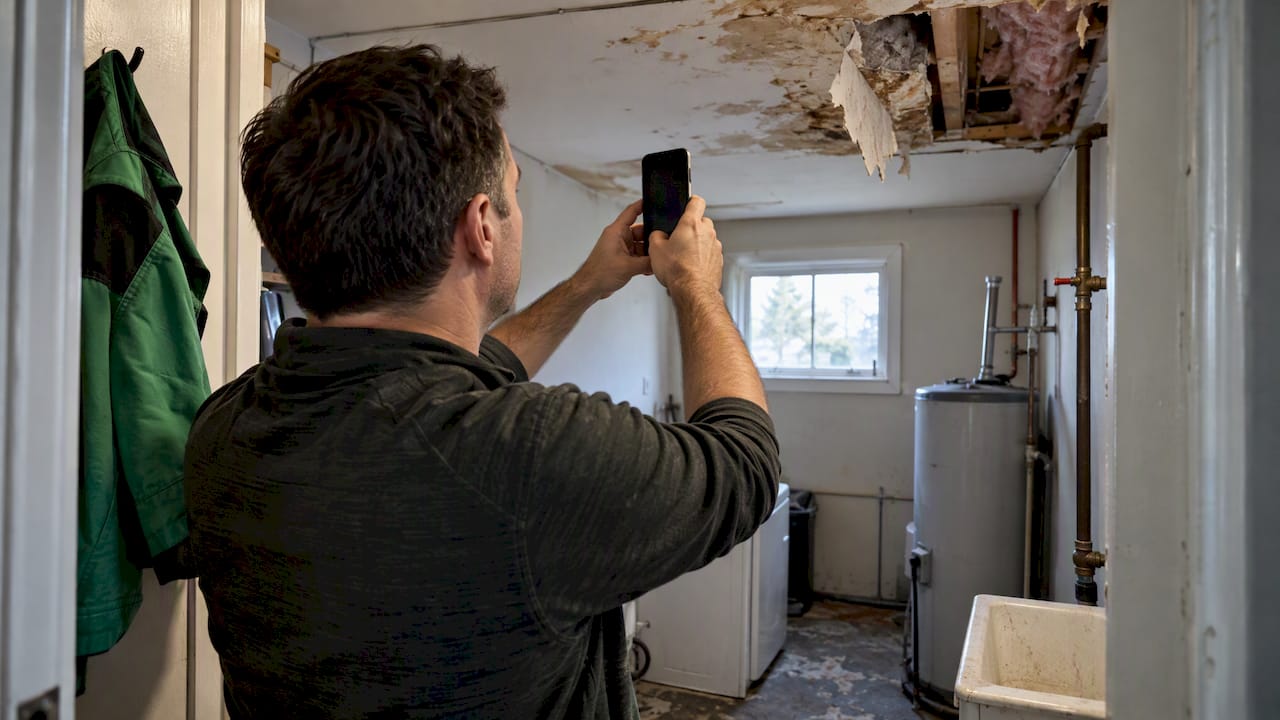
Generally, no: standard homeowners policies exclude routine asbestos abatement as ordinary maintenance. Insurers typically pay for remediation only when asbestos is disturbed or released by a covered peril, such as fire or sudden water damage, and then only as part of the repair claim, minus your deductible and within policy limits. If you suspect asbestos, read your policy’s pollutant exclusion and endorsement sections, then call your insurer or broker before any work starts.
TL;DR:
- Insurance coverage for asbestos removal activates only when asbestos is disturbed due to a covered peril, such as fire or burst pipe, not for routine maintenance.
- Proper documentation, including pre-renovation surveys, detailed scope of work, and chain-of-custody lab reports, is crucial for insurers to approve claims.
- Costs for asbestos abatement vary widely, from low thousands for small areas to tens of thousands for full-home remediation, depending on material type and location.
- Only licensed professionals should handle asbestos removal, as DIY approaches risk fibre release and often violate health regulations.
- Homeowners need to proactively test, photograph, and document asbestos and damage before contact with insurers to maximize claim success.
Table of Contents
- When insurers will pay: covered perils, triggers and examples
- Why many policies exclude asbestos removal outright
- How to prove coverage and file a claim
- How asbestos is assessed and what pre-renovation surveys do
- Typical asbestos removal costs and what drives the price
- Why hire certified contractors instead of doing it yourself
- How MSN Environmental documents insurer-ready abatement
- What the research actually tells homeowners to prioritize
- If you need help: contact MSN Environmental for testing or abatement
- Sources
- FAQ
When insurers will pay: covered perils, triggers and examples
Insurers generally define a “covered peril” as a specific, sudden event named in your policy, things like fire, windstorm, vandalism, or a burst pipe. According to Canada, typical covered perils include fire, wind-related weather damage, theft, vandalism, and sudden internal water damage, while floods and earthquakes usually require separate coverage bought on top of a standard policy.
The trigger that unlocks asbestos coverage is narrow: the material has to be disturbed or released because of that covered loss, and the remediation has to be a necessary step in repairing the insured damage, not a separate upgrade you decided to make while contractors were already on site.
A few situations show how this plays out in practice:
- A fallen tree punches through a roof and exposes asbestos-containing shingle underlay, so the repair crew has to remove it to fix the hole.
- A burst pipe soaks a wall cavity insulated with vermiculite, and the wet material has to come out before drywall can go back up.
- A kitchen fire damages ceiling tiles that turn out to contain asbestos, and the fire restoration plan has to account for safe removal.
Even in these cases, your deductible applies first, and the payout is capped by your policy limits. If the peril itself (flood, earthquake) isn’t covered, the asbestos remediation tied to it usually isn’t either.
Why many policies exclude asbestos removal outright
Most homeowners policies contain a pollutant or contaminant exclusion that treats asbestos, along with mould, lead, and similar hazards, as excluded unless the release is tied directly to a covered peril. Canada.ca’s guidance on unexpected events confirms that remediation tied to a covered loss can be paid as part of the property repair claim, but routine or pre-existing contamination generally isn’t.
Some insurers offer endorsements or riders, sometimes called sudden and accidental pollution coverage, that widen this exception slightly. These aren’t standard and usually cost extra.
To find out where you stand, check three parts of your policy:
- The definitions section, to see how “pollutant” or “contaminant” is defined.
- The exclusions section, where asbestos and hazardous materials are typically listed by name.
- The endorsements and limits section, which shows any add-ons you’ve purchased and their dollar caps.
Pro Tip: Call your broker and ask them to read the pollutant exclusion out loud to you; policy wording is often clearer in conversation than on the page.
How to prove coverage and file a claim
Once you suspect asbestos was disturbed by a covered event, the way you document it matters as much as the event itself. Insurers need a clear paper trail connecting the damage to the necessary removal work.
- Secure the area first. Photograph the damage, restrict access to the affected room, and avoid touching or disturbing any suspect material.
- Get professional testing. Arrange bulk or air sampling through an accredited lab, and keep the chain-of-custody paperwork with the results.
- Collect contractor documentation. Get a written scope of work and estimate that explicitly ties the abatement to the insured damage, not to unrelated upgrades.
- Notify your insurer promptly. Delaying notification can complicate a claim, since most policies require you to report a loss and begin mitigation within a reasonable timeframe.
- Keep every receipt and email. Insurers may ask for a full record of communications, invoices, and inspection reports before settling.
Insurers assess claims on a “necessity” standard: according to Canada.ca, remediation tied to a covered peril may be paid as part of the repair claim, but only when the paperwork shows the work was required to fix insured damage rather than to address a pre-existing condition.
How asbestos is assessed and what pre-renovation surveys do
Testing generally falls into a few categories, and knowing which applies helps you understand what your contractor or insurer will ask for.
- Bulk sampling involves taking a small physical piece of suspect material and sending it to a lab to confirm asbestos content.
- Component or air sampling measures fibres in the air, often used before and after abatement to confirm the space is safe.
- Clearance testing happens at the end of a remediation project to certify the area meets safety thresholds before it’s reopened.
A pre-renovation asbestos survey is done before any demolition or renovation work begins, specifically to catch asbestos-containing materials before they’re accidentally disturbed. Health Canada’s guidance notes that intact, undisturbed asbestos generally doesn’t need to be removed at all, which makes a survey a cheaper alternative to discovering the problem mid-project. Testing and clearance work should be done by licensed contractors and accredited labs, who provide a formal report with chain-of-custody documentation.
Typical asbestos removal costs and what drives the price
Costs vary widely depending on scope. Spot removal of a small, contained area costs far less than whole-house remediation, and industry cost reporting shows small jobs can run in the low thousands of dollars while full-home projects can climb into the tens of thousands.
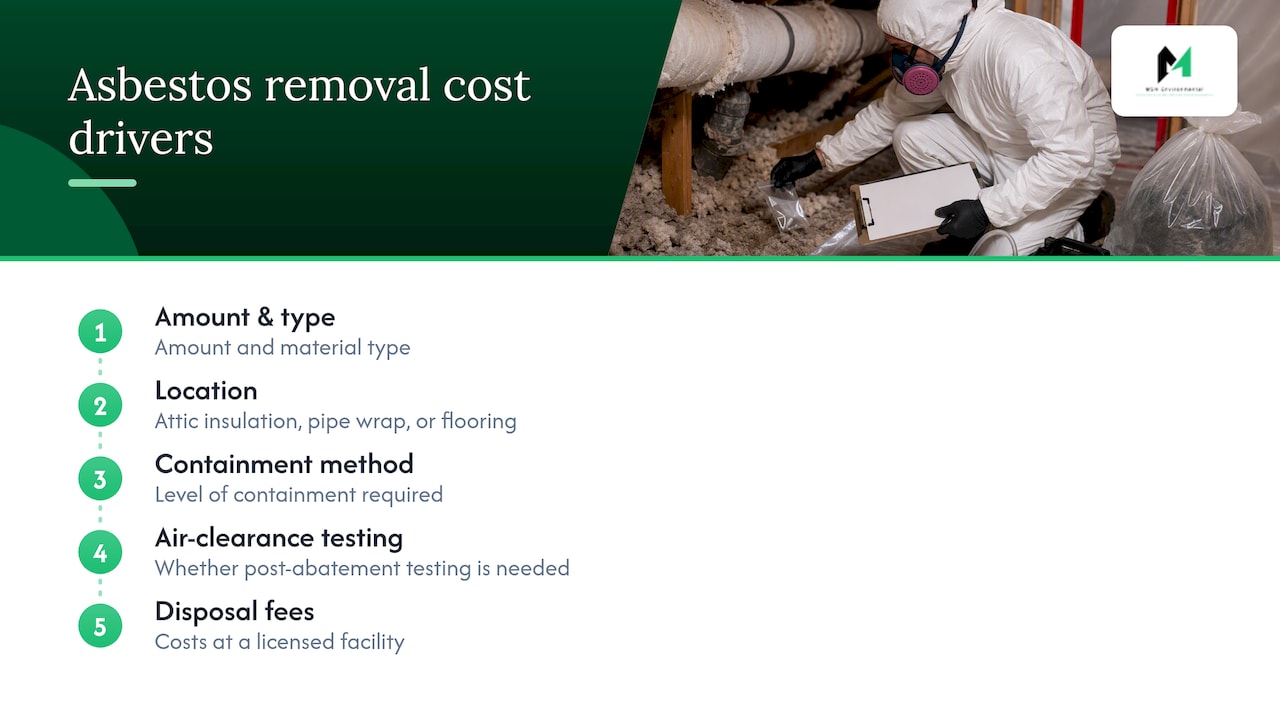
What actually drives the price: the amount and type of asbestos-containing material, its location (attic insulation versus a single pipe wrap versus flooring), the containment method required, whether air clearance testing is needed, and disposal fees at a licensed facility.
When a claim is involved, insurers generally pay only for work judged “reasonable and necessary” to repair the insured damage. They’ll typically decline to cover cosmetic upgrades or optional repair choices bundled into the same project, even if the abatement itself is legitimately covered.
Why hire certified contractors instead of doing it yourself
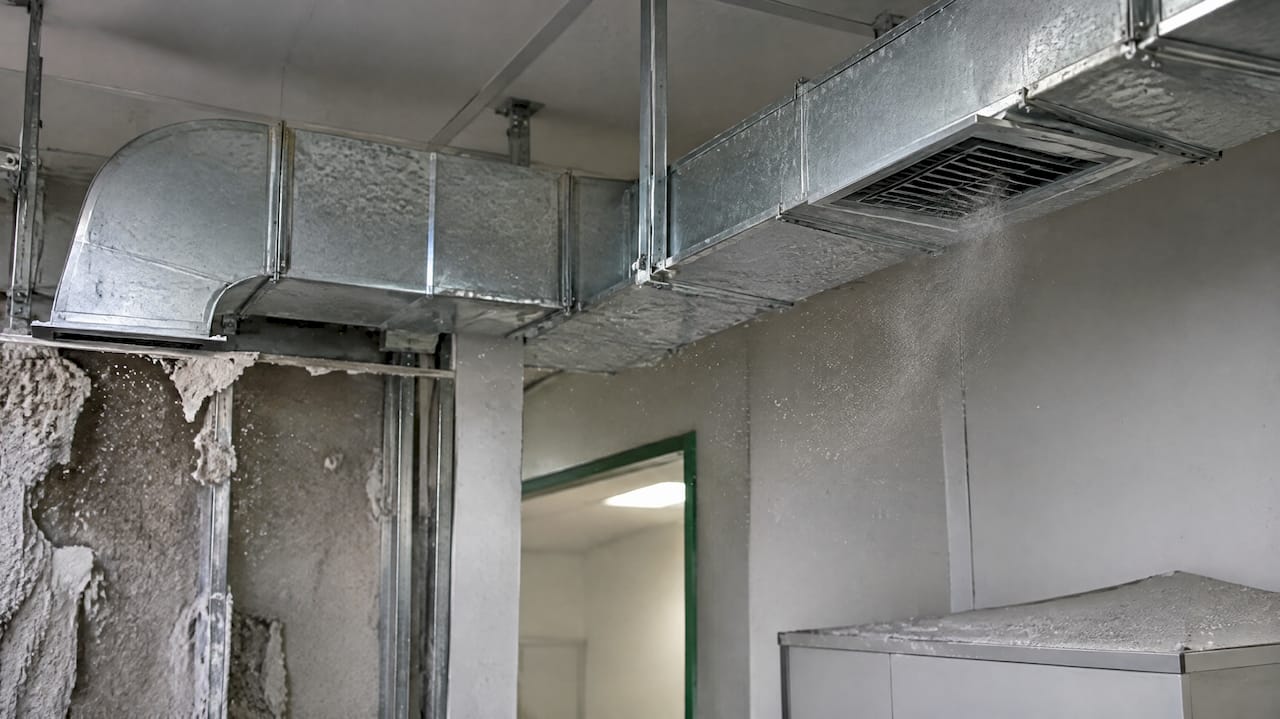
Disturbing asbestos without proper containment releases fibres into the air, where they can spread through HVAC systems and settle on surfaces well beyond the original work area. Health Canada explicitly advises against DIY removal because of this fibre release risk, recommending professional handling for any disturbance.
In Ontario, O. Reg. 278/05 sets out specific duties for asbestos management on construction projects and in buildings, including when formal surveys and control measures are required, though provisions differ for owner-occupied single-family homes.
Before hiring anyone, ask for:
- Proof of licensing and worker training specific to asbestos abatement.
- Liability insurance coverage documents.
- A written scope of work and disposal manifest for the waste stream.
Pro Tip: Ask to see a completed clearance certificate from a past job, not just a sales brochure, since that’s the document your insurer will eventually want too.
How MSN Environmental documents insurer-ready abatement
MSN Environmental provides testing and inspection services, including bulk sampling, air quality testing, and designated substance surveys, alongside full asbestos removal work. The company’s process is built to produce the paperwork a claim actually needs.
Typical deliverables include:
- A lab report with chain-of-custody documentation for every sample taken.
- A written scope of work tying the abatement to the specific damage identified.
- Air clearance certificates confirming the space is safe to reoccupy.
- Waste disposal manifests and itemized invoices for insurer review.
These documents give homeowners a complete file to hand to an adjuster, rather than a verbal assurance that the work was necessary.
What the research actually tells homeowners to prioritize
The most overrated piece of advice in this space is “just call your insurer and ask.” Coverage decisions hinge on documentation that has to exist before you call, not paperwork you assemble afterward under pressure. The homeowners who get paid are the ones who tested first, photographed the damage before any cleanup, and had a contractor’s scope of work that spelled out the causal link between the covered peril and the need for abatement.
Conventional wisdom treats asbestos removal as a single yes-or-no coverage question. It isn’t. It’s a documentation problem wearing an insurance question’s clothes. A pre-renovation survey done before you ever file a claim is worth more than any argument you could make to an adjuster after the fact, because it removes the ambiguity insurers use to deny claims.
If you take one thing from this: test before you touch anything, and keep every report. The claim is won or lost in the paperwork you generate in the first 48 hours.
— Moacyr
If you need help: contact MSN Environmental for testing or abatement
Getting a pre-renovation survey or removal estimate from MSN Environmental starts with a call or a request through the asbestos removal services page. A technician visits, assesses the suspect material, and outlines what testing or containment work is needed before anything is disturbed.
If you’re building an insurance claim, a certified asbestos removal company can provide the lab reports, written scopes of work, and clearance certificates an adjuster typically asks for.
- Request a survey or estimate through the asbestos removal page.
- Ask specifically for documentation formatted for an insurance claim.
- Keep copies of every report for your own file, not just the insurer’s.
Sources
For primary documents rather than summaries, these are worth bookmarking:
For homeowners comparing pre-purchase inspection workflows more broadly, pre-purchase inspection guidance from a home inspection provider offers a useful parallel process.
This article is general information, not a substitute for advice from a qualified doctor. Consult a qualified healthcare professional about your own circumstances before acting on anything here.
FAQ
Who is liable for asbestos removal?
Liability generally falls on the property owner to manage or remove asbestos safely, though a contractor or previous owner may share responsibility if they caused a disturbance or failed to disclose a known hazard. In workplaces or larger buildings, Ontario’s regulation places specific duties on building owners and employers.
How much compensation can you get for asbestos exposure?
There’s no fixed compensation figure since outcomes depend on the specific circumstances, the party at fault, and applicable provincial rules. Homeowners pursuing an insurance claim should focus on documenting a clear link between a covered peril and the required remediation rather than expecting a set payout.
Can you sell a house with asbestos in Canada?
Yes, selling a home with asbestos is generally permitted as long as you disclose known hazards to the buyer, since non-disclosure can create legal risk later. Many sellers arrange a pre-renovation or pre-sale survey so buyers have clear information about the condition and location of any asbestos-containing materials.
Can you sue for asbestos exposure in Canada?
Legal action for asbestos exposure is possible in certain circumstances, particularly where negligence or failure to disclose a known hazard caused harm, but outcomes depend heavily on the facts of the case. Anyone considering this route should speak with a lawyer, since provincial rules on liability and time limits vary.