

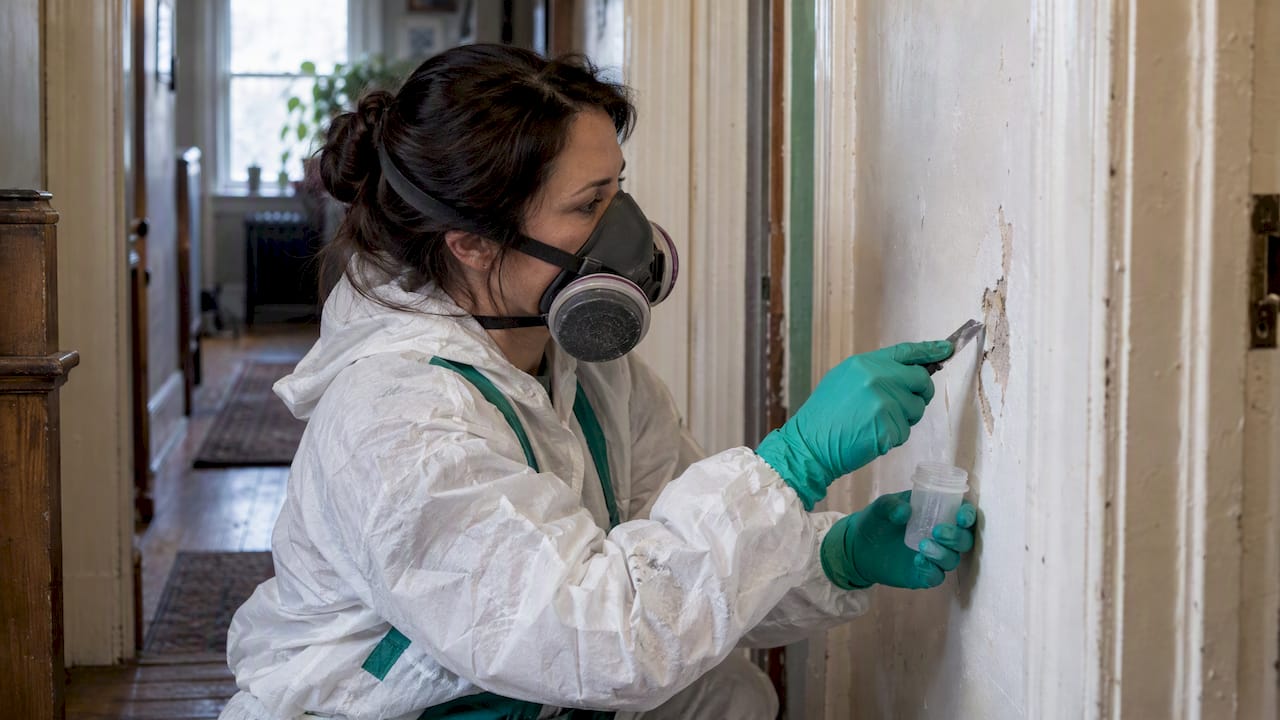
If you suspect asbestos, do not disturb it. Stop the work, keep people away from the area, and arrange a professional inspection before you sand, drill, or demolish anything. If testing confirms asbestos, follow the inspector’s recommendation on whether to encapsulate, enclose, or fully remove the material.
TL;DR:
- Before any renovation, repair, or demolition that could disturb suspected material, arrange professional testing; visible damage and vermiculite insulation also warrant a survey.
- Intact asbestos in good condition can often remain in place and be monitored, while cracked, crumbling, or material damaged by water needs prompt professional assessment.
- Bulk sampling identifies asbestos and its type; air sampling measures airborne fibers, and clearance testing confirms whether occupants can safely return after abatement.
- Encapsulation suits intact material unlikely to be disturbed; enclosure creates a barrier when sealing is impractical, while removal suits damaged material or spaces facing renovation.
- Compare written contractor quotes only after confirming each includes the same scope, with testing, containment, removal, disposal, and clearance costs itemized separately.
Table of Contents
- What asbestos is and why disturbance matters
- Common places asbestos hides in homes and buildings
- When to test: triggers that require a professional survey
- How professional asbestos testing and risk assessment works
- Abatement options: encapsulation, enclosure, and full removal
- What to expect during a professional removal or abatement job
- How to choose an asbestos contractor: qualifications and red flags
- Typical costs and timeline for residential asbestos work
- Regulations and safety controls to know
- MSN Environmental: what we offer and why it holds up
- A practical recommendation before you decide
- Get a proper assessment before you commit to anything
- FAQ
- Sources
What asbestos is and why disturbance matters
Asbestos is a group of fibrous minerals that builders mixed into insulation, flooring, cement, and sprayed coatings for most of the 20th century because it resisted heat and fire cheaply. It stopped showing up in most new construction after the 1990s, so older buildings carry the highest likelihood of containing it.
The danger comes from fibres, not the material itself. Breathing them in can lead to diseases that take decades to surface, which is why Health Canada warns that the risk comes from disturbance, not simply from presence.
- Intact, undisturbed asbestos-containing material is generally low risk.
- Cutting, sanding, or breaking it releases fibres into the air you breathe.
- Illness from exposure often appears years or decades after the fact.
Common places asbestos hides in homes and buildings
Asbestos shows up in predictable spots, and knowing them helps you flag risk before you start a project.
- Pipe and boiler insulation, especially wrapped fittings in basements and mechanical rooms.
- Vinyl floor tiles and the black mastic glue underneath them.
- Plaster, joint compound, and textured ceiling finishes like popcorn ceilings.
- Drop ceiling tiles and sprayed-on fireproofing in commercial buildings.
- Vermiculite attic insulation, a loose grey or silver pebble-like material.
Older homes carry the highest likelihood, and renovation hotspots like basement pipe runs, old flooring layers, and attic insulation deserve the closest look. Cracked, crumbling, or water-damaged material raises urgency because it is closer to releasing fibres.
When to test: triggers that require a professional survey
Testing is not optional guesswork. A handful of situations make it necessary before you proceed.
- Any renovation, demolition, or repair that could cut, sand, or break suspected material.
- Visible damage, water staining, or accidental disturbance of insulation, flooring, or ceiling finishes.
- Discovery of vermiculite insulation in an attic or wall cavity.
- Buying or selling a property, where a pre-purchase inspection or a designated substance survey before renovation may be required depending on the work planned.
Outside these triggers, intact material in good condition can often be monitored and left alone rather than removed immediately.
How professional asbestos testing and risk assessment works
Testing starts with bulk sampling: a technician collects small pieces of suspect material and sends them to a lab, which identifies whether asbestos is present and which type. This is the standard first step before any abatement decision gets made.
Air sampling comes next when risk needs quantifying, and clearance testing confirms the air is safe before anyone re-enters a space after work. For larger projects, a designated substance survey often falls to an occupational hygienist, who documents scope and testing results in a formal report.
- Bulk sampling confirms presence and type.
- Air sampling measures fibre concentration in occupied or work spaces.
- Clearance testing verifies safe re-entry after abatement.
- A written testing and assessment report with chain-of-custody details gives you a defensible paper trail.
A documented clearance test with sample lab results is one of the clearest signs a contractor’s process meets CCOHS abatement standards: ask to see one before you sign a contract.
Abatement options: encapsulation, enclosure, and full removal
Three strategies cover most asbestos jobs, and the right one depends on the material’s condition and what happens to the space afterward.
- Encapsulation seals the material in place with a sealant, keeping fibres locked in without removing the source. It suits intact material that will not be disturbed again soon.
- Enclosure builds a physical barrier around the material instead of sealing it directly, which can work when removal is impractical or too costly for the immediate need.
- Full removal takes the material out entirely and is the usual choice when it is damaged, friable, or likely to be disturbed by future renovations.
Pro Tip: Ask your contractor to explain why they recommend one method over another for your specific material and location, not just a default answer.
The decision should weigh the material’s current condition, where it sits in the building, how the space will be used going forward, and what the applicable regulation requires. A hygienist or qualified contractor should put that reasoning in writing as part of the scope of work.
What to expect during a professional removal or abatement job
A competent abatement follows a predictable sequence, and knowing it helps you judge whether a contractor is cutting corners.
- Pre-job: a site assessment, a written scope of work, any required notifications or permits, and a plan for occupants during the work.
- Containment: barriers go up, negative air machines and HEPA filtration run continuously, and technicians may use glove bags for isolated pipe insulation jobs.
- Work methods: wet removal techniques limit dust, HEPA vacuums collect debris, and waste gets bagged and labelled according to hazardous material rules.
- Post-work: clearance air testing confirms the space is safe, followed by decontamination of surfaces and equipment before anyone moves back in.
Containment with negative air and HEPA filtration is a standard control measure during abatement, according to CCOHS guidance on asbestos control, and its absence on a job site is a warning sign.
How to choose an asbestos contractor: qualifications and red flags
A qualified contractor should be able to answer every question below without hesitation.
- Ask about worker training, provincial licensing, and liability insurance coverage.
- Request references from comparable jobs, not just a company brochure.
- Confirm they provide a written scope of work and post-job clearance testing.
- Ask how they handle chain-of-custody for samples and where waste gets disposed of.
Pro Tip: Request a sample report from a past job. A contractor with nothing to show is a contractor with nothing to prove.
Red flags include refusal to document the scope, bids that skip testing altogether, or no mention of clearance testing before re-entry. A pre-renovation survey checklist can help you compare bids on equal footing.
Typical costs and timeline for residential asbestos work
Price depends on a handful of variables rather than a flat rate: the size of the affected area, how friable the material is, how complex containment needs to be, disposal volume, and the testing and clearance work bookending the job.
- Small remedial jobs, like removing a single damaged floor tile section, might take a day or two.
- Larger removals involving attic insulation or whole-room abatement take longer once you add planning, containment setup, the removal itself, and clearance testing.
- Get a written quote that states exactly what is included, then watch for add-ons like lab fees, disposal charges, or air monitoring billed separately.
Comparing quotes side by side only works when each one covers the same scope, so ask every contractor to itemize testing, containment, removal, and clearance separately.
Regulations and safety controls to know
Government guidance is consistent on one point: do not attempt removal yourself. Health Canada recommends professional testing before any renovation that might disturb suspected material, and leaves the removal decision to a qualified contractor once results come back.
Provincial rules add detail on top of that principle. Ontario’s regulation classifies asbestos work into Type 1, Type 2, and Type 3 operations, each with its own training, notification, and control requirements based on risk level.
Type 1 operations cover low-risk, minor disturbance work; Type 3 operations cover the highest-risk removal and demand the strictest containment and notification procedures.
Ontario Regulation O. Reg. 278/05
- Clearance testing after removal is a common requirement before a space can be reoccupied.
- Hazardous waste disposal must follow designated routes, not regular garbage collection.
- Owners may bear legal responsibility for commissioning a survey before tendering demolition or major renovation work.
MSN Environmental: what we offer and why it holds up
We specialize in hazardous materials removal, including asbestos removal services alongside mould, lead paint, and other designated substances, serving residential, commercial, and industrial clients. Our technicians receive specific training for abatement work, and we use equipment suited to containment, negative air control, and HEPA filtration on every job.
We document our process, from testing and assessment through to the step-by-step removal process, so clients see exactly what a scope of work and clearance testing look like before, during, and after the job.
A practical recommendation before you decide
Test before you touch anything, and favour a contractor who hands you a documented scope and clearance results over one who hands you a low number. The cost of testing is small next to the long-term health and liability exposure of guessing wrong.
— Moacyr
Get a proper assessment before you commit to anything
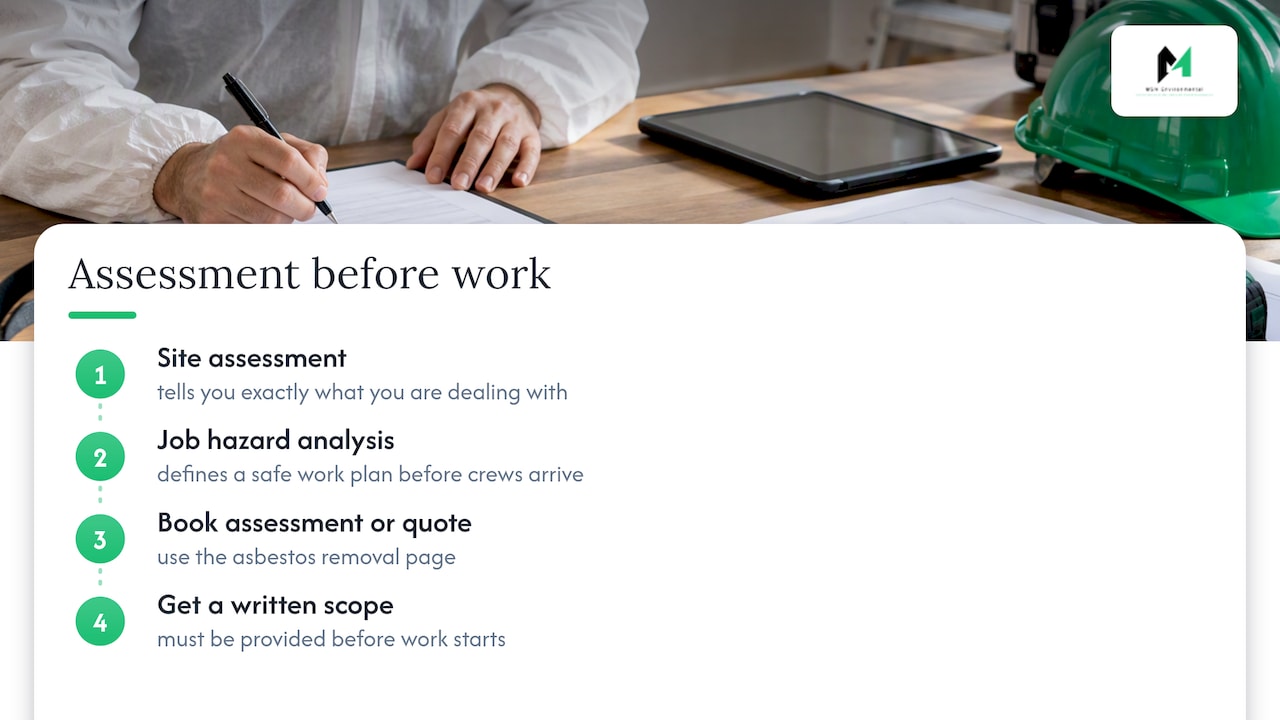
We make the first step simple: a site assessment that tells you exactly what you are dealing with before any work begins. If you suspect asbestos in a space you are about to renovate, demolish, or sell, our asbestos removal services page outlines how we scope, contain, and clear a job from start to finish.
For site-specific risk, a job hazard analysis can help you understand what a safe work plan should cover before crews arrive. Book a site assessment or request a quote through our asbestos removal page, and get a written scope before any work starts.
This article is general information, not a substitute for advice from a qualified doctor. Consult a qualified healthcare professional about your own circumstances before acting on anything here.
FAQ
Can you safely remove asbestos yourself?
No. Health Canada and occupational health guidance both recommend against DIY removal, since disturbing the material without proper containment and HEPA filtration risks spreading fibres through the whole building. Hire a qualified contractor to test and remove it instead.
How much does it cost for someone to remove asbestos?
Cost depends on the size of the affected area, how friable the material is, and how complex containment and disposal need to be, so there is no single flat rate. Get written quotes from qualified contractors that itemize testing, containment, removal, and clearance testing separately.
Can I remove asbestos myself?
Government guidance consistently advises against it: suspected material should be left undisturbed until a professional confirms whether asbestos is present and recommends a course of action. Health Canada’s renovation guidance specifically tells homeowners to hire a qualified specialist rather than attempt removal themselves.
Can you sell a house with asbestos in Canada?
Yes, selling a house containing asbestos is not illegal, but intact and undisturbed material is typically lower risk than material that gets disturbed during a sale-related renovation or inspection. Owners planning renovation or demolition work may be required to commission a designated substance survey before tendering the work, depending on the jurisdiction and project type.
Sources
- Asbestos and your health — Health Canada
- Abatement of hazardous materials — CCOHS
- Regulation respecting asbestos — Ontario