

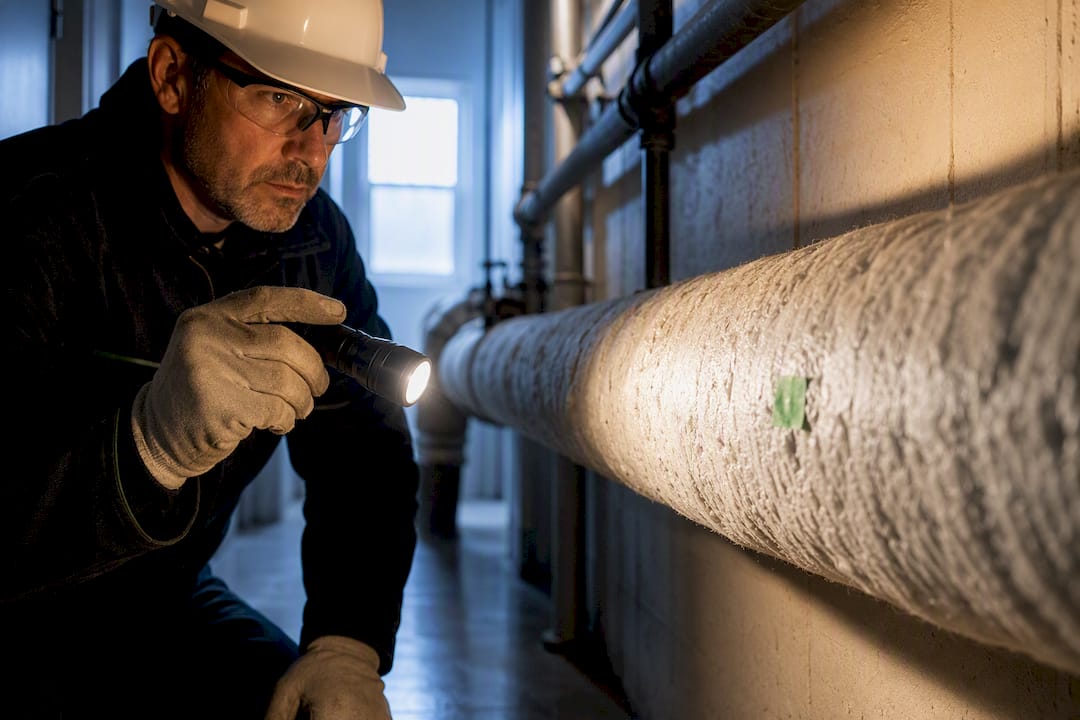
Breathing asbestos fibres raises your risk of asbestosis, lung cancer and mesothelioma, and there’s no identified safe level of exposure. If you suspect you’ve been exposed, write down where and when it happened, stop disturbing the material, see a doctor for a symptom check, and arrange professional testing before touching it again.
TL;DR:
- Any disturbance of asbestos-containing material can release dangerous fibres, so conduct a thorough assessment before starting renovation or demolition work.
- Professional testing and licensed removal are strongly recommended for damaged or friable asbestos materials to prevent airborne fibre release and health risks.
- Long latency periods mean symptoms often appear 10 to 40 years after exposure, making early detection and ongoing monitoring crucial for at-risk individuals.
- The risk of developing disease increases with both the amount and duration of asbestos inhalation, with even low-level exposure presenting some danger.
- Proper documentation and medical follow-up after exposure are essential, especially for those with heavy or occupational contact, to catch latent diseases early.
Table of Contents
- Asbestos health risks: the diseases fibres actually cause
- How people are exposed and who is most at risk
- How much exposure is dangerous, and why symptoms take decades to show
- Signs, symptoms and how doctors confirm a diagnosis
- If you think you were exposed, do this now
- Reducing exposure: prevention, safe management, and when a contractor is essential
- The psychological weight of an asbestos-related diagnosis
- Long-term monitoring after a known exposure
- Legal rules and safety guidelines you should know
- Where treatment and research stand today
- Why professionals treat every survey like it’s the only thing standing between a homeowner and a disaster
- Testing and licensed removal, when you’re ready for it
- Sources
- FAQ
Asbestos health risks: the diseases fibres actually cause
Asbestos fibres are small enough to lodge deep in lung tissue and stay there for decades. Once inhaled, they trigger ongoing inflammation and scarring that can eventually turn cancerous, which is why the World Health Organization classifies every form of asbestos as a proven human carcinogen.
Three diseases dominate the conversation, and each behaves differently:
- Asbestosis — permanent scarring of lung tissue that stiffens the lungs and makes breathing progressively harder. It’s not cancer, but it’s irreversible.
- Mesothelioma — a rare, aggressive cancer of the lining around the lungs or abdomen, almost exclusively linked to asbestos.
- Lung cancer — asbestos is a recognized cause, separate from and additive to smoking-related risk.
- Other cancers — research also ties asbestos exposure to cancers of the larynx and ovary.
The scale of the harm is hard to overstate. Occupational asbestos exposure alone causes more than 200,000 deaths worldwide every year and drives over 70% of all deaths from work-related cancers. That single statistic explains why regulators treat this material with the level of caution they do.
How people are exposed and who is most at risk
Asbestos doesn’t hurt anyone sitting quietly in a wall cavity. It becomes dangerous the moment it’s disturbed and fibres get released into the air you breathe.
Certain groups face far higher odds of exposure:
- Construction, demolition, and insulation workers handling older materials
- Mechanics doing brake or clutch repair on vehicles built before the 1990s
- Abatement crews and firefighters entering buildings with damaged materials
- Homeowners disturbing old attic insulation, vinyl floor tiles, or drywall mud during a renovation
- Family members exposed secondhand through fibres carried home on a worker’s clothing or hair
Pro Tip: If a household member works in a trade that might involve asbestos, have them change clothes and shower at the job site or in a mud room before greeting the rest of the family. Take-home exposure has caused documented illness in spouses and children who never set foot on a job site.
Intact, undamaged asbestos material bonded into flooring or pipe wrap is generally low-risk sitting still. Drill it, sand it, or smash it during a reno, and that calculus changes fast.
How much exposure is dangerous, and why symptoms take decades to show
There’s no threshold below which asbestos is considered safe. Every reputable health authority, including the National Cancer Institute, states plainly that risk simply rises with how much you inhale and for how long.
That said, dose and duration still matter for how likely disease actually becomes. A single afternoon of light disturbance carries far less risk than years of daily occupational exposure, though neither is risk-free. Symptoms typically don’t show up for 10 to 40 years after exposure, which is precisely why so many people diagnosed today were exposed back in the 1970s and 80s.
Smoking makes everything worse. Research on the interaction between asbestos and tobacco shows the combination multiplies lung cancer risk well beyond either exposure on its own, which is one of the strongest arguments for quitting if you’ve ever had a known exposure.
Signs, symptoms and how doctors confirm a diagnosis
The early symptoms are frustratingly ordinary, which is part of why asbestos disease often gets caught late. Watch for a persistent cough that won’t clear, shortness of breath that gets worse over months, chest pain or tightness, unexplained weight loss, or hoarseness.
None of those symptoms confirm asbestos exposure on their own. Diagnosis usually involves a combination:
- A detailed exposure history, including jobs held decades ago and any home renovation work
- Chest x-ray to spot early scarring or pleural changes
- CT scan for a more detailed look at lung structure
- Lung function tests to measure breathing capacity
- Biopsy, which is the most reliable way to confirm asbestos fibres in tissue, though it can’t tell a doctor how much exposure occurred or when
Tell every doctor you see about any past exposure, even if it happened thirty years ago and seems irrelevant now. That detail changes which tests get ordered and how seriously borderline symptoms get taken.
If you think you were exposed, do this now
- Write down the details. Note the material involved, where and when the exposure happened, and who else was in the area. This record matters for medical follow-up and any future claims.
- Stop disturbing the material immediately. Leave the area, close the door if possible, and don’t vacuum or sweep, which spreads fibres further.
- See a primary care provider and walk them through your exposure history in full, even if you feel fine right now.
- Loop in occupational health if the exposure happened at work, since employers often have reporting obligations.
- Arrange professional testing if the material is damaged, crumbling, or was disturbed by drilling, sanding, or demolition.
Pro Tip: Take a photo of the material before you leave the area. It helps testing professionals identify the product type and prioritize sampling without anyone needing to go back in first.
Reducing exposure: prevention, safe management, and when a contractor is essential
The safest asbestos is the asbestos nobody touches. If your home or workplace was built before the early 1990s, assume older insulation, floor tile, drywall compound, or pipe wrapping might contain it until proven otherwise, and get a survey before any renovation starts.
Two approaches exist for handling asbestos already in a building:
- Management in place — leaving intact, low-risk material undisturbed and monitoring its condition over time.
- Abatement — professional removal, required when material is friable (crumbles easily by hand), visibly damaged, or in the path of planned demolition.
Health Canada recommends professional surveys and proper handling of any suspect material before renovation work begins, and that guidance exists because DIY disturbance is one of the most common ways homeowners create an exposure problem where none existed before.
| Situation | Recommended action |
|---|---|
| Intact material, no planned renovation | Leave undisturbed; monitor periodically |
| Damaged or crumbling material | Isolate area, arrange professional testing |
| Planned renovation or demolition | Get a survey before work starts |
| Confirmed friable asbestos | Licensed abatement with containment and post-clearance air testing |
A proper abatement job includes a pre-work survey, bulk or air sampling, physical containment of the work area, HEPA filtration, licensed removal, and post-clearance testing to confirm the air is clear before anyone re-enters. Skipping any one of those steps is how amateur removal jobs turn a contained problem into a building-wide contamination.
The psychological weight of an asbestos-related diagnosis
A mesothelioma or asbestosis diagnosis carries a different emotional load than most respiratory illnesses, largely because of the decades-long gap between exposure and symptoms. Patients often describe a strange mix of anger and helplessness: the exposure that caused their illness happened so long ago that there’s no clear moment to point to, no accident to process, just a slow-building consequence of a job or a house they lived in years earlier.
Anxiety around prognosis tends to run higher with mesothelioma specifically, given how aggressive the disease can be once diagnosed. Family members carry their own version of this weight too, especially spouses and children who may have experienced take-home exposure without ever knowing it happened. Guilt shows up in both directions: workers who unknowingly brought fibres home, and family members now wondering whether their own symptoms trace back to a parent’s laundry decades earlier.
Financial stress compounds the emotional strain, since treatment for aggressive cancers is often lengthy and disruptive to a household’s income. Support groups specific to asbestos-related disease exist in many regions and tend to help precisely because general cancer support doesn’t always address the unique grief of a decades-delayed diagnosis. Talking to a doctor about mental health support isn’t a side conversation. It’s part of managing the disease itself, and patients who address the psychological side early often cope better with the physical treatment ahead.
Long-term monitoring after a known exposure
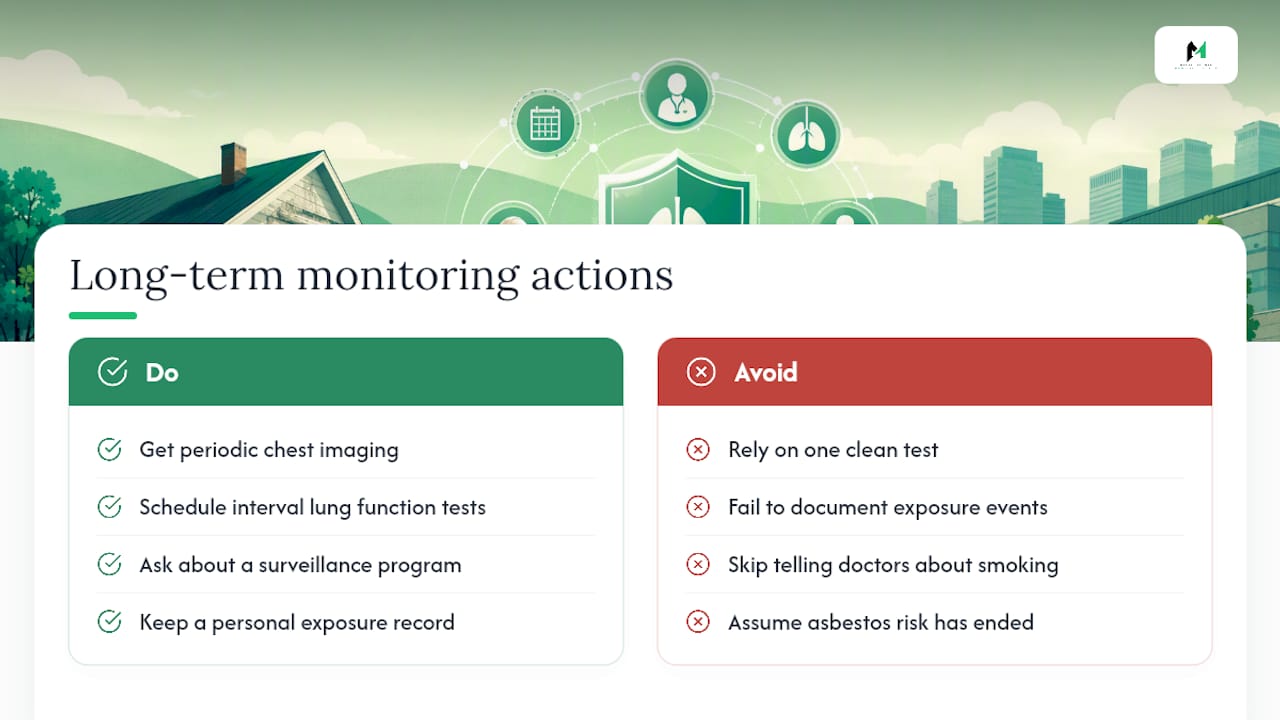
If you’ve had a confirmed or strongly suspected exposure, one clean test result doesn’t mean you’re finished. Because asbestos-related disease can take 10 to 40 years to appear, ongoing surveillance matters more than any single checkup.
Most physicians recommend periodic chest imaging for anyone with a documented history of significant exposure, with the frequency depending on how heavy that exposure was and how much time has passed since it occurred. Lung function tests done at intervals can catch early declines in breathing capacity before they become symptomatic. Anyone with occupational exposure should ask their doctor whether they qualify for a formal medical surveillance program, since some employers and provincial health programs run structured monitoring for workers with documented histories.
Keep a personal record of every exposure event, every test result, and every doctor’s note related to it. That paper trail becomes invaluable years later, both for your own care continuity and for any potential compensation claims, since proving exposure decades after the fact is far harder without documentation. Global health bodies note that asbestos-related disease will continue appearing for decades even in countries that have banned the material, which is exactly why long-term surveillance remains a public-health priority rather than a one-time concern.
If you smoked and were also exposed to asbestos, mention both facts every time you see a new doctor. The combined risk is well documented, and it changes how aggressively a physician should watch for early lung changes.
Legal rules and safety guidelines you should know
Asbestos regulation exists because unregulated handling caused a genuine public-health disaster over the past century, and rules today reflect decades of learning from that. In Canada, renovation and demolition work is subject to provincial occupational health and safety requirements, and Ontario specifically requires a designated substances survey before many types of renovation or demolition projects begin.
Employers have a legal duty to inform workers when asbestos-containing materials are present and to provide appropriate protective equipment and training before any work that might disturb them. Licensed abatement contractors must follow containment, air monitoring, and disposal protocols set by provincial regulators, and these aren’t optional suggestions. Cutting corners on containment or disposal creates liability exposure for the contractor and genuine health risk for anyone nearby.
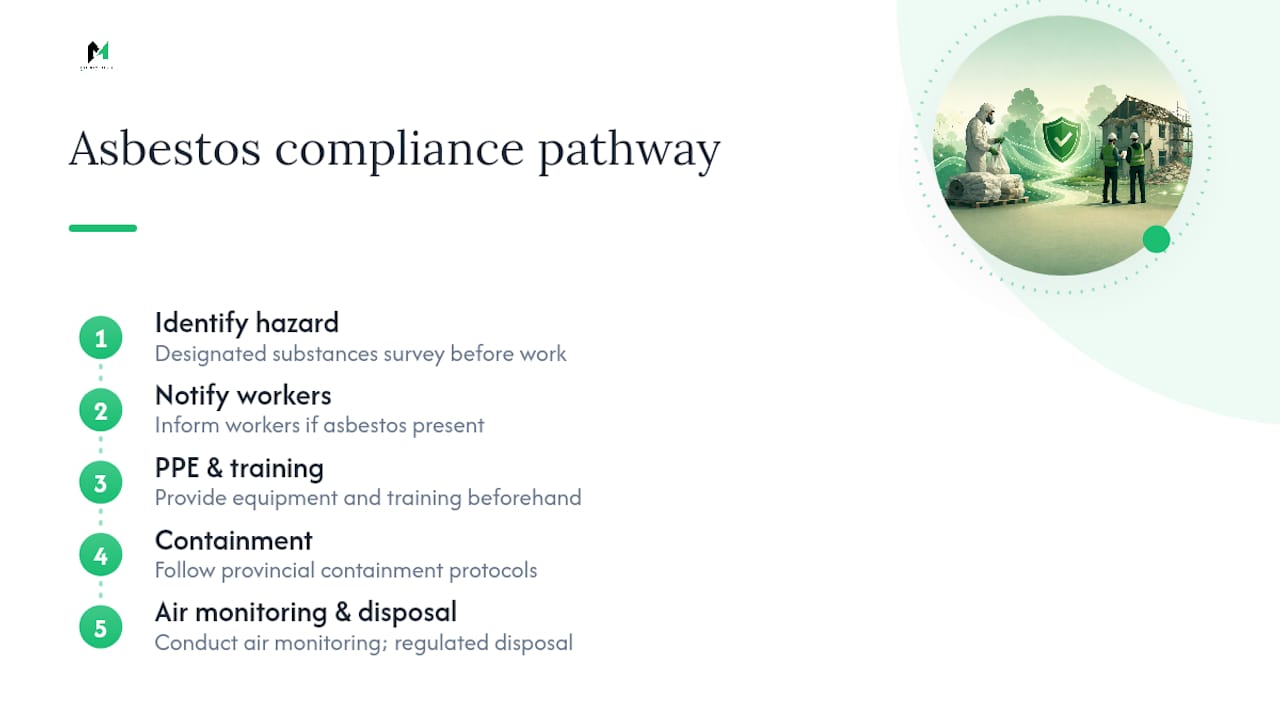
Homeowners doing their own renovations fall into a different category than commercial contractors in most jurisdictions, but that doesn’t mean the health risk is any smaller. A homeowner sanding old drywall compound faces the same fibre exposure a professional would, just without the training or equipment to control it. If you’re planning a renovation on an older property, a designated substances survey before demolition starts isn’t just a regulatory checkbox. It’s the step that tells you whether you’re about to create a serious problem.
Workplace safety programs increasingly integrate hazardous material awareness into broader risk assessment frameworks, an approach HR and workplace wellness professionals are also applying to reduce employee exposure to a range of occupational hazards, asbestos included.
Where treatment and research stand today
Treatment for asbestosis remains largely supportive since the lung scarring itself can’t be reversed. Care typically focuses on managing symptoms, improving oxygen levels, and slowing further decline through pulmonary rehabilitation and, in advanced cases, supplemental oxygen.
Mesothelioma treatment has genuinely advanced over the past decade. Combination approaches involving surgery, chemotherapy, and radiation are now used more selectively based on how early the cancer is caught and where it’s located, and immunotherapy has entered treatment protocols for cases that don’t respond well to traditional chemotherapy. None of this amounts to a cure, and prognosis for mesothelioma remains serious, but the treatment toolkit available to oncologists today is meaningfully broader than it was fifteen years ago.
Lung cancer linked to asbestos exposure is treated using the same evolving toolkit applied to lung cancer generally, including targeted therapies for cancers with specific genetic markers. Research continues into earlier detection methods, including blood-based biomarkers that might one day flag mesothelioma before it becomes symptomatic, though none of these are standard clinical tools yet.
The honest takeaway for anyone with a past exposure is this: treatment options keep improving, but early detection through the monitoring described earlier remains the single biggest factor in outcomes. Catching disease before it’s advanced still matters more than any single new therapy on the horizon.
Why professionals treat every survey like it’s the only thing standing between a homeowner and a disaster
Toxicology reviews are consistent on one point: fibre size, shape, and how long a fibre persists in lung tissue determine how dangerous it actually is, and amphibole fibres appear to carry greater mesothelioma risk than chrysotile in some analyses. That’s not a footnote for specialists. It’s the entire reason a visual guess at whether a material “looks like asbestos” is worthless, and why sampling and lab analysis exist at all.
What gets underestimated by most homeowners is how much friability changes the equation. A bonded, intact material and a crumbling one made of the identical substance carry wildly different risk profiles, and no amount of common sense substitutes for a trained technician actually testing the material in question. Technicians are trained specifically to make that distinction, using equipment calibrated to industry standards rather than a visual guess.
— Moacyr
Testing and licensed removal, when you’re ready for it
If you’ve read this far and you’re now looking at that old vinyl floor tile or attic insulation with real suspicion, that instinct is worth acting on. MSN Environmental handles the full range, from testing and inspections that confirm what you’re actually dealing with, through to licensed asbestos removal and post-clearance air testing that proves the air is safe again.
Hiring a licensed contractor becomes the right call the moment material is damaged, friable, or in the path of a planned renovation or demolition. Trying to handle that yourself means guessing at containment and disposal rules that trained technicians follow by default, with equipment built for exactly this job. If you want to understand what that process actually involves before committing to anything, the step-by-step abatement guide walks through what happens from survey to final clearance. Get in touch for a testing quote and find out what you’re actually working with before you touch another wall.
This article is general information, not a substitute for advice from a qualified doctor. Consult a qualified healthcare professional about your own circumstances before acting on anything here.
Sources
- Asbestos — World Health Organization (WHO)
- Health effects — ATSDR (Agency for Toxic Substances and Disease Registry)
- Asbestos Exposure and Cancer Risk — National Cancer Institute (NCI)
- Asbestos and your health — Health Canada
- Toxicological profile for asbestos — NCBI
FAQ
How does asbestos affect human health?
Inhaled asbestos fibres cause chronic lung inflammation and scarring that can lead to asbestosis, lung cancer, or mesothelioma, with symptoms often taking 10 to 40 years to appear.
What should I do if I think I’ve been exposed to asbestos?
Document the exposure details, stop disturbing the material, see a doctor about your exposure history, and arrange professional testing if the material is damaged.
What are the first signs of asbestos exposure?
Early warning signs include a persistent cough, breathlessness that worsens over time, chest pain, and unexplained weight loss, though these symptoms typically don’t appear until years after exposure.
Is it bad if you breathe in a little bit of asbestos?
There’s no identified safe level of asbestos exposure, so even small amounts carry some risk, though that risk rises significantly with higher dose and longer duration.