

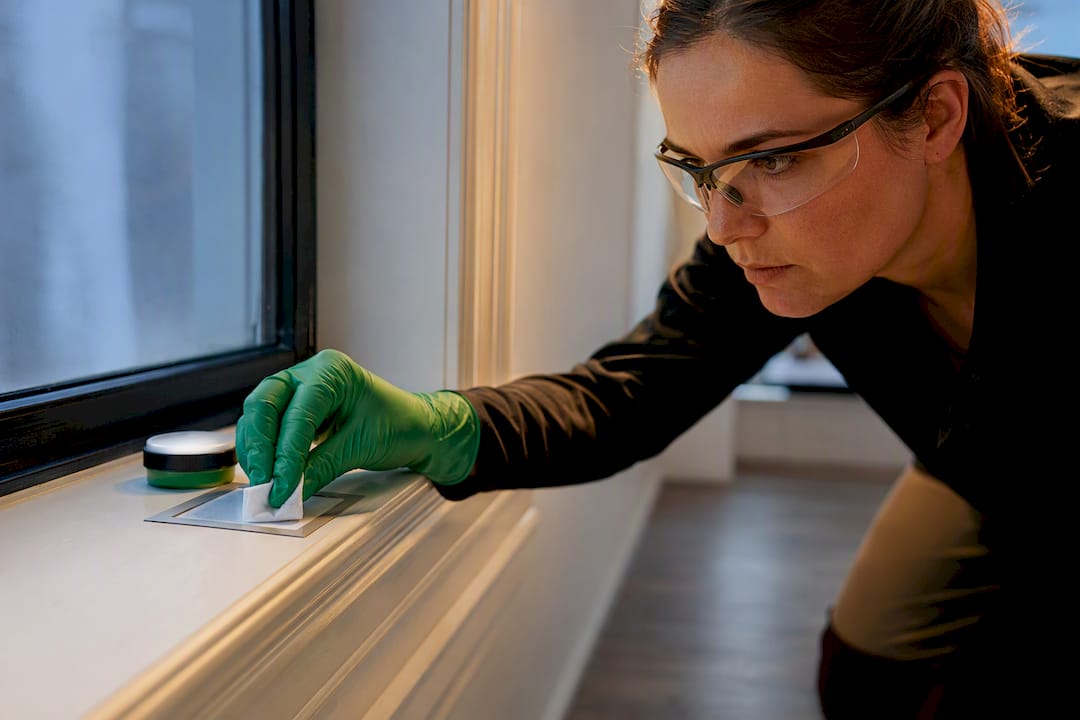
A lead dust wipe measures lead loading, the micrograms of lead per square foot of surface, at the exact moment you collect the sample, nothing more and nothing less. A colourimetric screening wipe can flag a hotspot in minutes; only accredited lab analysis using NIOSH Method 9105 or ICP gives you a defensible number. If a child’s blood lead is elevated, or you need a legal clearance report, skip the DIY route and call a certified technician.
TL;DR:
- Wipe samples measure lead loading in micrograms per square foot, which directly influences regulatory clearance standards and exposure assessment.
- Accurate collection depends on consistent technique, proper surface selection, timely sampling after cleaning, and precise measurement of the wiped area to avoid skewed results.
- Lab analysis via ICP or AAS provides definitive lead loadings, while colourimetric kits offer rapid screening but are less precise and cannot replace official clearance testing.
- Results can vary due to operator differences, contamination, and lab variability; repeat testing and professional analysis are essential if readings are close to thresholds or inconsistent.
- Certified professional testing is crucial when children have elevated blood lead levels, during official renovation clearance, or when legal or health risks demand a definitive, defensible report.
Table of Contents
- What does lead dust wipe sampling actually measure?
- Where and when should you collect wipe samples?
- How do you collect a single-surface lead dust wipe sample?
- How do labs analyze wipes, and what do the results mean?
- Why do lead dust results vary so much between tests?
- When should you hire a professional for lead dust testing?
- What field testing gets wrong more often than people expect
- Getting certified lead dust sampling and clearance testing
- Sources
- FAQ
What does lead dust wipe sampling actually measure?
A wipe sample reports lead loading, expressed in micrograms per square foot (µg/ft²), not concentration in the dust itself. That distinction matters because two rooms with identical dust concentration can carry very different loading depending on how much dust has accumulated on the surface, and loading is what regulators and clearance standards actually use to judge exposure risk.
There are two very different tiers of testing, and confusing them causes most of the bad calls homeowners make:
- Screening tests use a colourimetric reaction (the rhodizonate chemistry behind NIOSH 9105) that changes colour when lead is present above a rough threshold. They’re fast and cheap but qualitative.
- Quantitative lab methods (ICP or AAS) give you an exact number in micrograms, which a lab then converts to loading once you supply the accurate wiped area.
Either way, a wipe sample is a photograph of one moment. It tells you nothing about lead levels a week earlier or a month later, which is why the NCHH factsheet on lead dust stresses that testing dust is the only reliable way to know current conditions, not future ones.
Where and when should you collect wipe samples?
Location choice is not arbitrary. Standard clearance protocol targets three surfaces because they represent the three main ways dust reaches hands and mouths.
- Floors capture general foot traffic dust and are the surface most linked to hand to mouth exposure in young children.
- Interior window sills collect dust that settles from opening and closing painted windows, often the single dirtiest surface in an older home.
- Window troughs (the channel where the sash sits when closed) trap paint chips and dust from friction surfaces and frequently show the highest readings in a house.
Sampling strategy shifts depending on your purpose. A post-renovation clearance test typically requires a fixed number of samples per room type following EPA/HUD field guidance, while a screening test aimed at answering “do I have a problem” can be looser: pick the dirtiest looking sill, the most worn floor area, and the trough on the oldest window in the house.
Timing rules aren’t optional; following a low-dust door replacement process can help reduce recontamination risk during renovation and improve sampling accuracy. Do a visual inspection first, clean the area, then wait some time after final cleanup before sampling to allow dust to settle and avoid skewed results. Sampling too soon after cleaning risks catching disturbed dust that hasn’t resettled, which skews your loading number in either direction.
How do you collect a single-surface lead dust wipe sample?
Get your materials together before you touch a single surface. You’ll need:
- ASTM E1792 wipes (a specification that governs wipe composition so labs can trust the substrate itself isn’t introducing contamination)
- Disposable gloves, a fresh pair for every sample
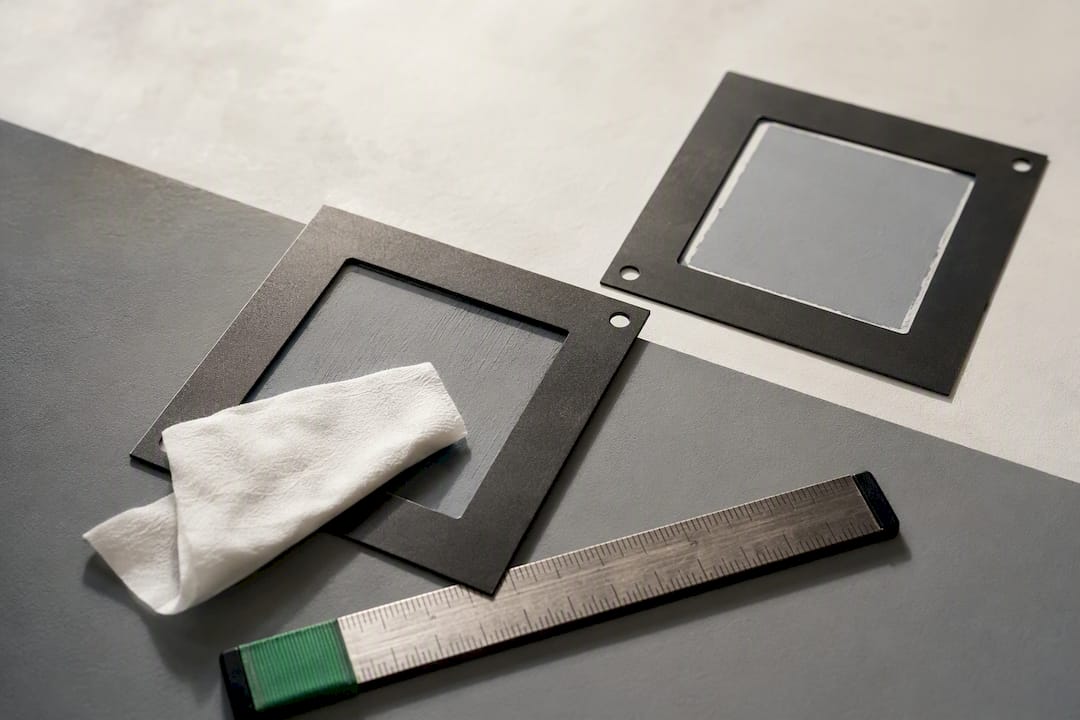
- A rigid template or painter’s tape to mark the exact wiped area
- Labelled sample tubes and a chain of custody form
With materials ready, follow this sequence for each surface:
- Put on gloves and lay out your template or tape boundary, then set the empty tube nearby and write down the sample ID before you start wiping.
- Wipe the surface in tight S-shaped passes covering the entire marked area.
- Fold the wipe in half with the dirty side folded inward, then wipe the same area again with passes running perpendicular to your first direction.
- Fold again and run one final pass around the perimeter of the template to catch edge dust.
- Fold the wipe a third time, dirty side always in, and drop it directly into the labelled tube.
- Measure the wiped area to the nearest eighth of an inch and record the exact dimensions on your form.
- Change gloves before starting the next sample, every time, with no exceptions.
If a lab plan calls for composite samples (multiple wipes combined into one analysis to cut cost), check with the lab first. Composite results sometimes aren’t accepted as evidence in legal or regulatory disputes unless the lab documents the compositing method clearly.
Pro Tip: Small errors in measuring the wiped area distort your final loading number more than almost any other step in the process. A template that’s off by half an inch on each side can shift a passing result into failing territory once the lab does the math.
How do labs analyze wipes, and what do the results mean?
Once your wipe reaches a lab, it’s typically digested and read on an ICP or AAS instrument, which reports total micrograms of lead in that sample. The lab then divides by your recorded wipe area to produce the loading figure in µg/ft². That’s why area measurement accuracy carries so much weight; a lab can only work with the number you give it.
Colourimetric field kits work differently and faster. SKC’s Full Disclosure kits, built on the NIOSH 9105 chemistry, show a visible colour change at roughly an 18 µg per sample threshold.
A 2025 peer-reviewed study found colourimetric wipes showed high specificity and strong negative predictive value against full lab analysis at that same 18 µg/sample threshold, which supports using them for rapid screening, though not as a full substitute for quantitative testing.
Clearance and action levels vary by jurisdiction, so treat any specific number as an example rather than a universal rule, and confirm current thresholds with your regional regulator before relying on a pass/fail call. A passing result also isn’t permanent: if the lead source (old paint, contaminated soil tracked indoors) is still present, dust can reaccumulate and a follow-up test months later can come back worse.
Why do lead dust results vary so much between tests?
Inconsistent results almost always trace back to one of three causes: the sampler, the surfaces, or the lab.
- Operator variability is the biggest single factor. ASTM E1728 guidance on settled dust collection notes that different people wiping the same surface with different pressure or pattern can produce meaningfully different readings, which is why serious projects assign one trained sampler to every sample on a job.
- Cross-contamination creeps in through reused gloves, a template that touched a dirty surface earlier in the day, or wipes stored near a dusty work area before use.
- Lab-to-lab variation shows up in different reporting limits and calibration standards, so ask for the lab’s detection limit up front and consider submitting a field blank or duplicate sample to check consistency.
Pro Tip: If two samples from the same room come back wildly different, don’t assume the house is fine because one passed. Rerun both with a fresh operator and fresh materials before you trust either number.
Repeat sampling when results conflict or sit close to a threshold. Escalate to a fully accredited lab and certified technician when the stakes involve a child’s health or a legal transaction.
When should you hire a professional for lead dust testing?
Certain situations move this out of DIY territory entirely. Call in a certified technician when a child in the home has an elevated blood lead result, when a renovation or abatement project requires an official clearance report, when paint is visibly peeling or deteriorated over a large area, or when the testing needs to hold up in a legal or government-funded context.
A competent vendor’s deliverable list looks like this:
- A visual inspection of the property before any sampling begins
- Standardized sampling technique following EPA/HUD protocol
- Complete chain-of-custody documentation for every sample
- Analysis through an accredited laboratory, not a field kit alone
- A written clearance report you can hand to a buyer, tenant, or regulator
If a wipe test turns up elevated readings tied to deteriorating lead paint on windows, the next step usually isn’t more testing, it’s remediation planned around the source.
What field testing gets wrong more often than people expect
DIY wipe kits are genuinely useful for a first pass, but the failure mode I see most isn’t bad chemistry, it’s inconsistent technique between samples taken by different people in the same house. One sampler, one method, every time, beats a more expensive kit used carelessly.
Sampling is a diagnostic step, not a fix. A clean result today tells you nothing about the paint still on the wall next year, which is the whole reason abatement and source control matter as much as the test itself.
— Moacyr
Getting certified lead dust sampling and clearance testing
Colourimetric kits and careful technique will tell you whether you have a problem. They won’t give you a legally defensible clearance report, and they won’t fix deteriorating lead paint once you’ve found it. A certified professional runs the full process end to end: a site visit, a sampling plan built around your specific rooms and surfaces, accredited lab coordination, a written clearance report, and a remediation quote if the results call for it.
That combination matters most for renovators and property managers who need results that hold up with a buyer, a tenant, or a regulator, not just a colour change on a wipe. If your situation involves peeling paint, a pending renovation, or a result you’re not confident interpreting, review the top reasons to hire a certified hazardous materials professional and book a site visit to get a sampling plan started.
This article is general information, not a substitute for advice from a qualified doctor. Consult a qualified healthcare professional about your own circumstances before acting on anything here.
Sources
- NCHH factsheet — Lead dust and health risks
- Lead dust sampling technician field guide (EPA/HUD 2026)
- NIOSH method 9105 — Lead in dust wipes (colorimetric screening)
- Using colorimetric wipes to characterize lead surface levels (2025)
- SKC Full Disclosure® Lead Wipe Test Kits for Skin and Surfaces
FAQ
How is lead dust wipe sampling used?
It’s used to measure lead loading on floors, sills, and troughs, either to screen for a potential hazard or to certify that a property meets clearance criteria after renovation or abatement.
What happens if you inhale a little bit of lead dust?
Lead dust exposure, even at seemingly low levels, has been linked to serious and permanent harm in young children, including brain and nerve damage, which is why the NCHH factsheet treats dust testing as essential rather than optional.
How can I test dust for lead?
Use ASTM E1792 wipes with a template, wipe the marked area following the S-pattern and perpendicular fold sequence, then send the sample to an accredited lab for ICP or AAS analysis, or use a colourimetric field kit for a quick screening check.
What are the lead dust wipe clearance levels?
Clearance and action thresholds vary by jurisdiction and property type, so there’s no single universal number. Confirm the current figure with your local regulator, and treat any passing result as time limited if the underlying lead source hasn’t been addressed.