

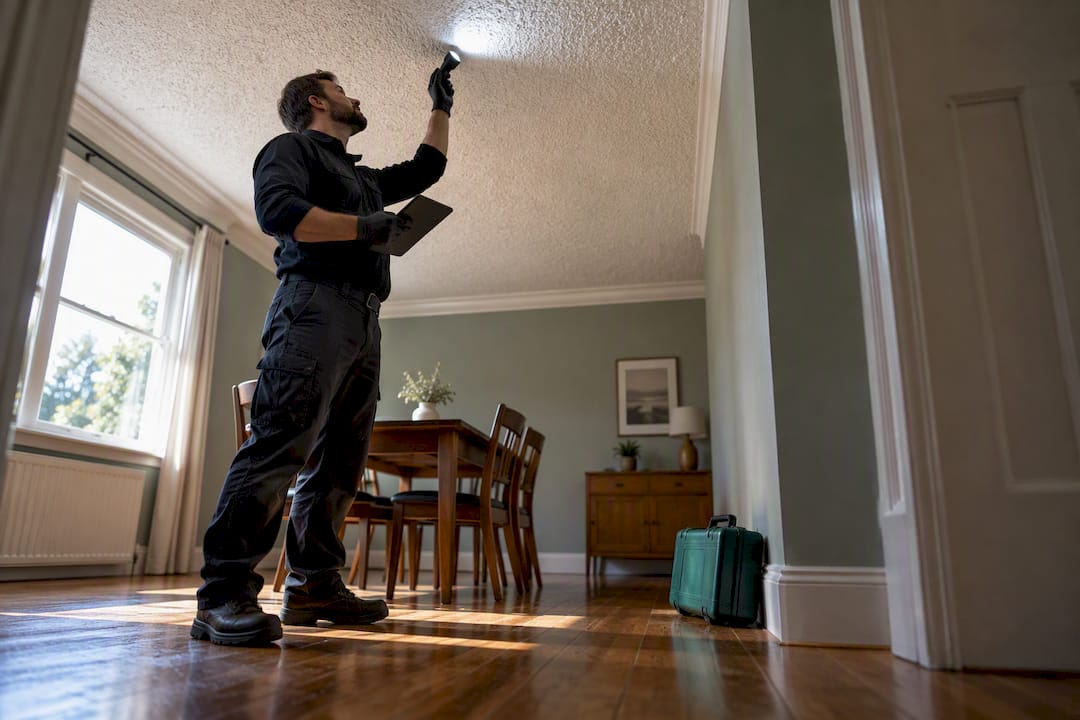
If your project will disturb walls, floors, ceilings, or insulation in a building constructed or renovated before 2000, yes, you need a pre renovation asbestos survey before intrusive work starts. The immediate next step is to commission a refurbishment and demolition (R&D) survey scoped to your exact works, or treat suspect materials as asbestos until a lab says otherwise. Health Canada and federal property guidance both support this conservative default, and a certified hazardous materials removal company can carry out both the testing and any resulting abatement.
TL;DR:
- A pre renovation asbestos survey is mandatory for structural or demolition work in buildings built or renovated before 2000, with intrusive inspections needed for any material disturbance.
- The most appropriate survey type is the fully intrusive refurbishment and demolition (R&D) survey, which must include destructive sampling and detailed reporting with sample locations and photographs.
- The survey typically costs between £300 and £800, with results delivered within a week, making early booking crucial to avoid costly delays or work stoppages.
- If asbestos is found, immediate work stoppage and strict adherence to the report’s recommended abatement procedures are essential to ensure safety and legal compliance.
- Hiring a qualified, accredited surveyor with clear documentation traditions prevents gaps that could cause issues during renovation, sale, or future inspections.
Table of Contents
- When is a pre renovation asbestos inspection actually required?
- Which type of asbestos survey matches your project?
- What happens during the on-site inspection and testing?
- What does a survey cost and how long does it take?
- What to do if asbestos turns up in your survey
- How do you vet an asbestos surveyor before hiring one?
- Where MSN Environmental fits into your renovation plan
- A renovation checklist, not a regulation lecture
- How to book a pre renovation survey with MSN Environmental
- Sources
- FAQ
When is a pre renovation asbestos inspection actually required?
Not every renovation triggers the same obligation, but a surprising number do. If your scope touches any of the following, plan on a survey before the first hammer swing:
- Demolition of walls, partitions, or entire structures
- Removing or replacing flooring, especially older vinyl tile or sheet flooring
- Ripping out ceilings, particularly textured or sprayed finishes
- Loft or attic conversions that disturb insulation
- Rewiring or replumbing that requires chasing through walls or floors
- Removing boilers, pipe lagging, or heating systems
Age is a strong signal but not a guarantee either way. Buildings built or refurbished before 2000 carry the highest risk, since asbestos-containing materials (ACMs) were common in insulation, floor tiles, roofing felt, and cement products well into the late 20th century. A newer renovation on an older shell can still hide ACMs from a previous decade’s repair work.
This is why the assume and treat principle matters so much. Without a survey on file, federal guidance directs property owners to assume any suspect material contains asbestos until testing proves otherwise. Skipping that step doesn’t remove the risk. It just moves the cost to whenever the material gets disturbed anyway, usually mid-project, usually more expensive.
Which type of asbestos survey matches your project?
Three survey types exist, and picking the wrong one is one of the most common mistakes renovators make. Each answers a different question:
- Management survey. Non-intrusive, designed to identify ACMs likely to be disturbed during normal occupation. Useful for ongoing building management, but not sufficient before renovation.
- Refurbishment and demolition (R&D) survey. Fully intrusive, designed to find every ACM that could be disturbed by the specific work planned. This is the survey type required before any work that opens up building fabric in pre-2000 structures.
- Targeted or pre-construction sampling. A narrower version of an R&D survey, scoped to one area or material (say, just the kitchen floor tile before a renovation) rather than the whole property.
For cosmetic work like painting or replacing fixtures without touching walls, a management survey or even a records check may be enough. For anything involving partial fabric disturbance, structural changes, or demolition, an R&D survey is the only correct choice, because it’s the only one that involves the intrusive inspection needed to find hidden materials behind finishes or inside voids.
What happens during the on-site inspection and testing?
A competent surveyor starts before they ever set foot on site. For a Project Design or Pre-Construction survey, hand over drawings or a written scope of work so the inspector knows exactly which walls, floors, and systems will be disturbed. Vague scopes lead to vague surveys.
On the day itself, expect genuinely intrusive work: opening wall voids, lifting floor coverings, pulling back ceiling tiles, and taking destructive samples from suspect materials. Some rooms may need to be vacated temporarily, particularly where the inspector suspects friable materials like sprayed coatings or loose insulation.
Sampling follows accepted practice, not guesswork:
- Each homogeneous material (all the vinyl tile in one room, for instance) gets its own representative sample rather than one sample for the whole house.
- Sprayed or friable materials typically need more samples than solid materials like floor tile, since fibre distribution is less uniform.
- Every sample is logged with a chain of custody from collection to lab.
- The lab itself should hold ISO 17025 accreditation, the international standard for testing laboratory competence.
Pro Tip: Ask your surveyor how many samples they plan to take before they arrive on site. A three-bedroom house with textured ceilings and old vinyl flooring should generate more samples than a quick verbal estimate suggests. If the number sounds low, ask why.
The final report needs to include sample locations tied to a floor plan, photographs, the asbestos type and percentage where detected, a recommended action for each finding, and a plain statement of any limitations, such as areas that couldn’t be accessed. A report missing any of these is not a survey you can trust with your renovation schedule.
What does a survey cost and how long does it take?
Budgeting for a survey is straightforward once you know what drives the price. For domestic properties, R&D surveys commonly run between £300 and £800, with the final figure shaped by:
- Property size and number of rooms or areas to inspect
- How many samples the scope requires
- Access difficulty, such as tight crawl spaces or occupied rooms
- Lab analysis fees, which scale with sample volume
Lab turnaround for bulk sample analysis typically runs 24 to 72 hours, so a full written report often lands within a week of the site visit. Book the survey as early in the home renovation process as possible. Discovering asbestos after demolition has started means stopping work entirely, which costs far more in delay and remobilization than the survey itself ever would.
What to do if asbestos turns up in your survey
Finding asbestos-containing materials isn’t the disaster it sounds like, but it does mean following a specific sequence rather than pushing ahead with your renovation timeline.
- Stop work in the affected area immediately and isolate it from the rest of the property. Don’t wait for a second opinion before sealing off the space.
- Follow the report’s recommended action exactly. Some materials can be safely encapsulated or left undisturbed if the renovation doesn’t touch them; others require removal before work continues.
- Confirm who’s licensed to do the removal. Higher-risk materials, like sprayed coatings or loose insulation, generally require licensed abatement contractors, while some lower-risk, bonded materials may fall under notifiable non-licensed work with its own notification and method statement requirements.
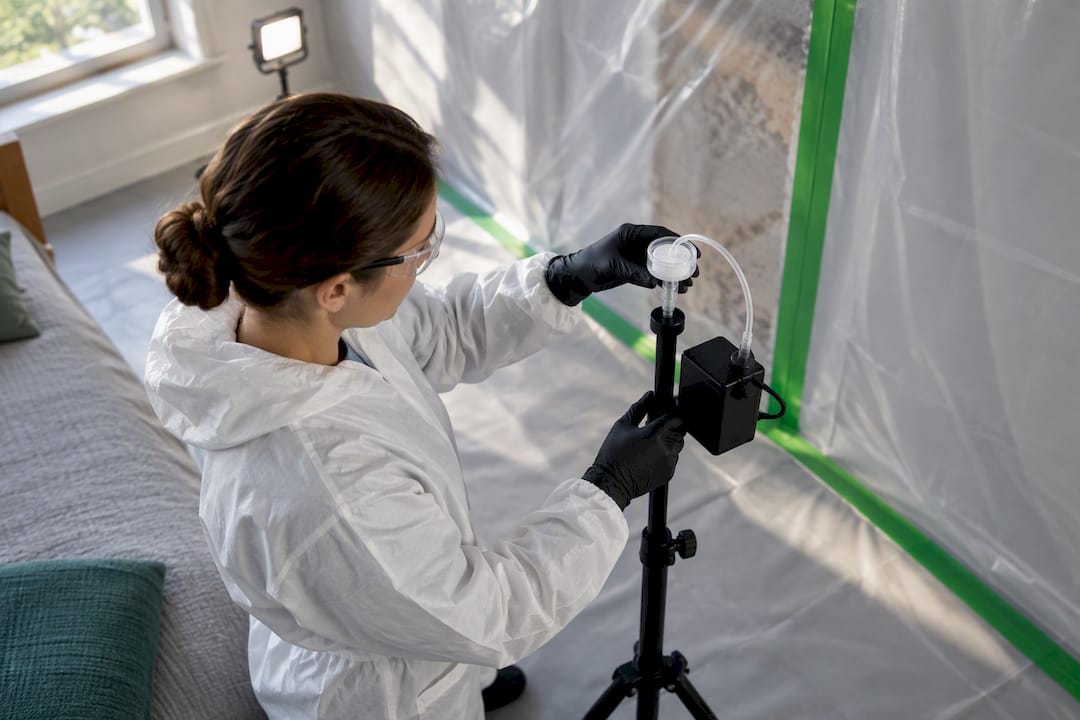
- Get a method statement and risk assessment before removal begins. This document outlines how the contractor will contain fibres, protect workers, and dispose of waste.
- Insist on clearance testing after abatement. This includes a visual inspection and, for higher-risk removals, air sampling before a certificate of reoccupation is issued.
Pro Tip: Keep every document, the original survey, the method statement, air clearance results, and the reoccupation certificate, in one file. If you sell the property later, that file is the single fastest way to prove due diligence to a buyer’s lawyer or lender.
Asbestos fibres cause documented long-term lung disease when disturbed and inhaled, which is exactly why clearance testing after removal isn’t optional paperwork. It’s the check that confirms the air is actually safe to breathe again.
How do you vet an asbestos surveyor before hiring one?
Ask for credentials before you ask for a price. A properly qualified inspector should hold a recognized surveying qualification (the BOHS P402 certificate or an equivalent), carry liability insurance, and be able to point to prior refurbishment survey work, not just management surveys. Ask which lab they use for analysis and confirm that lab holds current ISO 17025 accreditation. If they can’t answer either question clearly, keep looking.
A proper quote should spell out the scope matched to your actual works, not a generic whole-house package, along with an estimated sample count, what the final report will include, which lab performs the analysis, and expected turnaround time.
Red flags in a finished report are just as telling:
- Locations described vaguely (“upstairs area”) instead of tied to a floor plan
- No photographs of sampled materials
- Missing sample ID numbers or lab reference codes
- No clear recommended action listed for each material found
A report with these gaps isn’t a survey you can rely on for renovation planning; it’s a liability waiting to surface mid-project.
Where MSN Environmental fits into your renovation plan
MSN Environmental runs pre-renovation and demolition surveys, bulk sampling, air quality testing, and full designated substance surveys for residential and commercial properties. If a survey turns up asbestos-containing materials, the same team can carry out licensed abatement and clearance testing, so you’re not coordinating between separate testing and removal contractors on a tight renovation timeline.
Technicians work with accredited labs and follow documented sampling protocols, giving you a report you can actually hand to a contractor or building inspector without gaps. Older Ontario homes carry their own specific risk profile too. MSN Environmental’s guide on the 0.5% asbestos rule explains the regulatory threshold that governs how these materials get classified locally. Hiring a specialist for both stages of the work, survey and any resulting removal, is the most direct way to close out your due diligence before demolition day arrives.
A renovation checklist, not a regulation lecture
Most articles on this topic read like a compliance manual. That’s backwards for the person actually staring down a gutted kitchen wall next Tuesday. The research here points to a simpler frame: treat the survey report as insurance, not paperwork. It’s the document that protects you if a contractor disturbs something unexpected, if a buyer’s lawyer asks questions later, or if a health inspector shows up mid-project.
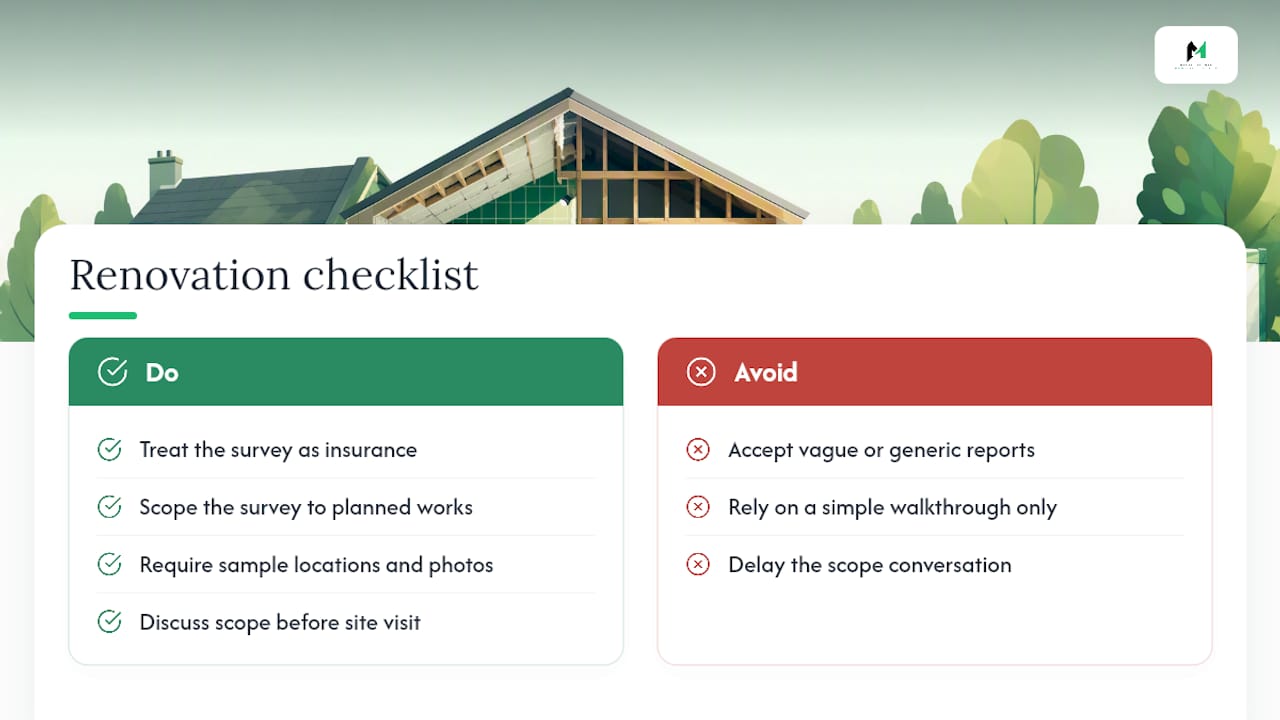
The conventional advice tends to stop at “get a survey.” That’s incomplete. What actually protects a renovator is a survey scoped tightly to the planned works, with a report that names sample locations, shows photographs, and states a clear recommended action for every material found. A vague report is barely better than no report, because it still leaves you guessing when the drywall comes down.
If you take one thing from this checklist, prioritize the scope conversation with your surveyor before the site visit, not after. A survey built around drawings and a real workscope catches hidden materials that a generic walkthrough misses, and it’s the difference between a smooth renovation and a costly mid-project stop.
— Moacyr
How to book a pre renovation survey with MSN Environmental
Some testing firms provide a single team that handles both the survey and, if needed, the removal, so clients are not chasing two contractors on the same deadline. When you request a quote, have your project scope ready: which rooms or systems will be disturbed, the building’s approximate age, and your target start date for demolition or construction.
Use the testing and inspection page to request a pre-renovation survey, or reach out through the asbestos removal services page if you already suspect ACMs and want abatement quoted alongside the inspection. After booking, expect an onsite scoping visit, intrusive sampling matched to your workscope, and a written report once lab results are back. Get that conversation started now so your renovation timeline doesn’t stall waiting on a survey that should have been booked weeks earlier.
Sources
- What you must know about asbestos survey reporting before selling your Canadian home
- Peer‑reviewed article on asbestos-related health risks
FAQ
How much does an asbestos refurbishment survey cost?
Domestic R&D surveys typically run between £300 and £800, depending on property size, sample count, and access difficulty. MSN Environmental doesn’t publish a flat rate online since scope varies by project; current pricing is available by requesting a quote through its testing and inspections page.
What is the 3-5-7 rule for asbestos sampling?
Definitions of this rule vary by jurisdiction and aren’t standardized the way some guides suggest, so treat any specific numeric formula with caution. The safer approach is to let your surveyor determine sample counts based on homogeneous material areas and material friability rather than relying on a fixed rule of thumb.
How often should a property get an asbestos survey?
A management survey should be reviewed periodically as part of ongoing building upkeep, but a fresh refurbishment survey is needed before any new renovation project that will disturb fabric, regardless of when a previous survey was done. Previous survey results don’t cover new areas of disturbance that weren’t part of the original scope.
What should an asbestos survey report include?
A complete report lists sample locations tied to a floor plan, photographs of sampled materials, the asbestos type and percentage detected, a recommended action for each finding, and a statement of any inspection limitations. Reports missing sample IDs, photos, or clear recommendations should be treated as incomplete.
What happens if I skip the survey and start renovating anyway?
Skipping the survey doesn’t eliminate the risk. It just means you’re operating under the assume and treat principle without documentation, which federal guidance treats as the reader’s own responsibility to manage. If ACMs are disturbed unknowingly, work stops, abatement becomes an emergency rather than a plan, and costs rise accordingly.