

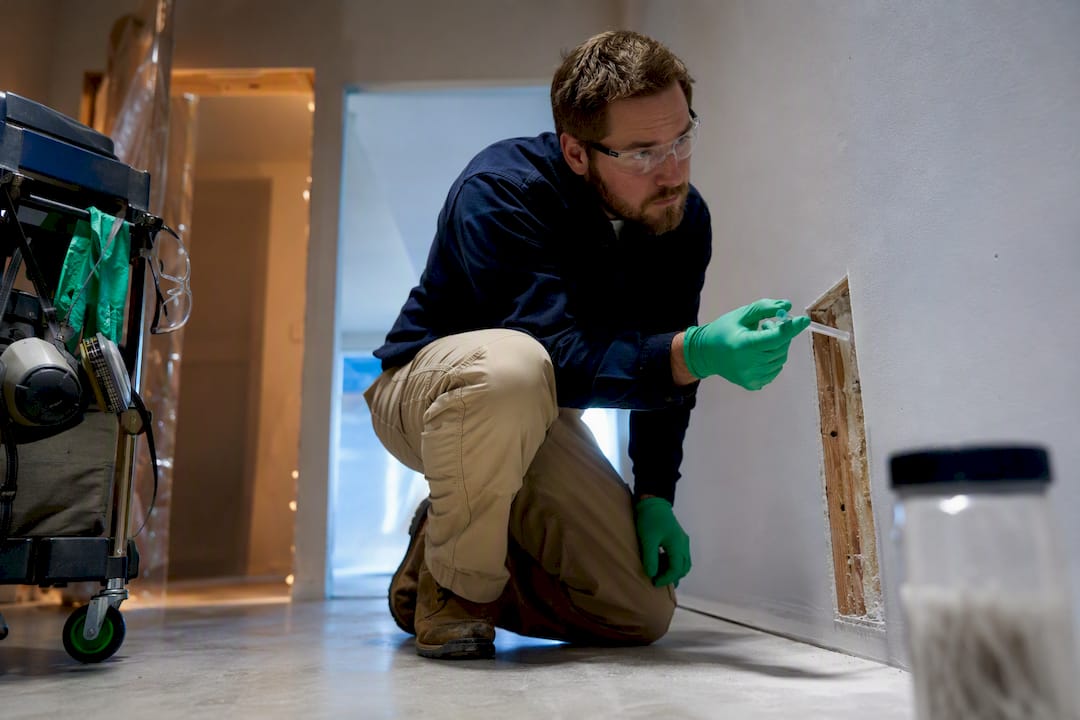
Ontario law names exactly 11 designated substances under O. Reg. 490/09: acrylonitrile, arsenic, asbestos, benzene, coke oven emissions, ethylene oxide, isocyanates, lead, mercury, silica, and vinyl chloride. Asbestos on construction sites and in building repair work falls separately under O. Reg. 278/05. Once any of these is present in a workplace, employers face specific duties around assessment, exposure control, and record keeping, covered in detail below.
TL;DR:
- Employers must conduct a detailed written assessment whenever one of the 11 designated substances is present or produced, consulting the joint health and safety committee and documenting all findings.
- If exposure to a designated substance is likely, a comprehensive control program must be implemented, addressing engineering controls, monitoring, worker training, medical surveillance, and record keeping.
- Air monitoring results exceeding the set limits require immediate notification of workers and the safety committee, with results retained for potential future claims or inspections.
- Respirators are a supplementary safety measure, only to be used after engineering controls fail and must be properly fit-tested, maintained, and supported by medical exams for specific substances like asbestos and lead.
- Construction projects involving asbestos require adherence to separate regulations and a prior designated substance survey to identify and disclose materials before contract signing, mitigating ongoing liability risks.
Table of Contents
- What are the 11 designated substances in Ontario, and where do they show up?
- Employer duties: assessment, control programmes and records under O. Reg. 490/09
- Exposure limits and air monitoring: reading Table 1 correctly
- Respiratory protection and medical surveillance: when and how they apply
- Construction projects and asbestos: the exception and the owner’s notice duty
- A step-by-step compliance checklist for Ontario employers
- Practical notes from the field on surveys, sampling and abatement timelines
- Why getting the paperwork right protects more than your inspection score
- How MSN Environmental supports your designated substance compliance
- Where to verify the law and get further guidance
- Sources
- FAQ
What are the 11 designated substances in Ontario, and where do they show up?
Each substance on the list earned its spot because of a documented serious health hazard rather than routine irritation. Regulators reserve this designation for agents that demand active assessment and a documented control programme, not just a warning label on a drum.
Here’s where Ontario workplaces actually encounter each one:
- Acrylonitrile is a solvent and monomer used in acrylic fibre, resin, and rubber manufacturing. Chronic exposure is linked to respiratory irritation and has raised cancer concerns in industrial settings.
- Arsenic appears in metal smelting, some wood preservatives, and certain glass and semiconductor processes. It’s a recognized carcinogen even at low chronic exposure.
- Asbestos turns up constantly in Ontario’s building stock: pipe insulation, vermiculite attic insulation, vinyl floor tile adhesive, drywall compound, and roofing shingles installed before the 1990s. This is the substance safety officers deal with most often, and it carries its own dedicated regulation.
- Benzene is common in petroleum refining, chemical manufacturing, and some laboratory solvent use. It’s a known bone marrow toxin linked to leukemia.
- Coke oven emissions are specific to steel and coke production, most relevant to Ontario’s industrial corridors around Hamilton.
- Ethylene oxide is used almost exclusively for gas sterilization of medical devices and instruments in hospitals and manufacturing plants.
- Isocyanates show up in spray foam insulation, polyurethane coatings, and automotive paint booths. They’re a leading cause of occupational asthma.
- Lead persists in older paint, some plumbing solder, battery manufacturing, and certain renovation and demolition work.
- Mercury appears in some laboratory instruments, dental amalgam handling, and legacy industrial equipment.
- Silica (crystalline) is generated by concrete cutting, tuck pointing, sandblasting, and rock drilling, making it a constant concern on construction and mining-adjacent sites.
- Vinyl chloride is tied to PVC plastic manufacturing and is a confirmed liver carcinogen.
An exclusion commonly applies when a substance is present but locked inside a sealed product with no reasonable likelihood of release, such as intact asbestos-containing material behind an undisturbed wall. That exclusion disappears the moment renovation, demolition, or maintenance work disturbs the material, which is exactly when most Ontario compliance failures happen.
Employer duties: assessment, control programmes and records under O. Reg. 490/09
The regulation doesn’t wait for an incident. If a designated substance is present or produced at a workplace, the employer has a legal obligation to act, starting with a written assessment.
Pro Tip: Don’t treat the assessment as a formality to file away. A vague or outdated assessment is one of the first things a Ministry of Labour, Immigration, Training and Skills Development inspector will flag, and it undermines every control decision built on top of it.
The core sequence looks like this:
- Complete a written assessment. Determine whether a designated substance is present, how workers might be exposed, and at what level. The employer must consult the joint health and safety committee (JHSC) or a health and safety representative during this process, and that consultation has to be documented, not just implied.
- Decide whether a control programme is required. If exposure is likely and could affect worker health, a written control programme becomes mandatory. If the assessment concludes no programme is needed, that conclusion needs a clear, defensible rationale on record, since an undocumented decision not to act is a common finding in itself.
- Build out the programme components. A compliant control programme addresses engineering controls first, then work practices, hygiene facilities, air or biological monitoring, worker training, medical surveillance where triggered, and a record-keeping system that ties it all together.
- Post monitoring results and retain records. Employers must make air monitoring results available to workers and the JHSC, and personal exposure and medical records need to be retained for the periods set out in the regulation, which in practice usually means far longer than a typical HR file.
The Ministry’s guide frames the control programme as a living document, not a one-time report. Monitoring frequency and medical surveillance intervals should scale to actual measured exposure levels, with named job categories responsible for each control measure and clear triggers for revisiting the whole programme, such as a process change or a new piece of equipment.
Exposure limits and air monitoring: reading Table 1 correctly
Table 1 of O. Reg. 490/09 sets three distinct types of numeric limits, and confusing them is one of the more common mistakes safety officers make when reviewing lab results.
- TWA (time-weighted average) is the average concentration a worker can be exposed to over a standard 8-hour shift.
- STEL (short-term exposure limit) caps exposure over a brief window, typically 15 minutes, to catch dangerous spikes that a shift-long average would mask.
- Ceiling is the absolute maximum concentration that must never be exceeded at any instant.
Not every substance on the list has all three limit types defined. Table 1 sets specific limits for benzene, ethylene oxide, and asbestos, among others, reflecting their varying characteristics.
Part I of Schedule 1 sets out the formula for calculating airborne exposure across a shift when concentrations vary, which matters on real job sites where a worker might spend two hours grinding concrete and six hours doing unrelated tasks. Sampling needs to reflect that variation rather than a single snapshot taken at a convenient moment.
Airborne concentrations exceeding the TWA trigger mandatory action. Once monitoring shows a result above the Table 1 limit, the employer must post the results for affected workers, notify the JHSC, and revise the control programme, not simply note the reading and move on. Monitoring records also need to be retained under the timelines set out in the regulation, since a single high reading can matter years later if a worker later files a claim tied to that exposure.
Respiratory protection and medical surveillance: when and how they apply
Respirators are a last resort under Ontario law, not a first line of defence. Section 16 of the regulation requires employers to control exposure through engineering measures and work practices first, reducing airborne concentration at the source before anyone reaches for a respirator. Respiratory protection only fills the gap that engineering controls can’t close, and its use is itself subject to limits under section 18.
A compliant respirator programme includes:
- Selection matched to the specific substance and measured exposure level, not a generic dust mask handed out by default.
- Fit-testing before first use, since an unfitted respirator can leave a worker essentially unprotected despite wearing equipment.
- Ongoing maintenance, cleaning, and cartridge replacement schedules.
- Documented training on donning, doffing, and limitations of the specific model issued.
Four substances explicitly trigger mandatory medical exams under the regulation: acrylonitrile, arsenic, ethylene oxide, and vinyl chloride. Workers exposed at or above defined levels must be referred to a physician, and the results flow back through a specific record process: the physician reports findings to the employer without disclosing unrelated personal health details, and those records get retained separately from general employment files.
Pro Tip: Fit-testing isn’t a once-and-done event. A worker’s facial hair, significant weight change, or a switch to a different respirator model all require a new fit test, and skipping this after a mask change is a frequent gap inspectors catch during site visits.
Construction projects and asbestos: the exception and the owner’s notice duty
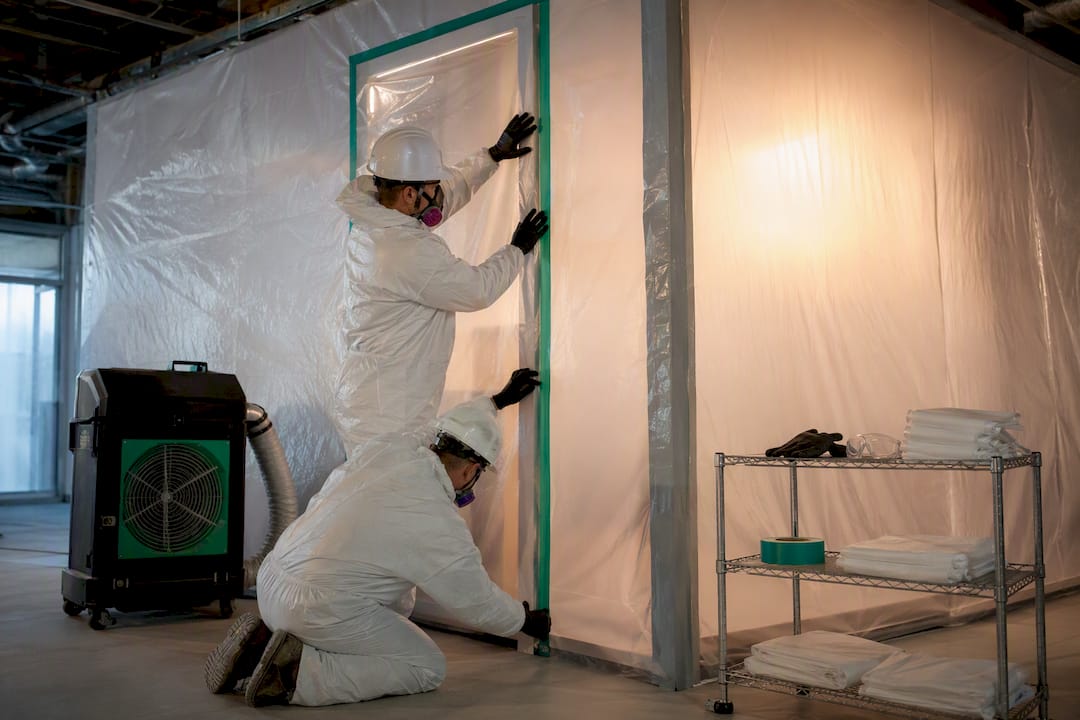
Section 14 of O. Reg. 490/09 exempts most construction projects from the regulation’s general designated substance rules, but that exemption isn’t a free pass. Where asbestos is involved, O. Reg. 278/05 takes over and governs the work with its own detailed requirements for construction projects and building repair operations, including asbestos abatement work covered by types 1 through 3 procedures.
The practical obligation that trips up the most project owners sits in Ontario’s Occupational Health and Safety Act itself. Under section 30, a project owner must determine whether designated substances, asbestos included, are present at a site, and must give contractors a written list of those substances before any binding contract is signed.
A practical sequence for project managers and contractors:
- Commission a designated substance survey before tendering the work. Waiting until after a contract is signed to discover asbestos-containing material is a common and expensive failure point.
- Attach the written list to the tender package, not as a verbal disclosure during a site walk-through.
- Confirm the contractor’s scope matches the abatement classification required, since asbestos work is typically type-classified based on disturbance risk, and a mismatch between survey findings and contractor scope creates liability for the owner even after the contract is signed.
Owners who skip this step remain exposed to liability long after the renovation wraps up, particularly if a worker’s later health claim traces back to undisclosed material on that specific site.
A step-by-step compliance checklist for Ontario employers
Compliance rarely fails because employers ignore the regulation outright. It fails because the sequence gets skipped or reordered.
- Commission a designated-substance survey whenever a new workplace, renovation, or process change might introduce one of the 11 substances. When hiring a consultant, ask about their sampling protocol, laboratory accreditation, and whether they’ve handled the specific substance category on comparable Ontario sites.
- Document the assessment formally, including JHSC consultation, and file it as a standalone record rather than burying it in a general safety binder.
- Move to a written control programme the moment the assessment shows likely exposure, covering engineering controls, monitoring schedules, and training content specific to the substance found.
- Build out surveillance and training components with named responsible roles, not generic “management will ensure” language that inspectors treat as a red flag.
- Schedule recurring reviews and internal audits, ideally tied to any process, equipment, or personnel change, and keep every monitoring result, training record, and medical surveillance note in a format ready to produce during an inspection.
Pro Tip: Build your review calendar around triggers, not just calendar dates. A new piece of equipment, a supplier change, or a renovation adjacent to your facility can shift exposure levels even if nothing else about your operation changed.
Ontario’s designated substances survey requirements outline what a properly documented survey should contain from the outset, which saves rework later when an inspector asks for supporting detail.
Practical notes from the field on surveys, sampling and abatement timelines
Field experience surfaces patterns that the regulation text alone doesn’t capture. A few shows up repeatedly across Ontario abatement and testing projects:
- The most common sampling mistake is sequencing. Teams sometimes run air monitoring before bulk sampling confirms what material is even present, wasting a monitoring cycle on the wrong target substance.
- Bulk sampling should come first to identify the specific designated substance and its concentration, with air monitoring following to establish actual worker exposure during the relevant task.
- Assessment timelines vary by site complexity, but a straightforward single-substance survey on a small commercial space typically moves faster than a multi-substance survey across an industrial facility with several process areas.
- Type 3 abatement work, the most stringent asbestos removal classification under O. Reg. 278/05, requires more setup time than lower-risk work, since containment, negative air pressure, and clearance air testing all add steps before the space can be released back for use.
- Documentation gaps surface most often around medical surveillance records, where employers track training and monitoring closely but lose the thread on physician reporting for the four substances that trigger mandatory exams.
MSN Environmental’s guides on asbestos bulk sampling and Type 3 asbestos abatement walk through these sequencing and timeline questions in more depth for anyone scoping a project.
Why getting the paperwork right protects more than your inspection score
Correct assessments and properly built control programmes do more than satisfy a Ministry of Labour, Immigration, Training and Skills Development inspector. They shrink an employer’s liability window, because a documented rationale for every decision, including a decision that no control programme was needed, holds up far better under later scrutiny than a gut call nobody wrote down.
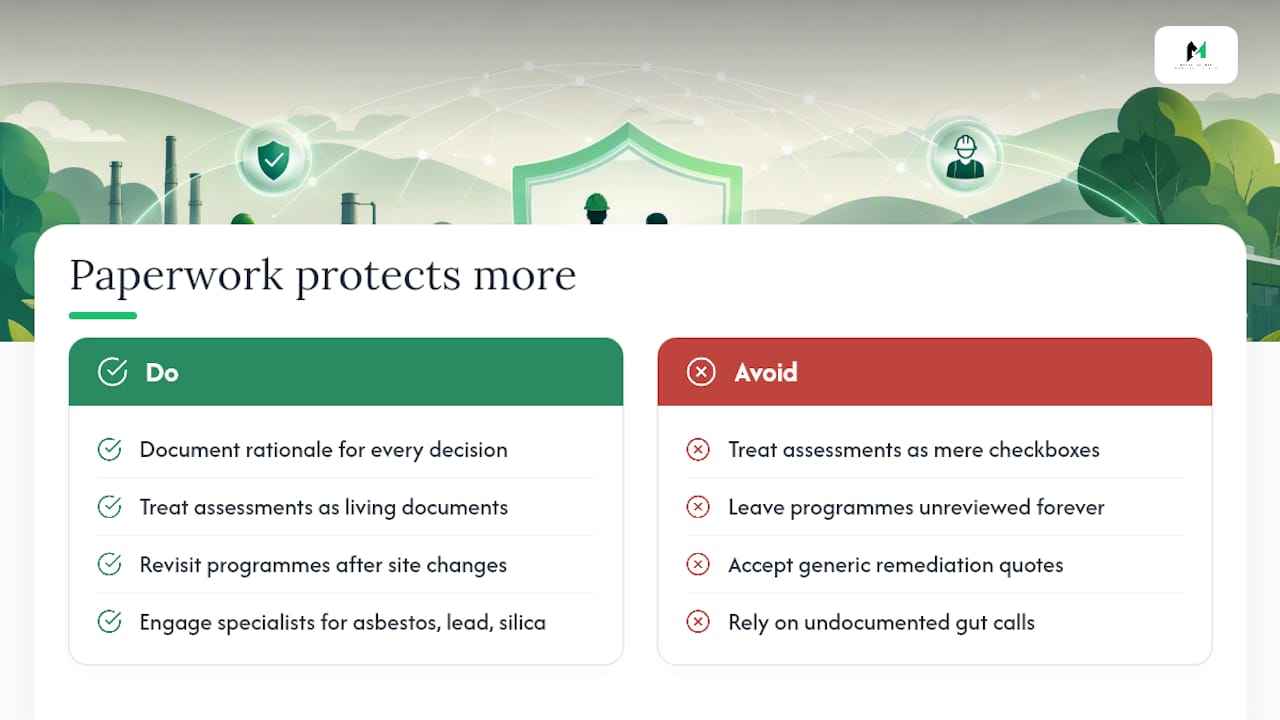
I’d argue the biggest blind spot in Ontario compliance isn’t ignorance of the 11 substances. It’s employers who know the list but treat the written assessment as a checkbox rather than a living risk document. A programme built once and never revisited ages badly, especially as equipment, suppliers, and building conditions change underneath it.
Engage a specialist the moment a survey turns up a designated substance you don’t have in-house expertise to manage, particularly asbestos, lead, or silica on a renovation or demolition project. A credible proposal from an abatement contractor should specify sampling protocols, laboratory accreditation, worker certifications, and a written scope tied directly to the substance and concentration found on site, not a generic remediation quote.
— Moacyr
How MSN Environmental supports your designated substance compliance
Once a survey confirms a designated substance is present, the real work starts: sampling, documentation, and, where needed, removal that meets Ontario’s regulatory standard the first time. MSN Environmental runs designated-substance surveys, asbestos bulk and air sampling, and full Type 3 abatement for property owners, renovators, and construction managers across Kitchener, Waterloo, Cambridge, Guelph, Hamilton, London, and surrounding Ontario communities, giving you one accountable contractor instead of coordinating testing and removal separately.
Every project comes with a written report detailing what was found, where, and at what concentration, along with a realistic timeline before work begins so you’re not guessing when the space will be clear again. If a recent designated substances survey flagged asbestos, lead, or another regulated material on your site, request a quote for asbestos abatement and removal and get a scoped proposal built around your actual test results, not a generic estimate.
Where to verify the law and get further guidance
The regulation text itself, not a summary page, is the final word when a compliance question gets contested. Start with O. Reg. 490/09 for the general designated substances rules and O. Reg. 278/05 for asbestos on construction and building repair projects specifically. The Ministry’s guide to designated substances explains the practical side of assessments and control programmes in plainer language, though it doesn’t override the regulation itself when the two seem to conflict.
For sampling and removal procedure detail, MSN Environmental’s guides on asbestos air sampling and Type 3 abatement round out the practical side of the picture.
FAQ
What are the 11 designated substances in Ontario?
Ontario’s O. Reg. 490/09 names acrylonitrile, arsenic, asbestos, benzene, coke oven emissions, ethylene oxide, isocyanates, lead, mercury, silica, and vinyl chloride as designated substances under the Occupational Health and Safety Act.
What counts as a designated substance under Ontario law?
A designated substance is one of the 11 specific agents named in O. Reg. 490/09 that carries a serious documented worker-health hazard, requiring employers to complete a written assessment and, where exposure is likely, a written control programme.
Is there a broader hazardous substances list beyond the 11 designated substances?
Ontario workplaces also deal with WHMIS-classified hazardous products more broadly, but the 11 designated substances form a distinct, more tightly regulated category with specific exposure limits and mandatory control programmes.
What is a designated substance survey?
A designated substance survey identifies whether any of the 11 regulated substances are present at a workplace or construction site, typically through bulk sampling, and forms the basis for the written assessment employers and project owners must complete. MSN Environmental’s survey process covers sampling, lab analysis, and the written report a project owner needs before tendering work.
Does asbestos fall under O. Reg. 490/09 or O. Reg. 278/05?
Asbestos is named in O. Reg. 490/09 generally, but on construction projects and in specified building repair operations, O. Reg. 278/05 governs the actual work, setting out abatement classifications and worker protection requirements specific to asbestos.