

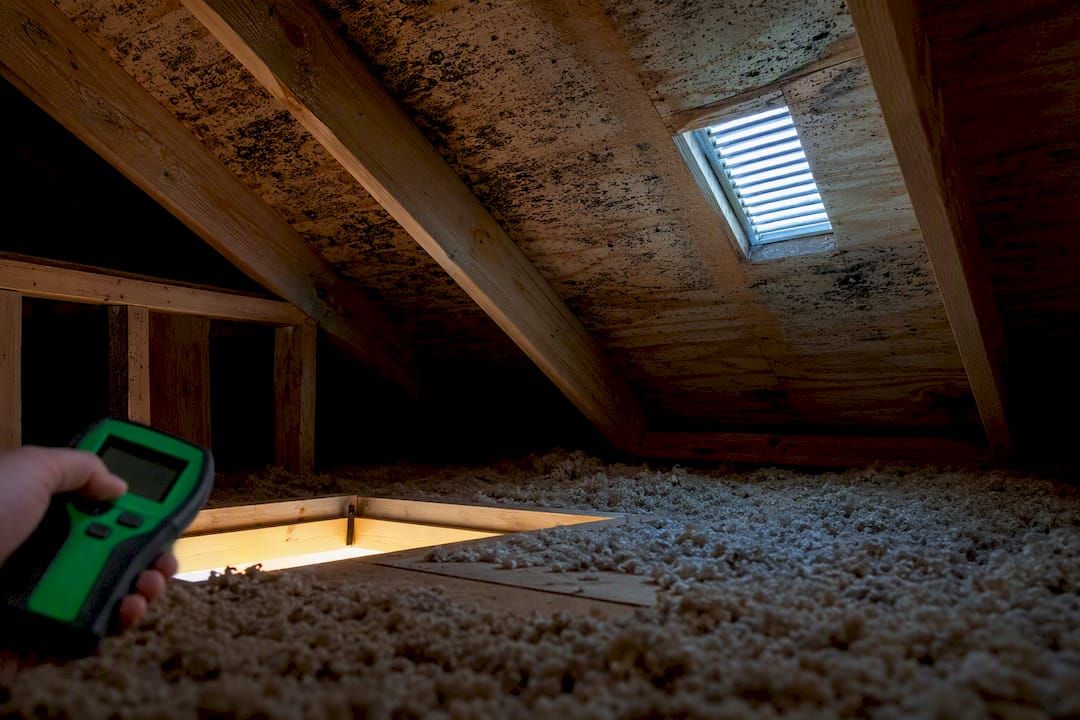
See a small patch on a tile or a non-porous surface with no odour or symptoms? Stop the moisture source, then clean it yourself with detergent and water. Anything bigger, hidden, or paired with a musty smell or respiratory symptoms means you isolate the area, stop water entry, and call a certified remediator or an accredited lab for testing before you touch it.
TL;DR:
- Visible mould patches, musty smells, or health symptoms affecting multiple household members indicate a likely problem requiring professional testing and inspection.
- The first hour after discovering mould is critical to prevent spores from spreading, with actions including stopping water entry, isolating the area, and avoiding disturbance of dry spores.
- Testing is advisable for suspected hidden growth or when health symptoms are present without visible mould, with sample analysis and thermal imaging used for accurate identification.
- Professional remediation involves containment, removal of contaminated materials, HEPA vacuuming, and clearance testing, not shortcuts like skipping containment or sealing.
- Costs vary based on contamination size, hidden growth, and structural repairs, with relief through proper testing, certified contractors, and documented clearance results.
Table of Contents
- How do you know if you have a mould problem in London, Ontario?
- What should you do in the first hour?
- When should you test versus remediate right away?
- What does professional mould cleanup actually involve?
- What does mould testing and remediation cost, and how long does it take?
- What questions should you ask before hiring a mould contractor?
- Why hire a certified remediator instead of doing it yourself?
- Local common mould types in London, Ontario and their health impacts
- How do London’s seasons affect mould growth patterns?
- What prevents mould in London Ontario homes?
- Where to go for lab testing or remediation help
- A homeowner’s honest read on mould advice in this market
- Get a certified team on the job instead of guessing
- Sources
- FAQ
How do you know if you have a mould problem in London, Ontario?
Visible growth is the obvious tell: black, green, or white patches on drywall, grout, window frames, or basement joists. A musty, earthy smell often shows up before you see anything, especially behind furniture or inside closets that back onto exterior walls.
Health symptoms are the third signal, and they’re the one people dismiss too often. Persistent coughing, sinus congestion, headaches, or worsening asthma that improves when you leave the house points to indoor air quality problems, mould among them. If several household members report the same symptoms and nobody’s sick outside the home, that’s not a coincidence worth ignoring.
The tricky part is hidden mould. Water that got into a wall cavity during a roof leak two years ago doesn’t announce itself until the smell finally seeps through the drywall. That’s where mould inspection London Ontario services earn their fee: finding contamination before it spreads into a five-figure remediation job.
What should you do in the first hour?
The first 60 minutes matter more than most homeowners realize. Mould spores disturbed by a heavy hand or a shop vac spread through the air and settle somewhere new, often somewhere worse.
- Stop the moisture source. Shut off the leaking pipe, unplug the humidifier, or move the wet items outside.
- Isolate the area. Close doors, and if possible, tape plastic sheeting over a doorway leading to the rest of the house.
- Skip the dry brushing or vacuuming. Disturbing dry mould releases spores; leave it alone until it’s either tested or professionally contained.
- Ventilate carefully. Open a window near the affected area if outdoor air is dry, but don’t run the central HVAC system, since that spreads spores through the ducts.
- Put on gloves and an N95 mask before getting anywhere close to the area.
- Wipe small spots on non-porous surfaces (tile, glass, metal) with detergent and water only if there are no symptoms and no hidden component suspected.
Move anyone with asthma, allergies, a compromised immune system, or an infant out of the affected rooms until the area is cleaned or cleared.
Pro Tip: Bleach may kill surface spores on porous materials like drywall or wood but often leaves roots intact underneath, leading to mould returning after treatment.
When should you test versus remediate right away?
Testing earns its cost when you need proof, not just a hunch. Skip straight to remediation when the mould is visible, extensive, and the source is obvious, like a flooded basement from last week’s storm.
Test first when:
- Occupants have unexplained respiratory symptoms and no visible mould has turned up yet
- You suspect hidden growth behind a wall, under flooring, or inside an HVAC system
- You’re buying or selling a home and need documented air quality results
- Remediation just wrapped up and you need clearance testing to confirm the job worked
Labs typically run three sample types: air samples (measuring spore counts in cubic metres of air against an outdoor baseline), bulk samples (physical material pulled from a suspect surface), and tape lifts (a strip of clear tape pressed onto a surface, then examined under a microscope). Infrared thermal imaging complements all three by locating temperature differentials that flag hidden moisture behind walls without cutting into drywall, a technique commonly used by local inspectors doing mould assessments around London.
A lab report showing spore counts well above the outdoor baseline for the same day is generally read as a positive result, though species identification has limits since some spores look nearly identical under a microscope. LCS Laboratory in London offers air sampling and analysis following standard methods like ASTM D7391, and firms such as A.L. Home Inspections collect samples on-site and walk homeowners through what the numbers actually mean.
What does professional mould cleanup actually involve?
Legitimate remediation follows a sequence, not a shortcut. Skipping any of these steps is usually where a “cheap” job turns expensive later.
- Inspection and scope: the technician maps the extent of contamination, often with a moisture meter and IR thermal imaging, before writing a plan
- Containment: plastic sheeting and negative-pressure air machines isolate the work area so spores don’t migrate to clean rooms
- Removal and disposal: contaminated porous materials (drywall, insulation, carpet) get bagged and removed following Ontario waste disposal rules
- HEPA vacuuming and air scrubbing: HEPA filters capture particles as small as 0.3 microns, well below what a standard shop vac catches
- Antimicrobial treatment: applied to remaining structural surfaces where appropriate, not as a substitute for removal
- Clearance testing: an independent air or surface sample confirms spore counts have returned to normal before containment comes down
HVAC systems deserve their own mention. If ductwork was exposed to spores during the event, it needs inspection and possibly cleaning separately, since running the furnace fan during remediation is one of the fastest ways to contaminate the whole house.
Pro Tip: Ask for the clearance test results in writing before you sign off on the job as complete. A remediator who resists that request, or calls it unnecessary, is telling you something about how confident they are in their own work.
What does mould testing and remediation cost, and how long does it take?
Costs vary enough by site conditions that any number quoted online should be treated as a rough starting point, not a promise. Testing alone runs from the price of a single air sample up to a multi-sample panel covering several rooms or a basement and main floor combination. Remediation costs scale with contamination size: a small spot cleanup costs far less than a single-room job with wall removal, and multi-room or structural repairs (replacing subfloor, joists, or insulation) sit at the top of the range.
What drives the price up:
- Concealed contamination discovered mid-job, behind walls or under flooring
- Structural repairs needed after material removal
- HVAC duct remediation
- Hazardous co-contaminants like asbestos found in older building materials, which requires separate abatement
- Disposal volume and access difficulty (basements, crawl spaces)
Turnaround times also vary by provider. Sample analysis can come back in one to two days for rush service or three to five days for standard reporting, a distinction worth asking about upfront if you’re on a tight closing date or dealing with an active health concern. Small remediation jobs typically wrap in one to three days; larger structural jobs stretch into weeks, with clearance testing scheduled only after containment comes down and the space has had time to stabilize.
What questions should you ask before hiring a mould contractor?
A written scope of work is the single best filter for separating a legitimate remediator from someone with a truck and a bottle of bleach. Ask these before signing anything:
- Are you certified for hazardous materials removal, and can you show proof?
- What accredited lab do you use for sample analysis, and can I see a sample report?
- Will you provide a written scope of work, a project timeline, and proof of liability insurance?
- Does the quote include clearance testing after the job is done, or is that billed separately?
- How do you handle containment if the job is larger than the initial estimate suggested?
Compare bids line by line, not by the bottom number alone. A quote that’s half the price of everyone else’s usually means containment, disposal, or clearance testing got dropped from the scope, not that the contractor found a cheaper way to do the same work.
Red flags worth walking away from: no written scope, refusal to run clearance testing, pressure to pay cash upfront, or a contractor who wants to demolish first and test later. That last one inverts the whole process and usually means guesswork billed at demolition rates.
Why hire a certified remediator instead of doing it yourself?
Certification exists because improper mould removal spreads contamination rather than solving it, and Ontario’s hazardous materials rules apply the same logic to mould as they do to asbestos and lead paint. MSN Environmental works from testing partnerships through to full mould remediation, including containment, HEPA-based removal, and clearance testing to confirm the job actually worked before anyone moves back in.
Before hiring anyone, local or otherwise, ask for:
- Proof of certifications specific to hazardous materials and mould remediation
- A written scope of work with project timeline
- Proof of liability insurance
- Confirmation of which accredited lab handles sample analysis
- The clearance criterion they’ll test against once the job is finished
A written scope and clearance report matter more than a sales pitch, because they’re the documents an insurer or a future buyer will actually ask to see.
Local common mould types in London, Ontario and their health impacts
Cladosporium and Penicillium show up most often in London basements and crawl spaces, usually following seasonal dampness rather than a single flood event. Both trigger allergic reactions in sensitive people, ranging from sneezing and watery eyes to worsening asthma symptoms, though they’re rarely classified as toxigenic.
Stachybotrys chartarum, the species most people mean when they say black mould, needs sustained moisture to establish itself, which usually means a slow leak went unnoticed for weeks or months. It’s associated with more severe respiratory symptoms and has drawn the most public concern, though the science on its broader health effects outside sensitive individuals remains debated among researchers.
Aspergillus is common in older homes with less ventilation, particularly in attics and around window frames where condensation collects in winter. For most healthy adults it’s a minor irritant; for people with compromised immune systems or chronic lung conditions, it poses a more serious risk.
None of these species can be reliably identified by eye. A patch that looks black might be Stachybotrys, or it might just be a darker strain of a harmless species growing on dust and grime. That’s the practical argument for lab identification over guesswork: the colour tells you almost nothing, and the treatment approach shouldn’t be based on a visual guess.
How do London’s seasons affect mould growth patterns?
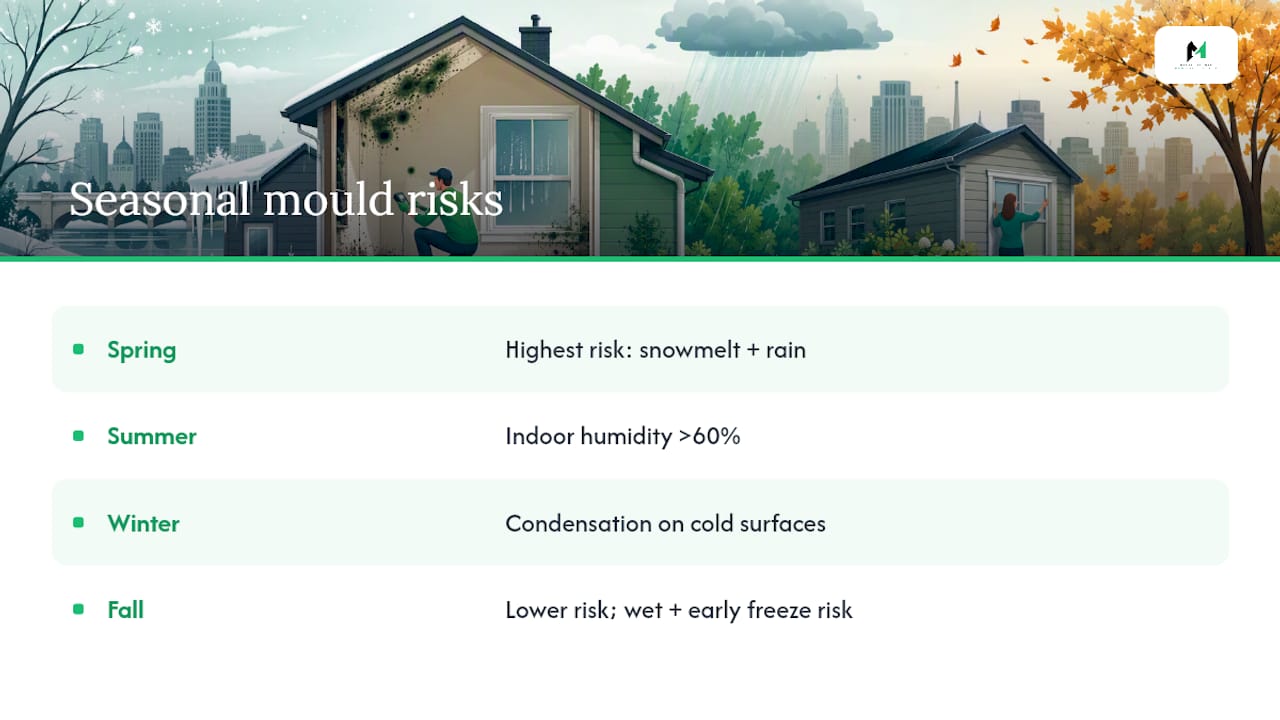
Spring is the highest-risk season for London homeowners, and it’s not close. Snowmelt combined with spring rain saturates foundations and window wells faster than older drainage systems can handle, and that moisture finds its way into basements through hairline cracks that stayed dry all winter.
Summer humidity creates a second, quieter risk. Ontario summers regularly push indoor relative humidity above the 60% threshold at which mould spores germinate, especially in basements without dehumidification or in homes where the air conditioner short-cycles instead of running long enough to actually pull moisture out of the air.
Winter brings a different mechanism entirely: condensation. Warm, moist indoor air meets cold surfaces, window frames, poorly insulated exterior walls, attic hatches, and beads into water that soaks into drywall and wood trim. This is where London’s mixed housing stock matters. Older Victorian and post-war homes tend to trap hidden mould in wall cavities and basements tied to aging foundations and past water events, while newer, tightly sealed builds run into a different problem: ventilation imbalances that trap humidity indoors with nowhere to escape. IR thermal imaging paired with a moisture meter finds these pockets in either housing type without opening up a wall to look.
Fall sits in between, generally the lowest-risk stretch, though a wet autumn followed by an early freeze can trap moisture in siding and eaves before winter sets in.
What prevents mould in London Ontario homes?
Controlling humidity is the single highest-leverage habit for London homeowners. Keep indoor relative humidity under 50%, using a hygrometer (they cost less than a dinner out) to actually check rather than guess, and run a dehumidifier in the basement through summer.
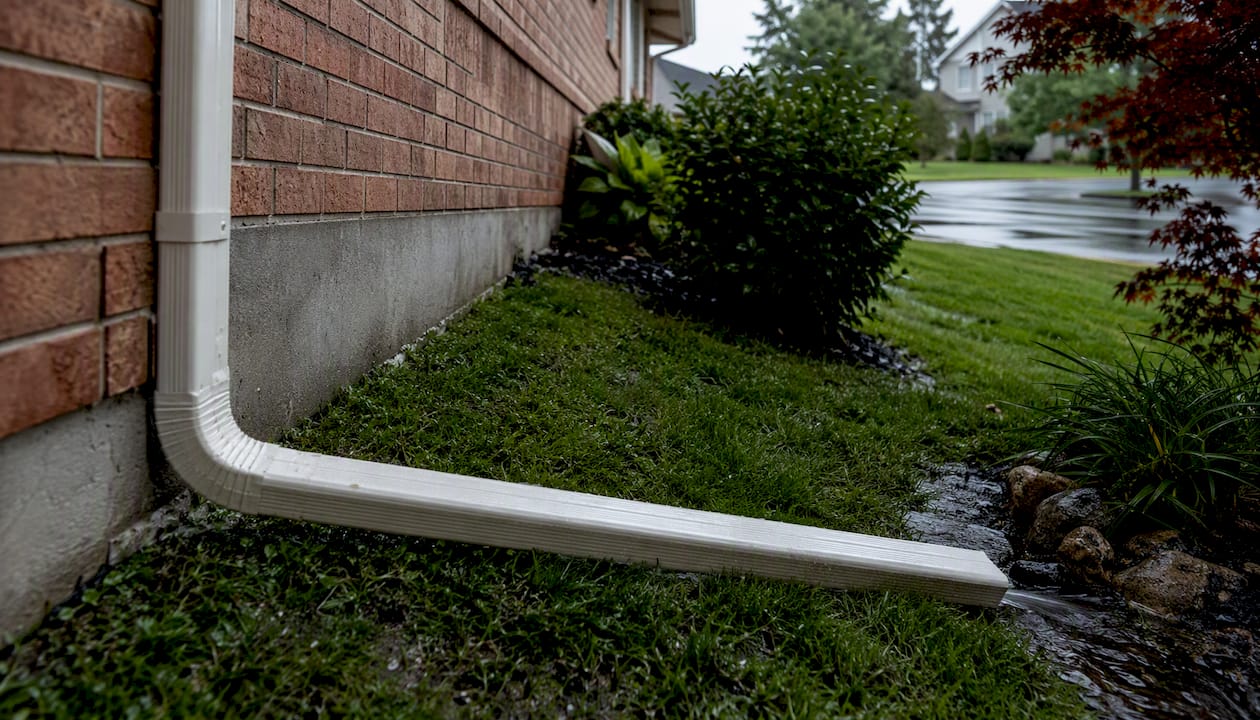
Grading and drainage matter more than most renovation budgets reflect. Make sure soil around the foundation slopes away from the house, and that downspouts discharge at least two metres from the foundation wall rather than pooling right against it, a common issue on older London lots with mature landscaping that’s shifted the original grade over decades.
Bathroom and kitchen exhaust fans need to vent outside, not into the attic, a mistake more common in older homes than most people realize. Run the fan during showers and for 15 to 20 minutes after, and check that the attic isn’t showing frost or condensation on the underside of the roof deck in winter, a sign the exhaust is dumping moisture where it shouldn’t be.
Basement waterproofing, sealing foundation cracks, and checking window well drainage before spring melt round out the seasonal checklist. For homes with a history of water events, a periodic mould air testing check offers cheap insurance against the kind of hidden growth that doesn’t show up until it’s already expensive.
Where to go for lab testing or remediation help
- LCS Laboratory analyzes air, bulk, and surface samples for airborne mould spores using standard testing methods.
- MSN Environmental’s testing and assessment services cover sampling, designated substance surveys, and pre-renovation inspections.
Always request the written lab report and ask what clearance criterion the remediator is testing against before work begins.
A homeowner’s honest read on mould advice in this market
Most mould advice online treats every basement stain like an emergency and every home like it’s built the same way. It isn’t. A 1920s brick home in Old South with a stone foundation behaves nothing like a 2018 build in Sunningdale with a poured basement and an HRV system, and the advice that works for one can be pointless for the other.
What the research actually supports is simpler than most guides admit: humidity control beats almost every other prevention tactic combined, and testing beats guessing every single time there’s ambiguity about whether something is hidden. The conventional advice oversells DIY bleach fixes and undersells the value of a written scope of work. A cheap quote that skips clearance testing isn’t a bargain, it’s a bet that the problem won’t come back, and that bet loses often enough that insurers and buyers have started asking for documentation as a matter of course.
If you take one thing from this: fix moisture before you fix mould. Everything else is maintenance.
— Moacyr
Get a certified team on the job instead of guessing
Hiring a certified remediation company is the practical alternative to piecing together DIY advice and hoping it holds. Certified technicians come with appropriate certifications, lab partnerships, and containment equipment to finish the job with documented clearance results in hand.

That matters most for London homeowners dealing with the housing stock quirks covered above: older foundations with hidden wall cavity contamination, or newer builds with ventilation-driven damp spots that don’t show up until they’re already spreading. Technicians trained in moisture meters and containment protocols that meet Ontario’s regulatory standards are best equipped to handle varied mould issues rather than using a one-size-fits-all approach borrowed from a different climate.
If you’ve got a suspicious smell, a visible patch bigger than a dinner plate, or a lab report already in hand pointing to elevated spore counts, the next step is straightforward: book a mould assessment or remediation quote and get a written scope before anyone touches a wall.
This article is general information, not a substitute for advice from a qualified doctor. Consult a qualified healthcare professional about your own circumstances before acting on anything here.
Sources
- Laboratory Test: Mould and Your Home.
- Mold Testing London, ON | A.L. Home Inspections
- Professional Mould Testing in London , Ontario
FAQ
Can you sell a house with mould in Ontario?
Yes, but sellers in Ontario are generally required to disclose known material defects, and undisclosed mould can lead to legal disputes after closing. A documented clearance test after remediation gives buyers confidence and can prevent price renegotiation during the inspection period.
Should I wipe mould off walls myself?
Only for small patches on non-porous surfaces like tile or glass, using detergent and water, and only if no one in the home has respiratory symptoms. Porous materials like drywall need professional removal, since surface wiping and even bleach leave roots intact underneath and the growth typically returns.
How much does mould removal cost in Ontario?
Costs range widely depending on the size of the affected area, whether structural repairs are needed, and whether hidden contamination turns up mid-job. Get a written, itemized quote comparing scope rather than price alone, and confirm whether clearance testing is included before comparing numbers between contractors.
Can a tenant relocate due to mould in Ontario?
Tenants can request repairs and, in cases of significant health risk, may pursue a rent abatement or termination through Ontario’s Landlord and Tenant Board if a landlord fails to address a documented mould problem. Written lab results and a paper trail of repair requests are the strongest evidence a tenant can present.
Is black mould more dangerous than other types?
Stachybotrys chartarum, commonly called black mould, is associated with more severe respiratory symptoms in some individuals, but any mould species can trigger allergic or respiratory reactions in sensitive people. Lab identification through air or bulk sampling, rather than colour alone, is the only reliable way to know which species you’re dealing with.