

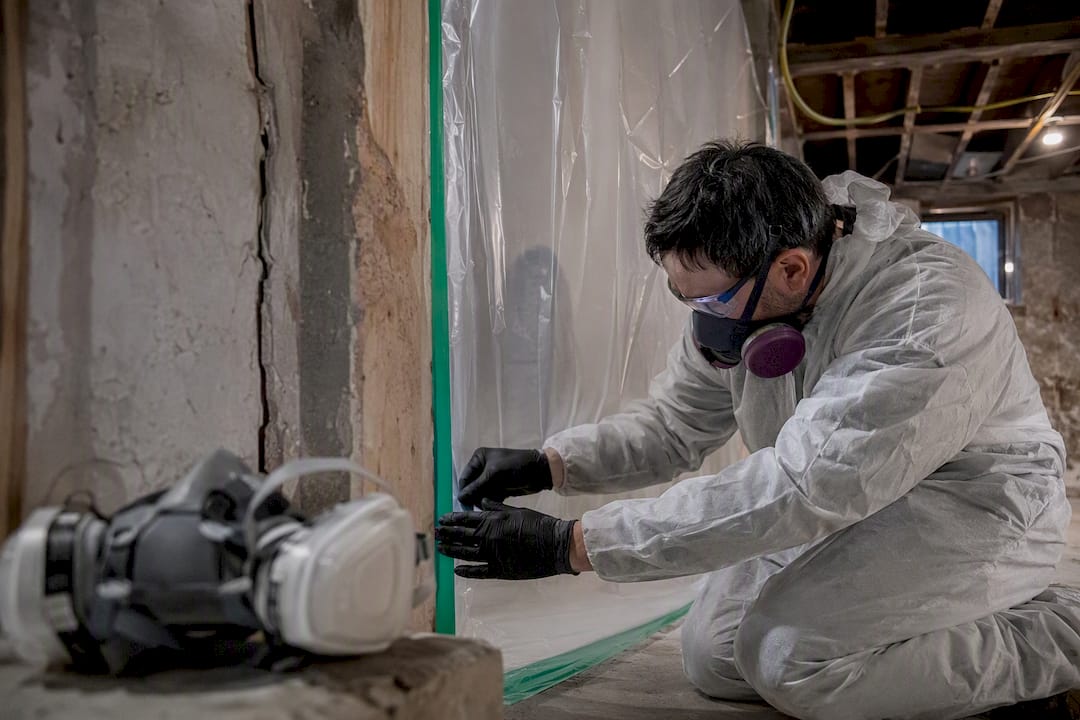
If you’ve uncovered suspected asbestos while renovating, stop work immediately. Keep everyone, including pets, out of the area. Do not touch, sweep, sand, or attempt to remove the material yourself. Your next call is to a licensed asbestos inspector who can arrange accredited laboratory testing before anyone goes near that wall, floor, or ceiling again.
- Stop all work in the affected area right away, and don’t resume until you have test results.
- Leave the material alone. No sweeping, sanding, scraping, or dry cleanup of any kind.
- Call a licensed inspector to collect samples for lab analysis rather than guessing based on appearance or age.
Key Takeaways
Asbestos found during renovation demands one sequence every time: stop, test with an accredited lab, then abate or manage based on the material’s condition and your project’s scope.
| Point | Details |
|---|---|
| Stop work immediately | Don’t touch, sand, or sweep suspect material until it’s tested by a licensed inspector. |
| Contain the area first | Seal doors, shut off HVAC, post warning signs, and keep people and pets out. |
| Testing requires a lab | Visual inspection can’t confirm asbestos; PLM analysis at an accredited lab is standard. |
| Condition drives the decision | Intact material may be managed in place; damaged or friable material typically needs removal. |
| MSN Environmental handles it end to end | Sampling, lab coordination, licensed abatement, and clearance testing are all part of MSN Environmental’s process. |
This article is general information, not a substitute for advice from a qualified doctor. Consult a qualified healthcare professional about your own circumstances before acting on anything here.
Table of Contents
- What to do if asbestos is found: immediate containment steps
- How does asbestos exposure affect your health?
- Where does asbestos hide during a renovation?
- How do you get materials tested for asbestos?
- Should you remove asbestos or leave it in place?
- What happens during professional asbestos abatement?
- Why hire a certified hazardous materials company?
- Safe temporary measures if you can’t get abatement right away
- How to spot a fraudulent asbestos contractor
- How is asbestos waste disposed of legally?
- What are your legal obligations when asbestos turns up?
- What PPE should you use before professional help arrives?
- How MSN Environmental handles asbestos found mid-renovation
- Sources
- FAQ
What to do if asbestos is found: immediate containment steps
Once you’ve stopped work, the next 30 minutes matter more than people think. Suspected asbestos found during renovation doesn’t need to become a full-blown crisis if you contain it properly while waiting for professional help.
- Seal off the area. Close doors, and if you can, hang plastic sheeting over doorways to stop dust migrating into hallways or living spaces.
- Shut down the HVAC system if it services that room. A running furnace or air handler can pull fibres through ductwork and spread them through the whole house.
- Post a warning sign on the door or entry point, even a handwritten note taped to the frame works, so nobody wanders in out of curiosity.
- Keep people and pets out. This includes kids who think a construction zone looks fun to explore.
- Damp wipe any visible dust on nearby surfaces using a wet cloth, never dry dusting or vacuuming with a standard shop vac, which can aerosolize fibres further.
- Bag your outer clothing if you were working in the area when you found the material, and change before walking through the rest of the house.
Pro Tip: Keep a roll of plastic sheeting and painter’s tape in your renovation toolkit before you even start demolition. Having containment materials on hand means you can isolate a suspect area in minutes instead of tracking dust through the house while you run to the hardware store.
How does asbestos exposure affect your health?
Asbestos fibres are microscopic and can lodge deep in lung tissue once inhaled. Over years, sometimes decades, that irritation can develop into mesothelioma, lung cancer, or asbestosis, a scarring lung disease. This latency period is what makes asbestos so deceptive: someone could be exposed today and not see symptoms for 20 to 40 years.
Risk isn’t a simple yes-or-no. It depends on the fibre type, how concentrated the dust was, and how long and how often someone breathed it in.
- A single brief disturbance of an intact material carries a different risk profile than years of repeated sanding or demolition work.
- HealthLink BC notes that renovators and trades workers face higher exposure risk than the general population, partly because power tools generate far more airborne fibres than everyday wear.
If you suspect a heavy, acute exposure (a cloud of dust from sanding, for instance), mention it to your doctor. Clinical assessment for asbestos related disease usually involves imaging and a detailed exposure history rather than an immediate blood test, since fibres don’t show up that way.
Where does asbestos hide during a renovation?
Asbestos was used in hundreds of building products well into the late 20th century, which is why almost any home built before the 1990s deserves a closer look before you start tearing things apart. Some materials are more likely to contain it than others.
- Vinyl floor tiles and the black mastic adhesive underneath them
- Textured “popcorn” ceilings, sprayed on for soundproofing and fire resistance
- Drywall joint compound and some plasters
- Pipe wrap and boiler insulation, often a chalky white or grey wrapping
- Cement sheeting used in siding, soffits, and some subflooring
- Older window putty and certain adhesives
The material’s condition matters more than its age. A bonded, intact vinyl tile that’s been sitting undisturbed for 40 years poses far less risk than the same tile once you take a circular saw to it. Sanding, demolition, cutting, and aggressive power tool work are the activities most likely to turn a dormant hazard into an airborne one, which is exactly why so many asbestos discoveries happen mid-project rather than during a pre-renovation walkthrough.
How do you get materials tested for asbestos?
You genuinely cannot identify asbestos by looking at it. Fibres are invisible to the naked eye, and plenty of asbestos-free materials look identical to the ones that contain it. That’s why EPA guidance is blunt on this point: sampling should happen when materials are damaged or about to be disturbed, and it should be done by someone trained to do it safely.
Here’s how the process typically works:
- A licensed asbestos inspector visits the site and collects small samples from the suspect material, using techniques designed to prevent fibre release during collection.
- Samples go to an accredited lab, where analysts most commonly use Polarized Light Microscopy (PLM) to identify asbestos fibres in bulk material.
- The lab maintains a chain-of-custody record, and results typically come back within a few business days for standard turnaround.
- You receive a written report identifying whether asbestos is present, the type, and a recommended management approach.
What to look for in that report:
- Clear identification of which samples tested positive and at what concentration
- A recommendation: manage in place, encapsulate, or remove
- Next steps and, ideally, a rough cost estimate for the recommended approach
MSN Environmental’s testing and inspection services follow this same sampling and lab protocol, so you get a report you can actually act on rather than a guess.
Should you remove asbestos or leave it in place?
Not every positive test means immediate removal. The decision comes down to condition, and whether your renovation plans will disturb the material.
Manage-in-place can work when the asbestos-containing material is intact, bonded, and won’t be touched by your project. Think a boiler room you’re not renovating, or flooring under a section you’re leaving alone. In these cases, periodic visual monitoring and leaving the material undisturbed is a legitimate strategy, not a shortcut.
Removal or encapsulation becomes the strong recommendation when the material is already damaged, crumbling, or friable (meaning it can be crumbled by hand pressure), or when your renovation plan requires cutting, sanding, or demolishing it. At that point, containment measures alone won’t hold up.
- Intact, undisturbed, and outside the renovation footprint: manage in place with monitoring.
- Damaged, friable, or directly in the path of your renovation: removal or encapsulation is the safer call.
- Selling the home soon or carrying renovation insurance: many insurers and buyers now expect documented abatement, not just a management plan, before major work proceeds.
Pro Tip: If you’re on the fence, ask your inspector to note the material’s friability directly in the report. That single word (friable versus non-friable) often settles the manage-versus-remove decision on its own.
What happens during professional asbestos abatement?
A licensed abatement contractor follows a defined sequence, and knowing it ahead of time helps you plan your renovation timeline realistically.
- Survey and sampling confirms exactly what’s present and where, building on the inspection report you already have.
- Project design and permitting lays out containment barriers, negative air pressure requirements, and worker protection based on the scope of material involved.
- Containment and removal happens inside sealed work areas, with crews in full protective equipment removing material according to regulated procedures.
- HEPA vacuuming and waste packaging cleans the space and seals removed material in labelled, leak-tight containers.
- Licensed disposal takes the waste to a facility approved to accept asbestos-containing material.
- Air monitoring and clearance testing confirm fibre levels have returned to acceptable levels before anyone re-occupies the space.
Cost and timeline swing on a few variables: whether the material is friable or non-friable, the total area involved, how accessible it is, whether it’s an emergency response versus scheduled work, and disposal fees at the receiving facility. A small, contained pipe insulation job might wrap in a day or two. A whole-house popcorn ceiling removal in an occupied home takes considerably longer. Either way, don’t move back into the space until you have a written clearance certificate in hand, not just a verbal “should be fine.”
Why hire a certified hazardous materials company?
Improper asbestos handling doesn’t just risk health, it risks your entire project. One widely reported case saw a high school shut down for months after unqualified removal work, highlighting the importance of managing asbestos removal certification across multiple sites to avoid costly decontamination and compliance failures. Homeowners face the same math on a smaller scale.
MSN Environmental technicians work with accredited sampling protocols, proper containment equipment, and documented clearance testing on every project. That combination is what separates a defensible paper trail from a costly do-over.
- Certified technicians trained specifically in hazardous material handling, not general contracting with a side interest in abatement
- Documented clearance testing before any space is declared safe to re-occupy
- A track record across residential and commercial abatement projects, tailored to Ontario regulatory requirements
Safe temporary measures if you can’t get abatement right away
Sometimes a licensed contractor can’t get to your site for a few days, especially during busy renovation seasons. That gap doesn’t have to mean elevated risk if you handle it carefully.
Keep the area sealed exactly as you left it during your initial containment. Don’t re-enter to “just take a quick look” or grab a tool you forgot. Every entry is a chance to disturb dust that’s already settled. If you must retrieve something from an adjacent room, use a taped-off pathway that avoids walking directly through the suspect zone.
Humidity and airflow matter more than people realize. A slightly damp cloth over any exposed edges of the material (never scrubbing, just resting there to suppress dust) can reduce the chance of fibres becoming airborne from air currents or vibration elsewhere in the house. Avoid running fans, box fans, or anything that creates airflow through the sealed room.
If the material is in a spot you can’t fully close off, like a section of hallway flooring, lay a single sheet of 6-mil plastic over it and tape the edges down flat, rather than draping it loosely. A loose sheet can still let dust migrate at the edges when someone walks past.
Don’t let contractors, delivery workers, or other trades continue working elsewhere in the house as if nothing changed. Dust from an active worksite travels further than most people expect, especially through shared HVAC returns or open stairwells. Treat the entire work zone as paused, not just the one room, until you’ve got test results back and a plan in hand.
How to spot a fraudulent asbestos contractor
Asbestos remediation attracts a fair number of operators cutting corners, because proper containment and disposal cost money that a fly-by-night crew would rather pocket. A few warning signs separate legitimate professionals from risky hires.
A contractor who can’t produce a current licence number on request is the biggest red flag. Legitimate abatement companies carry provincial or territorial licensing and should hand over that documentation without hesitation, not act offended that you asked. Similarly, any inspector who offers to “eyeball it” and skip lab testing entirely is not following accredited protocol. Visual identification alone is not a valid substitute for Polarized Light Microscopy analysis at an accredited lab.
Watch for quotes that come in dramatically lower than everyone else’s. Proper containment, HEPA filtration, protective equipment, and licensed disposal all cost real money. A quote that undercuts the competition by half often means one or more of those steps is being skipped, and you won’t find out which one until it’s too late to fix cheaply.
Ask specifically whether they’ll provide a written clearance certificate backed by post-removal air testing. A contractor who hesitates on this, or says it’s “not usually necessary,” is not following standard practice. Also check whether they carry their own liability insurance for hazardous materials work; general contracting insurance typically doesn’t cover asbestos incidents.
Finally, a legitimate company will happily let you verify their certifications independently rather than just taking their word for it. If a “great deal” seems to hinge on skipping documentation, testing, or licensing checks, walk away.
How is asbestos waste disposed of legally?
Asbestos-containing material doesn’t go in your regular renovation dumpster, and that’s not optional. It’s classified as a designated hazardous waste, which means it has to be double-bagged or wrapped in labelled, leak-tight containers and transported to a facility specifically approved to accept it.
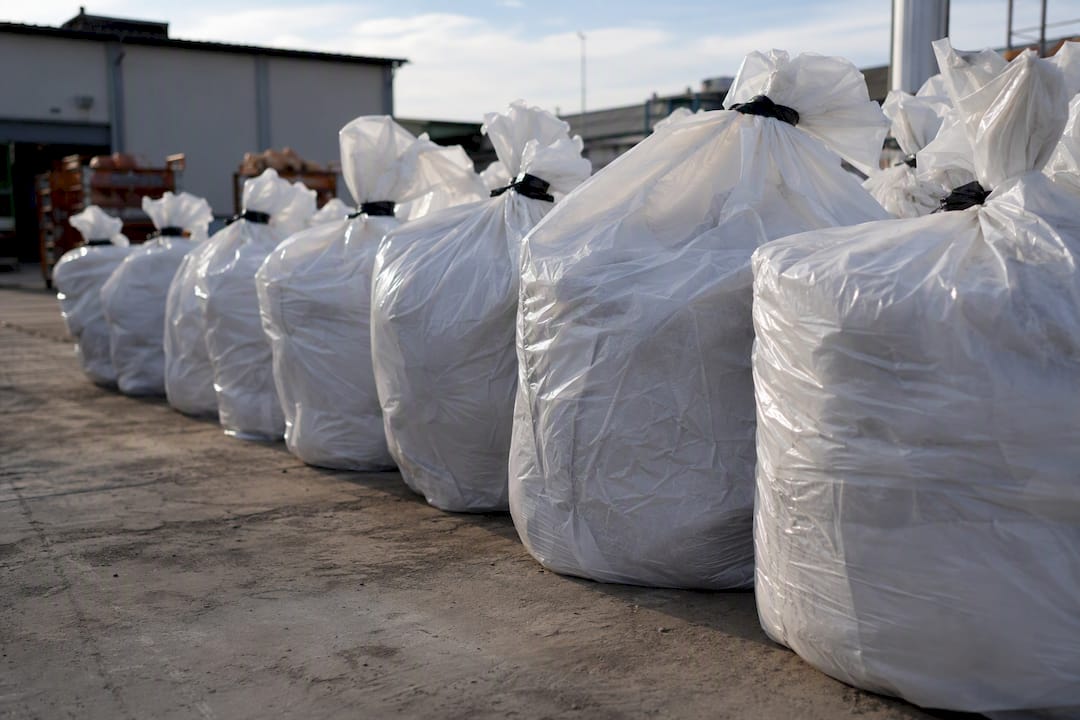
Regular landfills and construction waste transfer stations generally won’t take asbestos material, and most won’t even let it near the tipping floor if they spot it, because accepting unauthorized hazardous waste puts their own operating licence at risk. Approved disposal facilities log every load, track quantities, and often require advance notice or a waste manifest documenting where the material came from and who handled it.
This paperwork trail matters for more than compliance. If a dispute ever comes up (with an insurer, a future buyer, or a regulator) that manifest is your proof the material was handled correctly from removal through to final disposal. A licensed abatement contractor handles this as a standard part of the job, rolling packaging, transport, and disposal fees into the overall project cost rather than leaving you to figure out where to haul bagged material yourself.
Attempting to dispose of asbestos waste through unauthorized channels, including putting bagged material out with regular trash, carries real regulatory and legal risk. It also defeats the purpose of everything you did to contain the hazard properly in the first place. If a contractor’s quote seems to skip disposal fees entirely, ask directly where the waste is going and request documentation.
What are your legal obligations when asbestos turns up?
Finding suspected asbestos during a renovation isn’t just a health and safety question, it comes with notification obligations depending on your jurisdiction and the scope of work. Larger renovation and demolition projects, particularly ones involving a permit, commonly require a designated substance survey before work proceeds, and that survey has to be shared with anyone doing the work, including your own contractors.
If you’re renovating a property with employees or hired trades on site (not just yourself doing DIY work), workplace safety regulations typically require the employer or property owner to inform every worker of a known or suspected hazard before they continue in that area. This is where a lot of homeowners get caught off guard: hiring a general contractor doesn’t remove your responsibility to disclose what you know about the material.
Depending on the quantity and type of material involved, some jurisdictions require notifying a local building or health authority before abatement work begins, particularly for larger removal projects. HSE guidance on accidental disturbance during work also outlines the presumption that any suspect material should be treated as asbestos containing until testing proves otherwise, which shapes how notification and stop-work procedures typically play out.
The practical takeaway: don’t rely on memory or assumption here. A licensed abatement contractor or environmental consultant will know exactly what your specific municipality and provincial regulator require for your project’s scope, and building that into your renovation plan from the start avoids a stop-work order landing on you mid-project.
What PPE should you use before professional help arrives?
If you’ve already stopped work and sealed the area, you shouldn’t need to re-enter at all before a professional inspects it. But if circumstances force brief entry (checking on a leak, retrieving a tool left inside), some basic protective equipment reduces your risk during that short window.
A properly fitted N95 or P100 respirator is the minimum standard; a basic dust mask from the hardware store does not filter asbestos fibres effectively. Disposable coveralls with a hood keep fibres off your clothing and hair, and disposable shoe covers prevent tracking dust out of the contained area. Nitrile or similar disposable gloves round out the basics.
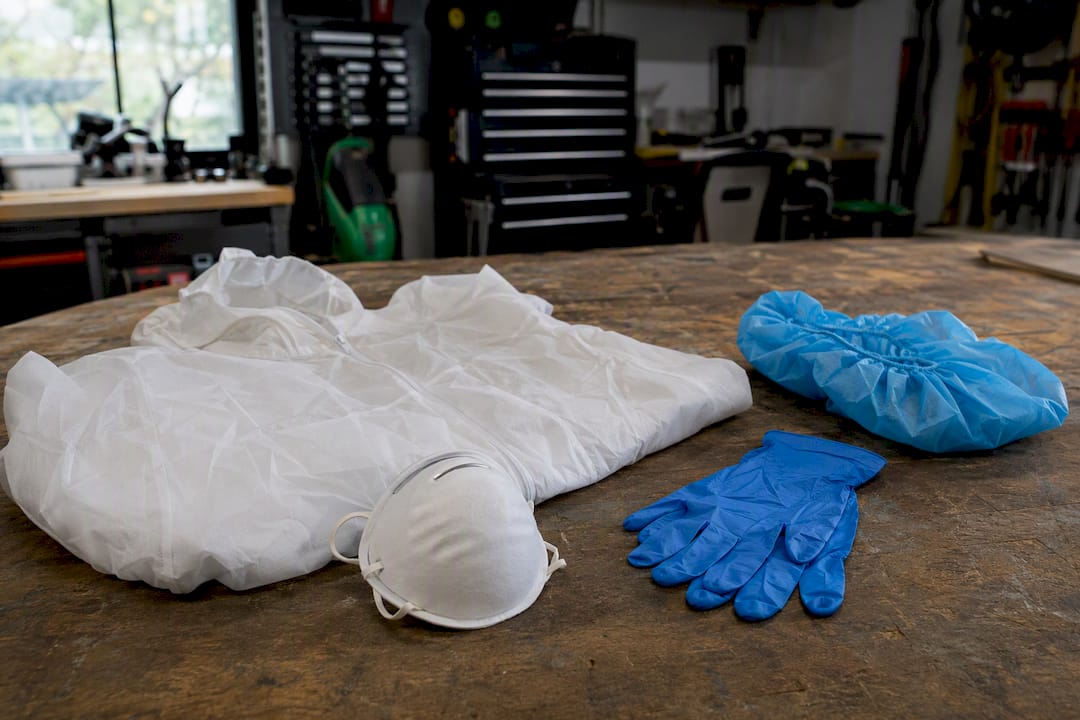
None of this equipment is a substitute for professional abatement, and none of it should be treated as permission to do the removal work yourself. It exists purely to reduce incidental exposure during the short gap between discovery and professional assessment. Once you’re done, remove protective gear inside the contained area if possible, bag it, and wash your hands and face thoroughly before touching anything else in the house.
A contractor’s take: keep it simple and in order
The homeowners who get through this cleanly follow one sequence: stop, test, plan, then abate or encapsulate, then confirm clearance. The ones who struggle usually skipped straight to removal themselves, or kept working after spotting a warning sign because the deadline felt more urgent than the risk.
How MSN Environmental handles asbestos found mid-renovation
Once you’ve stopped work and called for help, MSN Environmental takes over the parts of this process that actually require licensing and lab access: sampling, accredited testing, and if the results come back positive, full abatement with documented clearance. Unlike a general contractor who might subcontract this out and add a markup, you’re working directly with the certified technicians doing the removal, which tends to mean faster scheduling and a clearer chain of accountability if anything needs to be revisited.
Here’s what happens after you call: a technician schedules a site visit, usually within days rather than weeks, collects samples following the same protocol described above, and sends them to an accredited lab for PLM analysis. You get a written report and a firm quote before any abatement work starts, so there’s no guessing on cost partway through. If removal is required, the crew handles containment, HEPA cleanup, licensed disposal, and post-removal air testing, and you get a clearance certificate before moving back into the space.
If you’ve found suspect material during a renovation in the Kitchener, Waterloo, Cambridge, or Toronto areas, book an asbestos inspection and get a straight answer on what you’re dealing with before you decide anything else about your project.
Sources
- Kensington High asbestos closure: case reporting of improper removal
- National Cancer Institute: Asbestos fact sheet
- HSE guidance: What to do if you discover or accidentally disturb asbestos during your work
- HealthLink BC: Asbestos — when should I worry?
FAQ
Is a little bit of asbestos exposure OK?
Risk scales with fibre concentration and duration, so a brief, low-level exposure carries far less risk than repeated disturbance, but no exposure level is considered risk-free given the long latency of asbestos-related disease.
Can you still live in a house with asbestos?
Yes, if the material is intact, undisturbed, and not part of your renovation plans, it can often be managed in place with periodic monitoring rather than removed immediately.
What are the first signs of asbestos exposure?
Asbestos-related disease typically has no early symptoms and can take decades to appear as mesothelioma, lung cancer, or asbestosis, which is why testing rather than symptom-watching is the right response after exposure.
How can you tell if asbestos is in a building?
You can’t reliably tell by looking. A licensed inspector needs to collect samples and send them to an accredited lab for Polarized Light Microscopy analysis to confirm whether asbestos is present.