

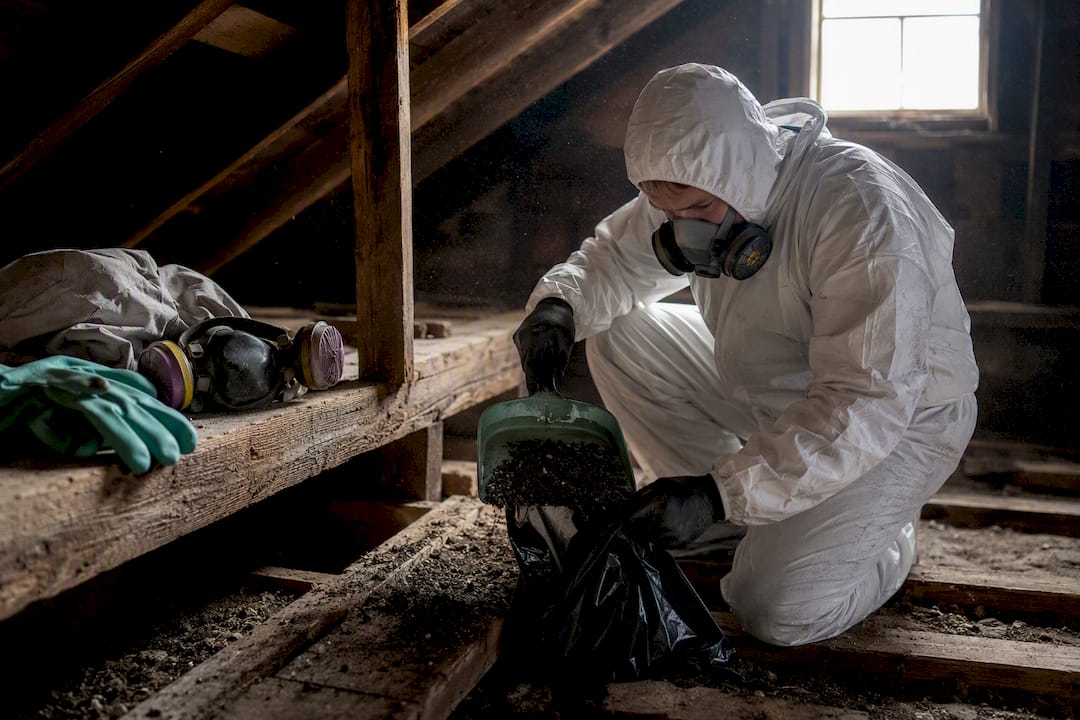
A few fresh droppings on a hard, reachable surface can be cleaned safely with proper PPE and light dampening. An attic full of guano, contaminated insulation, ductwork exposure, or an active bat colony is a different problem entirely, and it belongs to a certified remediation firm.
- DIY territory: small, isolated deposits on wood, metal, or concrete you can reach without disturbing insulation.
- Call-a-pro territory: widespread guano, saturated insulation, HVAC contact, or bats still roosting.
Pro Tip: If you’re not sure which category your attic falls into, stop and get an inspection first. Guessing wrong here means breathing in what you’re trying to clean up.
TL;DR:
- Small, hard-surface bat droppings can be cleaned DIY with proper PPE and dampening, but extensive or porous contamination requires professional removal.
- Disturbing dried guano releases airborne spores of the fungus Histoplasma, posing health risks especially to vulnerable individuals, and must be handled with caution.
- Always inspect and assess the extent of contamination before attempting cleanup, considering factors like location, surface type, insulation involvement, and active bat presence.
- Use damp cleaning methods and HEPA-rated vacuums for small jobs, and avoid household vacuums or dry sweeping to prevent spreading spores throughout the house.
- For large-scale or complex cases, certified remediation professionals conduct thorough inspections, containment, insulation replacement, and post-job verification to ensure safety.
Table of Contents
- Why attic guano cleanup carries real health risk
- How do you know if you can clean it yourself?
- Step-by-step: cleaning a small guano deposit safely
- What professional attic decontamination actually involves
- Keeping bats out and restoring the attic afterward
- Who handles attic guano remediation and what to expect
- The gap between guano cleanup advice and how homeowners actually behave
- Get a professional assessment before you commit to a cleanup plan
- Key Takeaways
- Sources
- FAQ
Why attic guano cleanup carries real health risk
Bat droppings dry out fast in an attic, and dried guano crumbles into dust with almost no disturbance at all. That dust can carry the fungus Histoplasma, and once it’s airborne, it’s easy to inhale without noticing. Provincial health guidance confirms that dried droppings release spores the moment someone sweeps, brushes, or vacuums them, which is exactly why those actions are banned during any attic guano cleanup.
Most healthy adults who inhale a small amount develop mild, flu-like symptoms or nothing at all. That’s not the whole picture, though. Infants, older adults, and anyone with a compromised immune system face a much higher risk of serious lung infection from the same exposure, and they should never attempt DIY removal, full stop.
A few rules apply no matter how small the job looks:
- Shut off the HVAC system before you open the attic hatch.
- Never use a household vacuum. Standard filters don’t trap the spores, so a vacuum just launches contaminated dust through the whole house.
- Never dry-sweep. Wet the material first, always.
- Keep kids, pets, and anyone with respiratory issues out of the house during the job, not just the attic.
How do you know if you can clean it yourself?
Run through this checklist before you touch anything:
- How much guano is there? A scattered handful of pellets is a different job than a layer covering the attic floor.
- What surface is it on? Hard, sealed surfaces (plywood, metal flashing, concrete) can be disinfected. Porous material like fibreglass or cellulose insulation absorbs contamination and usually can’t be cleaned, only replaced.
- Is insulation involved? If guano has settled into or under insulation, that’s a professional job.
- Is the HVAC system nearby? Any contamination within reach of ductwork or the furnace intake pushes this out of DIY range.
- Are bats still living up there? Active roosts change everything, both practically and legally.
- Who lives in the house? A household with young kids, seniors, or anyone immunocompromised should default to professional removal even for borderline cases.
Ontario-focused remediation guidance draws the same line: small, fresh, hard-surface deposits are manageable with the right PPE, but attic-scale accumulation and porous contamination need a professional.
Pro Tip: Never seal up a suspected entry point if bats might still be active. Exclusion has to happen at the right time of year and through the right method, or you risk trapping bats inside the attic, which creates a much bigger problem than the guano itself.
Step-by-step: cleaning a small guano deposit safely
If your situation checks every DIY box above, here’s the sequence pros actually follow, scaled down for a small job.
Prep the space:
- Turn off the furnace, AC, and any attic fans. Close vents leading into the space.
- Keep household members and pets away from the work area and the rooms below it.
- Open a window or run an exhaust fan pointed outward once the job is underway, and keep ventilating for a few hours after you finish.
Suit up. Full PPE isn’t optional here:
- A properly fitted respirator, N95 at an absolute minimum, though N100 or P100 gives far better spore protection.
- Goggles that seal against your face, not regular glasses.
- A disposable coverall or Tyvek suit.
- Two layers of disposable gloves.
- Disposable shoe covers.
Dampen before you touch anything. Use a spray bottle on a low-pressure mist setting and lightly wet the guano. This is the single most important step in the whole job: dry guano turns to dust the instant it’s disturbed, and pro decontamination guides are consistent on this point. Don’t soak the area, especially near wood or drywall.
Remove it. Scoop or wipe the dampened material into a heavy-duty plastic bag using a dustpan or disposable scraper. Never use a household vacuum, shop vac included, unless it’s HEPA-rated and dedicated to hazardous cleanup. Double-bag everything, seal each bag tightly, and dispose of it according to your municipality’s hazardous waste rules.
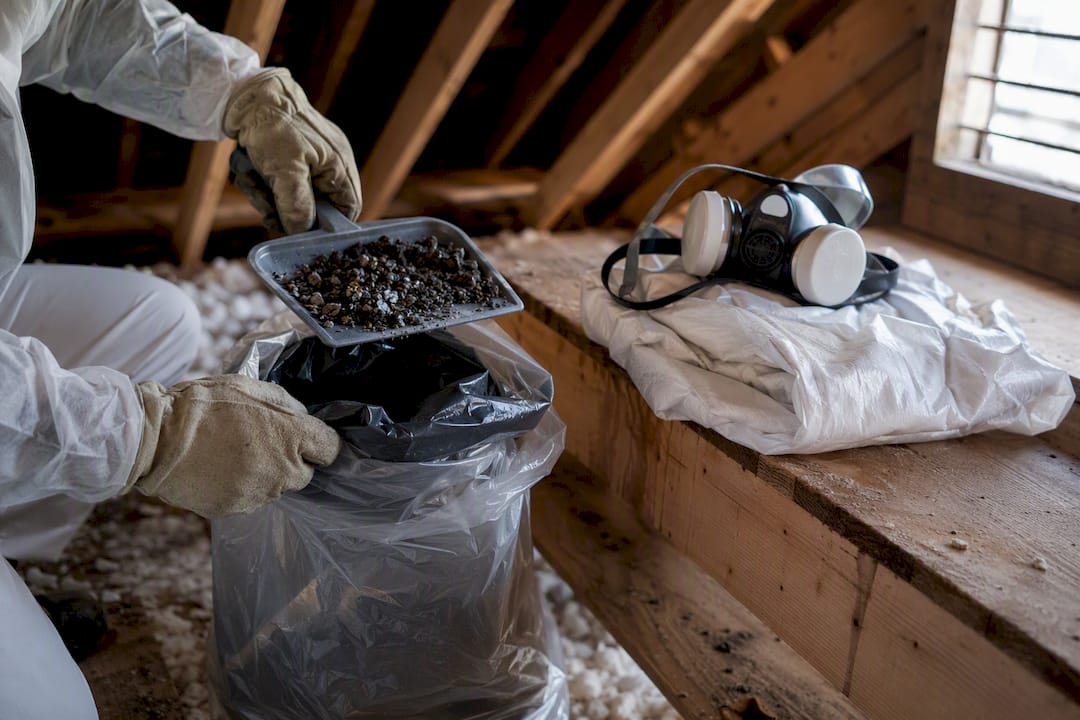
Disinfect. Wipe the cleared surface with an enzyme-based cleaner or a disinfectant made for organic biohazard cleanup. Skip the bleach. Guano often contains ammonia compounds, and mixing bleach with ammonia produces toxic gas, a real risk in an enclosed attic.
After the job: remove PPE in the reverse order you put it on, bag disposable items with the guano waste, and launder any reusable clothing separately on hot. Watch for lingering odour or flu-like symptoms over the next couple of weeks, and see a doctor if anything develops.
What professional attic decontamination actually involves
Once guano covers more than a small patch, or insulation and ductwork are involved, the job moves past what PPE and a spray bottle can safely handle. Visible piles are often just the surface of a much larger problem, since droppings work into insulation gaps and wall cavities long before they’re noticeable from the attic hatch.
A certified crew typically works through a defined sequence:
- Inspection and risk assessment to map contamination extent, check for active bats, and confirm whether ductwork or living space is affected.
- Containment, using poly sheeting and negative-pressure setups so spores don’t spread into the rest of the house during removal, as detailed in professional cleanup protocols.
- Industrial HEPA vacuum extraction, which handles volume and filtration that consumer equipment simply can’t.
- Insulation removal and replacement, since contaminated insulation traps odour and residue no amount of surface cleaning will fully resolve.
- HVAC and duct cleaning where the system has been exposed.
- Surface sanitization, deodorization, and a final verification check before the attic is declared clear.
When you’re comparing quotes, ask about certifications and insurance, exactly how they’ll dispose of contaminated material, and whether post-job testing is included. Cost varies with square footage, insulation type, and how far contamination has spread, but a vague quote with no mention of testing or disposal method is a red flag.
Keeping bats out and restoring the attic afterward
Cleanup only sticks if bats can’t get back in, and exclusion has to happen at the right time. Bats can’t be excluded during maternity season, since flightless pups left behind will die and decompose in the attic, creating a worse problem than the one you started with. A wildlife specialist can confirm timing for your region before any sealing work begins.
Once exclusion is safe, check and seal the usual entry points:
- Gaps under soffits and fascia boards.
- Roof and ridge vents without proper screening.
- Chimney flashing and gaps around the chimney chase.
- Any gap wider than a pencil around plumbing stacks or utility penetrations.
Restoration comes last: replace any insulation that was removed, check the vapour barrier for damage, confirm attic ventilation is working correctly, and schedule a follow-up inspection a few months out. Professional remediation tends to focus on this lasting fix, replacing insulation and repairing vapour barriers, rather than a cosmetic wipe-down that leaves the door open for round two.
Pro Tip: Get entry points sealed before winter. Bats look for warm, dry cavities as fall temperatures drop, and a half-sealed attic is an invitation.
Who handles attic guano remediation and what to expect
MSN Environmental specializes in certified hazardous material removal, including asbestos, mould, lead paint, and bat guano, for homes and businesses across its service area. Its technicians carry the safety certifications and equipment needed to handle attic-scale contamination properly, not just clean it up, but restore the space so it stays clean.
A typical guano remediation job with a certified firm includes:
- A full inspection to assess contamination extent and check for active bats.
- Containment set-up before any material is disturbed.
- Safe removal and disposal of contaminated guano and debris.
- Removal and replacement of affected insulation, similar to the process used in attic mould remediation.
- Post-job verification to confirm the space meets safety standards before it’s closed back up.
Homeowners get a clear scope of work up front, not a guess, and a documented result at the end rather than a hope that the smell doesn’t come back.
The gap between guano cleanup advice and how homeowners actually behave
Most articles on this topic treat “wear a mask and clean it up” as sufficient advice. It isn’t. The real failure point isn’t the cleaning step, it’s the assessment step that happens before anyone opens a spray bottle. Homeowners consistently underestimate how far contamination has spread because they’re only looking at what’s visible from the attic hatch, and that’s precisely where DIY attempts turn into HVAC contamination or a second, more expensive remediation job later.
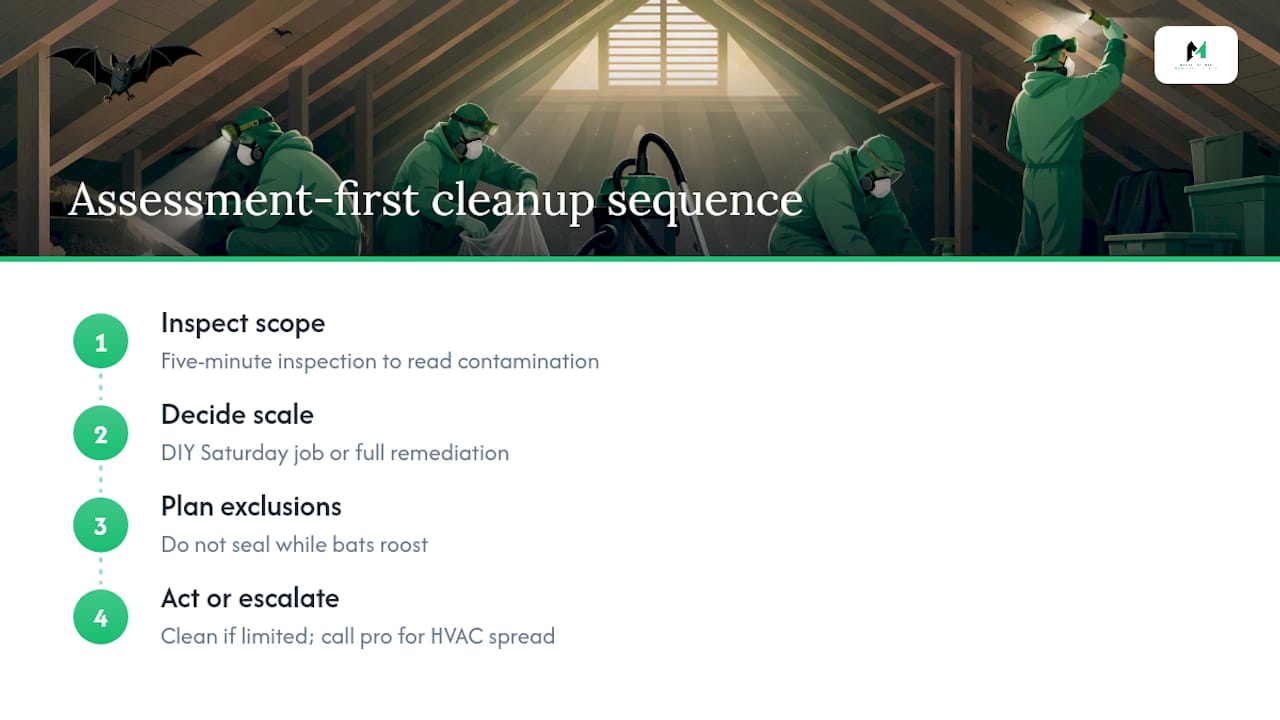
The conventional advice also underplays timing. Sealing entry points feels like the responsible move, and it usually is, except when bats are still roosting, in which case it turns a wildlife problem into a much worse one. Exclusion sequencing matters as much as the cleaning itself, and it’s the piece most guides skip entirely.
If there’s one thing worth prioritizing above all else, it’s getting an honest read on scope before deciding anything. A five-minute inspection, whether you do it yourself with the checklist above or bring in a professional, is what determines whether this is a Saturday afternoon job or a full remediation project. Skip that step, and you’re just guessing with a respirator on.
— Moacyr
Get a professional assessment before you commit to a cleanup plan
If you’ve read through the checklist above and you’re still not sure which side of the line your attic falls on, that uncertainty is the signal to bring in a professional rather than guess. MSN Environmental handles the parts of attic guano remediation that DIY simply can’t reach safely: contaminated insulation removal, HVAC decontamination, and disposal that meets regulatory standards, not just a bag in the curbside bin.
Where a DIY job stops at “it looks clean,” a certified remediation job ends with verification that the space actually is clean, with insulation replaced and ductwork checked included. That’s the real difference for a homeowner staring at an attic they’re not confident about handling themselves. If your situation looks anything like the “call a pro” side of the checklist, request a scope assessment from MSN Environmental before you buy a single roll of poly sheeting.
Key Takeaways
Safe attic guano cleanup depends on accurately assessing contamination extent first, since scope, not effort, determines whether DIY or professional remediation is the right call.
| Point | Details |
|---|---|
| Assess before acting | Check quantity, surface type, insulation involvement, and HVAC proximity before deciding on DIY. |
| Never dry-clean guano | Dampen with a light mist first; dry guano releases airborne spores the moment it’s disturbed. |
| Skip the household vacuum | Standard vacuums spread contaminated dust through ductwork; use HEPA-rated equipment only. |
| Insulation usually needs replacing | Porous, contaminated insulation traps residue and odour that surface cleaning can’t remove. |
| Call MSN Environmental for attic-scale jobs | MSN Environmental provides inspection, containment, insulation replacement, and post-job verification for guano remediation. |
This article is general information, not a substitute for advice from a qualified doctor. Consult a qualified healthcare professional about your own circumstances before acting on anything here.
Sources
- Cleaning of an environment contaminated with bat droppings | Gouvernement du Québec
- How to Safely Clean Bat Droppings (Guano) in Ontario | Sani IQ
- Bat Guano Cleanup Service: What to Expect – CP Bat Mitigation
- How To Clean Bat Guano Safely: A Pro Decontamination Guide | Pestclue
FAQ
How do you clean up bat guano in an attic?
Dampen the droppings with a light mist to prevent dust, then scoop or wipe them into heavy-duty bags while wearing a respirator, goggles, gloves, and a disposable suit. For attic-scale accumulation or contaminated insulation, hire a certified remediation firm rather than attempting it yourself.
Can bat droppings in your attic make you sick?
Yes. Dried guano can release Histoplasma spores when disturbed, and inhaling them can cause respiratory illness, with higher risk for infants, older adults, and anyone immunocompromised, according to provincial health guidance.
What should I do if there are bat droppings in my attic?
Shut off your HVAC system, avoid sweeping or vacuuming the area, and assess the extent of contamination before deciding whether it’s a small enough job for DIY cleanup or one that needs professional remediation.
How long does bat guano take to break down?
Guano dries out and becomes brittle within days in a typical attic environment, which is exactly when it turns into airborne dust risk rather than becoming safer over time. It doesn’t break down into something harmless on its own, and accumulated layers can persist for months or years until they’re physically removed.