

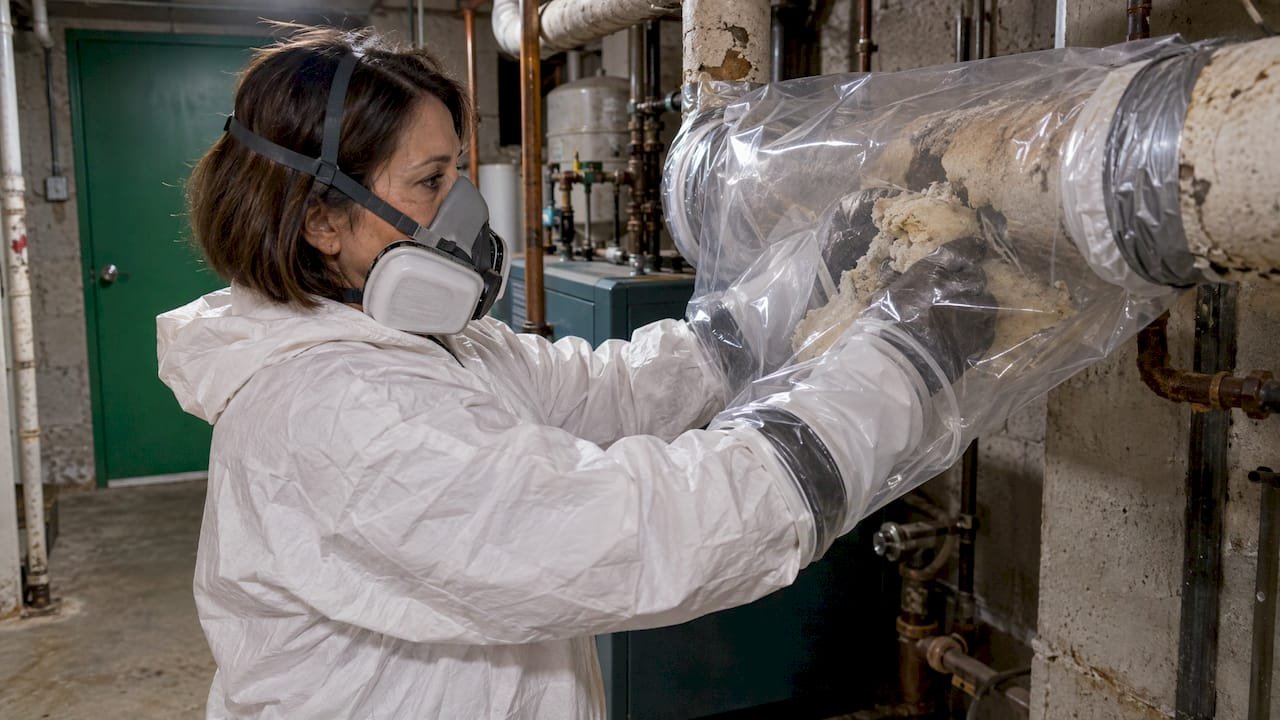
Type 2 asbestos abatement is the middle tier of work under Ontario Regulation 278/05. It covers jobs that can release fibres but are small or contained enough that full Type 3 containment is not the starting point. Examples are glove-bag removal of pipe insulation, disturbing a small patch of friable material, and removing asbestos drywall joint compound with the right dust controls. If your project touches any of these, the work needs trained workers, specific protective equipment and set procedures, and you need a clear written picture of the material before anyone starts.
TL;DR
- Ontario sorts asbestos work into Types 1, 2 and 3 under O. Reg. 278/05. Type 2 sits between low-disturbance work and large-scale friable removal.
- Type 2 includes disturbing 1 m² or less of friable material, glove-bag insulation removal, and removing at least 1 m² of drywall with asbestos joint compound.
- Required controls include signs, restricted access, wet methods or HEPA dust collection, approved respirators, full protective clothing and trained workers.
- Before work, the owner must find out whether the material contains asbestos and pass a written report to the contractors.
- The classification depends on the task, the material and the method, so get it confirmed before you request quotes.
Table of Contents
- The three types of asbestos work at a glance
- What counts as Type 2 work
- Type 1 versus Type 2: where the line falls
- Worked examples homeowners and managers run into
- What Type 2 work requires on site
- Worker training for Type 2
- What owners must do before work begins
- Planning a Type 2 job: practical steps
- Our perspective on Type 2 work
- Asbestos abatement with MSN Environmental
- Choosing a contractor for Type 2 work
- FAQ
- Sources
The three types of asbestos work at a glance
Ontario’s regulation classifies work by how much the task is likely to disturb asbestos-containing material, not by the type of building or who owns it. Each type carries its own precautions, and the precautions step up as the risk of airborne fibres rises.
| Type 1 | Type 2 | Type 3 | |
|---|---|---|---|
| Disturbance level | Lowest: material is non-friable and left largely intact | Moderate: small friable amounts, certain tools, certain removals | Highest: large-scale or high-release work |
| Typical examples | Removing intact ceiling tile under 7.5 m², wetted non-friable material cut with hand tools | Glove-bag pipe insulation removal, 1 m² or less of friable material, power tools with HEPA collection | Work that goes beyond the Type 1 and Type 2 definitions |
| Controls | Basic precautions | Signs, restricted access, wet or HEPA methods, respirators, protective clothing | Fuller containment and procedures; see our Type 3 compliance guide |
The regulation also works as a catch-all: any operation that exposes workers to asbestos and is not otherwise Type 1 or Type 3 is treated as Type 2. That matters, because an unusual job does not escape classification just because it is not on a list.
What counts as Type 2 work
The regulation names a specific list of tasks. According to O. Reg. 278/05, Type 2 includes:
- Removing all or part of a false ceiling to get access to a work area where asbestos debris may be lying on the ceiling.
- Disturbing 1 m² or less of friable asbestos-containing material.
- Enclosing friable material.
- Covering asbestos pipe or boiler insulation.
- Removing intact asbestos ceiling tile covering 7.5 m² or more.
- Disturbing non-friable material with non-powered hand tools when it is not wetted.
- Removing 1 m² or more of drywall finished with asbestos-containing joint compound.
- Work with power tools fitted with HEPA dust collection.
- Removing insulation with a glove bag.
- Specified work on air-handling filters.
- Any other operation that exposes workers to asbestos and is not Type 1 or Type 3.
The 1 m² threshold for friable material also applies during repair, alteration, maintenance or demolition of buildings and other covered structures and equipment, as set out in the same regulation.
Friable or non-friable: why it matters
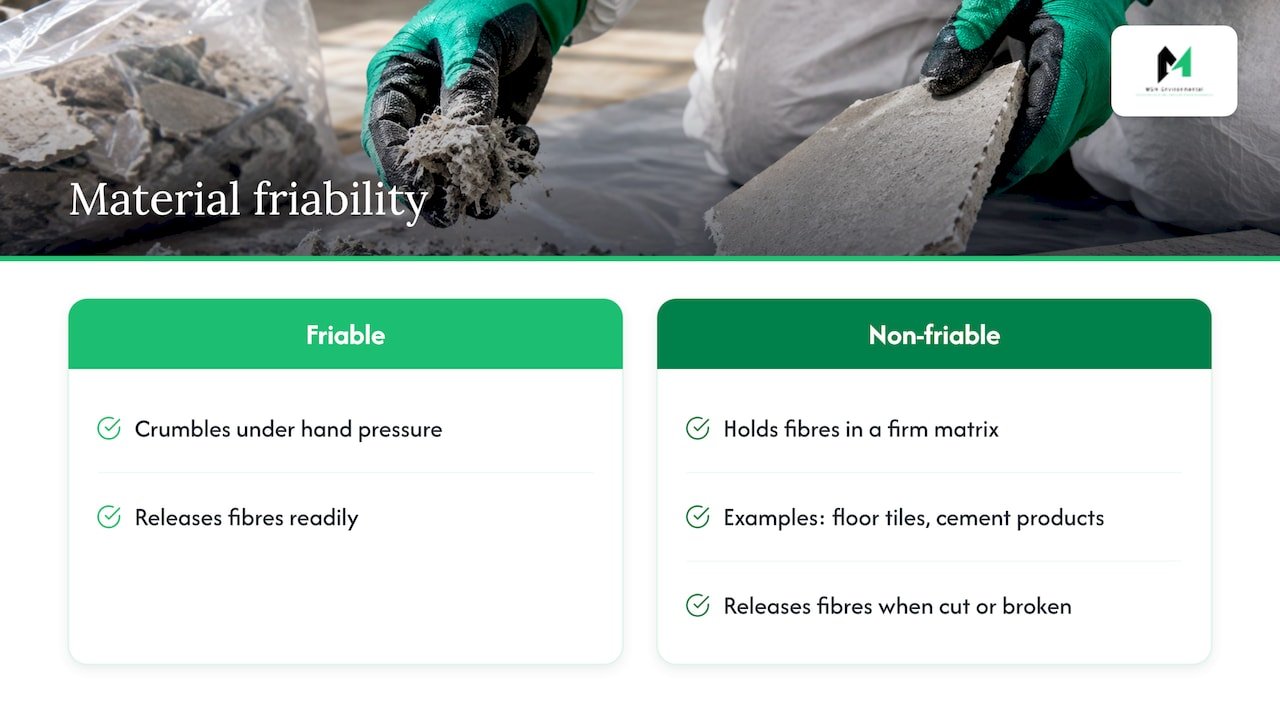
Friable material crumbles easily by hand pressure and releases fibres readily. Non-friable material, such as many floor tiles or cement products, holds its fibres in a firm matrix until it is cut, drilled, sanded or broken. That is why the same material can fall in Type 1 or Type 2 depending on what you do to it and how.
Type 1 versus Type 2: where the line falls
The boundary is the most common source of confusion, and it often comes down to method and quantity.
Type 1 covers installing or removing non-friable asbestos-containing material without breaking, cutting, drilling, abrading, grinding, sanding or vibrating it. It also covers removing less than 7.5 m² of intact asbestos ceiling tile, and breaking or cutting wetted non-friable material with non-powered hand tools.
Three contrasts show how the line moves:
- Ceiling tile area. Removing under 7.5 m² of intact tile is Type 1. At 7.5 m² or more it becomes Type 2.
- Wet or dry. Cutting wetted non-friable material with hand tools is Type 1. Disturbing it with hand tools when it is not wetted is Type 2.
- Tools. Non-powered hand tools on wetted material stay in Type 1. Power tools with HEPA dust collection are Type 2.
If you are planning a renovation, do not assume a job is Type 1 because it looks small. A kitchen demolition that removes a wall finished with asbestos joint compound can reach the Type 2 threshold quickly.
Worked examples homeowners and managers run into
These illustrate how the listed rules apply. Classification of your actual job should come from a qualified assessment of your materials.
Pipe insulation in a basement. Older mechanical rooms often have insulation wrapped around pipes. Removing it with a glove bag is named in the regulation as Type 2 work. The bag contains the material at the pipe, which is why the method suits small runs.
Drywall during a renovation. A wall gutted to the studs in a house with asbestos-containing joint compound is Type 2 once you are removing 1 m² or more of the drywall. The regulation sets it out in the Type 2 list. Our guide to testing older Ontario homes before renovation explains why testing comes first.
A drop ceiling in a commercial unit. Pushing up tiles to get above a false ceiling is Type 2 work where asbestos debris may be lying on the ceiling. Tenants’ trades, such as data cabling or sprinkler contractors, often do this without realising it.
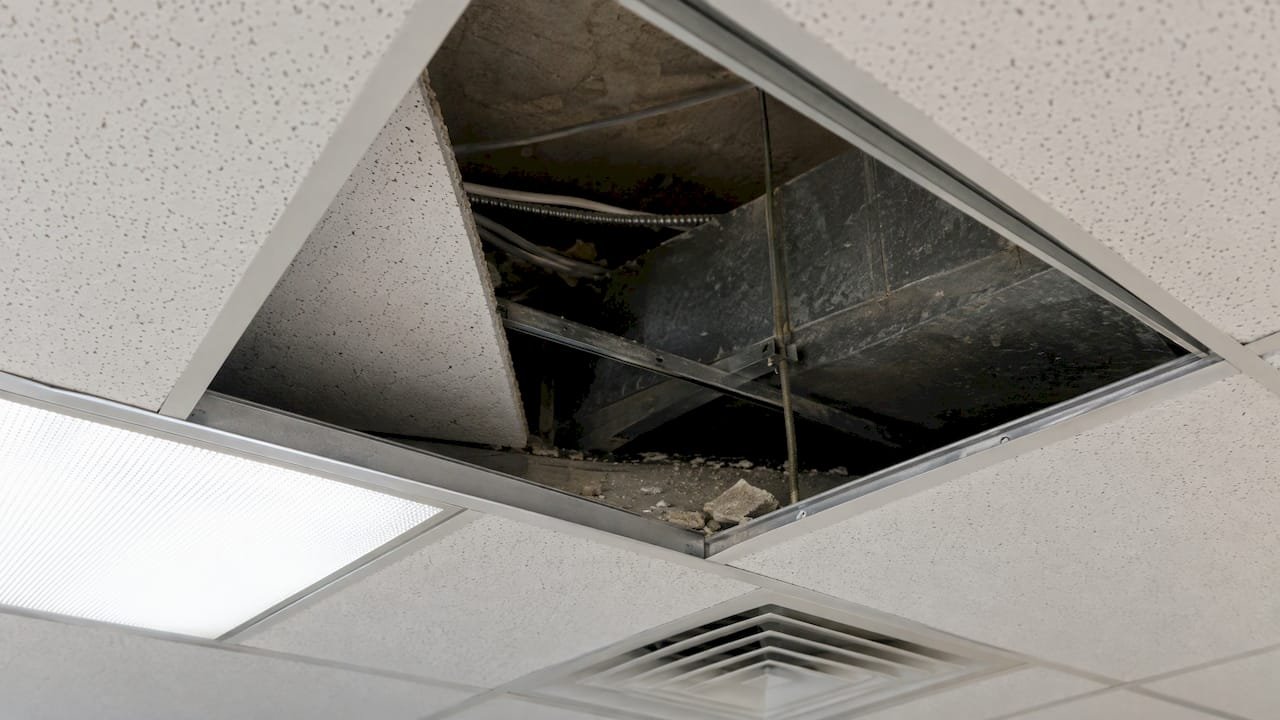
Ceiling tile replacement. Replacing a few intact asbestos tiles is Type 1. Stripping an entire office floor of tiles reaches 7.5 m² quickly and moves the work to Type 2.
What Type 2 work requires on site
The regulation sets out controls that apply to the work itself. Per O. Reg. 278/05, Type 2 work requires:
- Warning signs and restricted access to the work area.
- Wetting controls where they apply.
- Containers for asbestos waste.
- Cleanup by HEPA vacuum or wet methods, and no compressed air.
- Respirators approved under the regulation’s Table 2.
- Fibre-resistant full protective clothing and suitable footwear.
Ventilation and enclosure
For indoor false-ceiling work, or disturbance of 1 m² or less of friable material, the regulation requires, where practicable, disabling the serving mechanical ventilation, sealing ducts and using a polyethylene or equivalent enclosure when the area is not enclosed by walls. This stops fibres travelling through a building’s air system, which is the main way a small job becomes a building-wide problem.
Preparing the material
Before Type 2 work, any crumbled, pulverized or powdered friable asbestos likely to be disturbed must be removed by damp wiping or HEPA vacuuming. Other friable material likely to be disturbed must be thoroughly wetted and kept wet, unless wetting would create a hazard or damage.
Decontamination
Workers must decontaminate their clothing and wash their hands and face before leaving the work area, as the regulation sets out. On a residential job, this is one reason why household members should stay out of the area until work is complete.
Worker training for Type 2
Workers must receive instruction from a competent person on the hazards of asbestos, hygiene, work practices, respirators and protective clothing. That includes respirator fit, limits, maintenance and disinfection, per O. Reg. 278/05. It is a legal requirement for the people on your site, and it is a reasonable thing to ask any contractor to describe when you compare quotes.
What owners must do before work begins
The contractor is not the only party with duties. Under Ontario’s guidance, before tendering or arranging demolition, alteration or repair, the owner must determine whether the material likely to be handled or disturbed is asbestos-containing, or require that the work follow the regulation as though it were.
In practice that means:
- Identify the material. Sampling and lab analysis give a definite answer. Our page on testing and inspections outlines the bulk and air sampling and surveys available.
- Write the report. The owner prepares a report describing the material’s status, condition, friability and location.
- Pass it on. The report goes to prospective constructors, and must be passed down to contractors and subcontractors before work is arranged.
- Hold the work until it is safe. The owner must prevent handling or disturbance unless the material has been determined to contain asbestos or the regulatory precautions are followed.
The intent of the process is that asbestos controls become part of pricing and planning, not a surprise once demolition has started, as the same guide puts it. For a wider view of owner duties, see our Ontario asbestos regulations roadmap, and for buildings that need an ongoing plan, our guide to the asbestos management plan owners must have.
Planning a Type 2 job: practical steps
- Test before you quote. A written survey tells every bidder the same facts, so quotes can be compared fairly. Our pre-renovation hazardous materials inspection page covers what a survey looks at.
- Define the scope in writing. List which rooms, which materials, the approximate area and the method. Quantities matter because several Type 2 thresholds are area-based.
- Check the sequence. Abatement should finish before general demolition or finishing trades start in the affected area. If you are also gutting interiors, see our comparison of interior demolition and abatement.
- Ask how the work area will be isolated. Signs, restricted access, enclosure and ventilation shutdown should all be part of the answer.
- Ask about waste and cleanup. Waste containers, HEPA or wet cleanup and no compressed air are all regulatory points.
- Plan for clearance. Air sampling after work gives you documented evidence the area is ready. Our guide to asbestos air sampling explains how it works.
Pricing depends on the quantity, location, access and the type of material, so a site visit is the only reliable way to a number. Our asbestos removal cost guide walks through the factors that move a quote.
Our perspective on Type 2 work
Type 2 is where we see the most misjudged projects. Owners hear “small job” and assume the rules are light, or a trade starts on a ceiling or a wall before anyone has asked what is in it. The regulation is clear that these tasks need real controls, and we plan them that way from the first visit.
Our approach starts with identifying the material, because everything else follows from it: the classification, the method, the enclosure, the protective equipment and the sequence. Our technicians are trained and certified, we work with equipment built for containment and HEPA filtration, and we carry full liability insurance. We oversee each project personally rather than handing it off, so what was scoped is what gets done.
For residential clients, that means a clear scope and a work area your household can stay out of until it is cleared. For property managers and construction managers, it means documentation that fits into your tender and your schedule. In both cases we aim to make asbestos a planned line in the project, not a discovery that stops it.
Moacyr
Asbestos abatement with MSN Environmental
We remove asbestos and other hazardous materials for homeowners, property managers, renovators and construction managers across Ontario, in line with Ontario regulations. Our work includes testing, surveys, abatement and interior demolition, so one team can handle the sequence from identifying the material to leaving the area ready for the next trade.
If you have pipe insulation, ceiling tile, joint compound or another suspect material and need to know what class of work it is, start with a conversation about scope. See our asbestos removal services or contact us through the MSN Environmental site.
Choosing a contractor for Type 2 work
Look for answers to these questions, not just a number:
- Which type of work does the contractor say your job is, and why?
- Who will be on site, and how are they trained for the tasks involved?
- What protective equipment and respirators will they use?
- How will the area be isolated, and what happens with ventilation?
- How are waste and cleanup handled?
- Is the contractor insured, and will they confirm it in writing?
- Will air testing follow the work?
A contractor who answers in specifics, using the regulation’s own terms, is usually one who has done the work before. If you are comparing the full path from assessment to completion, our guide to the asbestos removal process and our overview of asbestos remediation in Ontario lay it out step by step.
FAQ
What is Type 2 asbestos work in Ontario?
It is a class of work defined in O. Reg. 278/05 that includes disturbing 1 m² or less of friable material, glove-bag insulation removal, removing 1 m² or more of asbestos joint-compound drywall and work with HEPA-equipped power tools. It also covers any asbestos-exposing operation that is not Type 1 or Type 3. The precautions are stricter than for Type 1.
What is the difference between Type 1 and Type 2?
Type 1 involves non-friable material handled without breaking, cutting or abrading it, plus limited tasks like removing under 7.5 m² of intact ceiling tile. Type 2 starts at larger tile areas, unwetted hand-tool work, power tools with HEPA collection and small amounts of friable material. Method and quantity decide which applies.
Do I need a contractor for Type 2 work at my home?
The regulation requires trained workers, specific respirators, protective clothing and set procedures. As a homeowner, you also have owner duties before any renovation begins. Hiring a trained abatement contractor is the practical way to meet these requirements safely.
What happens if I find out about asbestos after demolition has started?
Stop the work and keep people out of the area. Ontario’s guidance expects owners to identify material before work is arranged so that this situation does not arise. Have the material sampled and classified before work resumes.
Where does Type 3 begin?
Type 3 covers asbestos work beyond the Type 1 and Type 2 definitions and calls for fuller containment. Our Type 3 asbestos abatement guide explains how those projects are run.
Sources
- O. Reg. 278/05, Designated Substance: Asbestos on Construction Projects and in Buildings and Repair Operations
- O. Reg. 278/05, Type 2 precautions and preparation of friable material
- Demolition, alterations and repairs: a guide to the asbestos regulation