

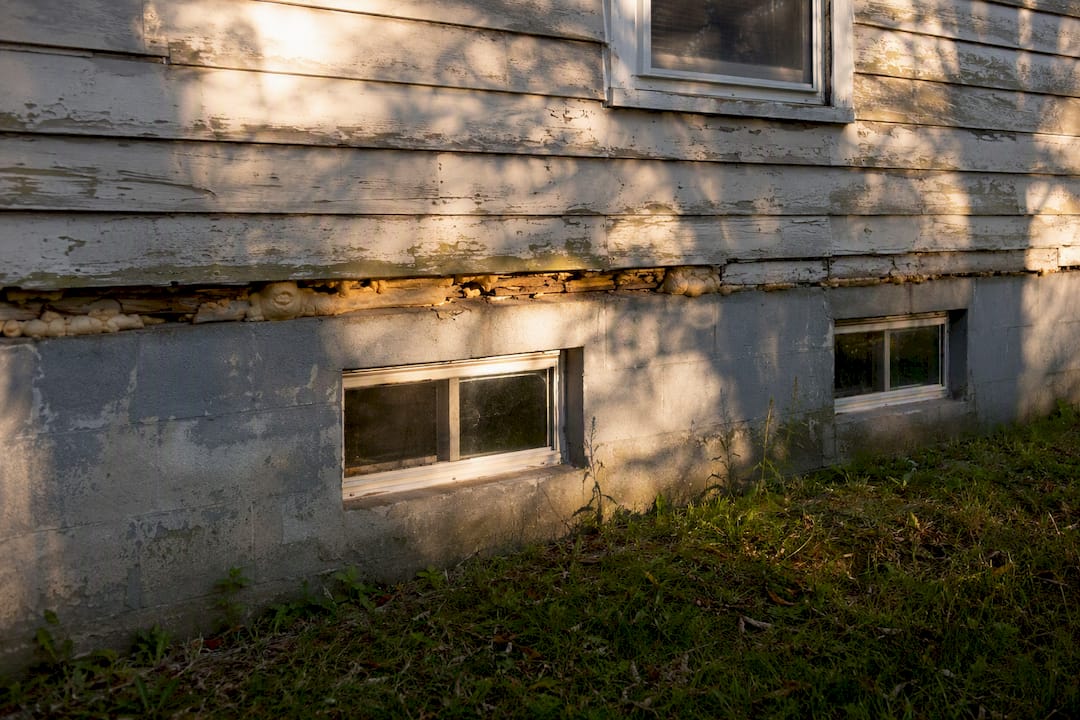
Most cured urea-formaldehyde foam insulation sitting in a home’s walls today is not a meaningful health hazard. The formaldehyde that mattered most escaped during the initial curing period, decades ago. The real risk now is narrower and more manageable: wet, deteriorating, or improperly installed foam, and occupants who already have formaldehyde sensitivity.
If your UFFI is dry, intact, and undisturbed, it’s usually a legacy material, not an active threat. If it’s wet, crumbling, or someone in the house has respiratory symptoms, that’s when testing becomes worthwhile.
Do these three checks first:
- Look for water stains, sagging drywall, or a musty smell near old injection holes.
- Ask occupants whether headaches, eye irritation, or breathing trouble ease when they leave the house.
- Note the home’s construction era. Homes built or insulated between 1977 and 1980 are the ones to watch.
Key Takeaways
Cured, dry UFFI installed decades ago is rarely a health hazard today, but wet or deteriorating foam and documented occupant symptoms both justify professional testing.
| Point | Details |
|---|---|
| Age matters most | Homes insulated between 1977 and 1980 are the ones most likely to contain UFFI. |
| Condition beats age | Dry, intact foam is low risk; wet or crumbling foam warrants testing and possible removal. |
| Long-term evidence is weak | A CMAJ-linked review found adequately designed studies gave little support for chronic illness from cured UFFI. |
| Disclosure still matters | Mortgage insurance no longer requires UFFI declarations since 1993, but real estate transactions often ask anyway. |
| Certified removal protects everyone | MSN Environmental provides testing, containment, HEPA-filtered removal, and verification for homes where remediation is warranted. |
This article is general information, not a substitute for advice from a qualified doctor. Consult a qualified healthcare professional about your own circumstances before acting on anything here.
Table of Contents
- What is UFFI insulation, and when was it installed?
- Is UFFI insulation legal, and what’s its regulatory history?
- What does the evidence say about UFFI health risks?
- How can you tell if a house has UFFI?
- How does UFFI testing and inspection actually work?
- When is UFFI removal actually necessary?
- Does UFFI affect selling a home or getting a mortgage?
- What should you do in the next 72 hours if you suspect UFFI?
- Why hire a certified hazardous-materials contractor?
- What environmental impact does UFFI removal and installation have?
- What regulatory standards govern UFFI remediation contractors?
- What are the safest UFFI removal techniques?
- If you need UFFI testing or removal, here’s how MSN Environmental helps
- Sources
- FAQ
What is UFFI insulation, and when was it installed?
UFFI stands for urea-formaldehyde foam insulation, a liquid resin injected into wall cavities that expanded and hardened to fill gaps around studs and framing. Contractors installed it heavily during the energy crisis retrofit boom, mostly between 1977 and 1980, when homeowners raced to cut heating costs. It fell out of use almost entirely after the federal ban that followed.
You can often spot it without opening a wall. Look for:
- Small, evenly spaced patched holes along exterior wall siding, usually in a row
- Foam visible at joist spaces, attic hatches, or around electrical outlets
- A white or dull yellow colour with a dry, crumbly, styrofoam-like texture
- Foam that appears to have oozed or dripped before hardening
Is UFFI insulation legal, and what’s its regulatory history?
Canada prohibited the manufacture, import, and installation of UFFI in 1980 after a wave of complaints about irritant symptoms during and after installation. The Canadian prohibition remains in effect today, and Health Canada’s site is the authoritative reference for anyone verifying current rules rather than relying on real estate forum chatter.
- 1977 to 1980: peak installation period across North America
- Canada banned UFFI in the early 1980s
- Early 1980s: the U.S. Consumer Product Safety Commission banned UFFI after thousands of complaints
- Since the 1990s, mandatory federal UFFI declarations under mortgage insurance rules were discontinued, though some regional or transaction-specific declarations persist
What does the evidence say about UFFI health risks?
Here’s the honest split: acute symptoms were real and well documented at the time, but the case for lasting harm from cured, undisturbed UFFI is thin. People exposed during or shortly after installation in the late 1970s reported eye and throat irritation, headaches, and breathing discomfort. That pattern drove the regulatory bans. What hasn’t held up as well is the idea that a properly cured, decades-old installation keeps producing dangerous exposure today.
A critical review published through CMAJ examined the studies linking UFFI to chronic illness and found that many failed basic methodological standards. The studies that were adequately designed provided little support for UFFI causing long-term health problems. Separately, Connecticut’s Department of Public Health tracked formaldehyde levels in homes that had previously logged high complaint rates. Average concentrations fell significantly over several years after installation, reaching very low levels that public health authorities consider safe, a decline steep enough that public health authorities stopped treating older UFFI installations as a routine exposure concern.
- Acute symptoms: well documented, mostly tied to the installation window
- Chronic illness causation: weak evidence in properly conducted studies
- Formaldehyde concentration over time: drops sharply as foam fully cures
Pro Tip: If anyone in the household has a diagnosed formaldehyde sensitivity or severe asthma, don’t rely on “it’s probably fine.” Get air testing done before you rule anything out.
Wet or physically deteriorating UFFI is a different animal entirely; if you want a fast way to screen your indoor environment for issues like mould or ventilation problems, consider taking a quick indoor air quality assessment survey. Moisture breaks down the foam structure, and that opens the door to mould growth and particulate release, problems that have nothing to do with formaldehyde off-gassing and everything to do with standard water damage remediation.
How can you tell if a house has UFFI?
Start with the home’s age. If it was built before 1977, or renovated for energy efficiency between 1977 and 1980, UFFI is a real possibility. From there, look for the same visual clues inspectors rely on: rows of patched injection holes on the exterior, foam visible at joist ends or in unfinished basement rims, and a texture that’s dry, crumbly, and white or yellowed rather than the pink or yellow batt insulation most people expect.
Resist the urge to poke at it or pull back drywall yourself. Disturbing old foam creates dust and, if it’s degraded, can release trapped gases you’d otherwise never encounter. According to inspection guidance from InterNACHI, UFFI tends to be fragile and prone to shrinkage, which is exactly why a visual glance from outside often isn’t enough. A certified home inspector can use a boroscope to look inside wall cavities without cutting anything open, and that’s the safer route if you’re buying a home or just want certainty before a renovation.
How does UFFI testing and inspection actually work?
A proper assessment moves through stages rather than jumping straight to lab work.
- Visual inspection first, checking for injection hole patterns, exposed foam, and signs of moisture or damage.
- Targeted air sampling if the visual inspection raises concerns or occupants report symptoms.
- Bulk sampling of the foam itself when it’s accessible, sent to a lab for formaldehyde content analysis.
- Written results with an explanation of what the numbers mean for that specific house.
Before hiring anyone, ask a few pointed questions:
- What certification do you hold for hazardous materials inspection or environmental testing?
- Which sampling method will you use, and why is it appropriate for this situation?
- Do you maintain chain of custody documentation for samples sent to a lab?
Not every older home needs testing. Connecticut’s public health guidance notes that routine air testing isn’t necessary in older UFFI homes unless occupants show sensitivity symptoms or the foam shows physical deterioration. When you do test, ask what guideline value the lab or jurisdiction uses for formaldehyde in air, since interpretation depends on comparing your result against a recognized threshold, not just a raw number.
When is UFFI removal actually necessary?
Removal isn’t automatic just because a house has UFFI. Full removal makes sense in three situations: the foam is wet or visibly deteriorated, air testing has documented elevated formaldehyde, or moisture has driven mould growth into the wall cavity. Outside those triggers, dry and intact UFFI is often left in place.
When removal is warranted, a qualified abatement contractor typically follows this sequence:
- Set up containment around the work area to prevent particulate spread into living spaces.
- Run HEPA-filtered negative air pressure equipment to keep contaminated air from migrating.
- Remove the foam carefully, minimizing dust and disturbance.
- Bag and dispose of material according to regional hazardous waste rules.
- Run verification testing to confirm the space is clear.
- Fix whatever moisture source caused the original problem, since foam alone was rarely the root cause.
- Cost drivers include the volume of foam, how accessible the wall cavities are, and regional labour and disposal rates
- There’s no reliable per-square-foot number that applies across different homes and access conditions
Improperly disturbed UFFI can release trapped gases and particulates that a sealed, undisturbed installation never would. That’s the entire argument for hiring certified hazardous-materials professionals instead of a general contractor.
Does UFFI affect selling a home or getting a mortgage?
Disclosure rules around UFFI have loosened since the 1990s, but the topic still comes up in real estate deals more often than most sellers expect.
- Mandatory UFFI declarations under federal mortgage insurance rules ended in 1993, but many provincial seller disclosure statements and buyer agreements still ask the question directly
- Sellers who know or suspect UFFI is present benefit from getting an inspection and, if moisture was ever an issue, a remediation certificate to show buyers the risk has been addressed
- Buyers facing a UFFI disclosure should build a conditional inspection clause into any offer and request existing test results before waiving conditions
A documented, current inspection report tends to matter more to a nervous buyer than the science itself. Even when formaldehyde risk is minimal, unresolved UFFI disclosures can slow a sale or shave value off an offer simply because buyers don’t want to inherit an unknown.
What should you do in the next 72 hours if you suspect UFFI?
- Leave the insulation undisturbed. Don’t cut into walls or pull back drywall to check.
- Ventilate the affected area if it’s safe to do so, particularly if anyone reports symptoms.
- Photograph patched injection holes, any exposed foam, and water stains or damage.
- Note when symptoms occur and whether they improve away from the house.
- Contact a certified home inspector or environmental testing service.
Before that call, prepare a short history: when symptoms started, whether anyone has a formaldehyde sensitivity, and whether the house has had past water leaks or previous insulation work.
- Have the home’s approximate construction or renovation date ready
- Know whether any wall cavities have been opened or disturbed recently
Why hire a certified hazardous-materials contractor?
A certified contractor brings more than removal muscle. Expect an on-site risk assessment, physical containment, HEPA filtration during any disturbance, disposal that meets regional hazardous waste regulations, and post-project verification testing to confirm the space is actually clear.
Before signing anything, ask for proof of licensing, liability insurance, safety certifications, and lab partnerships used for sample analysis. Ask for references from past UFFI or insulation-related abatement projects specifically, not just general renovation work.
Pro Tip: A contractor who can’t produce verification testing results after removal hasn’t finished the job, no matter how clean the site looks.
What environmental impact does UFFI removal and installation have?
Installation itself, back in the 1970s, wasn’t a large-scale environmental concern the way it’s sometimes portrayed. The bigger footprint shows up at removal, and it’s worth understanding before you commit to tearing foam out of every wall in a house.
Deteriorated UFFI, once removed, is classified as hazardous waste in most Canadian jurisdictions because of residual formaldehyde content and potential contamination from mould or moisture damage. That means it can’t go into a regular construction waste bin. Certified contractors route it through licensed hazardous waste facilities, which adds cost but keeps formaldehyde and any associated mould spores out of general landfill streams where they could affect groundwater or air quality nearby.
The removal process itself carries its own environmental considerations. HEPA filtration systems used during containment capture airborne particulates rather than venting them outside, which protects both the work crew and the surrounding neighbourhood air quality during a project. Water used to dampen material and control dust during removal also needs proper handling if it’s picked up any contaminants from degraded foam.
There’s a quieter environmental angle too: UFFI was originally installed to cut heating energy use, and homes that have it often still benefit thermally from what remains in good condition. Ripping out foam that’s dry, intact, and doing its job means replacing that thermal performance with new insulation, which has its own manufacturing footprint. That’s part of why removal triggers focus on condition rather than blanket removal regardless of foam state.
What regulatory standards govern UFFI remediation contractors?
Provincial and federal frameworks both apply to anyone doing UFFI remediation work, and a legitimate contractor should be able to speak to all of them without hesitation.
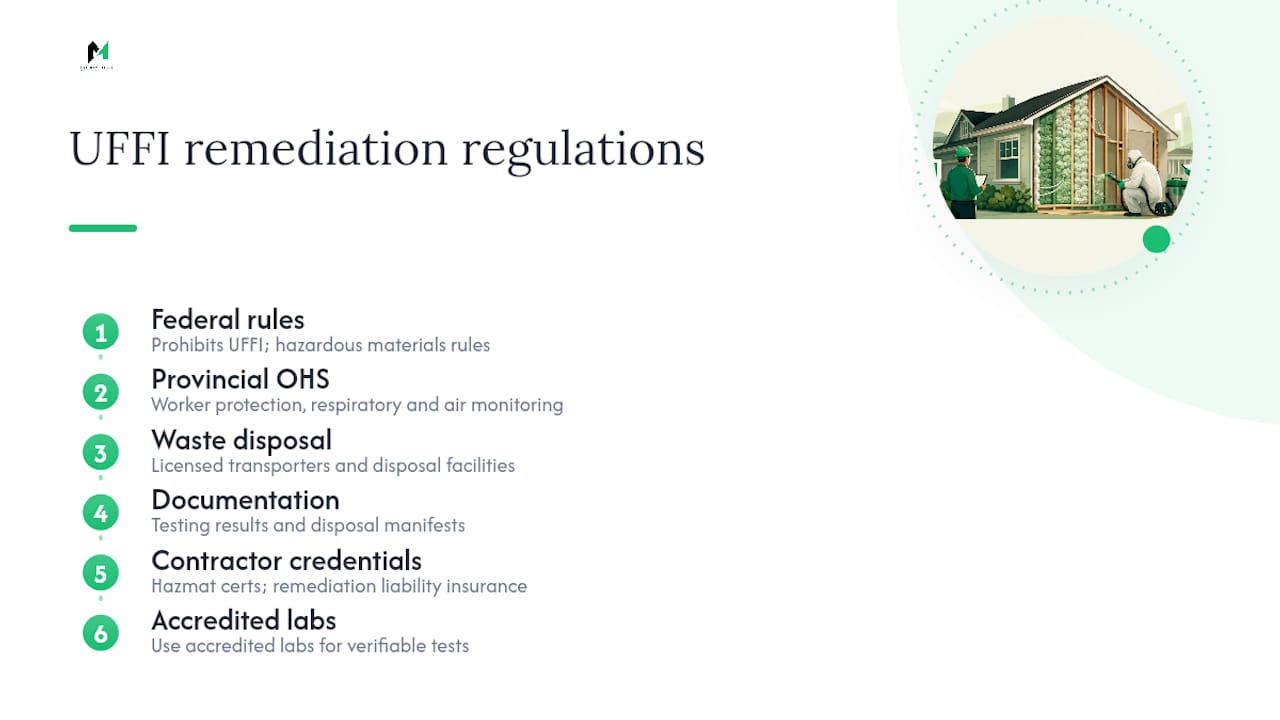
At the federal level, the Canadian prohibition on UFFI installation still stands, and any remediation work involving formaldehyde-contaminated material falls under broader hazardous materials handling and disposal rules. Provincial occupational health and safety regulations set requirements for worker protection during abatement, including respiratory protection, containment standards, and air monitoring during active removal.
Waste disposal is regulated separately. Material removed from a UFFI abatement project typically needs to go through a licensed hazardous waste transporter and disposal facility, with documentation tracking the waste from the job site to final disposal. This paper trail matters if a homeowner or buyer ever needs to prove a remediation was done properly, since verification testing results plus disposal manifests together form the record a real estate transaction or insurance claim might require.
On the credentialing side, look for contractors holding recognized hazardous materials abatement certifications and carrying liability insurance specific to environmental remediation work, not just general contracting coverage. Reputable firms also maintain relationships with accredited testing labs, since in-house or unaccredited lab results carry less weight if a dispute arises later. A contractor should be willing to walk through their containment protocol, negative air pressure setup, and disposal chain before you sign anything.
What are the safest UFFI removal techniques?
Safe removal comes down to controlling three things: where the dust goes, what the workers breathe, and how contaminated material leaves the site.
Containment is the first line of defence. Crews typically seal off the work area with polyethylene sheeting and create negative air pressure using HEPA-filtered fans, so air flows into the containment zone rather than out into the rest of the house. This keeps particulates and any residual formaldehyde vapour from spreading into living spaces occupants haven’t vacated.
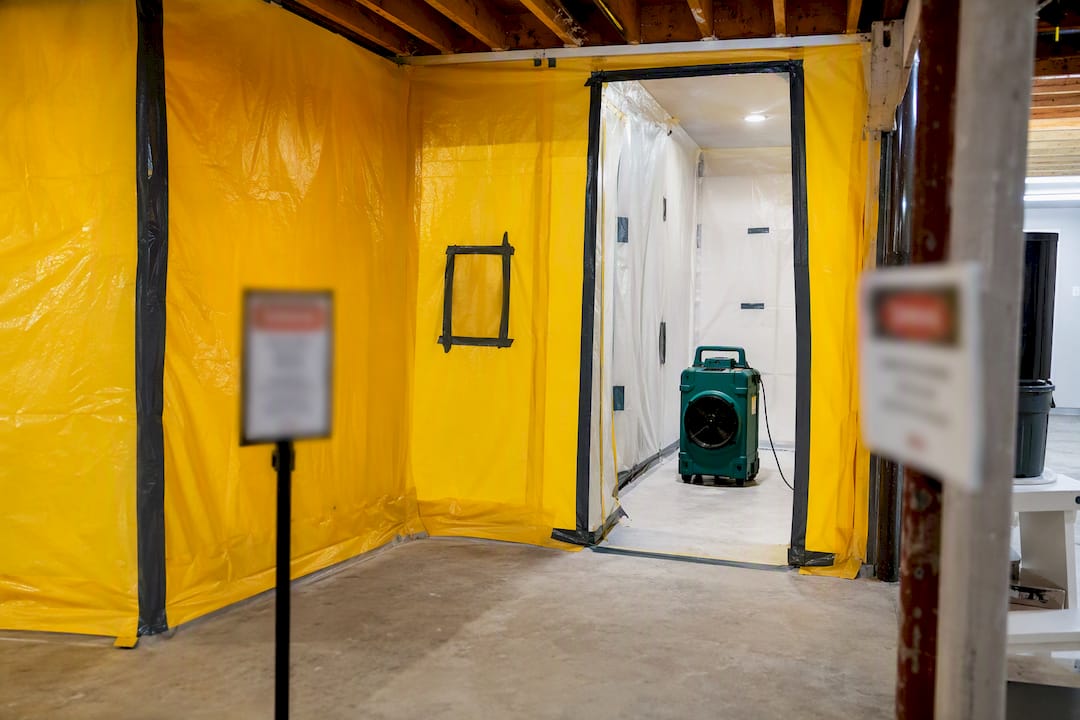
Workers wear respiratory protection rated for the specific hazard present, since dry crumbling foam behaves differently than wet, mould-affected material. Wetting the foam slightly before removal, where appropriate, cuts down on airborne dust without saturating the area further. Removal proceeds section by section rather than tearing out large sections at once, which limits how much material is exposed to open air at any given time.
Once the foam is out, the containment area gets a final HEPA vacuum pass and a visual and sometimes air-quality check before the barriers come down. Skipping that verification step is one of the more common shortcuts that leaves homeowners with lingering dust in wall cavities or adjacent rooms. Occupants, especially anyone with respiratory sensitivity, are generally advised to stay elsewhere during active removal and return only after verification confirms the space is clear.
A practical perspective on UFFI risk
Treat UFFI like any aging building material: assess its actual condition rather than its reputation. In the field, moisture and mould, not old formaldehyde, are usually what needs fixing.
If you need UFFI testing or removal, here’s how MSN Environmental helps
Guessing whether that foam behind your drywall is a problem costs you nothing until it costs you a sale, a renovation delay, or a symptomatic tenant. MSN Environmental handles the parts of this process that shouldn’t be DIY: bulk and air sampling to confirm what you’re actually dealing with, containment and HEPA-filtered removal when foam is wet or deteriorated, verification testing once the work is done, and interior demolition if a renovation project needs it.
Call and you’ll get a site assessment, a written quote before any work starts, and a clear safety plan for containment and disposal. There’s no obligation to proceed with removal just because you booked an inspection. Some homes turn out fine as-is. If yours doesn’t, MSN Environmental’s technicians are equipped to handle it start to finish rather than leaving you to coordinate testing, removal, and disposal through three separate companies. Reach out to book testing, inspections, and assessments and find out exactly what’s in your walls before you make any decisions about it.
Sources
- Urea Formaldehyde Foam Insulation guidance (Government of Canada publication)
- Health effects of urea formaldehyde foam insulation: evidence of causation. (CMAJ / PubMed Central)
- Urea‑formaldehyde foam insulation (UFFI) fact sheet (Connecticut DPH)
- CPSC bans urea formaldehyde foam insulation (CPSC news release)
FAQ
How much does it cost to remove UFFI insulation from a house?
Cost depends on the volume of foam, how accessible the wall cavities are, and regional labour and disposal rates, so there’s no standard per-square-foot figure. Get a written quote after an on-site assessment rather than relying on a general estimate.
How soon can you sleep in a house after spray foam insulation?
For a fresh UFFI-style installation, most off-gassing happens in the initial days after injection, though this applies to historical installations rather than current spray foam products. For any recent insulation work, follow the installer’s specific ventilation and re-entry guidance.
Is urea-formaldehyde foam insulation dangerous?
Properly cured, undisturbed UFFI installed decades ago is generally not considered a dangerous ongoing exposure source, based on formaldehyde levels declining sharply over time. Wet, damaged, or freshly installed UFFI is a different situation and warrants testing.
Is urea-formaldehyde toxic?
Formaldehyde is an irritant at higher concentrations, causing eye, throat, and respiratory symptoms, which is why regulators banned UFFI after installation-era complaints. A critical review of the research found weak support for long-term toxic effects from cured, older installations specifically.