

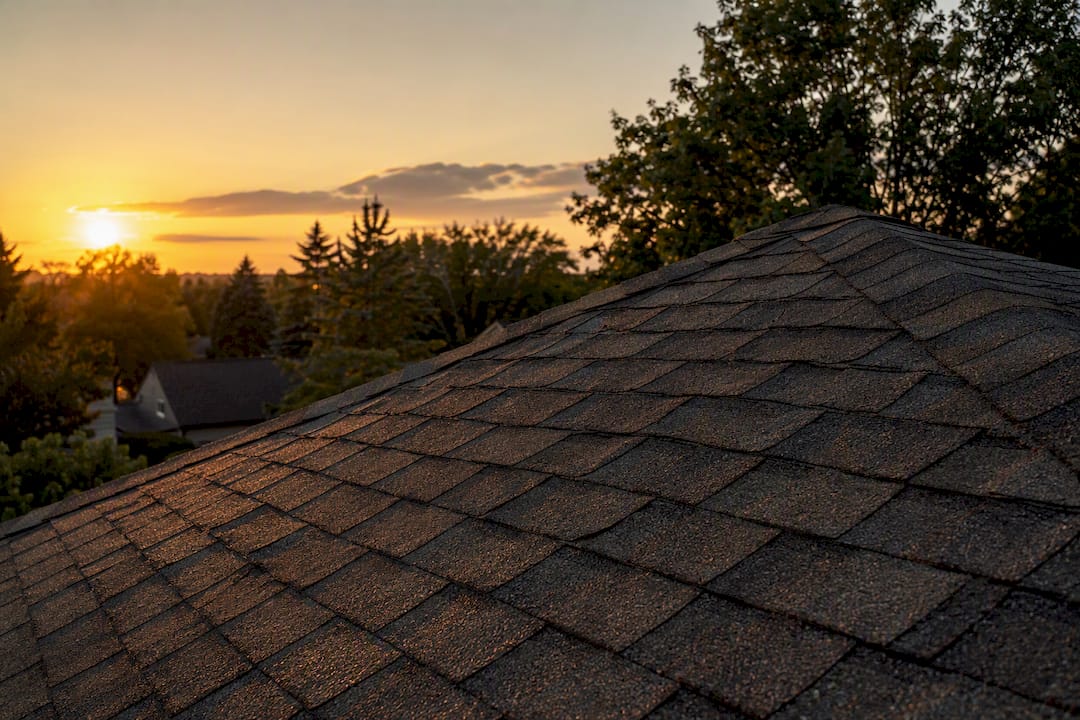
Intact asbestos roofing shingles that haven’t been cracked, cut, or disturbed usually pose low immediate risk. The asbestos is bonded into a cement or asphalt matrix, so fibres stay locked in place unless something breaks that matrix apart. Damaged, weathered, or disturbed shingles are a different story: they can shed fibres into the air, and Health Canada notes that diseases linked to inhaling those fibres can take 30 years or more to show up.
If you suspect your roof contains asbestos shingles, here’s what to do today:
- Don’t walk on the roof, pressure wash it, or attempt any repair yourself.
- Take photos from the ground for your records.
- Avoid drilling, cutting, or leaning ladders against the shingles.
- Book a certified inspection before any renovation, solar install, or repair work begins.
The World Health Organization is blunt about this: every form of asbestos is carcinogenic, and the safest move is to stop disturbance rather than gamble on “it’s probably fine.”
Key Takeaways
Intact asbestos roofing shingles carry low immediate risk, but disturbance, damage, or renovation work changes that risk profile fast and calls for certified testing before any action.
| Point | Details |
|---|---|
| Don’t disturb suspect roofing | Avoid walking on, cutting, or pressure washing shingles until they’re confirmed safe or unsafe. |
| Age alone isn’t the trigger | Condition, damage extent, and planned renovations matter more than installation decade. |
| Use the 25% damage threshold | Widespread damage across roughly a quarter of the roof typically favours removal over repair. |
| Testing requires trained sampling | Wet sampling by certified technicians and lab analysis confirm asbestos, not DIY guesses. |
| Match the fix to the condition | Leave in place, encapsulate, roof-over, or remove, depending on damage and future plans. |
Table of Contents
- What asbestos roofing shingles are and how to identify them
- What health risks come with asbestos exposure from roofing
- How long do asbestos shingles last, and when do you need to remove them?
- How does professional asbestos testing and inspection work?
- Leave it, encapsulate, roof-over, or remove: which is safest?
- What should you ask before hiring a certified asbestos contractor?
- Why hire a certified team like MSN Environmental
- Editorial take: the safety-first rule most homeowners skip
- Sources
- FAQ
What asbestos roofing shingles are and how to identify them
Asbestos found its way into several roofing products through the mid-20th century, and knowing which type you’re dealing with helps frame the conversation with an inspector.
- Asbestos-cement (AC) shingles and tiles — chrysotile fibres mixed into cement, often with concentrations around 10 to 30% by weight, according to the National Cancer Institute. These are the classic slate-look shingles found on older homes.
- Asphalt-bonded shingles with asbestos filler — asbestos fibres reinforced the asphalt mat instead of cement, common on lower-slope roofs.
- Corrugated asbestos-cement sheets — used on garages, sheds, and industrial buildings, easy to mistake for fibre-cement or metal from a distance.
- Asbestos-containing underlayment or felt — hidden beneath visible shingles, often overlooked until a tear-off begins.
A few non-destructive clues can point you in the right direction: a roof installed before the 1980s, tiles that feel brittle or unusually thin (around a few millimeters), and a lighter weight than modern concrete tiles. Older AC tiles often weigh close to 2.5 kilograms each, noticeably lighter than what replaced them. None of these clues confirm anything on their own.
Pro Tip: Never chip off a piece to check yourself. If a tile looks slate-like and your home predates 1990, treat it as suspect asbestos roofing and call a certified inspector rather than testing your luck with a hammer.
What health risks come with asbestos exposure from roofing
Asbestos is a recognized human carcinogen, and the roofing industry’s decades of use left a long tail of exposure risk still working its way through the population.
The conditions linked to inhaling asbestos fibres include:
- Mesothelioma — a rare, aggressive cancer of the lung and abdominal lining.
- Lung cancer — risk climbs sharply when asbestos exposure combines with smoking.
- Asbestosis — scarring of lung tissue from long-term fibre buildup.
These illnesses don’t show up right away. Health Canada points to latency periods of 30 years or more between exposure and diagnosis, which is exactly why “it hasn’t caused problems yet” is a poor way to judge safety.
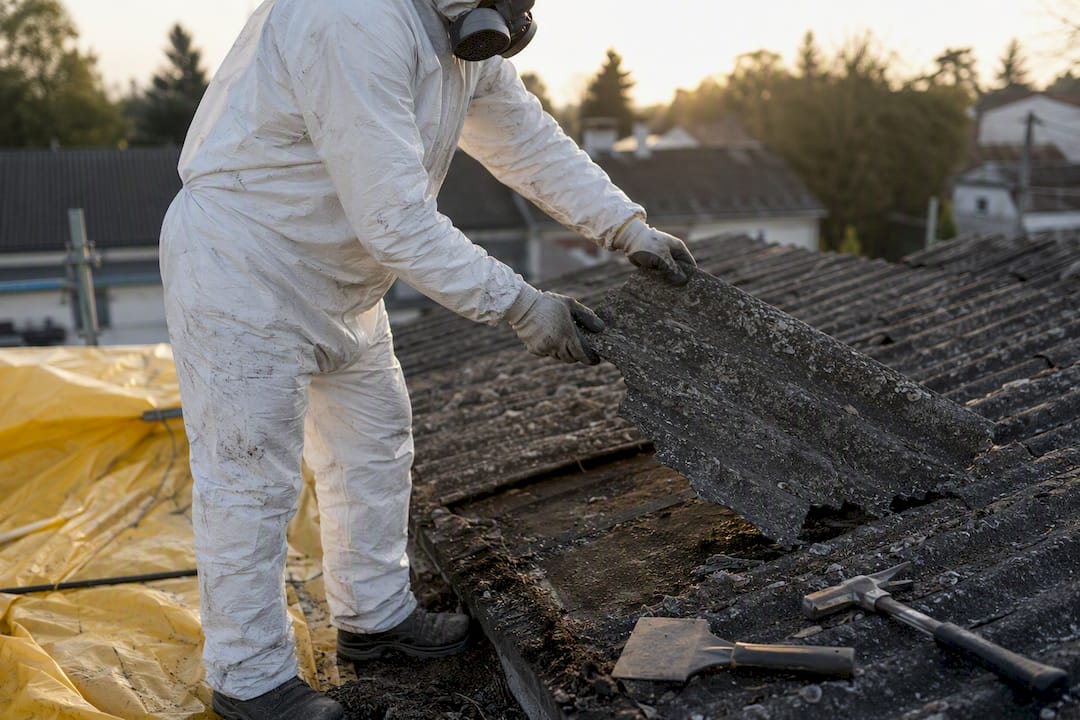
The exposure mechanism matters too. Fibres release when material is cut, ground, torn, or aggressively weathered, not simply by sitting on a roof. That’s why a systematic review of occupational studies found construction and demolition workers face the highest documented risk. Intact shingles sitting quietly overhead carry far less risk than the same shingles once someone starts tearing them off without containment.
How long do asbestos shingles last, and when do you need to remove them?
Asbestos-cement shingles typically last 30 to 50 years, which explains why so many are still sitting on roofs installed decades ago. Age alone isn’t the trigger for action. What matters is condition.
Watch for these signals that the risk profile is shifting:
- Cracking, chipping, or crumbling across multiple tiles.
- Visible fibre bloom or a chalky, fraying surface texture.
- Water infiltration into the attic space.
- Widespread deterioration rather than a few isolated spots.
Professionals commonly use a rough threshold: once roughly 25% or more of the roof surface shows damage, removal usually makes more sense than patchwork repair. Planned renovations, attic conversions, or solar panel installs are also natural triggers, since they force disturbance regardless of the roof’s current condition. A roof-over is sometimes used as an interim fix, but check local building code limits on how many layers a roof structure can carry before assuming that’s an option.
How does professional asbestos testing and inspection work?
Confirming asbestos in roofing shingles isn’t a guessing game once a certified inspector gets involved, and the process follows a fairly consistent sequence.
- Visual inspection of the roof from the ground or via drone, with documented photos of suspect areas.
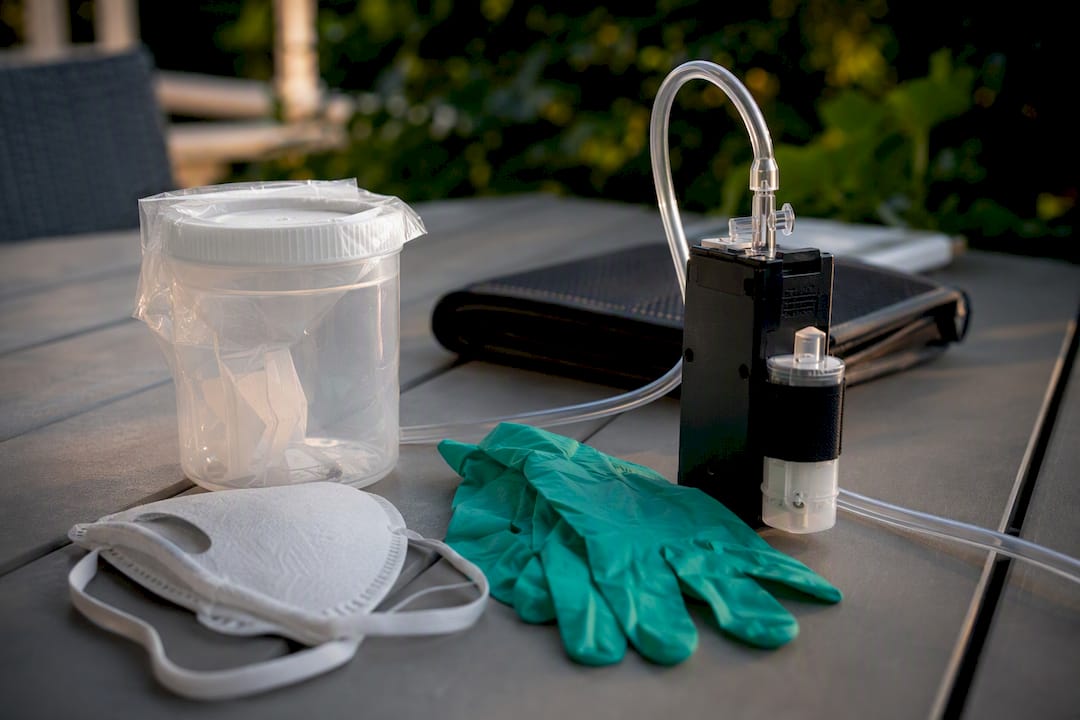
- Safe bulk sampling by a trained technician, who wets the material to limit fibre release, removes a small intact piece, and seals it for transport, a method ATSDR recommends specifically to avoid raising exposure during sampling.
- Accredited laboratory analysis to confirm asbestos type and concentration.
- Air sampling and clearance testing afterward, if removal work is planned, to confirm the area is safe to reoccupy.
A proper asbestos inspection report should state the material type, its condition, estimated concentration, and a recommended work category, not just a yes or no answer.
Pro Tip: A DIY sample taken with a hammer and a sandwich bag can do more harm than good. Improper sampling technique is one of the most common ways homeowners accidentally increase their own exposure.
Leave it, encapsulate, roof-over, or remove: which is safest?
There’s no single right answer here. The right call depends on the shingles’ condition, whether you’re planning renovations, and how long you intend to own the property.
| Option | Best suited for | Key limitation |
|---|---|---|
| Leave in place, monitor | Intact shingles, no planned work | Requires periodic condition checks and no disturbance |
| Encapsulation | Buying time on aging but stable material | Not a permanent fix; deteriorating substrate limits effectiveness |
| Roof-over | Avoiding disturbance while adding a new surface | Structural load limits and local building code restrictions apply |
| Professional removal | Damaged, deteriorating, or pre-renovation situations | Requires containment, licensed handling, and disposal costs |
Leaving shingles in place works when there’s no active damage and nothing planned that would disturb them. Encapsulation and roof-overs are commonly used as interim strategies, but neither solves the underlying problem if the material is genuinely at end of life. Full removal remains the only option that permanently eliminates the hazard, and it demands containment, trained crews, and mandatory clearance testing once the work wraps up.
What should you ask before hiring a certified asbestos contractor?
Choosing the right contractor matters as much as choosing the right management option, and a few pointed questions separate a legitimate abatement crew from a risky shortcut.
- Ask for training certificates, provincial licensing status, and current insurance documentation.
- Confirm worker safety compliance, including WSIB coverage where applicable.
- Request references from recent jobs similar in scope to yours.
- Get a written quote that spells out containment procedures, the disposal route, an air monitoring plan, clearance testing, and a realistic timeline.
Cost drivers worth understanding upfront include roof access difficulty, the extent of deterioration, waste volume, and licensing requirements, all of which shift the price more than the roof’s square footage alone.
Red flags are easy to spot once you know what to look for: a contractor who skips lab testing, quotes instantly without seeing the roof, or won’t put the scope in writing. Reviewing asbestos removal cost factors before getting quotes helps you tell a fair price from a lowball one that cuts corners on containment.
Pro Tip: If a contractor can’t explain what happens to the waste after removal, that’s a scope gap, not a minor detail. Ask specifically where the material goes and how disposal is documented.
Why hire a certified team like MSN Environmental
Asbestos roofing shingle work isn’t a job for generalist roofers. MSN Environmental’s technicians carry the training and certifications to run inspection, sampling, and full abatement under proper containment, with clearance testing built into every removal job rather than treated as an afterthought.
Homeowners often assume a roofing contractor and an abatement contractor do the same job with different price tags. They don’t. One is trained to install shingles; the other is trained and equipped to contain, remove, and dispose of hazardous material without contaminating the site.
Practical scenarios the team handles regularly include pre-sale inspections, complete roof removal ahead of a rebuild, and post-removal air clearance testing for testing and inspection needs across several service areas, including Toronto. Structural questions around roof-over feasibility are also worth a conversation with a building engineer, and partners like Bazini Engineering support that side of the decision for property owners and managers.
If you’re weighing whether to hire a certified crew at all, the reasoning holds up across every hazardous material category, not just roofing: certified professionals reduce liability and health risk in ways a DIY approach simply can’t match.
Editorial take: the safety-first rule most homeowners skip
Most advice on asbestos roofing shingles jumps straight to removal, as though every asbestos-containing roof is a ticking hazard. That framing is wrong more often than it’s right. The evidence points somewhere more nuanced: intact, undisturbed shingles are genuinely low risk, and the real danger shows up the moment someone climbs up there, drills into it, or lets deterioration go unchecked for years.
Where conventional advice falls short is treating age as the deciding factor. A 40-year-old roof in good condition is a monitoring situation, not an emergency. A 15-year-old roof with cracked, weathered tiles after a bad storm season is a different conversation entirely. Condition and disturbance risk should drive the decision, not the calendar.
What readers should prioritize first is simple: get a real inspection before assuming anything, and resist the urge to solve the “problem” yourself. The homeowners who get into trouble aren’t the ones who leave asbestos shingles alone. They’re the ones who decide to inspect, patch, or clean the roof on a Saturday afternoon without knowing what they’re standing on.
Sources
- Health Canada — Health risks of asbestos
- World Health Organization — Asbestos fact sheet
- ATSDR — Preventing asbestos exposure
- PMC — review on occupational asbestos exposure
This article is general information, not a substitute for advice from a qualified doctor. Consult a qualified healthcare professional about your own circumstances before acting on anything here.
FAQ
How can you tell if shingles have asbestos?
Look for a slate-like appearance, brittle or thin tiles, and an installation date before the 1980s, but only accredited lab testing on a properly collected sample can confirm asbestos content.
Are asbestos shingles still available?
No. Asbestos roofing products stopped being manufactured decades ago, so any asbestos-containing shingles on a roof today date back to older construction or renovation work.
Is it bad to have asbestos shingles?
Intact, undisturbed asbestos shingles pose low immediate risk, but damaged or deteriorating shingles can release fibres linked to mesothelioma and lung cancer after long latency periods.
What does an asbestos shingle look like?
Asbestos-cement shingles typically look like thin, flat slate tiles, often grey or weathered in colour, and feel noticeably lighter and more brittle than modern concrete or fibre-cement roofing.