

If you need asbestos abatement in London, Ontario, you are choosing between several kinds of company, and they are not interchangeable. Some only test. Some are restoration firms that subcontract the removal. Some specialize in hazardous materials and do the testing, containment, removal and clearance themselves. The right choice depends on what material you have, how much of it, and whether it will be disturbed. Below we compare the options, explain the Ontario rules that shape every job, and say plainly where we fit.
TL;DR
- Asbestos that is intact and undisturbed is generally not a significant health risk, according to Health Canada. Abatement becomes necessary when you plan to renovate, demolish, or the material is damaged.
- Test before you quote. A lab result and a written scope let you compare contractors on the same basis.
- In Ontario, O. Reg. 278/05 sorts asbestos work into Type 1, 2 and 3. The higher the risk, the stricter the controls and paperwork.
- Compare contractors on scope, certification, insurance, disposal records and post-work air clearance, not on the lowest number.
- Do not remove it yourself. Health Canada advises against DIY removal.
Table of Contents
- When asbestos abatement is actually needed
- The Ontario rules behind every job
- Your options compared
- The process, step by step
- What about cost?
- Questions to ask any London contractor
- Residential versus commercial jobs
- Disposal and what happens to the waste
- Our perspective
- Ready to get a scope for your property?
- FAQ
- Sources
When asbestos abatement is actually needed
Asbestos was widely used in Canadian homes built before 1990, in insulation, fireproofing, cement products, plaster, floor and ceiling tiles, and around furnace systems, as Health Canada explains. In London, that covers a large share of the housing stock, from older homes near the core to mid-century suburbs.
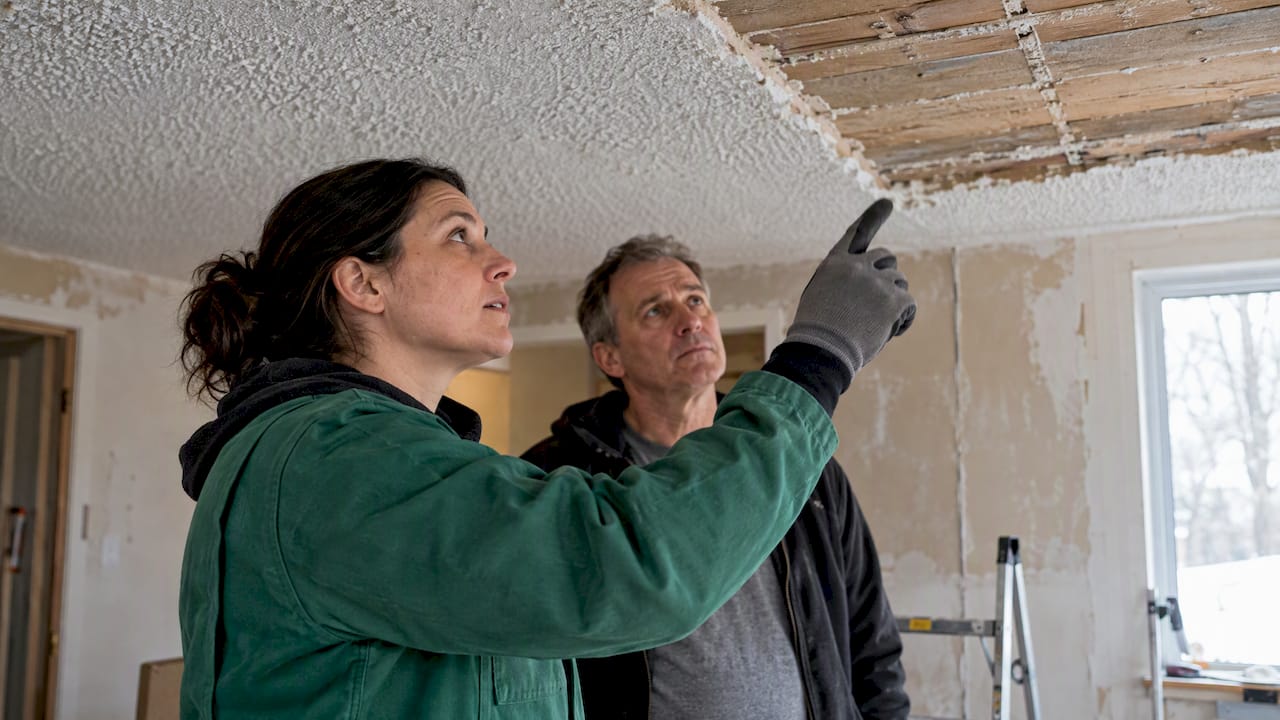
The same Health Canada page says materials that are tightly bound, in good condition, sealed behind walls or left alone pose no significant risk. So the question is rarely “is there asbestos?” It is “will anyone disturb it?” Abatement is the sensible route in these situations:
- You are renovating, opening walls, replacing flooring or removing a ceiling in a pre-1990 building.
- The material is crumbling, water-damaged or already disturbed.
- You are demolishing part or all of a structure.
- You are buying, selling or insuring a property and need documentation.
- You manage a commercial or multi-unit building and have duties to occupants and workers.
Health Canada’s renovation guidance says to have your home tested by a professional before you start, and to hire a qualified professional if asbestos is found. If you are weighing whether a project is demolition or abatement, our guide on interior demolition vs abatement explains how the two differ and why the order of work matters.
The Ontario rules behind every job
When readers search for asbestos regulations in London, some results come from the other London, in England. Ignore those. They describe a different regulator, a different licensing system and a different currency. In London, Ontario, the framework is provincial.
Types 1, 2 and 3
O. Reg. 278/05 is the Ontario regulation that governs asbestos on construction projects and in buildings. It classes work as Type 1, Type 2 or Type 3, with controls scaled to risk. Type 3 is the highest: it includes work disturbing more than 1 square metre of friable asbestos-containing material, and it requires full containment, decontamination procedures and notice to the Ministry of Labour before work begins. The regulation text states the notification must be given orally and in writing before a Type 3 operation starts, as shown on CanLII’s copy of the regulation.
In practice, this means the contractor, not you, handles the classification and the filings. But you should ask which type your job is and why. A contractor who cannot answer clearly is a warning sign.
What owners and constructors must do
The regulation also places duties on building owners and on constructors, including keeping records of asbestos in buildings and giving written notice of that information to those who will work there. Our Ontario asbestos regulations roadmap breaks down who owes what: owners, renovators and contractors.
The 0.5% question
Whether a material counts as asbestos-containing is a matter of lab results against a threshold, so a visual guess is never enough. We cover how that threshold affects room-by-room decisions in London homes and in older Ontario homes more broadly.
Your options compared
This is the part most pages skip. Here are the kinds of provider a London property owner will find, described by type.
| Provider type | What they do well | Where to be careful |
|---|---|---|
| Testing-only laboratories and consultants | Sampling, surveys, clearance air tests, independent verification | They do not remove anything, so you still need a contractor and a second set of quotes |
| Restoration and emergency-response companies | Fast response after fire, flood or sewer backup; one call for everything | Asbestos work may be one service among many, sometimes subcontracted. Ask who is on site |
| Demolition and general contractors | Can fold removal into a larger build | Asbestos removal must be done before demolition by qualified workers. Confirm who is responsible |
| Waste haulers and metal or material recyclers | Haul away bagged material | Hauling is not abatement. Removal, containment and clearance are separate work |
| Specialist hazardous-materials abatement firms (including us) | Testing, containment, removal, disposal and documentation under one scope | Fewer firms of this type, so book early and compare scopes |
None of these is wrong in every case. A tiny, low-risk job may suit one provider; a multi-room Type 3 project clearly needs a specialist. What matters is that you know which type you are speaking to.
Where MSN Environmental fits
We are a specialist. Our service list covers asbestos removal, mould remediation, UFFI, lead paint, PCBs, mercury and bat guano, plus testing, inspections and assessments: bulk sampling, air testing, designated substance surveys and pre-renovation or demolition surveys. We also do interior demolition, so when a job needs the hazardous material out and the room stripped, one team can plan both. We are fully insured for liability, our technicians are trained and certified, and we provide personalized oversight on each project. Our London service page is here.
The process, step by step
A properly run abatement job follows the same arc whoever does it.
- Identify and sample. A qualified person takes bulk samples of suspect materials, and a lab analyses them. This is the step that tells you what you actually have. Our guide to what to demand from a pre-renovation survey lists what a defensible report includes.
- Write the scope. The scope says which materials, which rooms, what quantity, what method and which Type of work under Ontario’s regulation. Four situations where testing and a written scope are expected are worth reading before you sign anything.
- Notify and plan. For Type 3 work, notice goes to the Ministry of Labour before the work starts. Build that into your schedule rather than expecting a start the next day.
- Contain and remove. The area is sealed, kept under negative air pressure for higher-risk work, and materials are wetted and removed by workers in protective equipment. Glove-bag methods exist for specific situations such as pipe insulation, which we explain in our glove bag article.
- Clean and clear. Surfaces are decontaminated, and for appropriate jobs an independent air test confirms the area is safe to reoccupy. Our air sampling guide shows what those results mean.
- Dispose and document. Waste is bagged, labelled and sent to an approved facility, and you receive the paperwork. Keep it. It is your proof for a future sale, a lender or an insurer.
That sixth step is where weak contractors cut corners. Ask for disposal records before you pay the final invoice.
What about cost?
Everyone wants a number, and most pages online give one. Be wary. Cost depends on the material (a few floor tiles are very different from sprayed ceiling texture or vermiculite attic insulation), how much there is, access, whether the job is Type 1, 2 or 3, how much containment is needed, and the cost of testing and air clearance.
Be careful with figures from other countries. Some of the pages ranking for this topic quote prices in pounds for England; those do not apply in Ontario. We do not publish fixed prices because a fair quote needs a site assessment, and we will not guess before one. For a general look at what drives pricing in Ontario, read our asbestos removal cost guide.
How to compare quotes fairly
Two quotes only compare if they describe the same work. Check that each one states:
- the materials and quantities being removed, tied to lab results;
- the Type of work under O. Reg. 278/05;
- whether testing and post-removal air clearance are included, and who performs them;
- waste handling and disposal, with documents provided;
- what is excluded, such as rebuilding drywall, flooring or trim;
- insurance coverage and proof of it.
The cheapest quote is often the one that leaves out clearance testing or disposal paperwork. “Affordable” should mean the full scope at a fair price, not a low number that grows after demolition starts.
Questions to ask any London contractor
- Who will be on site, and are they your employees or subcontractors?
- What training do your workers hold for asbestos work?
- Which Type is this job, and who files the notification?
- Do you carry liability insurance, and can I see the certificate?
- Will an independent party do the clearance air test?
- Where does the waste go, and will I get the records?
- Can you coordinate testing, removal and any demolition?
Honest answers are quick and specific. Vague answers, or pressure to start today, tell you what to expect later.
Residential versus commercial jobs
Homeowners usually face asbestos during a renovation: a basement finish, a kitchen gut, an old furnace removal. Health Canada recommends testing before work begins, and the owner’s priority is a clean, documented result with minimal disruption.
Commercial and property-management clients carry additional duties. As the regulation sets out requirements for owners, including records and communication about asbestos in buildings, a designated substance survey is the practical way to meet them before a project. We offer designated substance surveys and pre-demolition inspections so tenant improvements, retrofits and demolitions can start with the facts. Construction managers should treat the survey as a schedule item, not an afterthought.
If asbestos turns up after a fire or water loss, the cleanup sequence matters for insurance. This overview of fire cleanup phases and claim protection is a useful companion when you are coordinating with an adjuster.
Disposal and what happens to the waste
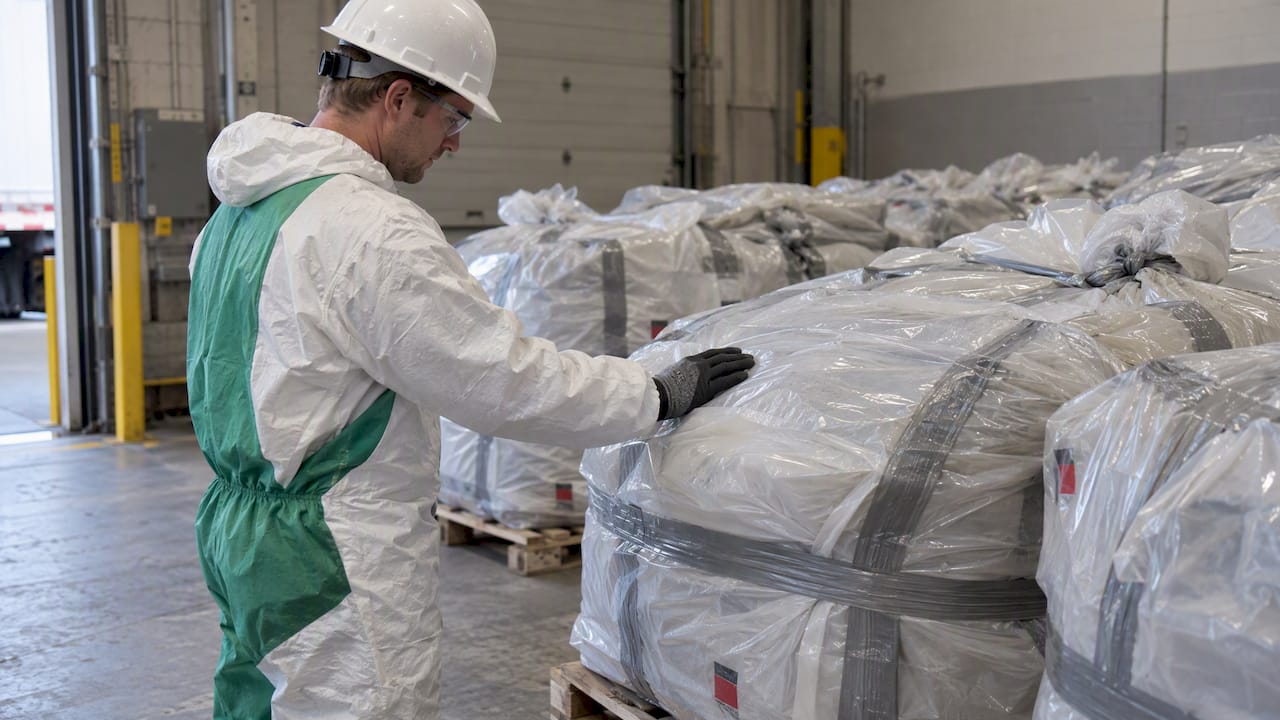
Asbestos waste is not household garbage. It is wetted, double-bagged or wrapped, labelled and transported to a facility approved to accept it. Your contractor arranges this; you should never put asbestos in the curb or bring it to a regular transfer station. Because rules and accepting sites can change, ask the contractor to name the facility and give you the waste records at job close. Those records, along with the clearance results, belong in your property file.
Our perspective
We see the same pattern repeatedly in southwestern Ontario homes and buildings. A client calls after a contractor has already opened a wall, or after demolition has started and a suspect material appears. The work stops, the schedule slips, and the bill rises. Almost all of that is avoidable with a sample taken before anyone swings a hammer.
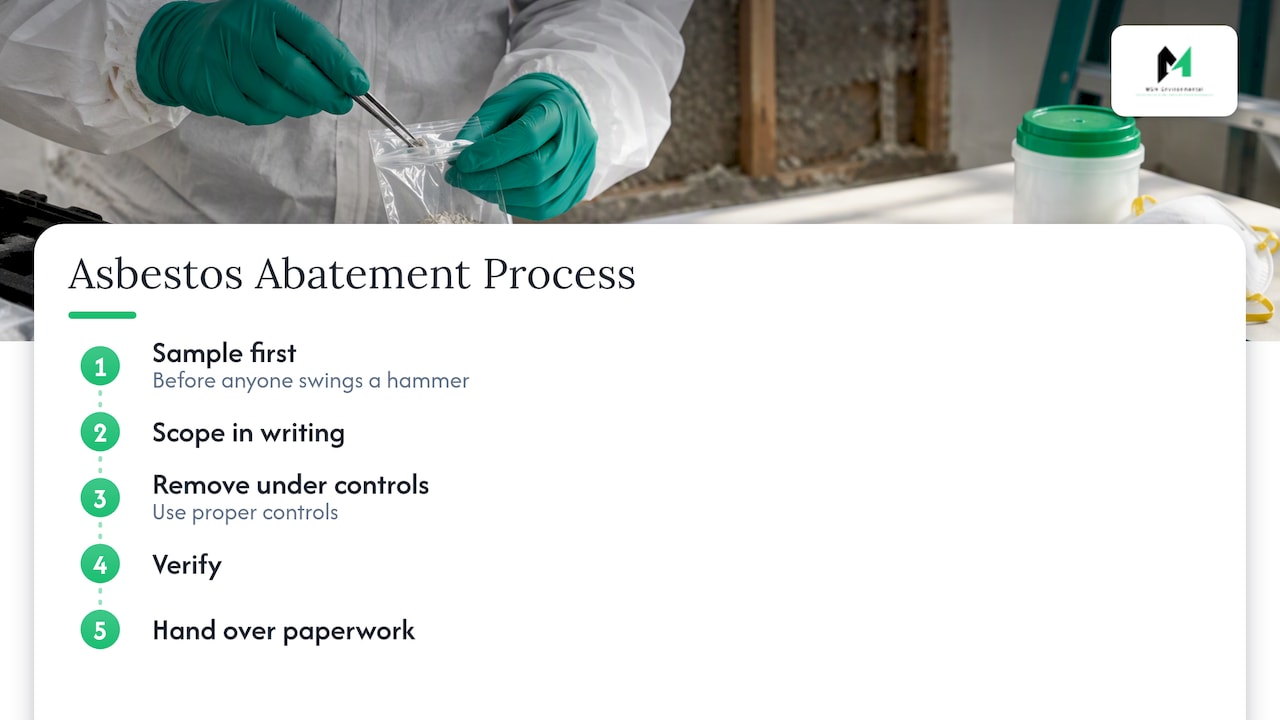
Our view is simple. Test first, scope in writing, remove under proper controls, verify, and hand the owner the paperwork. We do not believe every old building needs everything torn out, and we say so when material can safely be left alone or managed. We also do not believe in shortcuts on containment or disposal, because the people who pay for those shortcuts are the occupants and the next owner.
We built our service around one team that can test, abate and, where needed, demolish, with experienced technicians, current equipment and close oversight, so you are not coordinating three companies who each point at the other.
— Moacyr
Ready to get a scope for your property?
If you are in London or nearby, we can start with testing and a written scope, then price the removal against it. See our London asbestos removal page or our asbestos removal services overview, or start from the MSN Environmental home page to reach the right service for mould, lead paint or other hazardous materials.
FAQ
Can I remove asbestos myself?
Health Canada advises against it. Disturbing asbestos releases fibres that are dangerous to breathe, and the right approach is to hire a qualified, certified professional. If you suspect a material and have not disturbed it, leave it alone and have it tested.
Do I need testing before abatement?
For homes, testing before renovation is strongly recommended by Health Canada, and it is the only way to know what you have. For commercial and industrial buildings, owners have regulatory duties around asbestos information, so a survey is the practical route. Either way, testing gives you a written scope you can use to compare quotes.
How long does asbestos abatement take?
It depends on quantity, access and the Type of work. Small jobs can be done quickly, while Type 3 work needs notice to the Ministry of Labour before it starts, which sets the earliest start. Ask your contractor for a schedule that includes testing, notification, removal and clearance.
How do I know a contractor is legitimate?
Ask for proof of liability insurance, worker training records and a clear statement of the work Type. Ask who does the clearance air test and where the waste will go. A reputable firm will answer plainly and put it in writing.
Sources
- Asbestos and your health, Health Canada
- Planning a renovation? Asbestos: what you need to know, Health Canada
- O. Reg. 278/05, Ontario e-Laws
- O. Reg. 278/05, CanLII
- Fire cleanup phases and claim protection, Nationwide Maintenance