

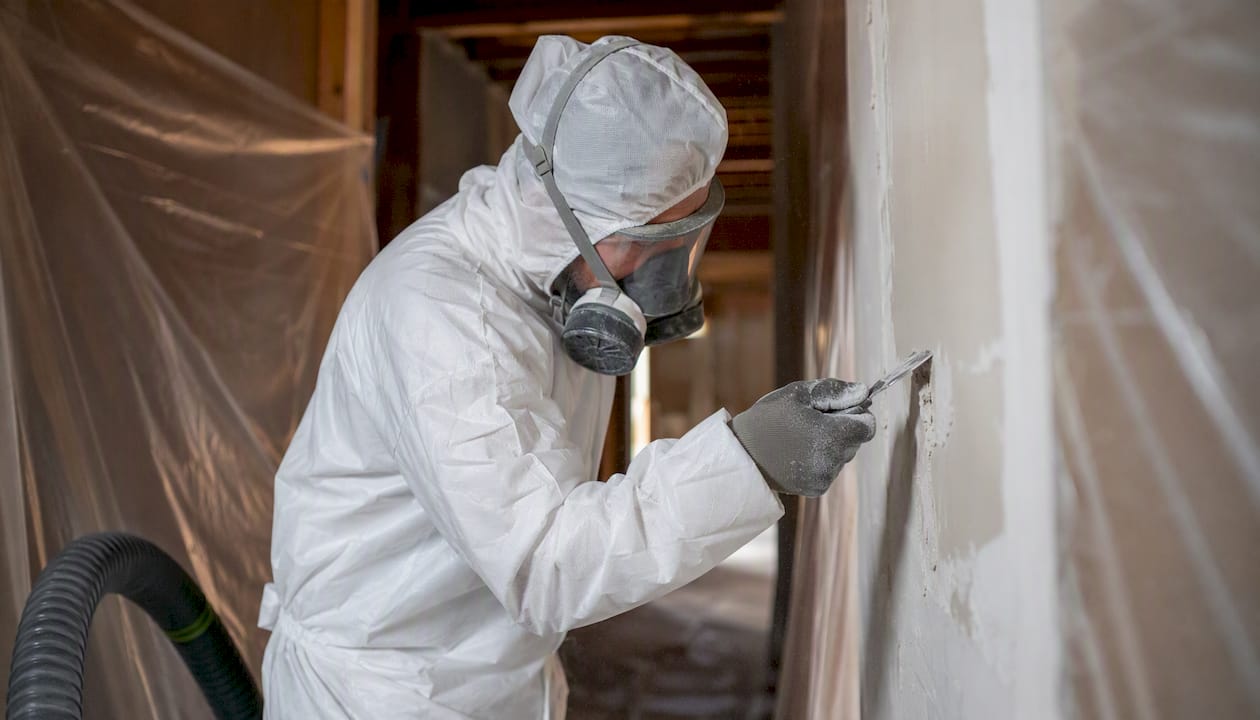
Older drywall joint compound — the material tradespeople call “drywall mud” — can contain asbestos, and you cannot tell by looking at it. If your home was built or renovated before 1980, the finishing compound on your walls and ceilings may contain chrysotile asbestos fibres. The EPA confirms that while modern joint compounds do not contain asbestos, older products can — and the only way to know for certain is laboratory testing.
Three things to do right now if you suspect asbestos in your drywall mud:
- Stop all work immediately. Any sanding, scraping, cutting, or drilling on suspect compound must stop. Even a small repair can release fibres.
- Isolate the area. Close doors, turn off forced-air systems that circulate air through the space, and keep other occupants out until testing is complete.
- Arrange professional bulk sampling. Contact a certified asbestos assessor — such as MSN Environmental — to collect samples safely and submit them to an accredited laboratory.
Pro Tip: Do not vacuum or dry-sweep a disturbed area. Vacuuming without a HEPA filter spreads fibres rather than capturing them. Wet-wipe hard surfaces only, and leave the rest for the professionals.
Key takeaways
Asbestos-containing drywall mud cannot be identified visually; professional bulk sampling and laboratory analysis are the only reliable way to confirm its presence, and stopping all dust-generating work immediately is the single most important action a homeowner can take.
| Point | Details |
|---|---|
| Visual ID is impossible | Older joint compound looks identical to modern compound; only PLM or TEM lab analysis confirms asbestos. |
| Era is the key risk indicator | Finishes applied before 1980 carry the highest likelihood of asbestos-containing mud and should be tested before any renovation. |
| Sanding is the highest-risk activity | Sanding and dry-mixing generate the greatest airborne fibre concentrations; stop both immediately on suspect surfaces. |
| DIY sampling creates exposure | Untrained sampling without containment is a common cause of avoidable fibre release; always hire a certified assessor. |
| MSN Environmental | Provides certified bulk sampling, air monitoring, and licensed abatement with post-job clearance testing across Southern Ontario. |
Table of Contents
- When asbestos was used in drywall joint compound
- Why you cannot identify asbestos in drywall mud by sight
- When asbestos in drywall mud becomes a health risk
- What to do right now if you suspect asbestos in drywall mud
- What a professional testing visit looks like
- When removal is needed and what abatement involves
- What the research says and where uncertainty remains
- Why certified abatement matters more than most homeowners expect
- MSN Environmental’s asbestos testing and abatement services
- Sources
- FAQ
When asbestos was used in drywall joint compound
Asbestos was added to joint compounds, skim coats, patching compounds, and texture coats primarily from the 1940s through the mid-to-late 1970s. Manufacturers valued it for its binding strength and crack resistance. Some regional formulations persisted into the early 1980s before the CPSC’s regulatory pressure and voluntary reformulation effectively removed it from the mainstream market.
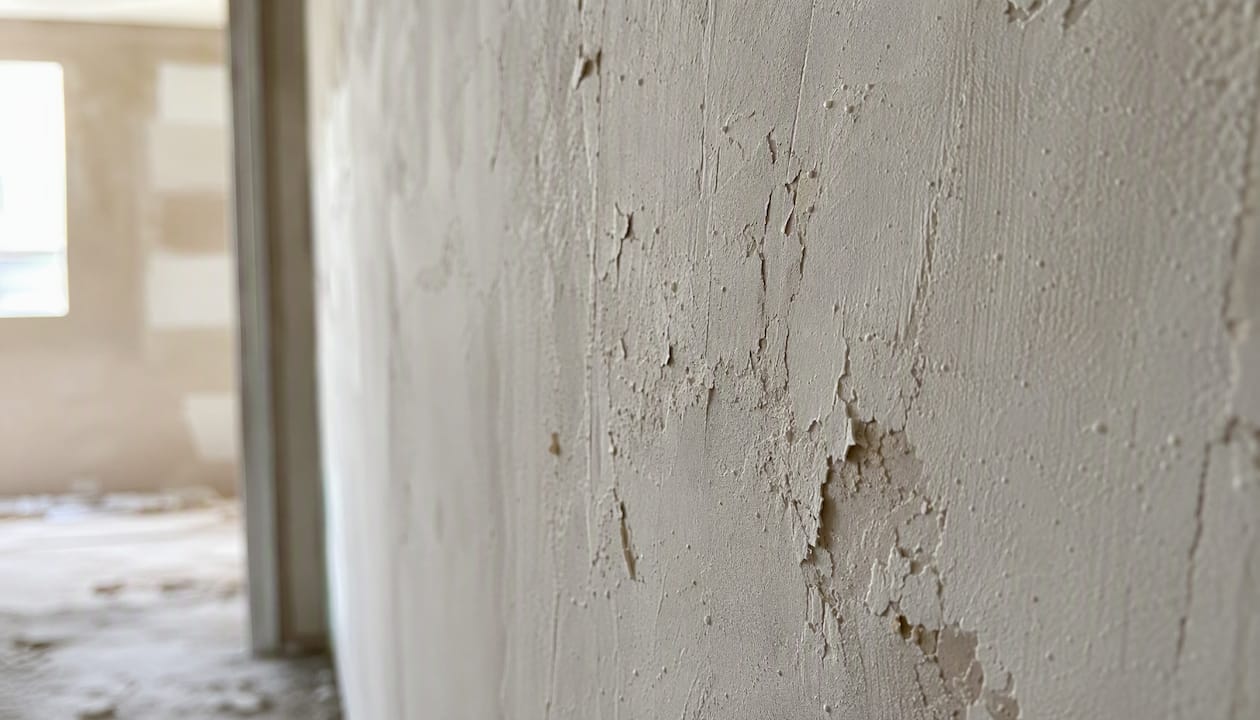
Microscopy analyses of historical products found chrysotile in many joint-compound formulations, with asbestos content ranging from roughly low single-digit to low double-digit percentages by weight depending on the product and era, though moderate percentages were common in typical formulations. That range matters because even lower concentrations can generate respirable fibres when the material is sanded or disturbed.
The table below summarises the risk picture by building era.
| Building era | Likelihood of asbestos-containing mud | Notes |
|---|---|---|
| Pre-1970 | High | Most joint compounds and patching products from this period contained asbestos |
| 1970–1980 | Moderate to high | Reformulation was underway but not universal; regional variation is significant |
| 1980–1980s | Low to moderate | Most manufacturers had reformulated, but some stock remained in use |
| Post-1980 | Very low | Asbestos largely absent from mainstream joint compound by this point |
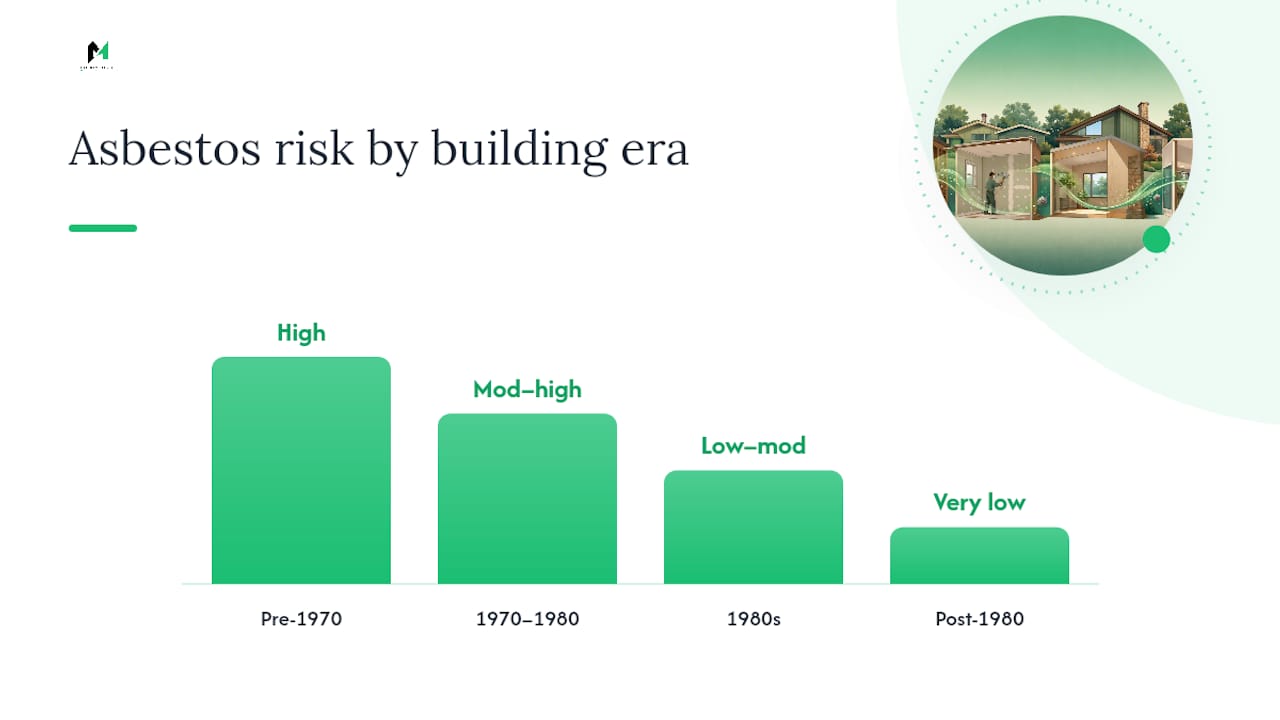
Age alone is not definitive. A 1975 house renovated in 1978 with leftover stock compound could still have asbestos-containing mud on walls that look perfectly modern. The practical rule: treat any finish applied before about 1980 as a candidate for testing before you touch it.
The real hazard is nearly always the joint compound, tape, skim coats, and patches rather than the gypsum board itself. A full-wall skim coat means asbestos-containing mud could be present across an entire surface, not just at visible seams — something worth knowing before any renovation begins.
Why you cannot identify asbestos in drywall mud by sight
Asbestos fibres are microscopic. Older joint compound looks identical to modern compound: the same off-white colour, the same texture, the same feel when dry. No visual inspection can confirm or rule out asbestos — only professional bulk sampling and laboratory microscopy can do that.
Two lab methods are used in practice:
- Polarized Light Microscopy (PLM): The standard method for bulk samples. A technician prepares a small portion of the sample and examines it under polarised light to identify fibre type and estimate percentage. PLM is cost-effective, widely accepted by regulators, and sufficient for most residential decisions.
- Transmission Electron Microscopy (TEM): More sensitive than PLM, capable of detecting finer fibres and lower concentrations. Used when PLM results are inconclusive, when litigation is involved, or when a more rigorous confirmation is needed. TEM costs more and takes longer.
For most homeowners, PLM on a properly collected bulk sample is the right starting point.
Homeowners should not collect their own samples. Improper sampling — breaking off a piece of compound without containment — releases fibres into the air and can contaminate the home. Certified assessors use wet methods, containment, and proper personal protective equipment to collect samples without creating a secondary exposure event.
High-yield sampling locations include joints, inside and outside corners, screw and nail covers, ceiling-wall junctures, and any visible patches. A small number of samples may not guarantee the entire surface is clear, since formulations could vary across different application stages in the same home.
When asbestos in drywall mud becomes a health risk
Intact, undisturbed joint compound poses minimal day-to-day risk. The hazard activates when the material is disturbed and fibres become airborne. Sanding is the highest-risk activity by a significant margin. Dry-mixing powdered compound, power-tool cutting, and demolition all follow closely.
Sanding and dry-mixing generate the highest airborne fibre concentrations of any drywall finishing task. Exposure-reconstruction modelling found that mean 8-hour time-weighted average chrysotile concentrations were numerically highest for drywall specialists, with peak task concentrations during sanding reaching tens of fibres per cubic centimetre in older measurements without controls.
Simulation studies measuring task-duration fibre concentrations during mixing and sanding of older formulations found measurable airborne asbestos under both activities — mixing peaks of several fibres per cubic centimetre and sanding peaks in a similar or higher range depending on method and product.
A state-of-the-science assessment published through HERO/EPA concluded that estimated cumulative chrysotile exposures for workers and homeowners were generally below levels known to be associated with respiratory disease. That is a meaningful finding, but it comes with important caveats: the assessment also identified data gaps, noted variation across historic formulations, and acknowledged that peak sanding exposures without controls can be high.
The practical takeaway is straightforward: low risk when the material is left alone; significant risk when it is sanded, cut, or demolished without professional controls.
Pro Tip: If you are doing any renovation in a pre-1980 home and are unsure whether the walls have been tested, treat every dusty task as a potential asbestos exposure event. Wet methods, HEPA-filtered tools, and professional oversight are not overcautions — they are the standard.
What to do right now if you suspect asbestos in drywall mud
If you have already disturbed suspect compound — or you are about to start a renovation and have not tested — follow these steps in order.
- Stop all work on the suspect surface. Put down tools. Do not continue sanding, scraping, or cutting.
- Seal off the area. Close doors and cover gaps with plastic sheeting if you have it. Turn off HVAC systems that move air through the space.
- Keep people out. Notify other occupants and keep children and pets away from the area until a professional has assessed it.
- Do not vacuum or dry-sweep. A standard vacuum spreads fibres. Wet-wipe hard surfaces only if necessary, and leave soft furnishings for the assessor to advise on.
- Do not attempt to collect a sample yourself. Breaking off compound without containment and proper PPE is a common cause of avoidable exposure.
- Document the condition. Take photos of the disturbed area, note what work was done and for how long, and record any visible damage or crumbling. This information helps the assessor plan sampling and helps an abatement contractor scope the job accurately.
- Contact a certified asbestos assessor. Book a professional sampling visit as soon as possible. The sooner the area is assessed, the sooner you know what you are dealing with.
Even a small disturbance — hanging a picture, drilling for a shelf bracket — can release fibres if it breaks into joint compound. The safe assumption is that any disturbance of older compound is a dust-generating event.
What a professional testing visit looks like
A certified asbestos assessor’s visit typically runs one to three hours for a residential property, depending on size and the number of suspect materials. Here is what to expect.
The assessor begins with a site interview: when was the home built, what renovations have been done, what work triggered the concern? This shapes the sampling plan. They then conduct a visual inspection to identify suspect materials and prioritise sampling locations — joints, patches, corners, and skim-coated surfaces are all candidates.
Before collecting any sample, the assessor sets up containment around the sampling point: plastic sheeting, wet methods, and respiratory protection. Samples are collected using a wet technique to suppress dust, placed in sealed containers, and logged on a chain-of-custody form that travels with the sample to the laboratory.
Ask your assessor these questions before they begin: What credentials and certifications do you hold? Which accredited laboratory will you use, and what method (PLM or TEM)? How is chain of custody maintained? Are you insured for this work? What does the written report include, and when will I receive it?
Lab turnaround for PLM bulk samples is typically two to five business days for standard service, with rush options available. The written report will state whether asbestos was detected, at what percentage, and will include recommendations for next steps. If abatement follows, air clearance testing after removal confirms the space is safe to reoccupy.
For homeowners buying a property, a pre-purchase asbestos inspection covers the same sampling process and can be incorporated into the broader home inspection timeline.
When removal is needed and what abatement involves
Not every positive result means immediate removal. Professionals weigh several factors before recommending abatement versus management-in-place.
- Condition of the material: Intact, painted-over compound that will not be disturbed can sometimes be managed in place with encapsulation and monitoring. Friable, crumbling, or already-disturbed compound generally requires removal.
- Planned renovations: Any renovation that will sand, cut, or demolish the affected surface requires abatement first, regardless of the material’s current condition.
- Occupant sensitivity: Households with young children, elderly occupants, or anyone with a respiratory condition may warrant a lower threshold for removal.
- Regulatory requirements: Ontario regulations and municipal requirements govern abatement procedures, disposal, and documentation. A licensed contractor navigates these on your behalf.
When removal is the right call, the typical abatement workflow follows this sequence:
- Project scoping and quote: The contractor reviews the assessment report, inspects the site, and provides a written scope of work with timeline and cost.
- Containment and negative pressure: The work area is sealed with polyethylene sheeting and a negative-pressure unit with HEPA filtration is installed to prevent fibres from migrating to adjacent spaces.
- Wet removal: Compound is removed using wet methods to suppress dust. HEPA-filtered tools are used where wet methods alone are insufficient.
- Waste handling: All removed material is double-bagged in labelled asbestos waste bags and disposed of at a licensed facility following regulated disposal protocols.
- Decontamination and clearance testing: The work area is decontaminated, and air clearance testing confirms fibre levels are within acceptable limits before the space is reopened.
Cost drivers include the volume of material, the complexity of containment required, disposal distance and fees, whether air monitoring is required throughout the job, and whether interior demolition is part of the scope. For a detailed breakdown of what to look for in contractor proposals, MSN Environmental’s asbestos drywall removal guide covers the process step by step.
What the research says and where uncertainty remains
The science on asbestos-containing joint compound is more developed than many homeowners realise, but it is not without gaps.
That is a meaningful result, but the same assessment flagged limited long-term epidemiology specific to joint-compound workers, variation across historic formulations, and measurement-method limitations in older studies.
| Research area | What the evidence shows | Key uncertainty |
|---|---|---|
| Fibre type | Chrysotile dominated historical joint-compound formulations | Some products may have contained amphibole fibres; product-by-product variation existed |
| Historical concentrations | Roughly 0.5%–23% by weight; 3–6% common in typical formulations | Formulations varied by manufacturer, region, and era |
| Exposure during sanding | Peak task concentrations can reach tens of fibres per cc without controls | Older measurement methods may underestimate or overestimate; modern abatement controls were not in use during historical studies |
| Cumulative health risk | Typical exposures estimated below NOAELs for chrysotile | Limited long-term epidemiology specific to joint-compound workers; data gaps acknowledged |
The research provides important context, but it does not change the immediate safety rule: avoid creating dust from suspect compound and arrange professional testing before any renovation. Context is not a substitute for containment.
Sanding and dry-mixing remain the activities that most reliably generate airborne asbestos above safety thresholds. Dust-free work practices and HEPA-controlled or wet-method removal are the recommended controls regardless of what the cumulative-exposure models suggest about average scenarios.
It is also worth noting that joint compound fibres were historically more tightly bound in the matrix than in friable acoustic sprays — but that distinction disappears the moment you sand the surface. Grinding breaks the matrix and releases fibres just as effectively as any other asbestos-containing material.
Why certified abatement matters more than most homeowners expect
There is a version of this situation that plays out more often than it should: a homeowner gets a positive test result, decides the area is small enough to handle themselves, and proceeds to scrape or sand without proper controls. The material is removed, but fibres are now distributed across the room, embedded in soft furnishings, and circulating through the HVAC system. The problem is not smaller — it is larger and harder to remediate.
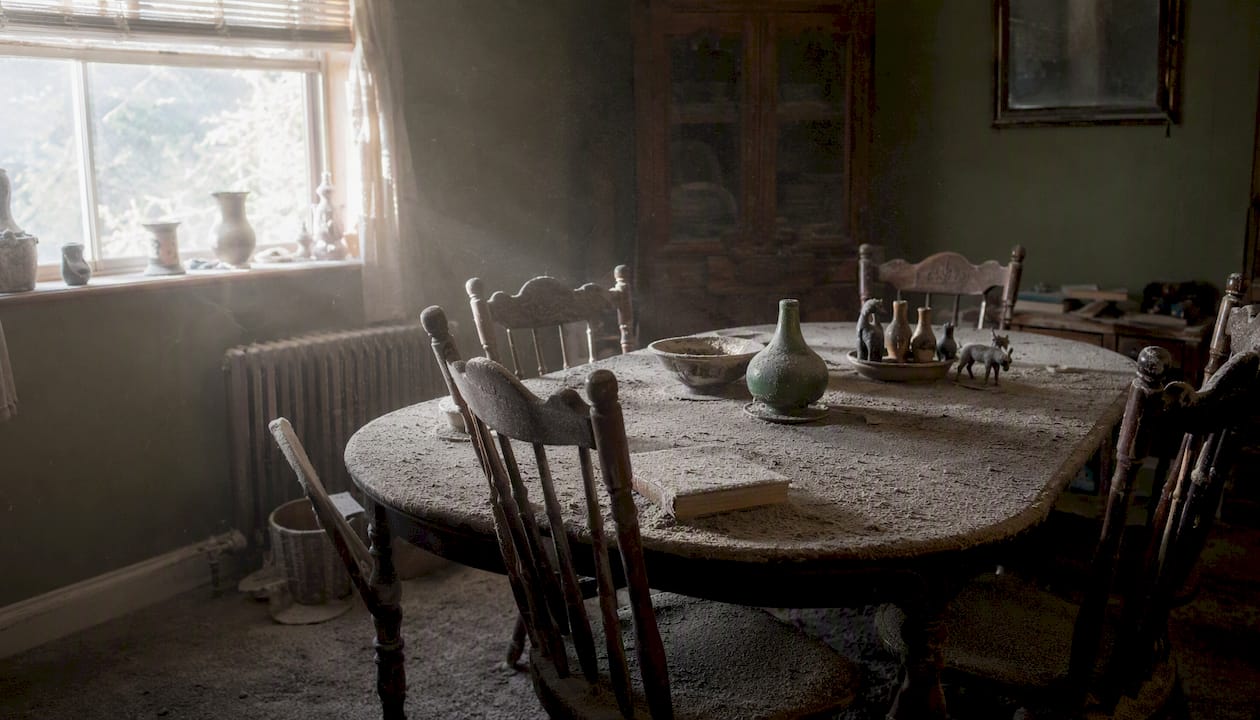
Certification and documented procedures matter for reasons beyond the obvious safety benefit. A licensed abatement contractor provides a paper trail: the scope of work, the containment methods used, the disposal manifests, and the post-job clearance report. That documentation protects you legally, satisfies insurers, and is increasingly expected by buyers during real estate transactions. A home with a documented, professionally cleared abatement history is in a stronger position than one where the work was done informally and nothing was recorded.
The clearance report is the piece most homeowners underestimate. Air testing after abatement confirms that fibre levels in the work area have returned to background levels. Without it, you are relying on the contractor’s word rather than measured data. Reputable contractors include clearance testing as a standard part of the job, not an optional add-on.
Faster project timelines are another underappreciated benefit. A certified team with proper equipment, containment materials, and disposal logistics on hand completes the job in a defined window. DIY attempts, by contrast, tend to expand in scope, create secondary contamination, and ultimately cost more to remediate properly.
MSN Environmental’s asbestos testing and abatement services
MSN Environmental handles the full scope of what a positive asbestos test result requires: professional bulk sampling, air monitoring, certified abatement, and regulated disposal, all under one roof. For homeowners in Kitchener, Waterloo, Cambridge, Guelph, Hamilton, London, Brantford, and surrounding communities, that means one call covers the assessment and the remediation.
What sets MSN Environmental apart is the combination of certified technicians, documented procedures, and post-job clearance testing that confirms the space is safe before you reoccupy it. When you contact MSN Environmental, have the building’s age, a description of any recent disturbances, and photos of the suspect area ready — that information speeds up the scoping process considerably.
To book a professional asbestos assessment or get a quote for abatement, visit MSN Environmental’s service pages or reach out directly. For homeowners who want to understand why certified professionals make a measurable difference, the top reasons to hire certified hazardous material removal specialists page covers the case in detail.
Sources
The sources below are the most authoritative references for homeowners who want to verify claims in this article or go deeper on specific topics.
- Asbestos in Drywall — InspectAPedia
- Potential health hazards associated with exposures to asbestos-containing drywall accessory products: A state-of-the-science assessment | HERO/EPA
- Exposure reconstruction for sanding of joint compound (RISA study)
- Microscopy in the study of asbestos-containing joint compound and patching products
- Does drywall or sheet rock contain asbestos? — EPA
For professional testing, abatement, and clearance services in Southern Ontario, MSN Environmental’s service pages and contact information are available at Msnenvironmental.
If your home also has concerns about radon, radon mitigation services are available through allied indoor-air specialists and can be addressed alongside asbestos remediation.
FAQ
How common is asbestos in drywall mud?
Asbestos was widely used in joint compounds from the 1940s through the late 1970s, making it common in homes built or renovated during that period. Buildings with original finishes from before 1980 have a meaningful likelihood of containing asbestos-containing compound.
Will 30 minutes of asbestos exposure hurt you?
A single short exposure is unlikely to cause disease on its own, but no exposure to asbestos fibres is considered safe. The state-of-the-science assessment found typical cumulative exposures for homeowners were generally below levels associated with respiratory disease, though peak sanding exposures without controls can be high.
Is it bad to breathe in drywall mud dust?
Modern joint compound dust is a nuisance irritant but not an asbestos hazard. Dust from older asbestos-containing compound is a different matter: sanding and dry-mixing can generate airborne chrysotile fibres at concentrations that, with repeated exposure, carry health risk. Stop work and arrange testing before creating any more dust.
How can you tell if drywall contains asbestos?
You cannot tell by looking. Asbestos fibres are invisible to the naked eye, and older compound is visually identical to modern material. Professional bulk sampling followed by PLM or TEM laboratory analysis is the only reliable method of confirmation.
When should I call a certified abatement contractor?
Call a certified contractor whenever testing confirms asbestos-containing compound and you plan any renovation that will disturb the surface, or when the material is already friable or damaged. MSN Environmental provides certified abatement services across Southern Ontario, including post-job air clearance testing.