

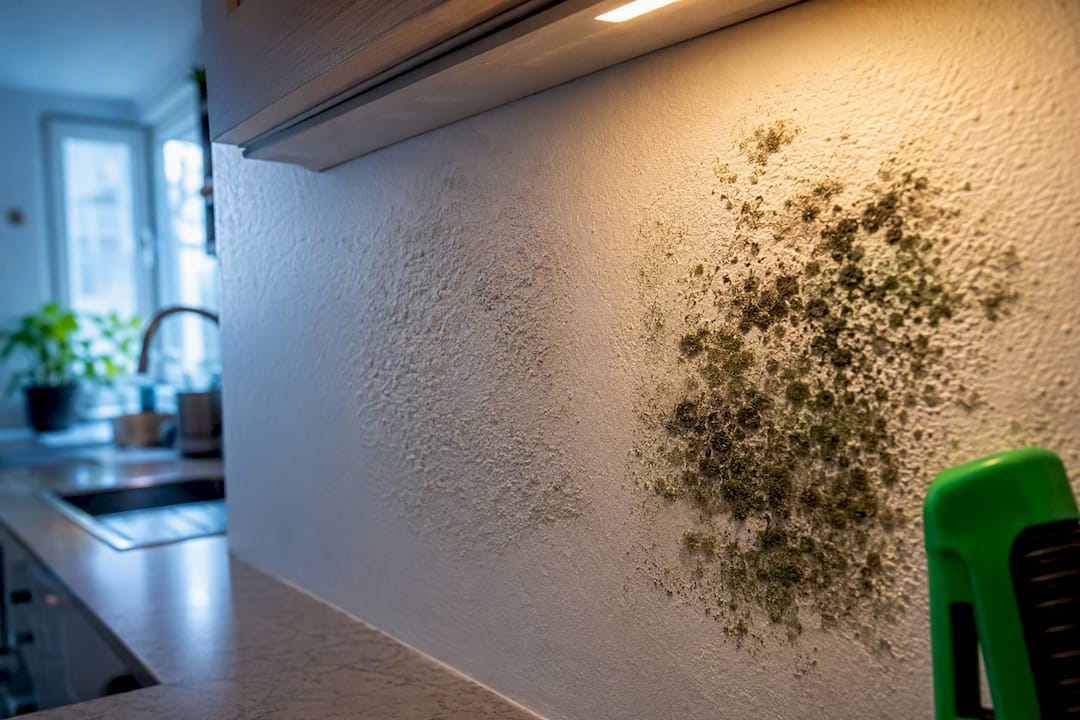
Mildew is the flat, powdery growth you find on shower tile or windowsills. Mould is the broader term for fungi that can be fuzzy, slimy, or raised, and often grows inside porous materials like drywall or wood. If you spot either, stop the moisture first, ventilate the room, and don’t scrub or disturb it until you know whether it’s a wipe-down job or a call to a professional. The EPA, the CDC, and remediation firms like MSN Environmental all draw the same line: small and surface-level, clean it; large, porous, or recurring, get it assessed.
TL;DR:
- Small, surface-level mildew on non-porous surfaces can be safely removed with vinegar or soap and water, but larger or porous mold requires professional help.
- Mould inside drywall, insulation, or behind water stains often persists despite surface cleaning, indicating a moisture problem that must be addressed before remediation.
- Visual identification of mold or mildew is less critical than assessing whether it is growing on porous materials or repeatedly returning, which signals a moisture source.
- Testing for mold spores is generally unnecessary unless the problem exceeds roughly 3 feet by 3 feet, involves structural materials, or persists after cleaning.
- Professional remediation involves containment, removal of contaminated materials, HEPA filtration, moisture source repair, and verification, especially in cases of recurring or extensive mould issues.
Table of Contents
- Mould vs mildew: how to identify what’s growing in your home
- Is black mould dangerous, and what does the science actually say?
- When should you test for mould versus just calling a professional?
- How to remove mould and mildew safely (and where DIY stops working)
- Preventing mould and mildew from coming back
- Why certified remediation matters for larger mould problems
- What actually matters here
- Get a mould assessment from MSN Environmental
- Sources
- FAQ
Mould vs mildew: how to identify what’s growing in your home
Colour and texture tell you most of what you need to know before you even touch anything. Mildew tends to be white or grey, with a flat, powdery look, almost like dust that won’t wipe away completely. Mould shows up in green, black, or brown patches, often fuzzy or slimy, and it sits raised above the surface rather than lying flat against it.
Where it grows matters just as much as what it looks like. Mildew sticks to flat, non-porous surfaces exposed to condensation: shower tile, window frames, bathroom grout lines. Mould, being a much larger fungal family, digs into porous materials like drywall, wood framing, insulation, and carpet backing, and it can spread behind baseboards or caulk where you can’t see it.
A few quick checks help you sort one from the other:
- Rub test: mildew wipes away fairly easily with a damp cloth; mould tends to smear or stain instead of lifting off.
- Smell test: a strong, persistent musty odour usually points to mould growing somewhere hidden, since microbial compounds released by mould cause that smell even when you can’t see the source.
- Spread pattern: mildew stays contained to damp surfaces; mould spreads across a growing area over days or weeks.
None of these checks tell you the species or whether it produces toxins. If you’re inspecting a basement or crawl space, keep exposure short and wear a mask while you look.
Is black mould dangerous, and what does the science actually say?
The clinical evidence points mostly to one thing: respiratory and allergic reactions, not the systemic poisoning that headlines sometimes suggest. Harvard Health lists asthma flare-ups, allergic rhinitis, and chronic coughing as the best-supported effects of indoor mould exposure. People with asthma, existing allergies, or weakened immune systems feel it fastest, along with infants and older adults whose airways are already more sensitive.
What the evidence supports: Mould’s proven health risks are respiratory and allergic, not the dramatic “toxic mould syndrome” some sources describe. Household exposure to Stachybotrys (often called black mould) can trigger the same allergic and respiratory symptoms as other moulds, but the AAAAI notes that evidence for systemic mycotoxin poisoning from typical home exposure remains limited.
There’s no accepted number that separates “safe” mould from “dangerous” mould in a home. Regulators don’t set a spore-count threshold the way they do for something like lead in water. The practical guidance from both the CDC and EPA is simpler: if you can see it or smell it, deal with it. Call a doctor if respiratory symptoms worsen, headaches persist, or you notice signs of a severe allergic reaction after time spent in an affected room.
When should you test for mould versus just calling a professional?
Testing sounds like the responsible move, but it’s often the wrong first step. A spore count without context tells you almost nothing useful, and most home test kits can’t distinguish a harmless colony from one worth worrying about. The CDC’s own cleanup guidance treats visible or smellable mould as reason enough to act, skipping the lab step entirely for most residential cases.
That said, a few situations genuinely call for professional involvement rather than DIY effort:
- Size: anything larger than roughly 3 feet by 3 feet, a rough benchmark many remediation guides use, is past the point of a homeowner-safe cleanup.
- Material: mould inside drywall, insulation, or structural wood needs assessment, since cleaning the surface can mask a colony still growing underneath.
- Cause: flooding, a burst pipe, or mould that keeps returning after cleaning points to a moisture source you haven’t fixed.
- System contamination: mould inside HVAC ductwork spreads spores through the whole house every time the furnace runs.
- Health signals: if occupants develop new or worsening respiratory symptoms, get the property assessed rather than guessing.
Pro Tip: Skip the $40 mould test kit from the hardware store. Spend that money on a moisture meter instead. Finding the wet spot behind the wall tells you more than any spore count ever will.
A qualified team doesn’t just scrub visible growth. They contain the area, remove contaminated material, run HEPA filtration, fix the moisture source, and verify the space is clear before calling the job done.
How to remove mould and mildew safely (and where DIY stops working)
Cleaning surface mildew is genuinely simple, and most homeowners can handle it themselves in under an hour.
- Ventilate first. Open a window or run an exhaust fan before you start, and keep the door propped so spores don’t concentrate in a closed room.
- Gear up. Rubber gloves and eye protection are enough for a small, non-porous surface.
- Scrub with soap and water, or a diluted vinegar solution, working the flat, powdery growth off tile, grout, or glass.
- Rinse and dry completely. Mildew comes back fast on a surface that stays damp, so a towel dry beats air drying alone.
Small mould spots on non-porous surfaces (tile, glass, sealed countertops) follow a similar process, with one substitution: 3% hydrogen peroxide often works better than bleach here, since bleach tends to sit on top of a porous surface rather than killing mould at the root. For anything porous, like drywall in a bathroom corner or a water-stained ceiling tile, cleaning the surface does little good. The colony usually survives inside the material and keeps releasing spores even after the visible patch is gone.
Pro Tip: If a porous item, drywall, carpet, ceiling tile, has been wet for more than 48 hours, plan to replace it rather than clean it. Drying time matters more than cleaning product.
That’s the point where DIY effort stops being worth it. Systemic water intrusion, contaminated HVAC systems, and any scenario tied to occupant health symptoms belong with a professional. A proper remediation job runs through five stages: assessment of the affected area, containment to stop spores spreading to clean rooms, removal of contaminated material, HEPA-filtered air cleaning, and a moisture-source repair with a final verification check before the space is signed off.
Preventing mould and mildew from coming back
Fixing the moisture source is the single most effective thing you can do, more effective than any cleaner on the shelf. Cleaning without addressing why the area got wet in the first place just buys you a few weeks before the same spot reappears.
A few habits keep humidity where fungi can’t take hold:
- Keep indoor humidity in the recommended moderate range, checked with an inexpensive hygrometer, and run a dehumidifier in basements or crawl spaces that run higher.
- Use bathroom and kitchen exhaust fans every time you shower or cook, and vent your clothes dryer outdoors, not into the attic.
- Fix leaks the day you notice them, not the month you get around to it, and check that grading around your foundation moves water away from the house.
- Dry any wet material, carpet, drywall, insulation, within 24 to 48 hours of a spill or flood.
Worth remembering: There’s no fixed spore count that defines “safe.” The CDC and Harvard Health both frame prevention around humidity control, not testing, because moisture is the one variable you can actually manage.
Smaller maintenance items pay off more than people expect: a properly flashed roof, a working sump pump, and a MERV-rated furnace filter changed on schedule all reduce the moisture load your home has to deal with.
Why certified remediation matters for larger mould problems
Trained technicians follow a documented protocol every time: assess, contain, remove, verify. That consistency is what separates a scrub-and-hope approach from actual remediation. MSN Environmental handles the range of jobs homeowners run into, basement mould, crawl space contamination, and stubborn black mould in bathrooms, using HEPA filtration and containment equipment built for exactly this kind of work.
What that gets you in practice:
- A written scope of work instead of a guess about how bad the problem is.
- Equipment (HEPA air scrubbers, containment barriers) that isn’t available at a hardware store.
- Compliance with Ontario regulations for hazardous material handling, which matters if the mould sits near other concerns like lead paint or asbestos.
- A verification step at the end, so you know the job actually worked rather than hoping it did.
What actually matters here
Most articles on this topic spend too much time on the mould-versus-mildew vocabulary and not enough on what to do about it. The distinction is real, but it’s not the decision that matters most. The decision that matters is whether what you’re looking at sits on a porous material and whether it keeps coming back.
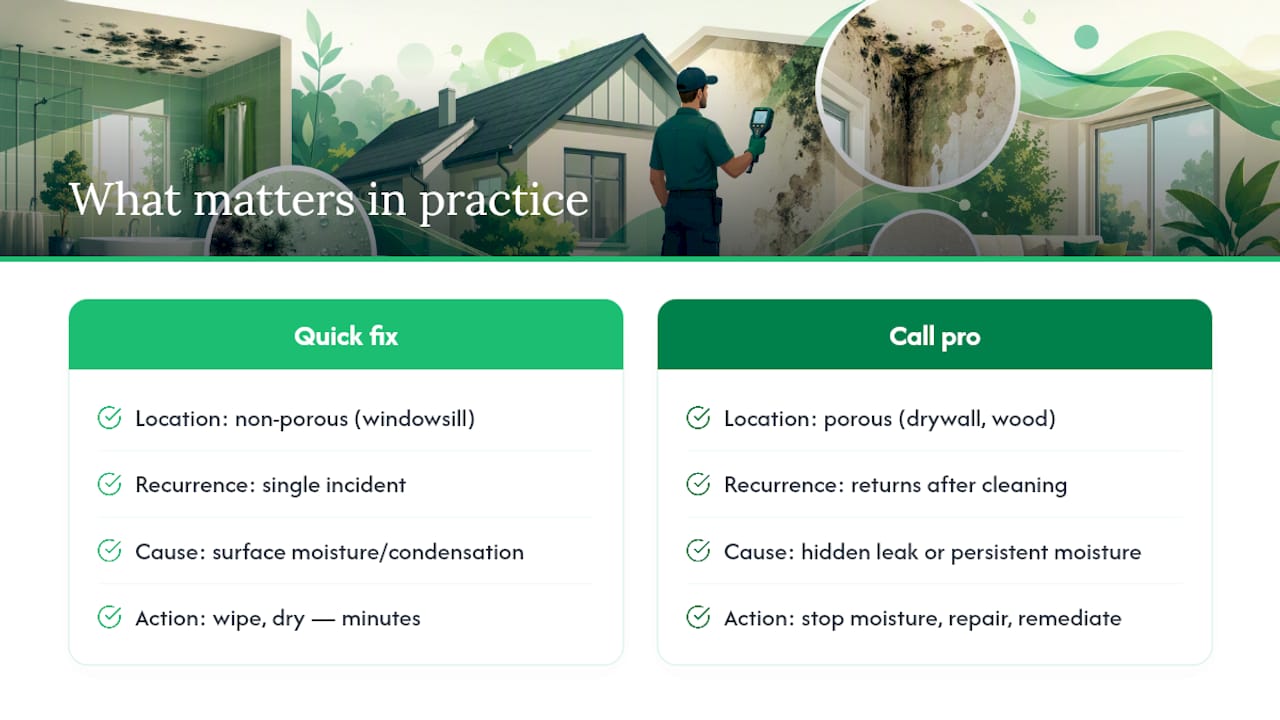
Conventional advice leans hard on visual identification, colour charts, texture guides, species photos, as if knowing the name solves the problem. It doesn’t. A homeowner who correctly identifies Stachybotrys but never fixes the leak behind the wall ends up right back where they started. The CDC’s own guidance skips species identification almost entirely, and that’s a deliberate choice, not an oversight.
If you take one thing from all of this, take the moisture question. Ask why the area got wet before you ask what’s growing on it. Surface mildew on a windowsill is a five-minute fix. Mould behind drywall after a slow plumbing leak is a different problem entirely, one that gets worse the longer identification substitutes for action. Know the difference, but act on the cause.
— Moacyr
Get a mould assessment from MSN Environmental
If what you’re looking at covers more than a small patch, sits inside drywall or wood, or keeps returning no matter how often you clean it, that’s a job for MSN Environmental, not another bottle of vinegar. Homeowners across the service area call when a mould problem has moved past the cleaning-supplies stage into something with a moisture source they can’t locate or reach on their own.
Reaching out starts with an on-site assessment. A technician looks at the affected area, checks for moisture behind the surface, and puts together a written scope and quote before any work begins, so you know exactly what’s involved and what it covers. From there, the remediation plan follows the same containment, removal, and verification steps outlined earlier, with a final check to confirm the space is clear.
Book an inspection through the mould remediation services page and get a written plan instead of a guess.
This article is general information, not a substitute for advice from a qualified doctor. Consult a qualified healthcare professional about your own circumstances before acting on anything here.
Sources
- What is the difference between mold and mildew? | US EPA
- Mold in the home: identifying and treating the issue to prevent health problems | Harvard Health
- Black mold exposure: symptoms, risks & treatment | Cleveland Clinic
FAQ
What is worse, mould or mildew?
Mould is generally worse because it penetrates porous materials and can cause structural damage, while mildew stays on the surface and is far easier to clean.
What kills mildew instantly?
A vinegar solution or soap and water removes surface mildew quickly on non-porous surfaces like tile and grout; for small mould spots, 3% hydrogen peroxide often works better than bleach.
How do you know if it’s mildew or mould?
Mildew is flat, powdery, and white or grey; mould is fuzzy or slimy, appears in green, black, or brown, and often sits raised above the surface it’s growing on.
What are the first signs of mould sickness?
Early signs are usually respiratory or allergic, coughing, sneezing, nasal congestion, or worsening asthma symptoms, and they tend to improve once you leave the affected space, according to Harvard Health.