

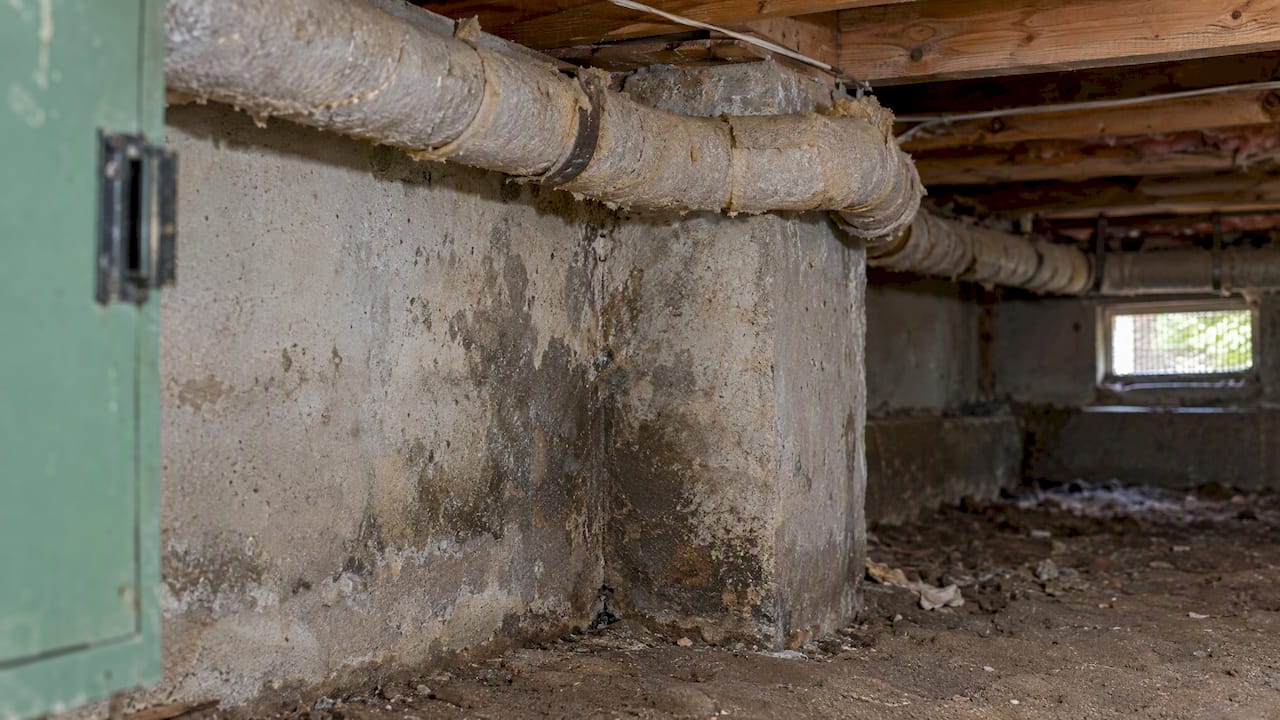
Asbestos and mould are two separate hazards that often show up in the same older building. Asbestos is a mineral fibre. Mould is a living fungus. Asbestos is dangerous when disturbed, and mould is a problem wherever moisture lingers. The two need different tests and different clean-up methods, and a renovation can turn one into the other if you handle it badly. Below, we explain how to tell them apart, why they so often overlap, and what to do first.
TL;DR
- Asbestos is not a type of mould. It is a group of naturally occurring fibrous minerals, while mould is a fungus that grows on damp materials.
- Asbestos is a risk mainly when materials are damaged or disturbed. Mould is a risk as long as the moisture that feeds it is still there.
- You cannot identify either one reliably by sight. Asbestos needs lab analysis of a sample, and mould is best handled by finding and fixing the water source.
- Water damage and renovation collide in older homes: wet drywall, plaster or floor tile may hold both hazards, so test for asbestos before anyone cuts into it.
- Hire a contractor who is qualified, insured and willing to give you a written scope before work starts.
Table of Contents
- Is asbestos a form of mould?
- Why you find both in the same older building
- Can you tell either one by sight?
- Asbestos is not an emergency until it is disturbed
- Mould: fix the water, not the symptom
- What to do if you suspect either one
- How professional abatement works
- Choosing a contractor
- Our perspective
- Working with MSN Environmental
- FAQ
- Sources
Is asbestos a form of mould?
No. People search the two words together because they show up in the same conversations about old basements, but they have nothing in common biologically.
Asbestos is a group of naturally occurring, fibrous silicate minerals. It was mined, then mixed into building products for strength, insulation and fire resistance. It is not alive and it does not grow.
Mould, by contrast, is a fungus that grows on food or damp building materials. It spreads when conditions allow, and it stops when the moisture is gone.
| Asbestos | Mould | |
|---|---|---|
| What it is | Mineral fibres | Fungus |
| Alive? | No | Yes |
| When it becomes a hazard | When material is damaged or disturbed and fibres are released | When moisture lets it grow and spores spread |
| Can you spot it? | No, only lab analysis confirms it | Often visible as stains, sometimes hidden, sometimes smelled |
| Root fix | Leave sealed and intact, or have it abated by a professional | Find and fix the moisture, then clean up with containment |
| Main health concerns | Lung cancer, mesothelioma, asbestosis | Allergic and respiratory problems, especially for sensitive people |
The health picture is different too. Breathing asbestos fibres in sufficient concentration and for long enough can raise the risk of lung cancer, mesothelioma and asbestosis. Those diseases take years to appear, which is why one-off exposures during a weekend demolition are worth taking seriously.
Why you find both in the same older building
The overlap is a matter of timing and materials. Homes built before 1990 are the ones most likely to contain asbestos. Health Canada notes that before 1990 it was used for insulating and fireproofing buildings, and that it may still be found in cement and plaster, tiles, siding, drywall and insulation.
Those same homes have had decades for a roof, pipe or foundation to leak. Leaks, flooding or high humidity promote mould growth. So a damp basement in a 1960s bungalow in Kitchener, Hamilton or London can have mould on the wall surface and asbestos-containing material behind it or under it.
Typical places the two meet:
- Basement walls and ceilings. Plaster and old drywall systems can contain asbestos, and a chronic leak feeds mould on the same surface. See our guide to asbestos in plaster walls and asbestos drywall removal.
- Floors. Old vinyl tile and the black adhesive under it can contain asbestos, and a flooded floor traps moisture beneath. Read about asbestos floor tile removal and asbestos mastic removal.
- Attics and wall cavities. Loose-fill insulation such as vermiculite may contain asbestos, and roof leaks can wet it and the framing around it.
- Crawl spaces. Damp, poorly ventilated spaces grow mould, and old pipe wrap or insulation may be nearby. See mould in a crawl space.
The risk is that someone sees mould, grabs a scraper or a saw, and in the process breaks up material that contains asbestos. That is the most common way a mould problem becomes an asbestos problem.
Can you tell either one by sight?
Not with confidence.
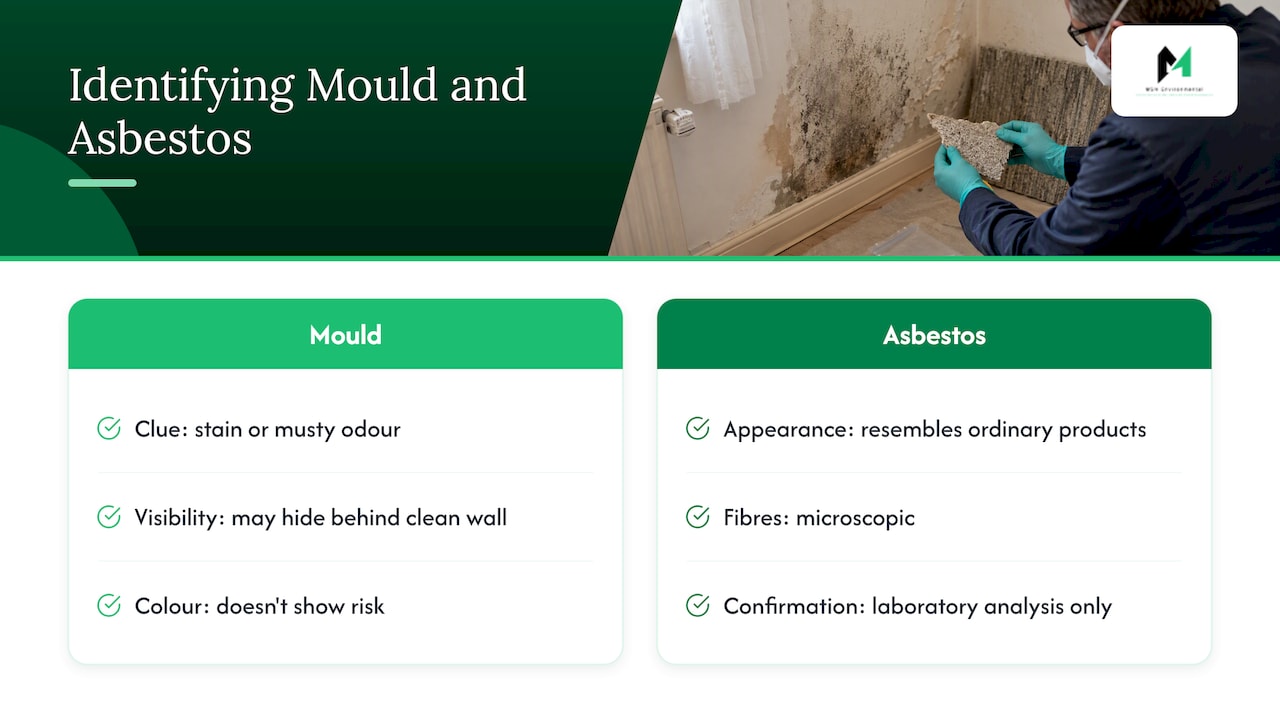
Mould often looks like a stain, may be hidden, and can sometimes be noticed by a musty odour. Colour does not tell you how risky it is, and a clean-looking wall can have growth behind it.
Asbestos is harder still. Fibres are microscopic, and the material is mixed into products that look like any other drywall, plaster, tile or insulation. A person who searches for what asbestos looks like in rock form will find mineral photos, but the material in your home is a manufactured product, not a rock sample. Only laboratory analysis of a sample can confirm it. That is why the safe assumption for any pre-1990 material you plan to disturb is that it needs testing first.
What about asbestos in drywall?
Yes, it is possible in Canada. Health Canada lists drywall among older materials where asbestos may still be found. In practice the risk sits in older joint compound, plaster and wall systems, not in every sheet. Age of the home is a clue, not a verdict, so a sample is the only way to know.
Asbestos is not an emergency until it is disturbed
This is the part that surprises people. Asbestos is not hazardous when left undisturbed, sealed behind walls, or in good condition. It becomes a health risk when material is damaged or disturbed during renovations, releasing microscopic fibres into the air.
So if you have an intact textured ceiling or old floor tile you never plan to touch, there is usually no reason to panic or rip it out. The trigger is a plan: new flooring, a basement finish, a wall removal, a kitchen gut. Before any of that, get a sample result in hand.
Health Canada’s advice for homes built before 1990 is to hire a professional to test for asbestos before renovating, and to use a qualified asbestos removal specialist if it is found. Our page on the 0.5% asbestos rule and testing older Ontario homes explains the Ontario side of that decision, and four situations where testing and a written scope are needed is a good checklist before you sign anything.
If you are budgeting a refurbishment, it helps to plan around survey findings from the start, and survey-first refurbishment planning shows why scoping unknowns before measuring and pricing the work avoids nasty surprises.
How Ontario sorts asbestos work
In Ontario, Regulation 278/05 classifies operations that may expose a worker to asbestos as Type 1, Type 2 or Type 3. Higher types need more controls. Type 3 work, the most demanding, is covered in our Ontario compliance guide to Type 3 asbestos abatement. For high-risk work and moderate-risk work using an enclosure, containment system or clean room, a qualified person must conduct air sampling to monitor airborne fibres, under the federal technical guideline.
Mould: fix the water, not the symptom
Mould follows a different logic. Health Canada does not recommend routine testing for mould, because air test results do not necessarily show whether there is a problem. Remediation should focus on identifying and correcting the underlying moisture source rather than on sampling. The department also says that mould test results have limited use in building a remediation plan.
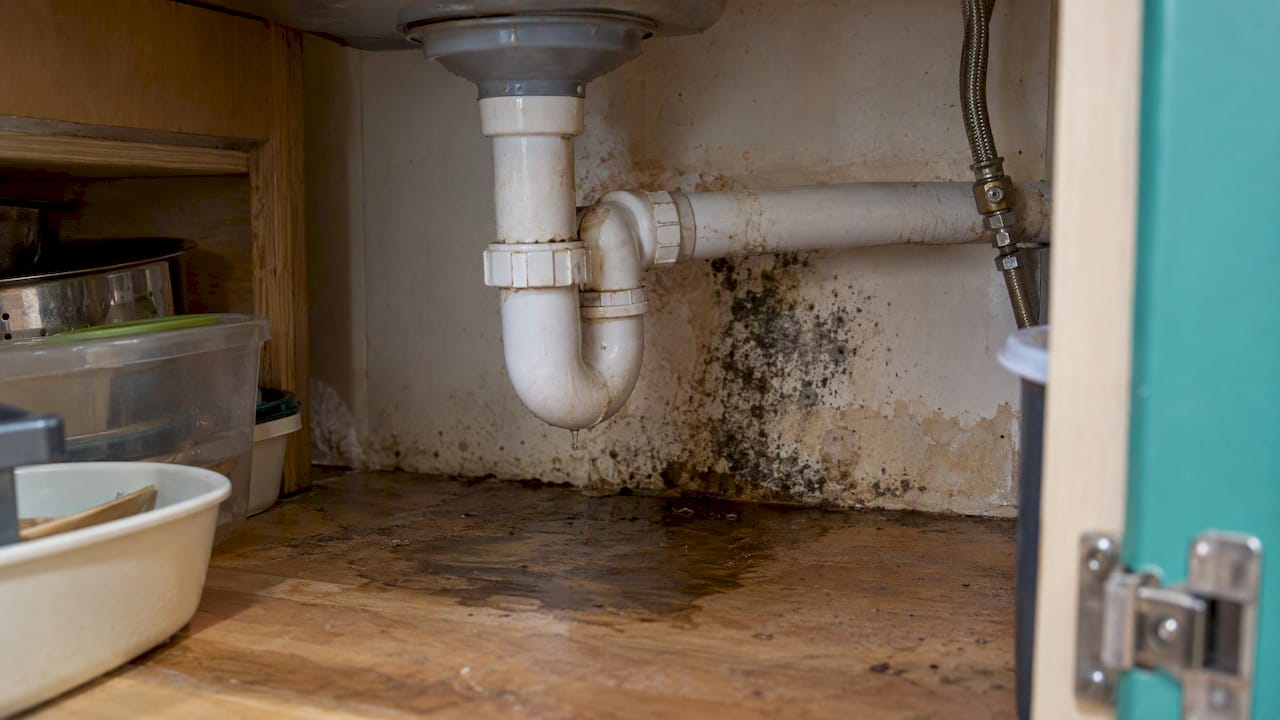
That does not make testing useless. It means testing answers specific questions, for example when a hidden source is suspected, when an insurer or a tenant dispute needs documentation, or when you want a before-and-after record. Our guide to mould air testing in Canada walks through when it earns its cost and when it does not.
A few practical rules follow from the guidance:
- Find the moisture first. A roof leak, a plumbing drip, a foundation seep or condensation will bring mould back no matter how well you clean.
- Control humidity. Canadian guidance points to keeping indoor humidity between 30% and 50% and ventilating with exhaust fans and air exchanges.
- Do not paint over it. If mould is under the paint, the drywall needs to be removed and replaced. Painting hides the problem without solving it.
- Contain the work. Professional remediation must include containment of work areas to stop spores and fragments spreading to clean areas, followed by thorough cleaning.
If the affected area is a basement or crawl space, see our homeowner guides on mould in a basement and the black mould removal process.
What to do if you suspect either one
Here is the order we recommend to homeowners and property managers.
- Stop the work. If you are mid-renovation and a wall, ceiling or floor turns out to be suspicious, put the tools down. Keep people and pets away from the area.
- Do not sweep, sand or vacuum debris. Dry cleanup of possible asbestos dust spreads fibres. Dry scrubbing of mould spreads spores.
- Look for the water. If there is staining, a musty smell or a recent leak, deal with the source. Turn off the supply, repair the leak, run dehumidification.
- Sample the materials you will disturb. For a pre-1990 building, ask a professional to take bulk samples for lab analysis. Our page on understanding asbestos testing explains what happens to a sample.
- Get a written scope. It should say what is being removed, how the area will be contained, how waste will be handled and what clearance looks like.
- Rebuild after, not before. Finish, paint and flooring go in once abatement and drying are complete.
For health concerns, such as a persistent cough, breathing trouble or symptoms that flare at home and ease when you leave, speak to your family doctor. If you have asthma or another respiratory condition, mention a known mould problem. If you know you had a significant asbestos exposure, tell your doctor about it so it is on your record, as related disease can appear many years later.
How professional abatement works
Abatement is not one single method. It may involve complete removal, encapsulation or enclosure, and the process varies with the material and the circumstances. Many hazardous materials have regulated assessment and removal processes, and waste must be disposed of according to local, provincial and federal regulations.
For asbestos, that typically means a survey, a defined work area, negative air or other controls depending on the type of operation, wet methods, sealed waste and air monitoring where required. Our step-by-step asbestos removal process lays out each stage.
When both hazards are present, sequence matters. Mould-affected material that also contains asbestos cannot simply be torn out like ordinary wet drywall. The asbestos controls apply first, and mould containment runs alongside them. This is the single biggest reason to use a contractor who handles both under one plan and not two crews who do not know what the other found.
Choosing a contractor
The Canadian Centre for Occupational Health and Safety (CCOHS) does not keep a list of asbestos removal contractors. It advises confirming that the contractor is qualified and carries insurance covering the work. Beyond that, ask:
- Will you provide a written scope that names the materials and the method?
- Who is on site, and who supervises?
- How is the work area contained, and how is air monitored?
- Where does the waste go, and will I get documentation?
- Do you carry liability insurance for this kind of work?
We have gathered the reasons behind these questions in why certified hazardous material removal matters.
Our perspective
Most calls we get begin with a single worry: mould, or a renovation that has uncovered something old. What we see over and over is that people treat the two as separate jobs and discover too late that they are one site. A wet basement ceiling in a 1970s house is a good example. The homeowner wants the mould gone. The ceiling material may be asbestos-containing. If it is scraped as a mould cleanup, the fibres are in the air before anyone has asked the question.
So our advice is boring and consistent. Test what you plan to disturb. Fix the water. Put the plan in writing. Use technicians who are trained for the materials in front of them, with full liability insurance and proper oversight on the job. We would rather you phone us before the demolition and hear that you can leave a sealed material alone, than after.
— Moacyr
Working with MSN Environmental
We handle both sides of this problem across southwestern Ontario, from Kitchener, Waterloo and Cambridge to Hamilton, London, Guelph and Oakville. That includes asbestos removal, mould remediation, and asbestos and mould testing, bulk sampling and air quality testing, plus interior demolition when a gut renovation follows. Local pages cover Hamilton, London and Cambridge. Get in touch through our main site and we will tell you what needs testing, what can stay and what the scope should say.
FAQ
Is asbestos a form of mould?
No. Asbestos is a group of mineral fibres, and mould is a living fungus. They are unrelated, but they are often found in the same older, water-damaged buildings, so both need to be considered before a renovation.
Is there asbestos in drywall in Canada?
It can be. Health Canada lists drywall among older materials, from before 1990, in which asbestos may still be found. Because you cannot tell by looking, a lab-tested sample is the only way to confirm it before cutting, sanding or removing a wall.
Do I need to remove asbestos if I find it?
Not always. Asbestos in good condition and left undisturbed is not considered hazardous. Removal becomes important when you plan renovation that will damage it, or when the material is already deteriorating. A qualified professional can advise on removal, encapsulation or enclosure.
Should I get my home tested for mould?
Health Canada does not recommend routine mould testing, because results do not show clearly whether there is a problem. Look for visible growth, musty smells and moisture sources first. Testing makes sense for specific needs, such as suspected hidden growth or documentation.
Sources
- Asbestos and your health, Health Canada
- Guidance for indoor air quality professionals (PDF), Health Canada
- Guidance for indoor air quality professionals, Canada.ca
- Occupant Handbook, Indoor air quality, National Defence
- Technical guideline to asbestos exposure management programs, Government of Canada
- CCOHS: Asbestos in the home
- CCOHS: Abatement of hazardous materials
- Asbestos profile, CAREX Canada
- Ontario Regulation 278/05, CanLII